The Farm at Les Collettes, Cagnes by Pierre-Auguste Renoir
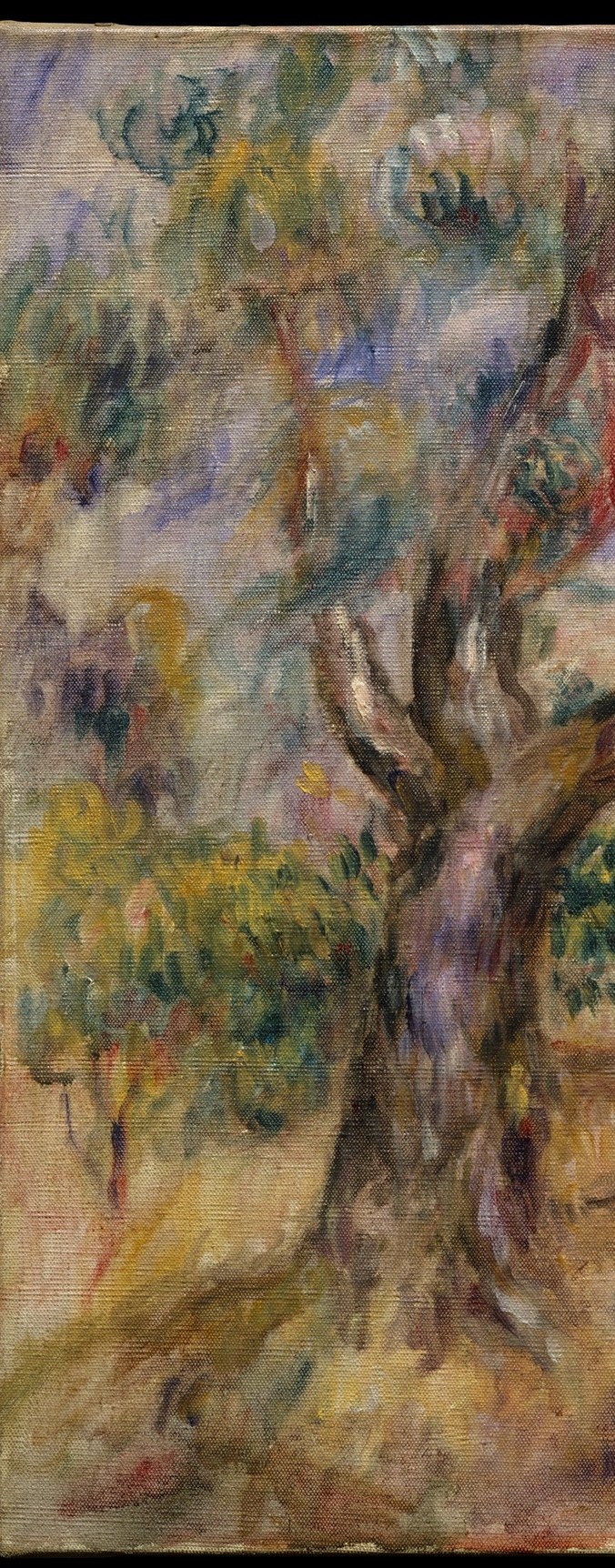
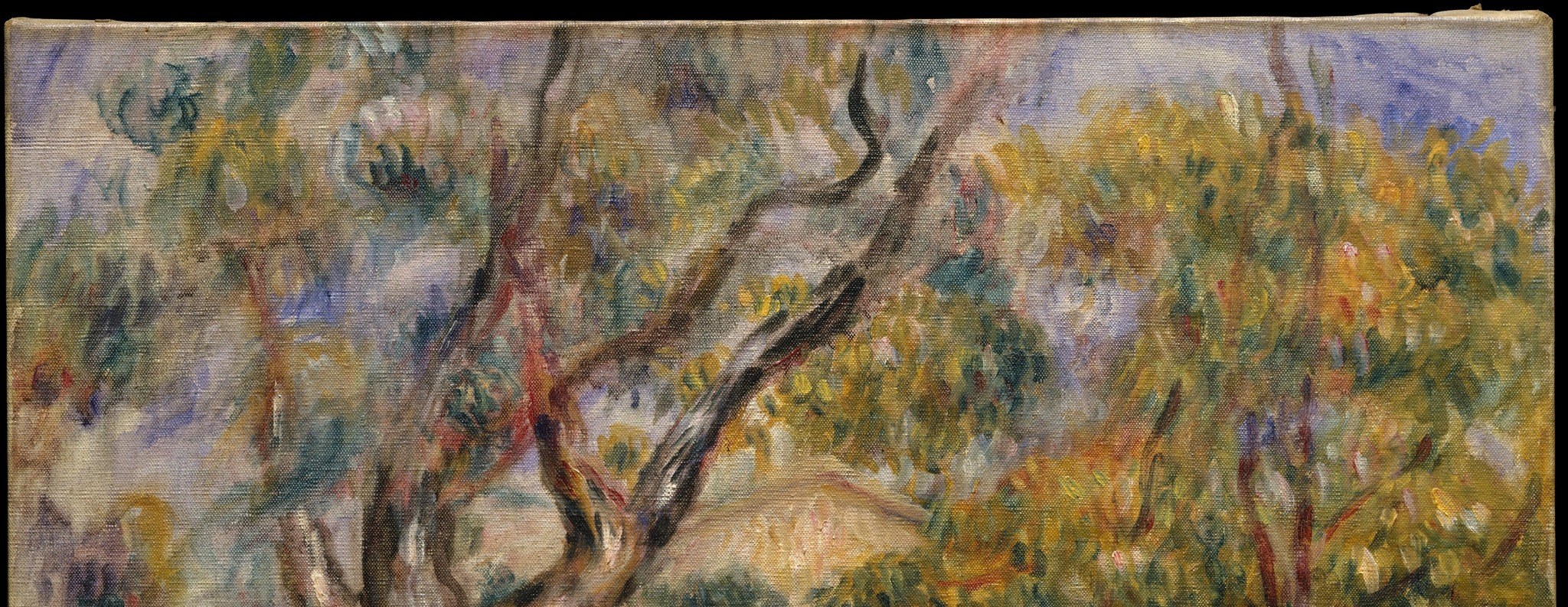
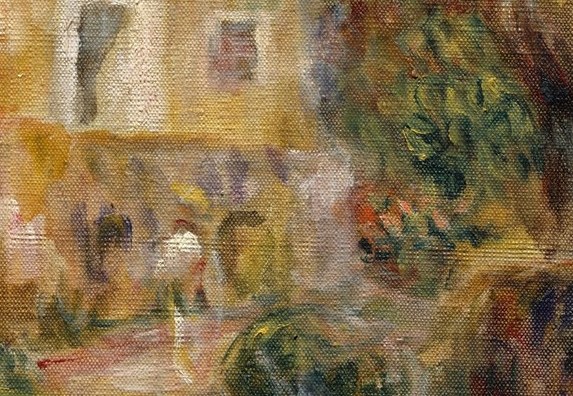
This is The Farm at Les Collettes, Cagnes, painted by Pierre-Auguste Renoir in 1911 and now in the collection of the Metropolitan Museum of Art. His hands were so gnarled by rheumatoid arthritis that a brush had to be strapped to his wrist, yet the painting is a riot of loose, confident strokes, dappled sunlight flickering through olive and citrus leaves in the south of France.
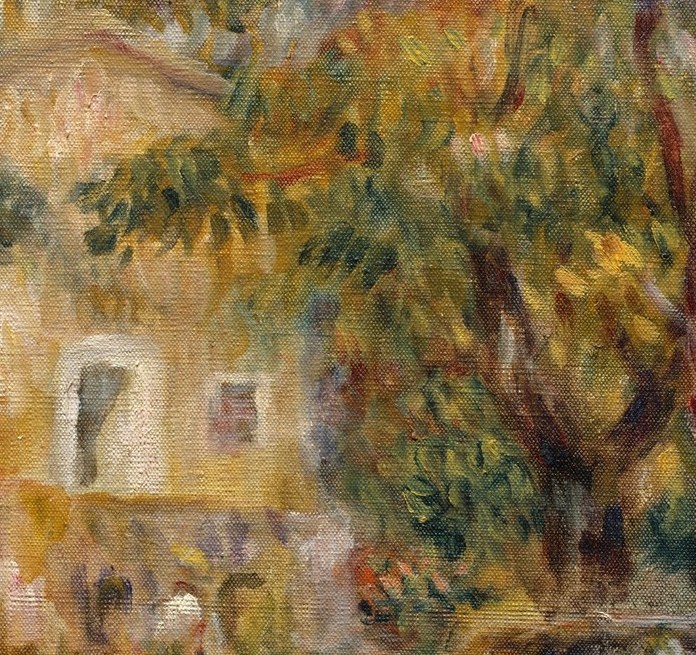
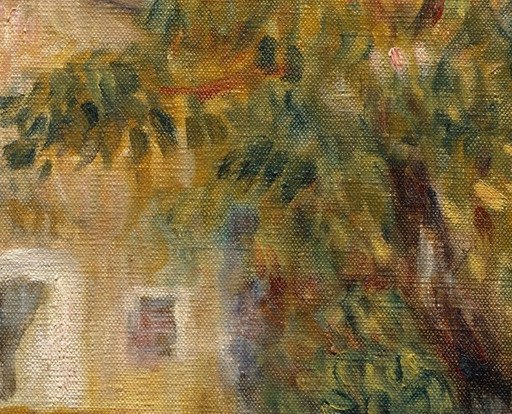
Run your eye along the base of the white farmhouse in the middle distance. What look at first like stray shadows or brush marks are actually two small figures. Renoir gave them only a few flicks of warm and dark pigment, but they are unmistakably people, farm workers on his estate. Once you see them, the painting shifts from a pure landscape into a document of inhabited, working life.
The farm was real. In 1908, desperate for a warmer climate to ease his pain, Renoir moved to Les Collettes in Cagnes-sur-Mer on the Mediterranean coast. This canvas shows the original farmhouse on the property, illuminated through the trunks of the ancient olive trees he loved. But he never slept in that building; he had a new house constructed elsewhere on the estate, where he lived and painted until his death in 1919.
It is strange to think of a painter so physically wrecked producing work this luminous. The painting feels like an act of stubbornness. What did he choose to look at, every day, as his body failed? A white house, old trees, and two small people going about their work in the light.
Details
Transcript
Southern France, 1911. The painter was 70 years old. Rheumatoid arthritis had frozen his hands, so he moved here, to the coast, for the heat. He painted these olive trees by strapping the brush to his wrist. The white house glows through the trunks, but he never lived in it. That was the original farmhouse. His own new house stood elsewhere on the estate. Now look at the very base of that house. Two small figures. Farm workers, barely six strokes of paint. They turn a landscape into a record of daily life on his farm.