La Grenouillère by Claude Monet
View the artwork: La Grenouillère →
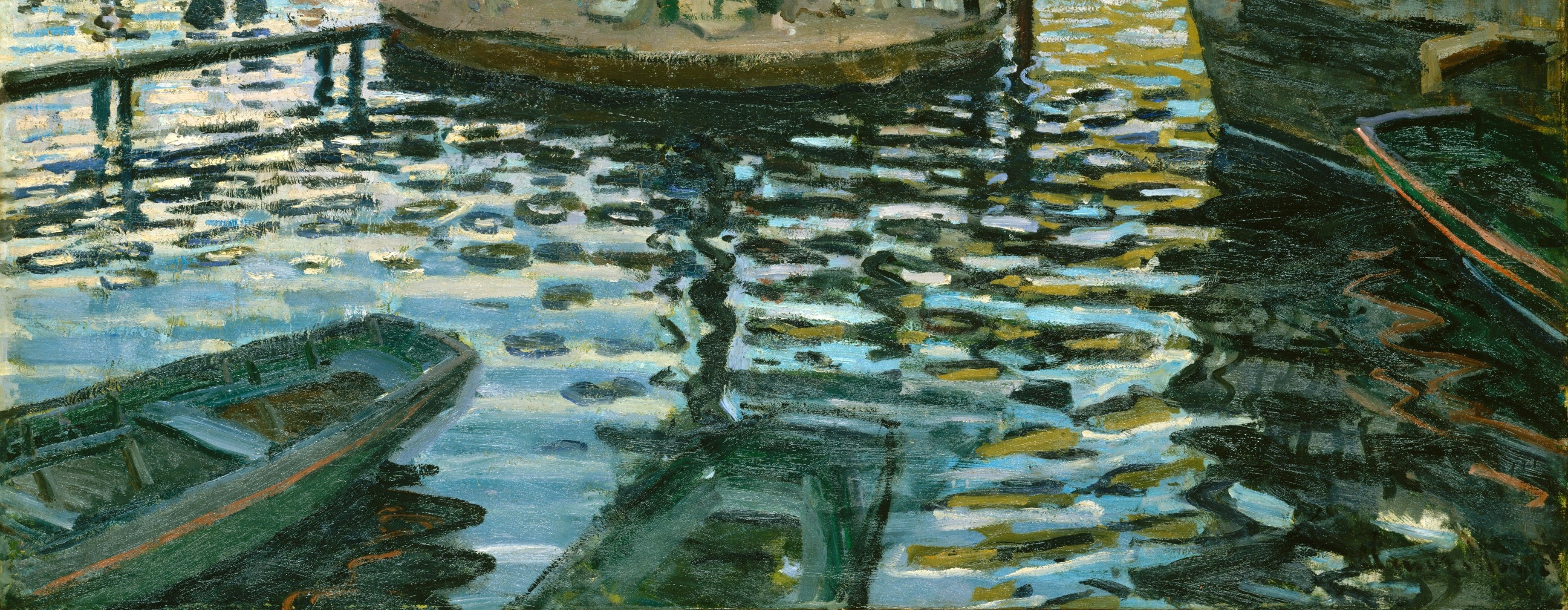
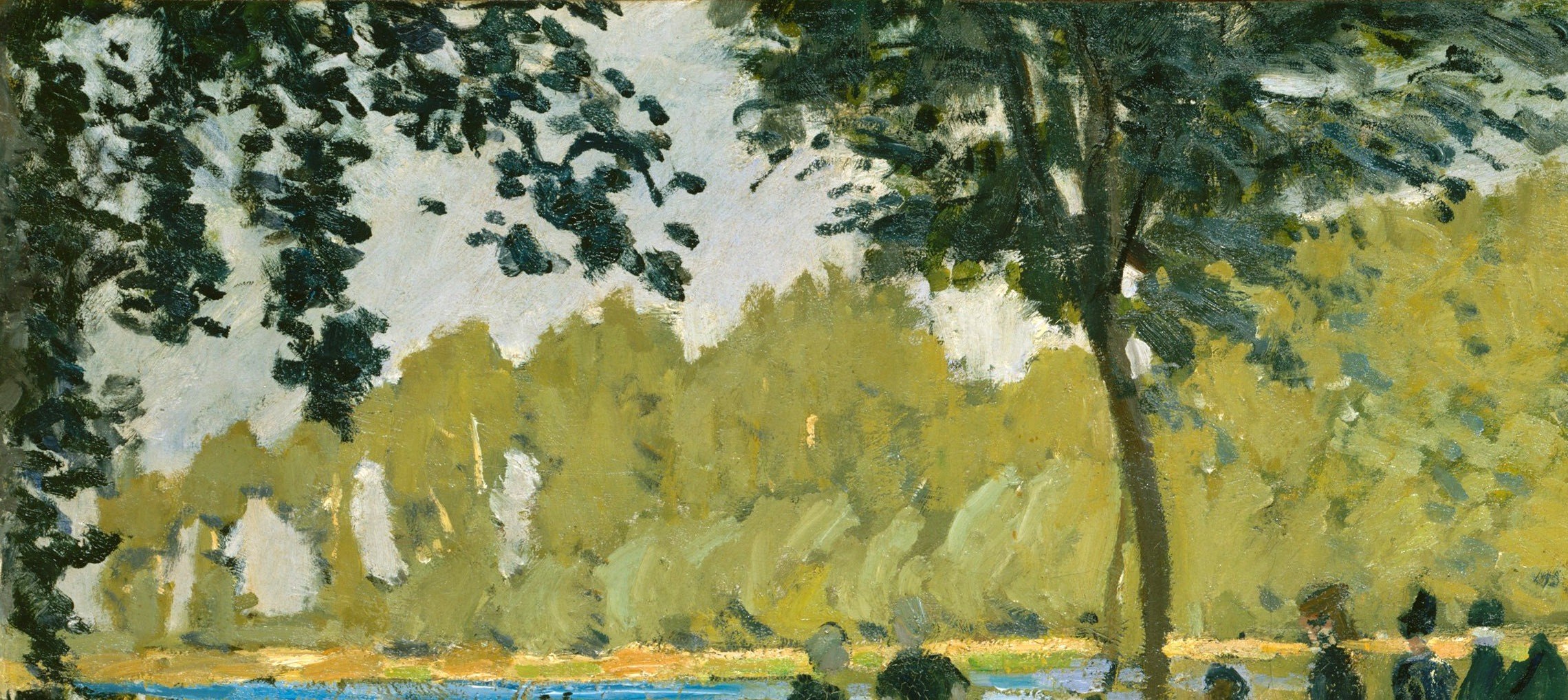
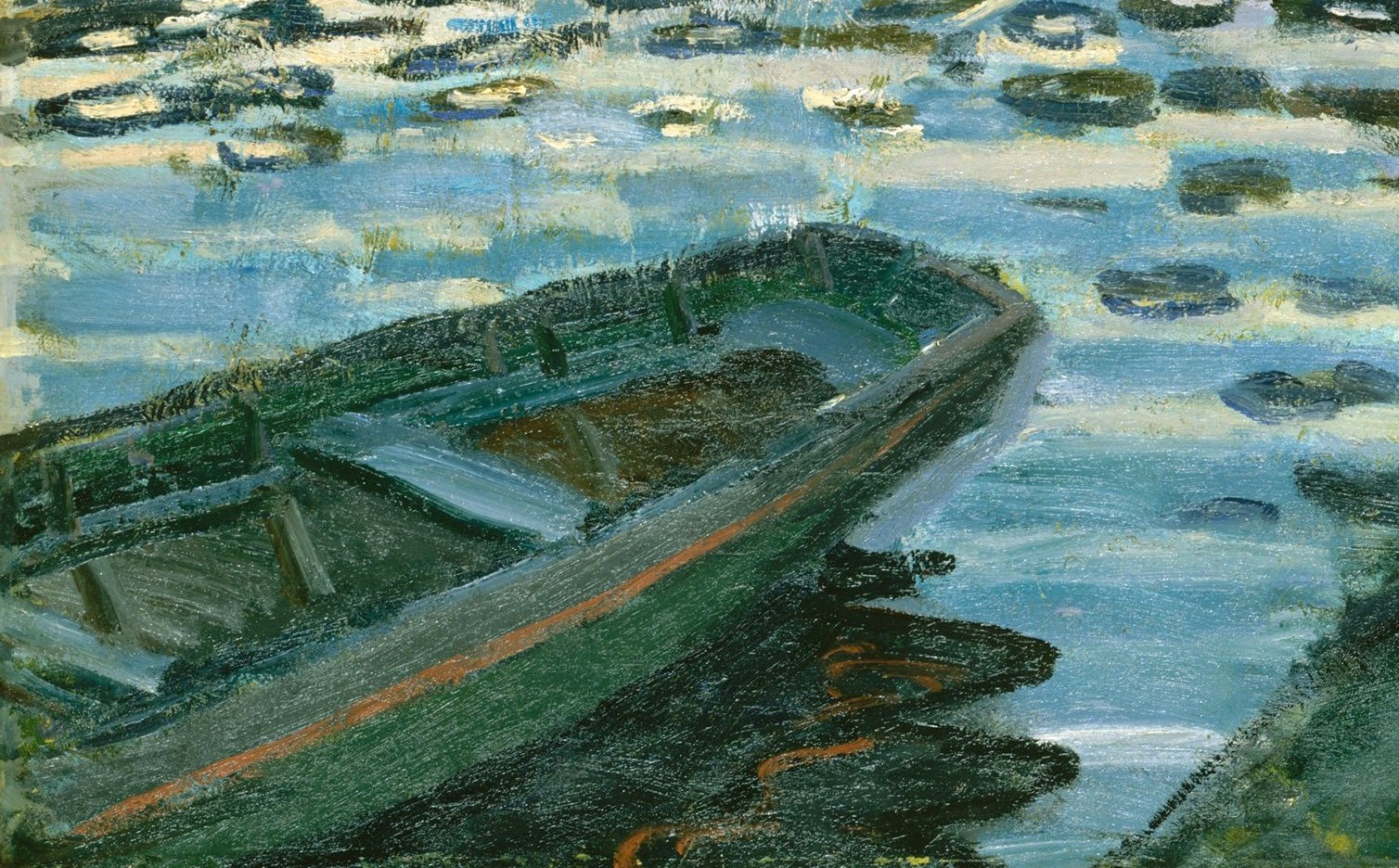
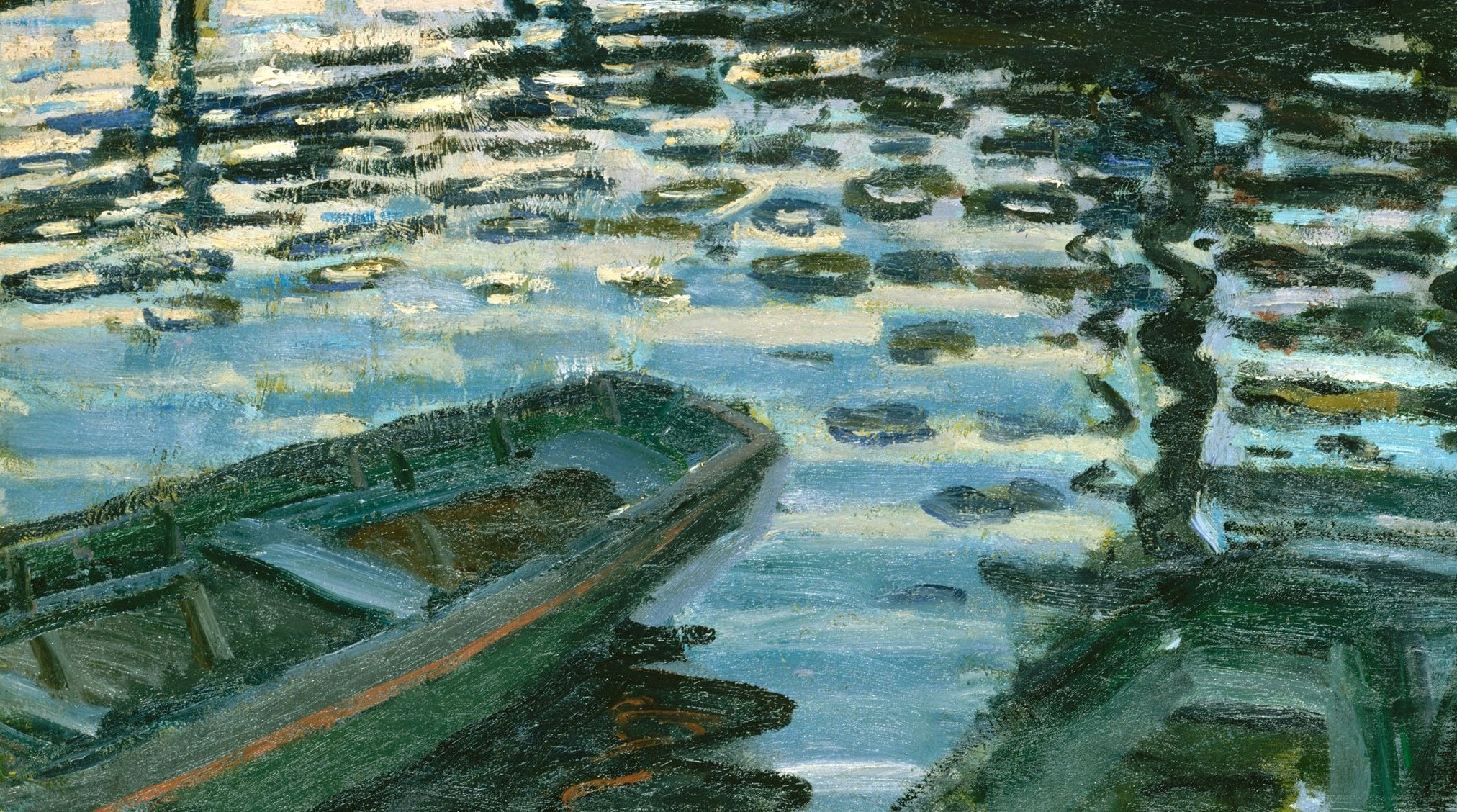
Claude Monet painted La Grenouillère in the summer of 1869, working side by side with Pierre-Auguste Renoir at this popular floating restaurant and bathing spot on the Seine. It was painted quickly, outdoors, as a study of light hitting moving water. Today it hangs in the Metropolitan Museum of Art.
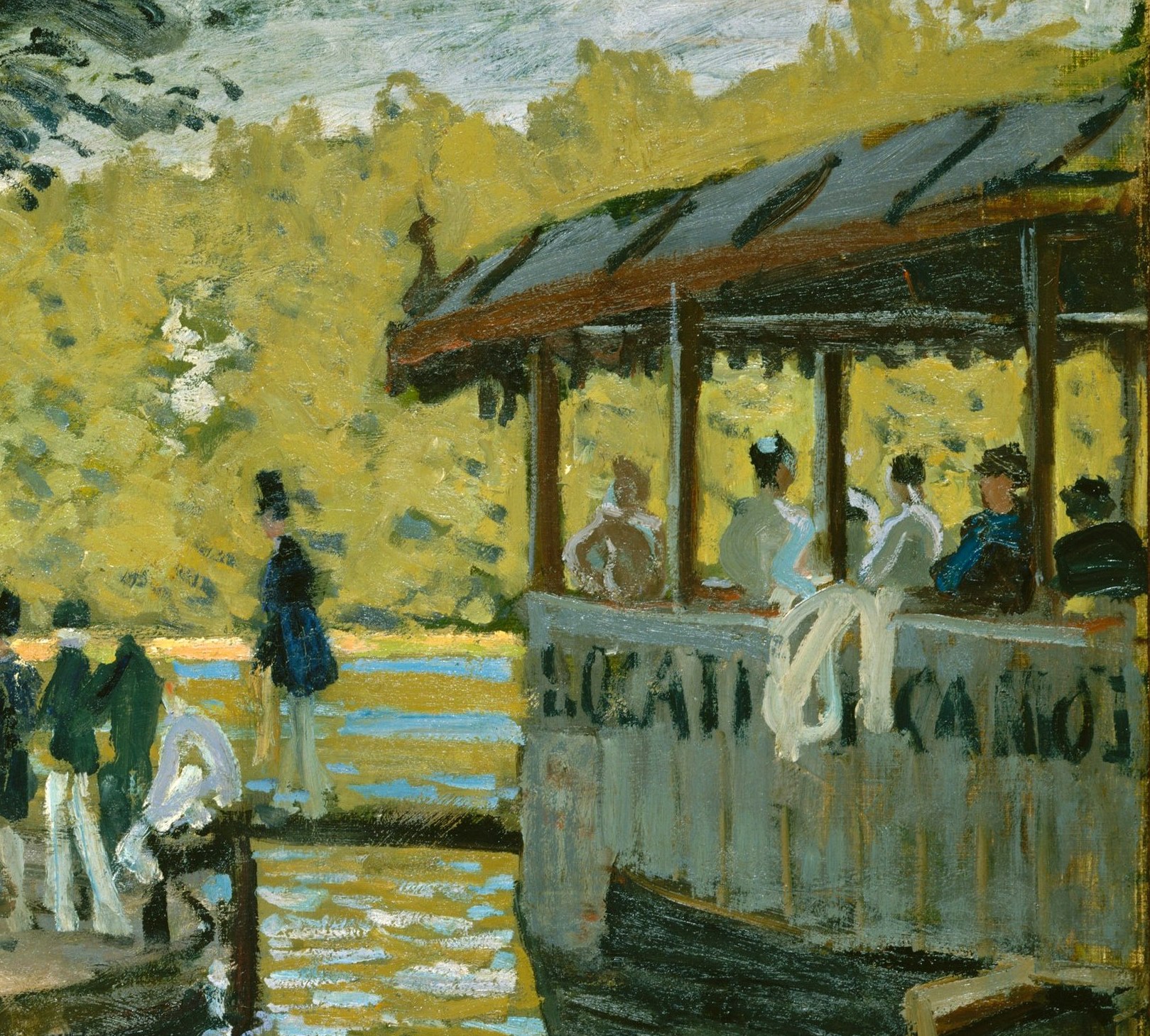
The scene is built around the Camembert, a small wooden island in the river where bathers mingled freely. Look closely at the figures there: Monet renders them as dark, anonymous slashes of paint. He isn't interested in who they are, only in how light wraps around them. The real subject is the water itself, built from short horizontal strokes that dissolve reflections into shimmering fragments.
Monet was 28 years old and nearly destitute when he painted this. He and Renoir shared a studio and often couldn't afford paint. In a letter to Frédéric Bazille that summer, Monet dismissed these riverside panels as 'bad sketches' he wasn't sure anyone would want. They were studies for a larger Salon picture that never materialized.
What he called a bad sketch became the engine of a revolution. The broken brushwork he practiced here, the insistence on painting light rather than objects, would define the next half-century of his life. Impressionism began on this floating dance floor.
#arthistory #impressionism #claudemonet
Details
Transcript
Summer, 1869. The Seine, just west of Paris. This wooden disc on the river was called the Camembert. On it, strangers of every class stood shoulder to shoulder. Monet paints them as quick dark dabs, not individuals. He and Renoir were broke that summer, sharing one studio. So they came here to paint the water, the light, the crowd. Monet called these quick studies 'bad sketches.' He kept painting like this for the next 57 years.