元 吳鎮 蘆灘釣艇圖 卷|Fisherman by Wu Zhen
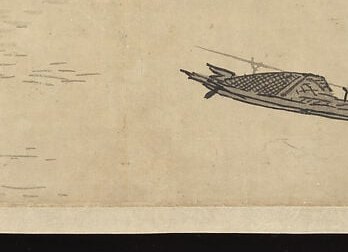
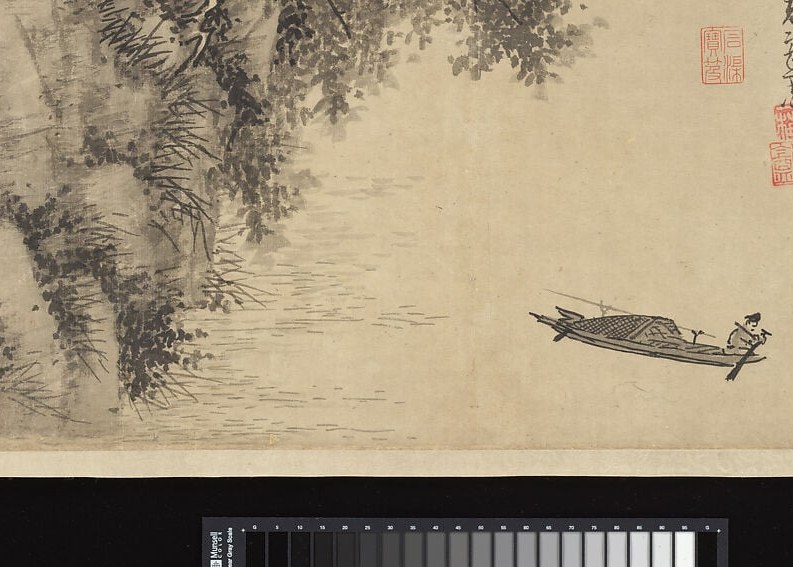
Wu Zhen's 'Fisherman' is a handscroll of radical refusal. Painted in ink on paper around 1350, it depicts a single figure in a boat on a vast, empty river. The work is in the collection of the Metropolitan Museum of Art today, but its journey there was not a straight line from the artist's hand. It passed through six centuries of buyers, each leaving a red seal as a financial signature.
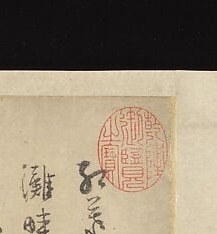
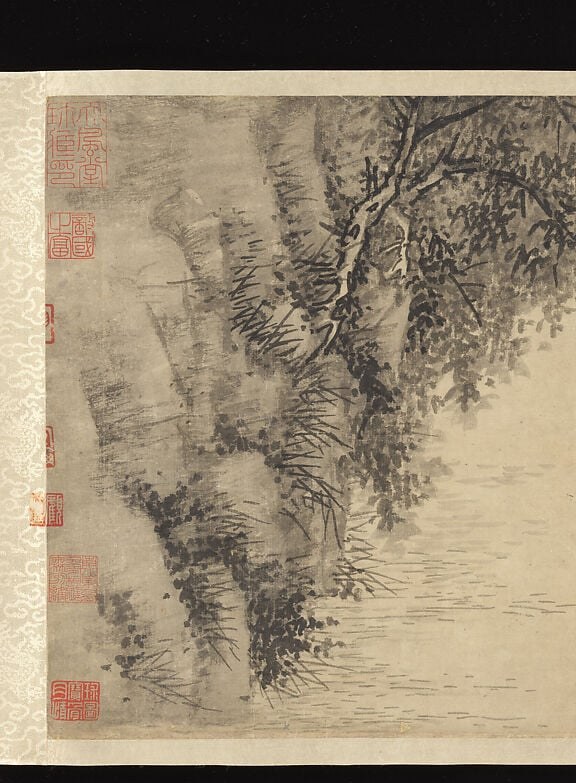
Look at the seal cluster in the upper right. These are not decorative. Each one marks a transfer of ownership, a price negotiated, a work that changed hands for silver and prestige. The most prominent belongs to the Qianlong Emperor, who absorbed it into the imperial collection in the 18th century at tremendous cost. The seals below the inscription are later additions, placed carefully so as not to violate the original composition.
Wu Zhen himself refused to serve the Mongol Yuan court. He made his living selling small works like this to a close circle, never to emperors. The man in the boat is a scholar playing at fishing, not a laborer. He chose poverty and solitude over official position. The vast unpainted paper around him, the mist, the water, the infinite, was a philosophical statement about letting go.
What he gave away for a modest sum to his friends is now a national treasure, insured for an unpublicable figure. The empty space he left free is the most expensive part of the painting.
Details
Transcript
You are looking at a 650-year-old financial instrument. Wu Zhen painted this hermit-fisherman around 1350, for his own friends. He refused to work for the Mongol court. So he lived poor, selling ink on paper. Now count the red seals. Every single one is a transfer of money. The Qianlong Emperor paid an enormous sum to stamp his seal here in the 1700s. The blank paper he left for mist became value. The emptiness itself is now priceless.