Marriage Panel of Gabriel Weydacher and his wife Juliana Wemis with the Virgin and Child and Saints Barbara and Catherine by http://www.wikidata.org/.well-known/genid/296b61f1c864096f2ee47edf7c705c2e
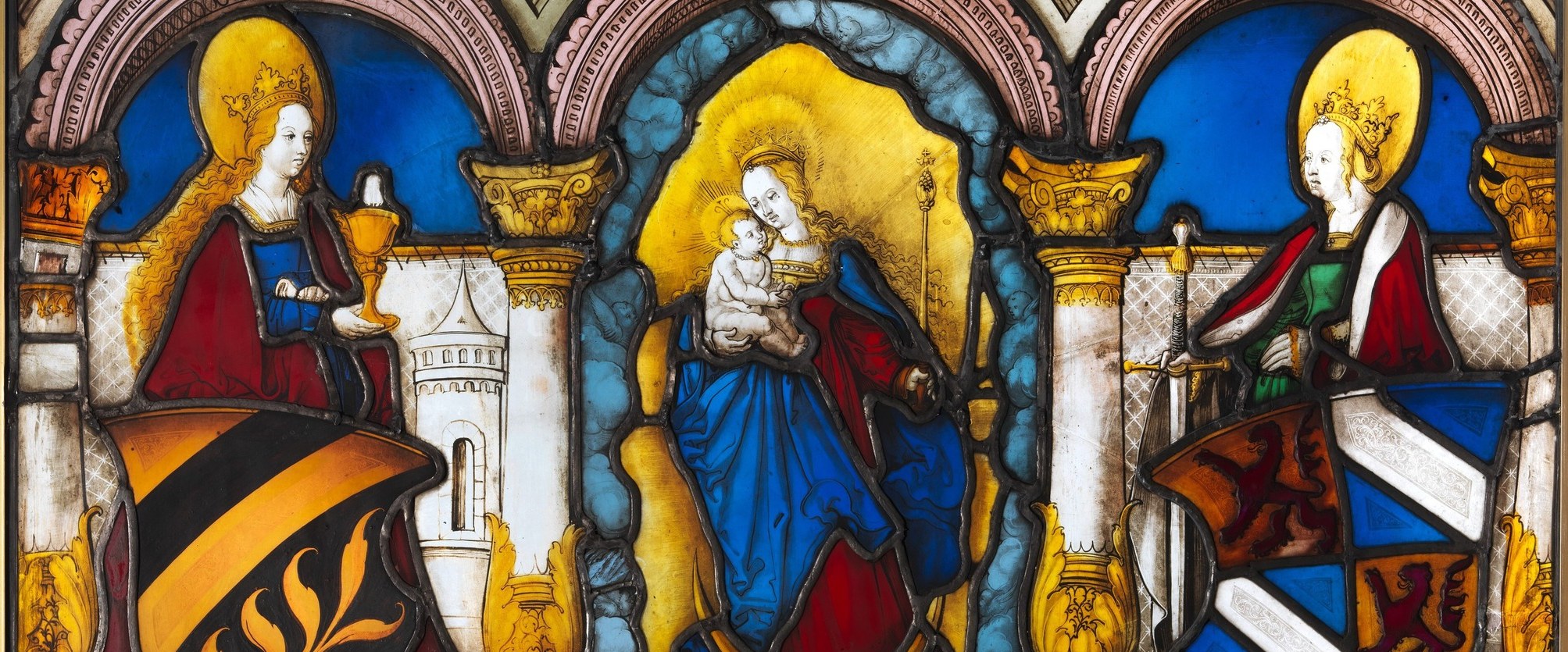
This is not a stained glass window. It is an oil painting on panel, designed to mimic the luminous effect of illuminated glass. The "Marriage Panel of Gabriel Weydacher and Juliana Wemis" (dated 1519) is a devotional and legal object in one, a painted contract kneeling beneath the Virgin and Child.
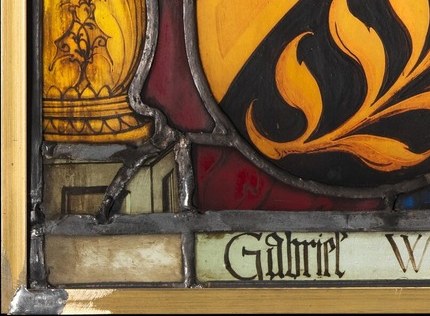
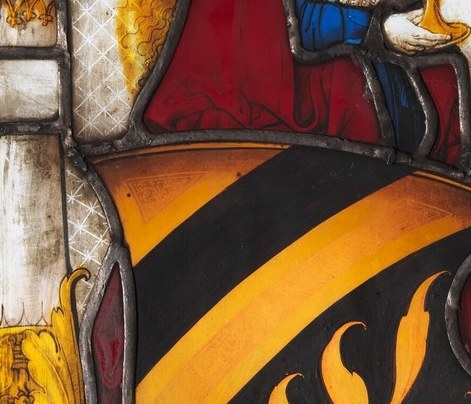
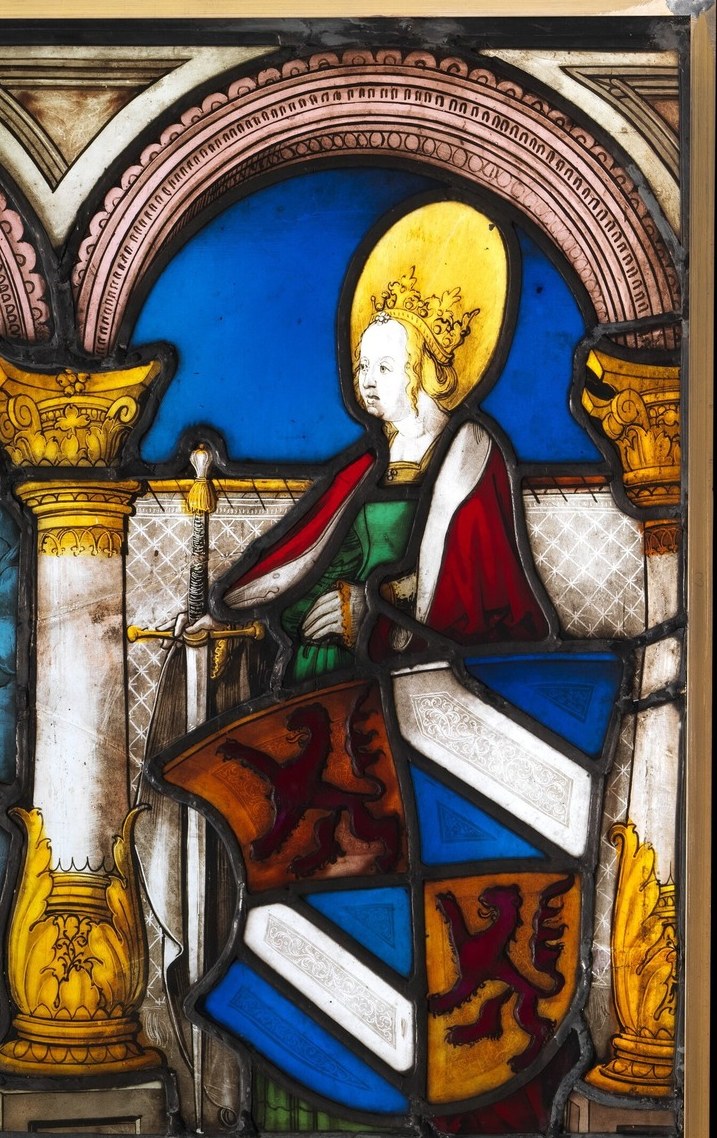
Look closely at the bottom. The inscription names the kneeling couple: Gabriel Weydacher and Juliana Wemis. Their paired heraldic shields frame that inscription, anchoring the holy image to a specific family lineage. On the left, Saint Barbara holds a three-windowed tower, her attribute as patron of safe childbirth and a good death. On the right, Saint Catherine carries her own attribute, marking her as protector of scholars and brides.
The composition is built like a church interior, with painted Gothic tracery and saturated cobalt fields. The artist simulates transmitted light in an opaque medium, the central visual trick of the piece, so that the whole panel performs the illusion of being a backlit window while remaining paint on wood.
Every object on this surface is a coded intercession. Barbara for the birth, Catherine for the mind, the Virgin at center, and two real people kneeling at the feet of the divine. It is a prayer for protection pressed into the form of a legal document.
Details

Transcript
It looks like stained glass, but it is a painting. The blue ground performs a trick: luminous glass, in oil paint. These are real people: Gabriel Weydacher and Juliana Wemis. Their coats of arms make this a legal contract in paint. They kneel below Saint Barbara. She protects safe childbirth. Her three-windowed tower is a symbol of the Trinity. Opposite, Saint Catherine protects scholars and brides. Every coded object asks heaven to guard this marriage, and their children.