Margarethe Vöhlin [reverse] by Strigel, Bernhard
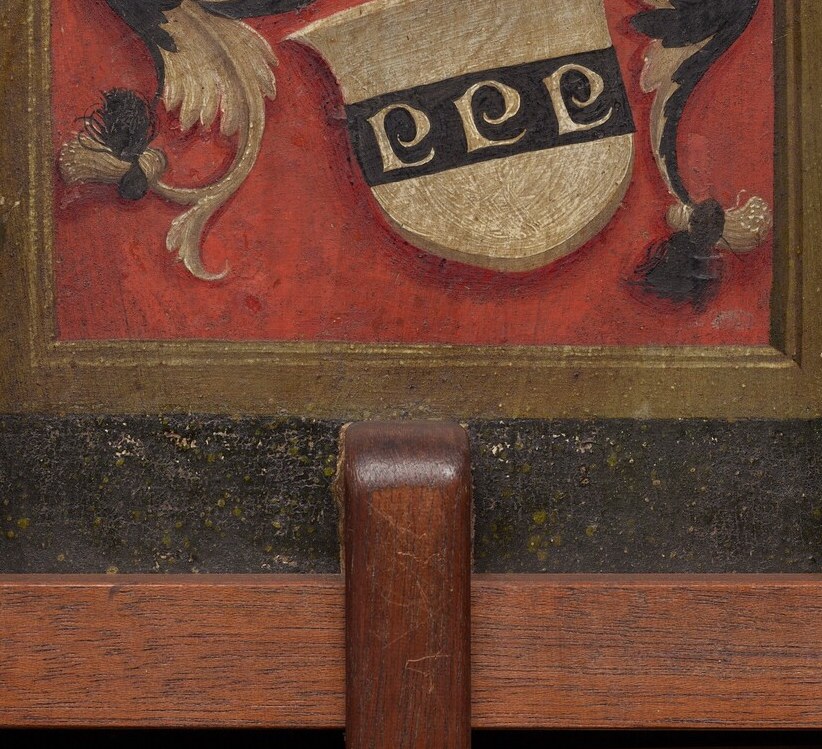
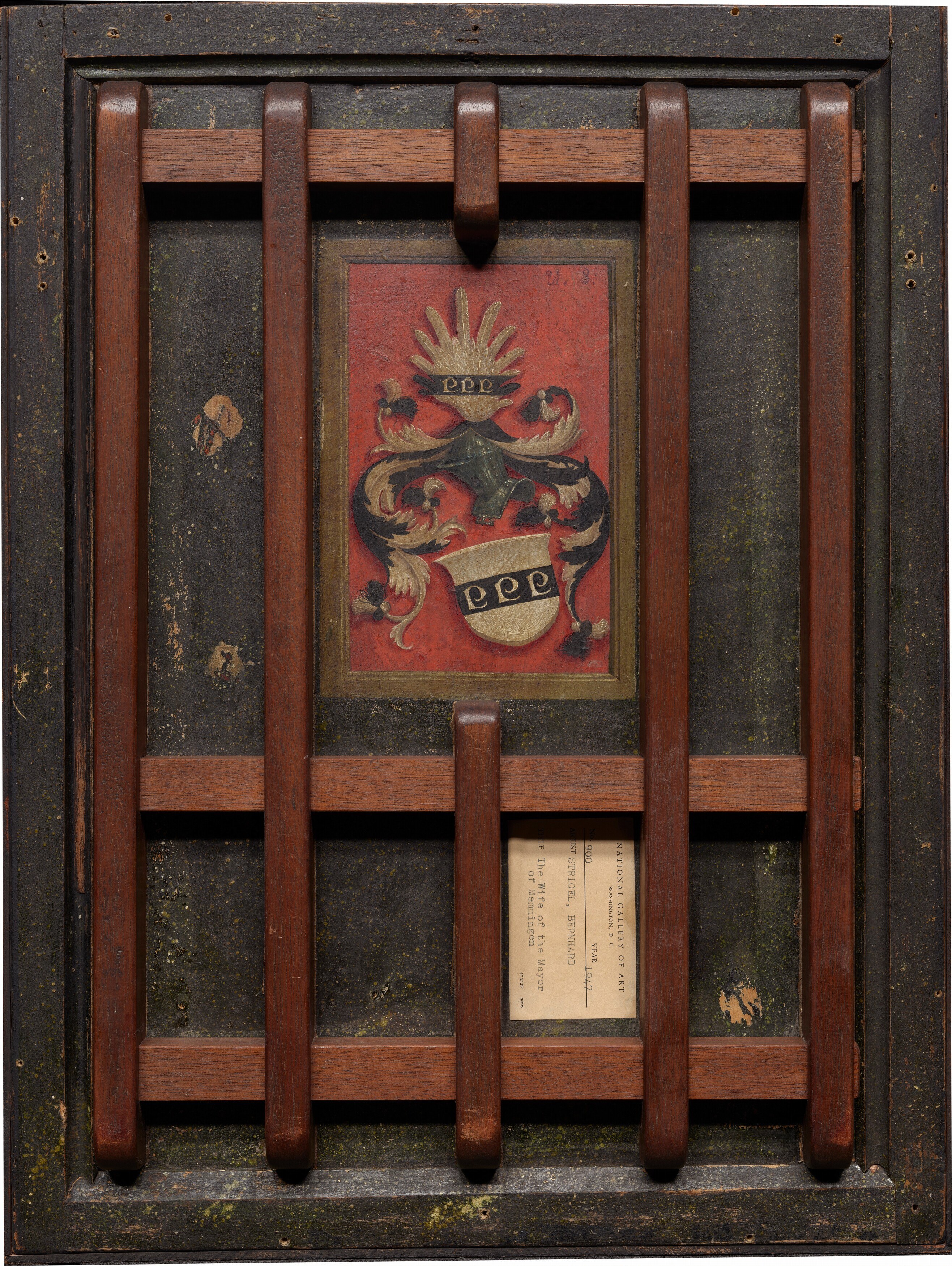
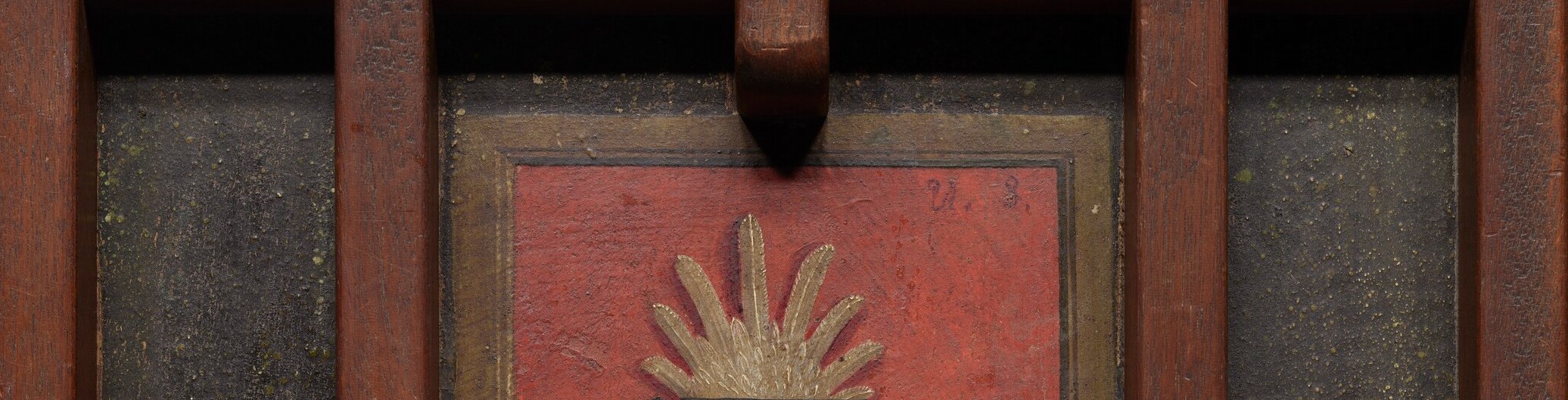
This is the reverse side of *Margarethe Vöhlin* by Bernhard Strigel, painted in 1527. Currently held at the National Gallery of Art, it showcases a remarkable illusionistic rendering of a family crest framed by faux wood.
Look closely at the dark, weathered wood frame and the vertical and horizontal wooden slats. Strigel masterfully uses layered paint to create the illusion of realistic knots and grain, a testament to the detailed observation characteristic of the Northern Renaissance.
Bernhard Strigel, a prominent German painter of the Swabian school, was known for his portraits and historical paintings. This panel, likely the back of a devotional diptych, served to identify the patron, a common practice in Renaissance art to personalize commissions.
It's fascinating how much care went into creating a convincing illusion, even on the back of a painting.
Details

Transcript
This is the back of a 1527 German painting. It’s a family crest for Margarethe Vöhlin. See how the painter made this wood look textured? He layered paint to create realistic knots and grain. Even the small details look like real carved wood. A common trick for the back of a fine portrait.