God the Father by Pierre Mignard I
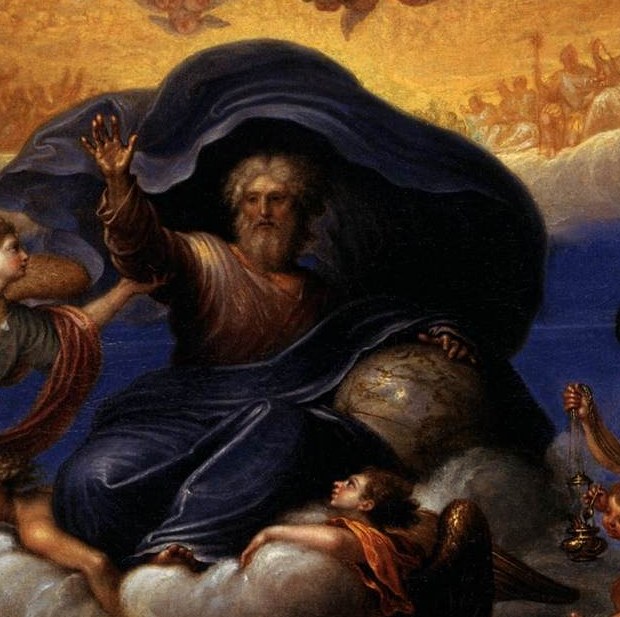
Pierre Mignard's "God the Father," painted in 1664, is a rich example of French Classical Baroque art, held at the National Gallery of Art in Washington. This dramatic oil painting depicts God the Father at its center, surrounded by a celestial host of angels and cherubs.
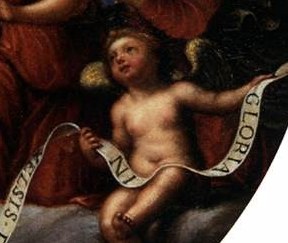
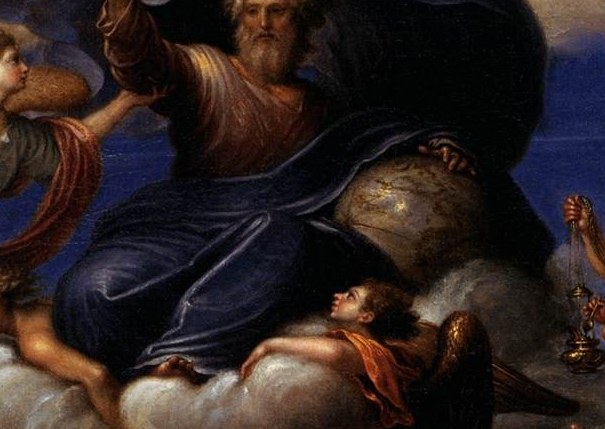
Look closely at the symbolic elements. God holds a globe, representing his dominion over creation. Nearby, an angel swings a censer, a gesture of worship and purification. A cherub holds a scroll inscribed with "GLORIA IN EXCELSIS DEO," a Latin phrase meaning "Glory to God in the Highest," from a traditional hymn.
Mignard, also known as "Mignard le Romain," was a prominent 17th-century French painter of religious, mythological, and portrait works. He was a contemporary of Charles Le Brun and contributed significantly to the artistic landscape of his era.
These carefully placed symbols invite the viewer to contemplate the divine power and heavenly glory inherent in the scene. What other subtle details do you notice?
Details
Transcript
This 17th-century painting shows God the Father, surrounded by angels. He holds a globe, a classical symbol of creation and dominion. An angel nearby swings a censer, suggesting worship and purification. Another cherub holds a scroll with 'GLORIA IN EXCELSIS DEO' written. It means 'Glory to God in the Highest,' a hymn of praise. Every element here points to divine power and heavenly glory.