Portrait of a Woman, Said to be Madame Charles Simon Favart (Marie Justine Benoîte Duronceray, 1727–1772) by François-Hubert Drouais
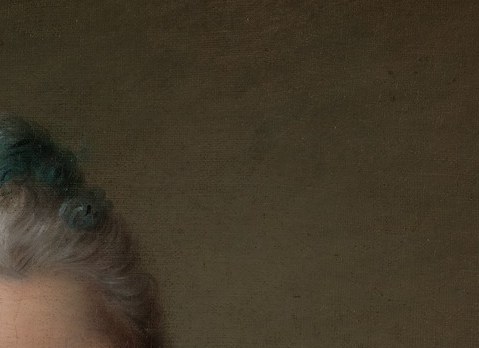
This is François-Hubert Drouais's 1757 portrait of Marie Justine Benoîte Duronceray, known professionally as Madame Charles Simon Favart. She was the most celebrated comic actress of eighteenth-century France, a playwright, and a woman who built a career on her own terms while letting the world believe her husband led the way.
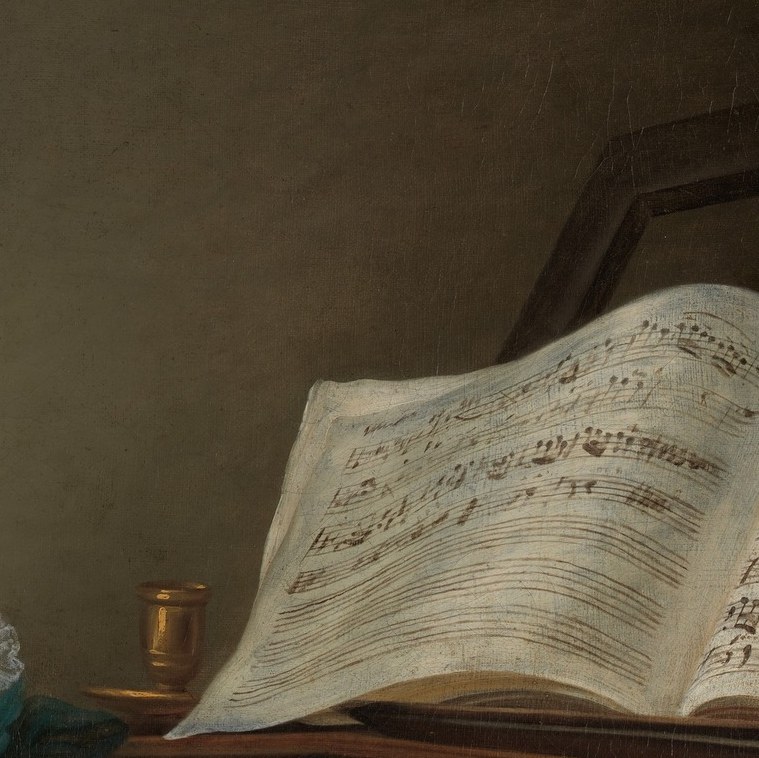
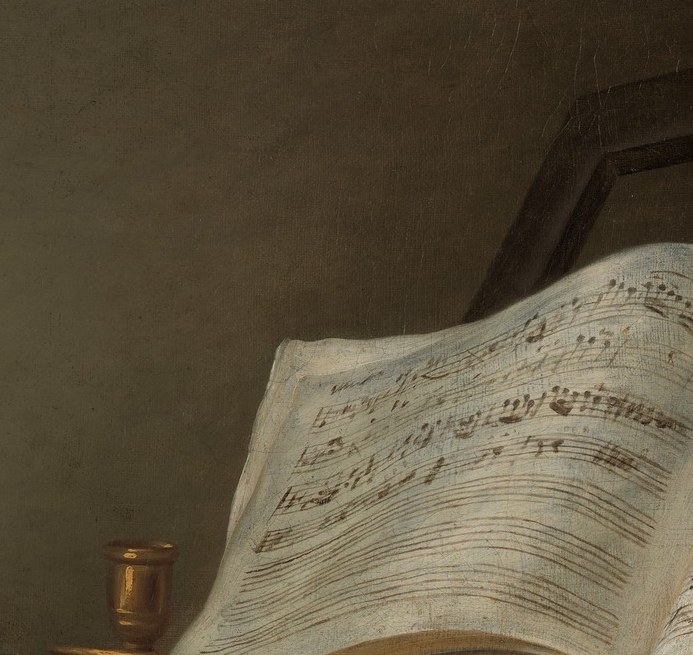
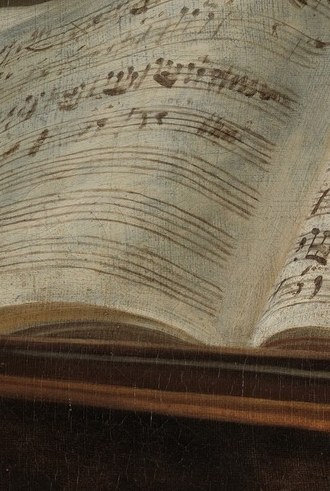
Look at her hands, paused mid-phrase on the harpsichord keys. Musical accomplishment was a social requirement, but the open score beside her carries a quieter suggestion. The notes are legible enough to trace: Favart-era Opéra-Comique pieces often credited her husband Charles Simon. Yet Marie Justine frequently wrote the roles she performed, publishing under his name to get the work on stage.
The small candle beside the music is a vanitas gesture, beauty and learning, and the extinguishing of both. Drouais painted this two years after Marie Justine had returned from a brutal stint following her husband to a battlefield command. She had been captured, then released. Back in Paris, she resumed performing and writing. She died at forty-five, having shaped a generation of French comic theatre.
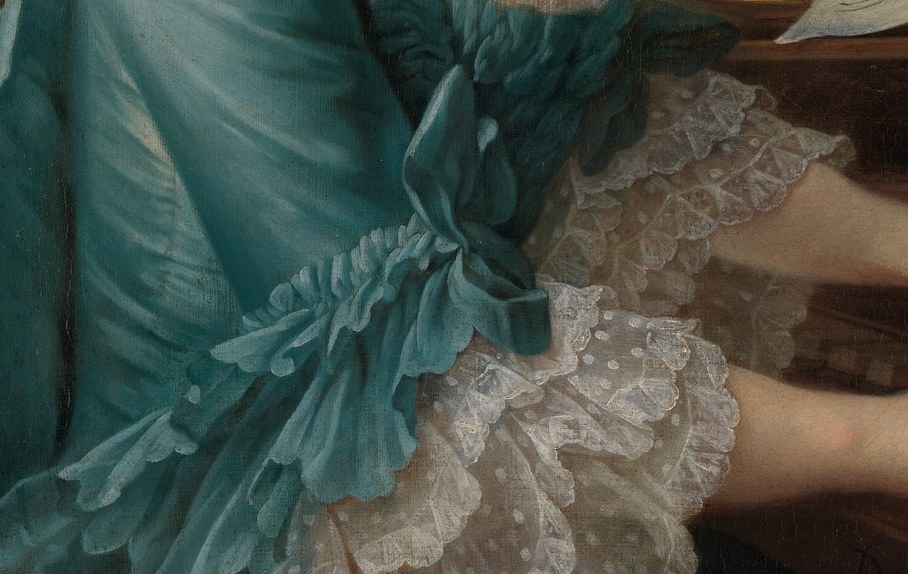
Someone in the salon would have looked at this composed woman in her blue shot-silk and seen only elegance. What do you see?
Details
Transcript
She looks at you as an equal. Marie Justine Duronceray began performing at twelve. By thirty, she was the most famous actress in Paris. Her husband wrote comic operas. But she wrote her own parts, under a pen name. He took the credit. Everyone knew.