Pietà by http://www.wikidata.org/.well-known/genid/a96e6f385ed42a7a0e4b114383cbfc92
This is a Pietà, carved in limewood by an unknown German sculptor in 1437. It lives today in a museum, but it was made for a church, a devotional object meant to be prayed before, not simply admired.
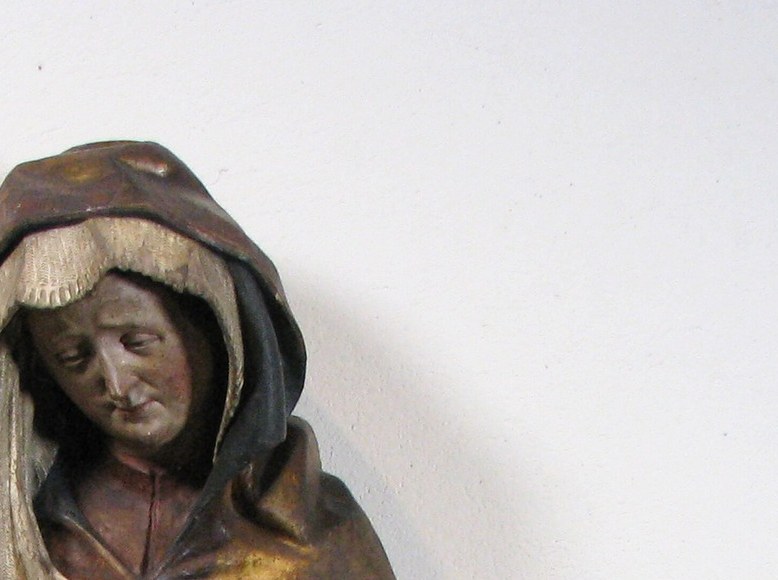
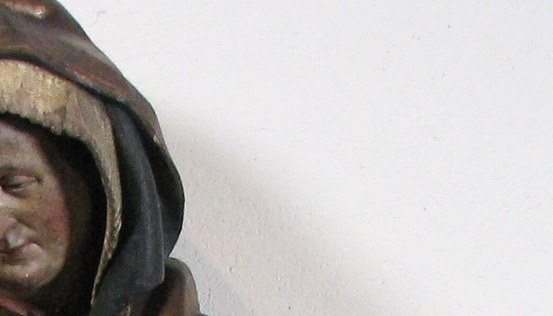
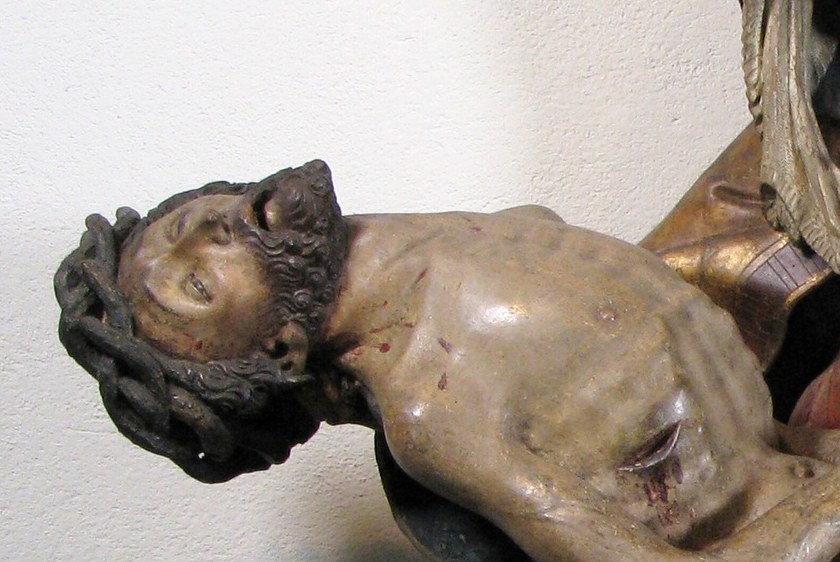
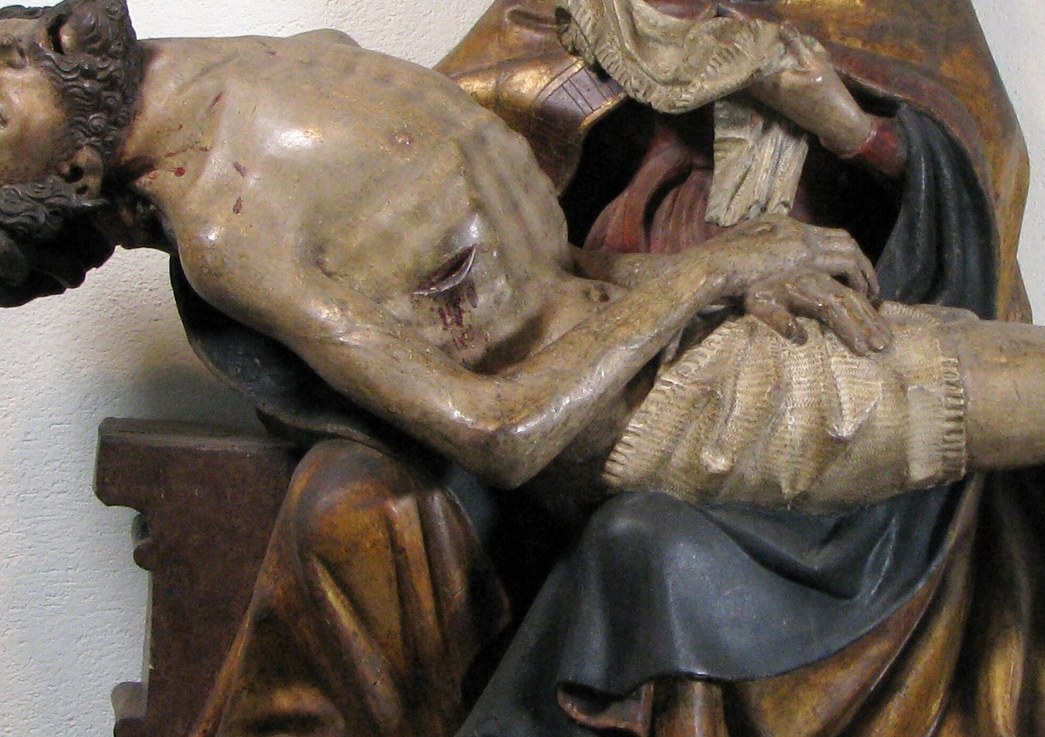
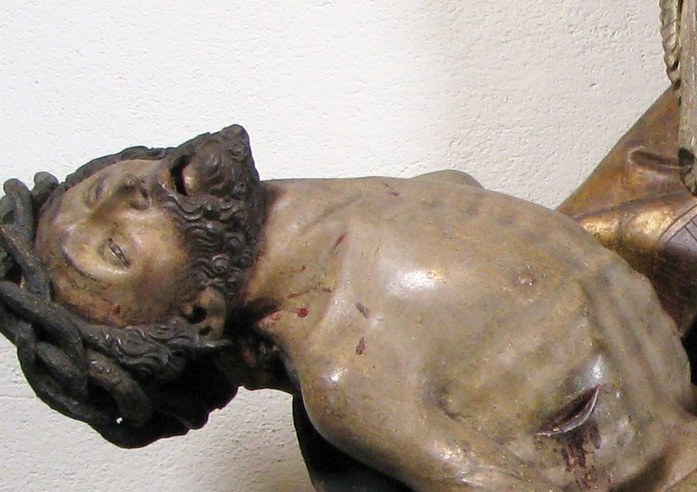
Look first at Mary's face. The downcast eyes are not serene, they are exhausted, hollowed by grief. The brow is furrowed in a way that limewood should not be able to capture. Then look at Christ: the ribs pushing through the pale torso, the mouth slackened, the head fallen backward. This is not idealized suffering. This is Gothic realism at its most unflinching.
The thorns remain on his head. That is a theological choice, even in this moment of maternal embrace, the humiliation of the crucifixion is ongoing. Nothing is resolved. The sculpture refuses to look away, and it asks the same of you.
1437 sits at a hinge point. In northern Europe, the Gothic tradition was reaching its emotional peak, intensely physical, deeply personal, built for kneeling close. Within a generation, the Italian Renaissance would bring a different kind of body: proportional, heroic, idealized. You can feel the difference here. This Pietà is not about beauty. It is about weight.
What do you see in her hands, support, or surrender?
Details
Transcript
1437. A German sculptor carves a mother holding her dead son. Her face is the whole story. The downcast eyes, the furrowed brow, grief carved in limewood. His head falls back. Mouth slack. This is not sleep. The ribs show through. Gothic realism wanted you to see exactly what suffering cost. The thorns are still on his head, humiliation even after death. Her hands do the impossible: they hold the weight of a grown man and the weight of the world. In a few decades, Michelangelo will carve the same scene. Everything will look different. This is what devotion looked like before.