Enthroned Virgin and Child by http://www.wikidata.org/.well-known/genid/6b06e04a8b46c4eff82f48884ed2e23d
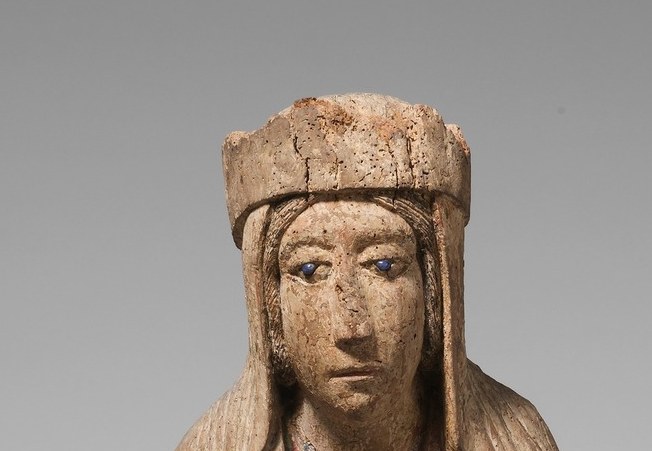
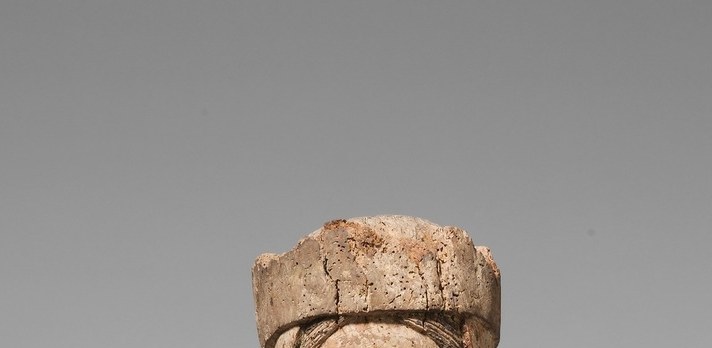
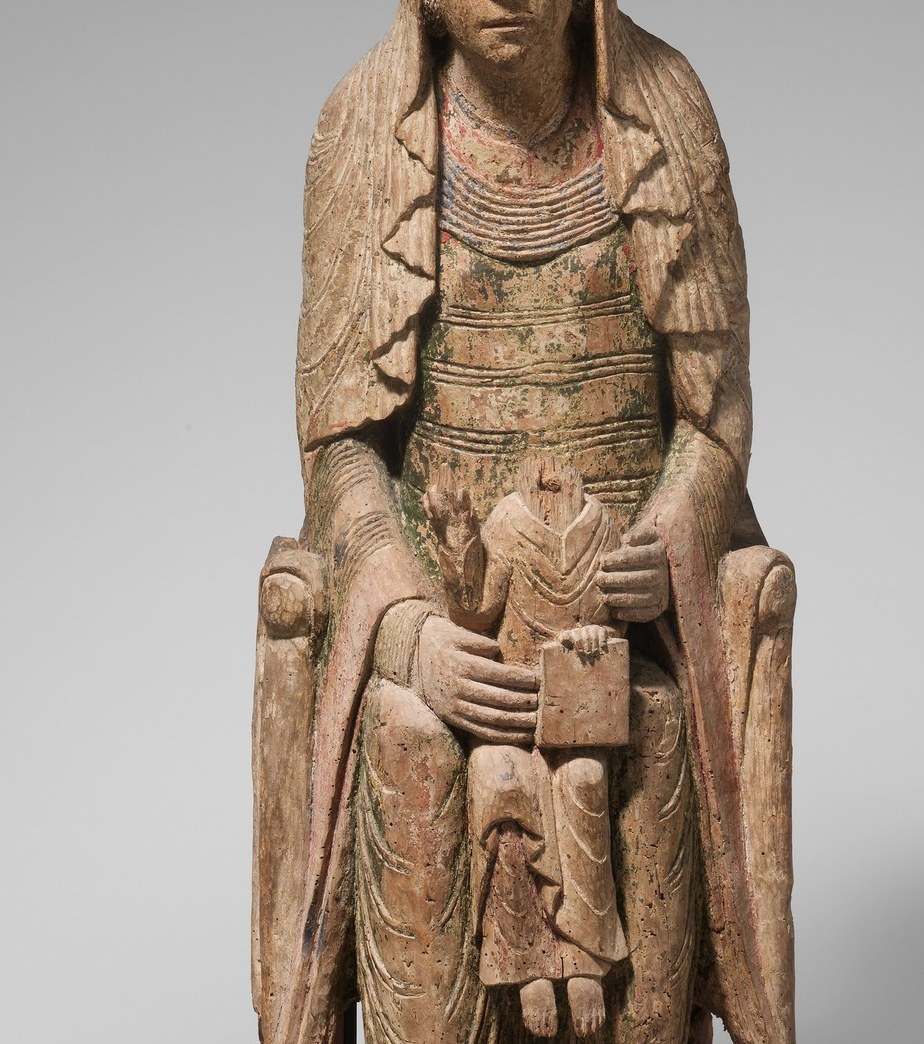
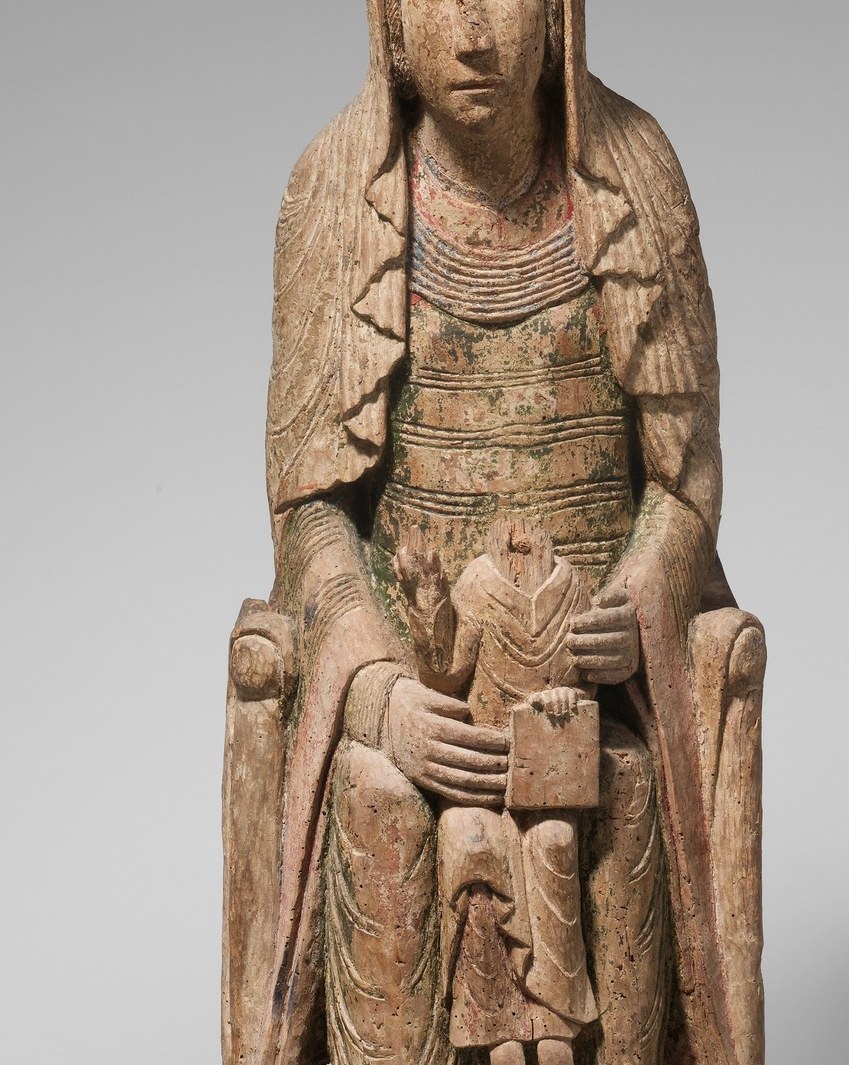
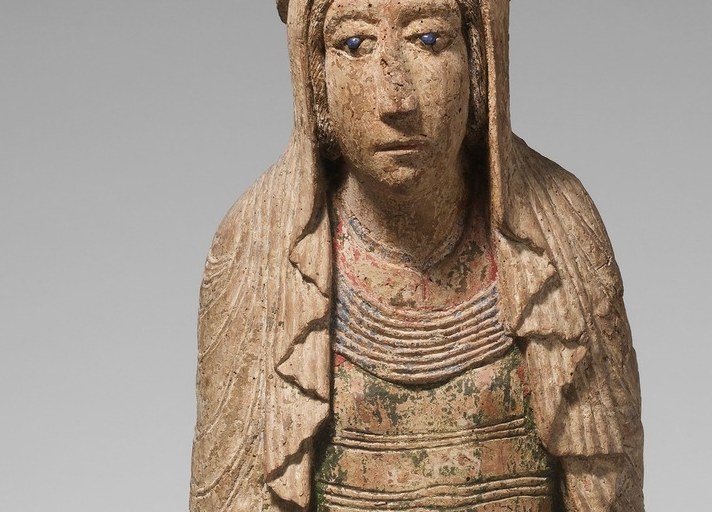
This is the Enthroned Virgin and Child, carved from wood in the Auvergne region of France around 1135. It is a Romanesque sculpture, and when it was new, it was not the colour of honeyed wood you see today. It was painted. Brightly. Every surface, the crown, the robes, the throne, was covered in red, blue, and gold.
The clue is still there if you know where to look. Camera work that pushes into the deepest folds of the Virgin's carved drapery can find them: tiny, stubborn flecks of original polychromy that nearly nine centuries of dust, candle smoke, and cleaning have not managed to erase. That ghost pigment is the last physical trace of the object's first life.
Romanesque sculpture was almost always polychromed. The idea of bare wood or stone as an aesthetic finish is a modern projection backward. This figure, solemn and rigidly frontal, was designed to dominate a dimly lit church interior, and the colour was essential to that work. It made the holy figures legible at a distance and, up close, gave them a vivid, almost unnerving presence by candlelight.
We walk past these weathered objects in museums and imagine them as they are. But this one still carries the evidence of what it was. Next time you see old wood in a gallery, check the creases.
Details
Transcript
She looks like a carving in plain wood. But the honey-toned surface is a ghost. This was once a blazing, painted object. Red, blue, and gold pigments covered every inch. Look inside the deepest folds of the drapery. There. Faint flecks of colour the centuries missed. It has been here since 1135. Almost nine hundred years. In a dim church, by candlelight, it would have looked alive.