The Tired Gleaner by Jules Breton
Jules Breton's "The Tired Gleaner," painted in 1890, captures the demanding reality of rural life in late 19th-century France. This oil painting, held at The Cleveland Museum of Art, exemplifies the Realism movement's focus on everyday agrarian labor.
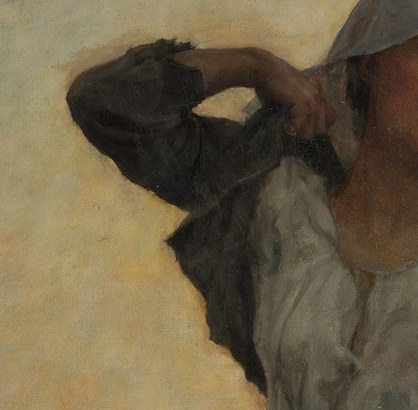
The painting centers on a solitary woman at dusk, her posture conveying profound fatigue after a day spent gleaning. Notice her bare feet, her worn headscarf, and the bundle of grain, all details that highlight her connection to the land and the physical toll of her work.
Breton, a naturalist painter, dedicated much of his career to portraying the lives of peasants, imbuing their toil with a quiet dignity. This work reflects the enduring importance of manual labor in the French countryside at a time of increasing industrialization.
She stands at the end of a long day, her work complete, yet ready to face another. What do you see in her expression?
Details

Transcript
In the late 1800s, rural France was still powered by hand. This woman spent her day gleaning, gathering leftover grain. Her right arm is raised, a universal sign of exhaustion. The heavy skirt and bare feet connect her to the earth. This painter was known for depicting the dignity of peasant labor. At dusk, her work is done, but the cycle will continue.