Mary Magdalene by Jan van Scorel
View the artwork: Mary Magdalene →
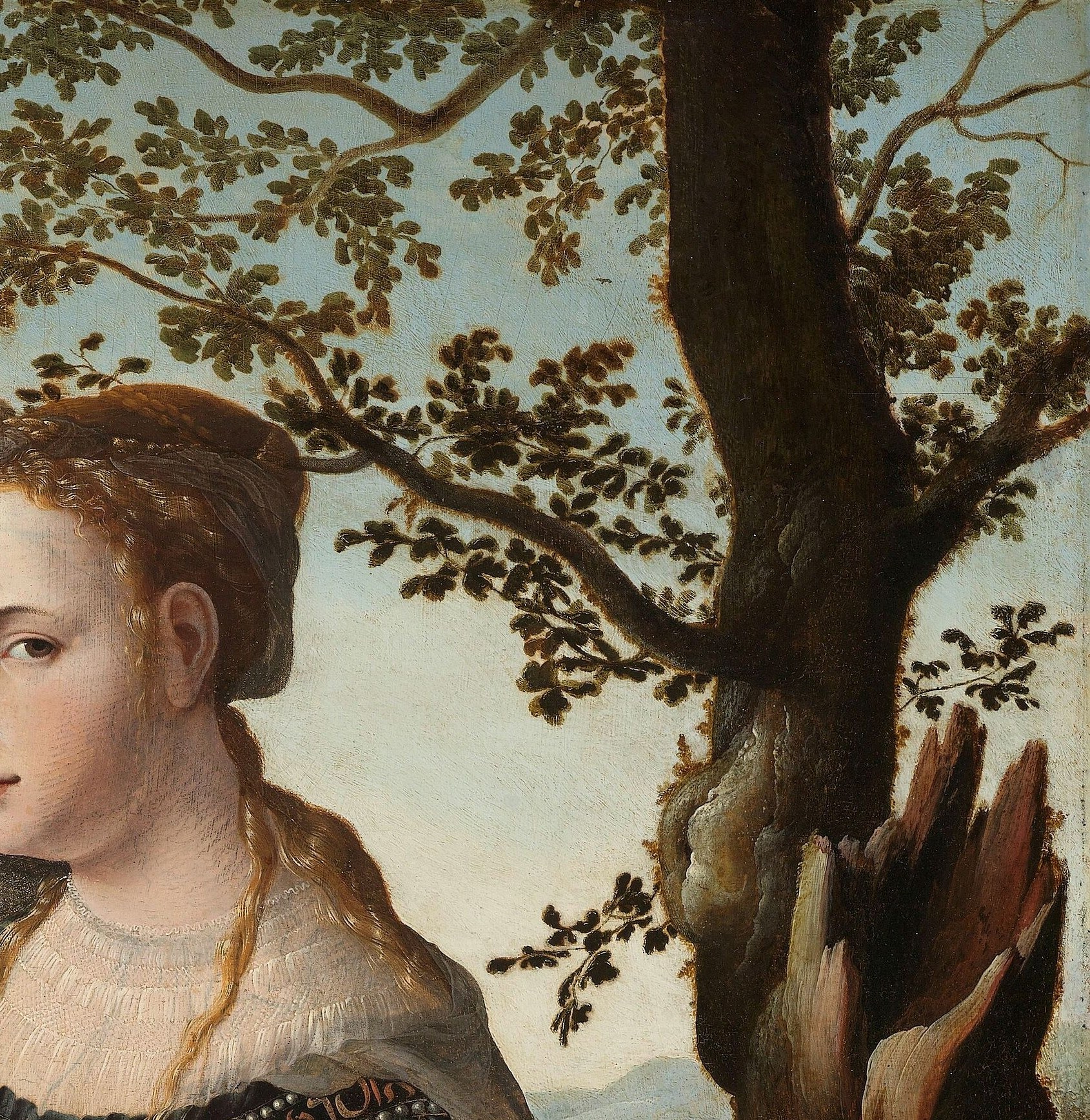
This is Mary Magdalene, painted around 1530 by the Dutch artist Jan van Scorel. It hangs in the Rijksmuseum in Amsterdam. What you are looking at is a turning point: the moment Italian Renaissance painting first walked through the front door of Northern European art, carried home by a Dutchman who had spent six years in Venice and Rome.
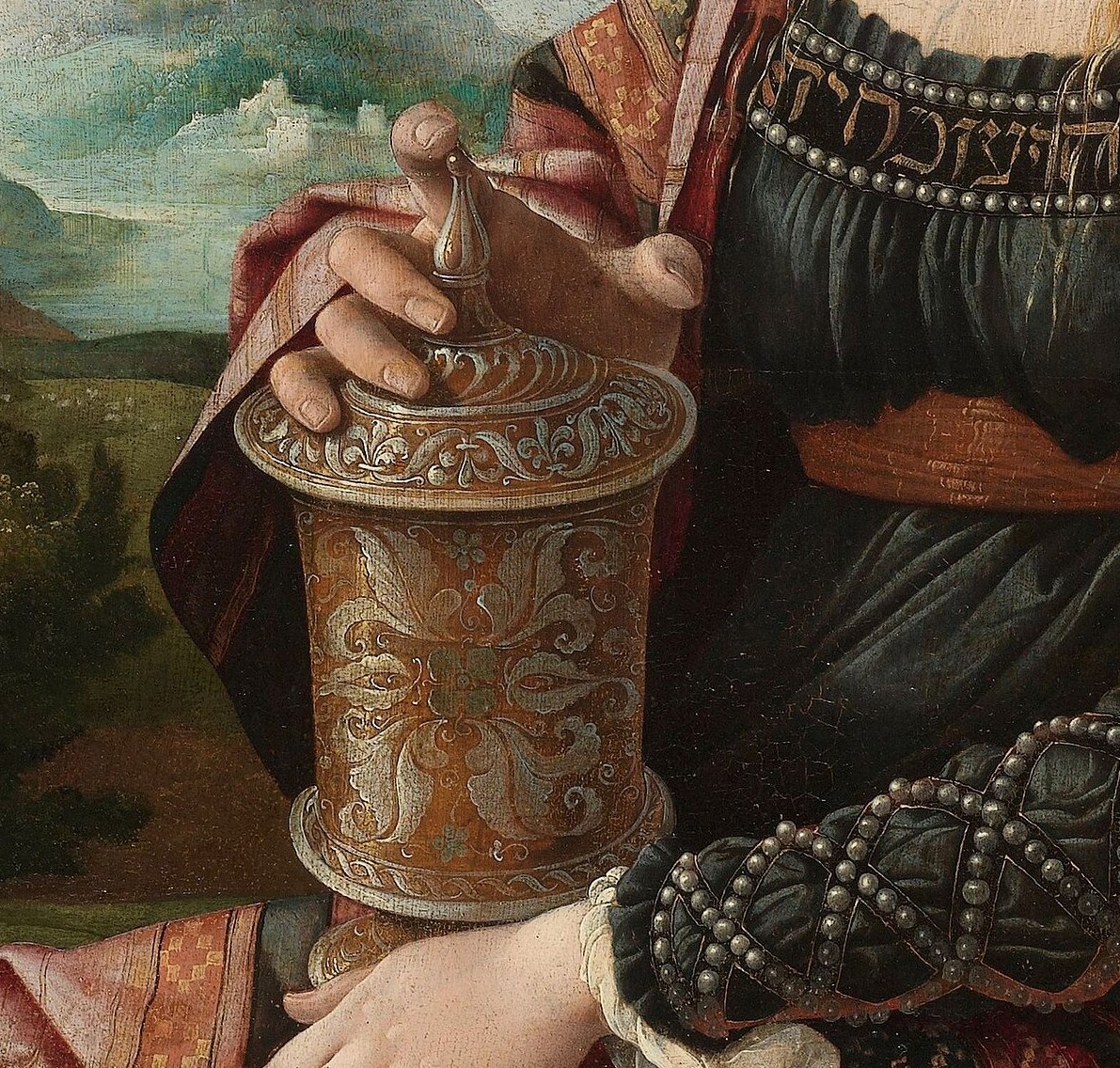
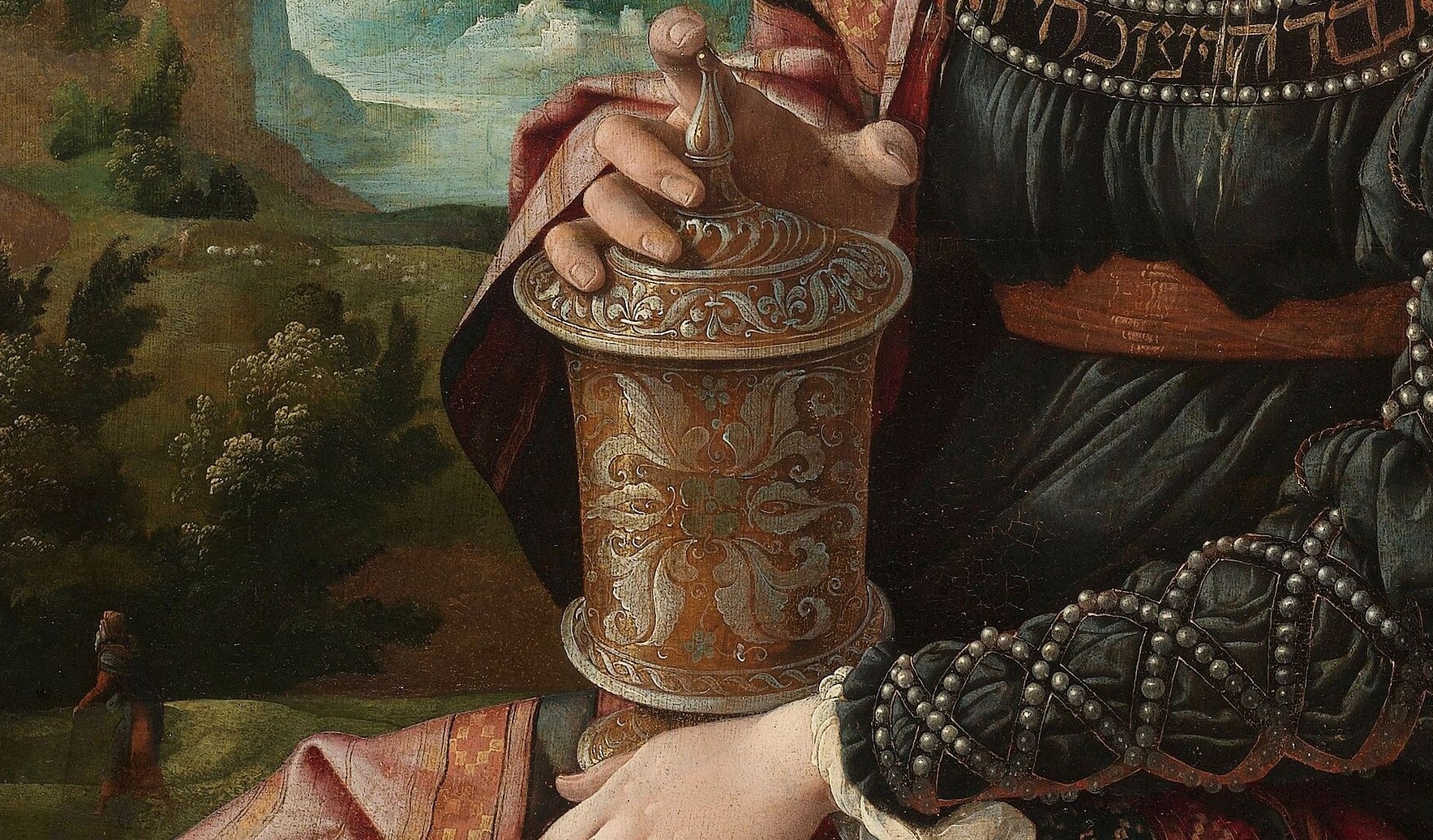
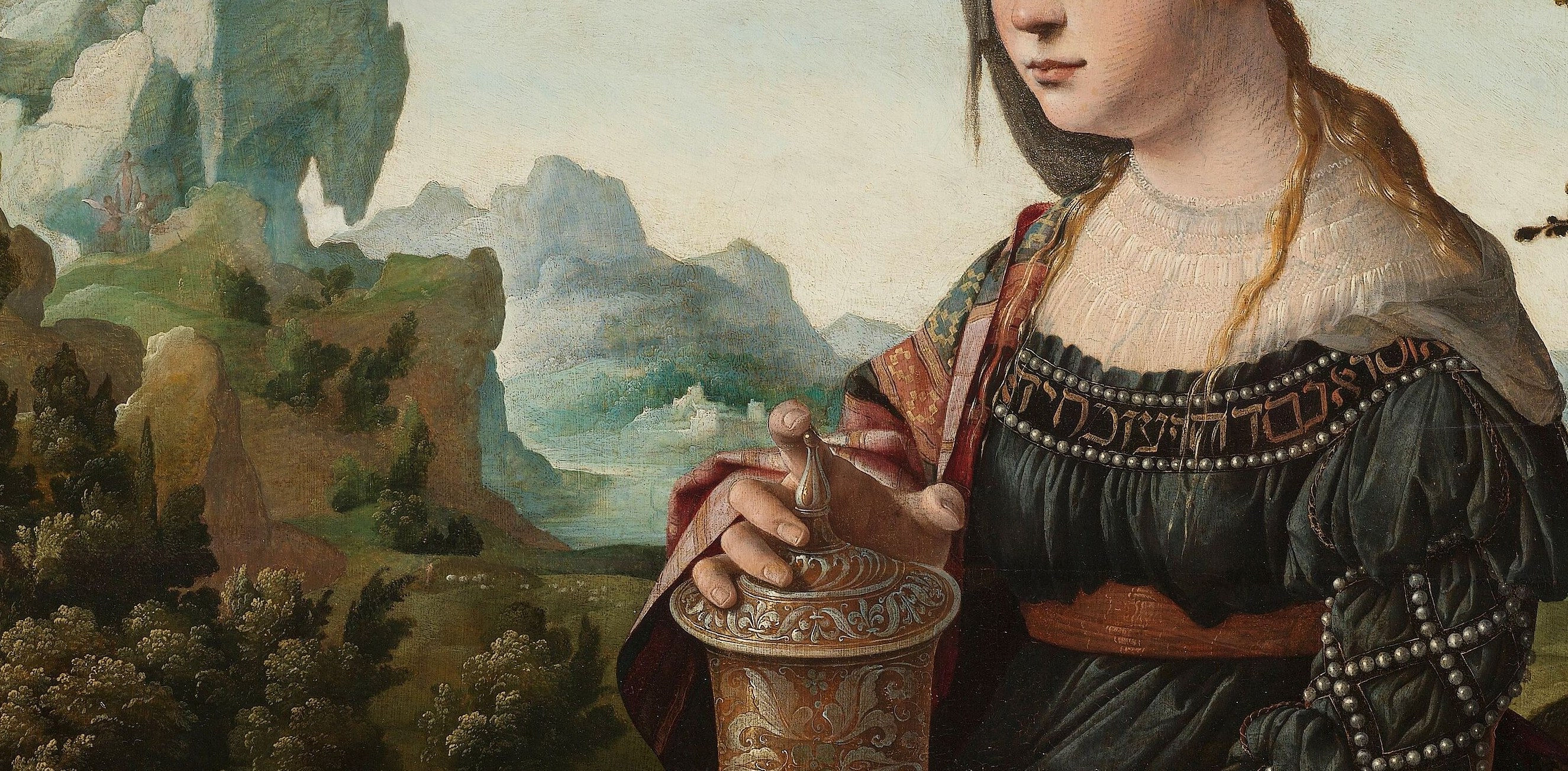
The first thing to notice is her dress. The brocade bodice is pure Venetian color, red, green, and gold all woven together at a saturation Northern panel painters almost never attempted. Then look through the sleeve of her near arm. Van Scorel painted netting, the skin beneath it, and the fabric beneath that, all in a single translucent passage. It is a quiet, show-off technical miracle.
Jan van Scorel traveled to Italy in 1518 and did not come back until 1524. While there, he was appointed court painter and keeper of antiquities by Pope Adrian VI, still the only Dutchman ever to occupy the papacy. Van Scorel absorbed everything: Venetian color, Roman composition, the craggy Mannerist rocks you see in the background that evoke the Alpine route south. He brought those lessons back and wove them into Northern traditions of meticulous detail and symbolic landscape.
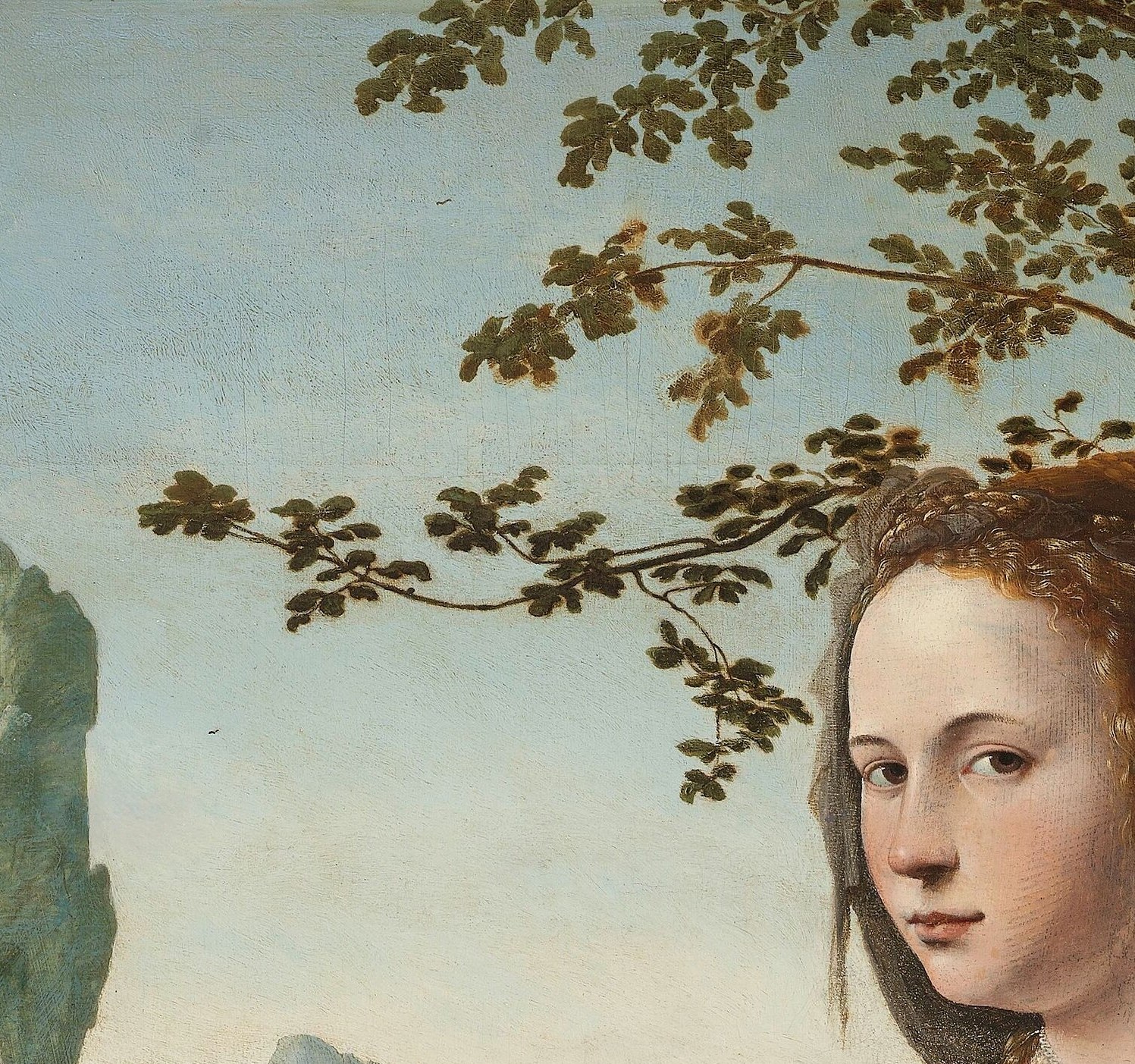
Mary Magdalene holds her jar of ointment with both hands, her hair unbound in the ancient sign of penitence. But she does not lower her eyes. She looks back at you, direct and steady, a Renaissance saint who does not forget she is in the room. What does that directness do to a devotional image?
#arthistory #dutchrenaissance #rijksmuseum
Details
Transcript
1530. A Dutch painter has just returned from Rome. He brought back something no one in the Netherlands had seen. Italian brocade, painted in the North, red, green, and gold that Northern panels rarely dared. Look through her sleeve. Skin, netting, and fabric in one translucent layer. The background is a Mannerist fantasy, those rocks came straight from Italy too. A wilderness for her penance, imagined by a painter who had walked the Alps. And then her face. Unwavering. A penitent saint who looks straight back at you. Jan van Scorel. He was court painter to the only Dutch pope in history.