Artwork
Mary Magdalene
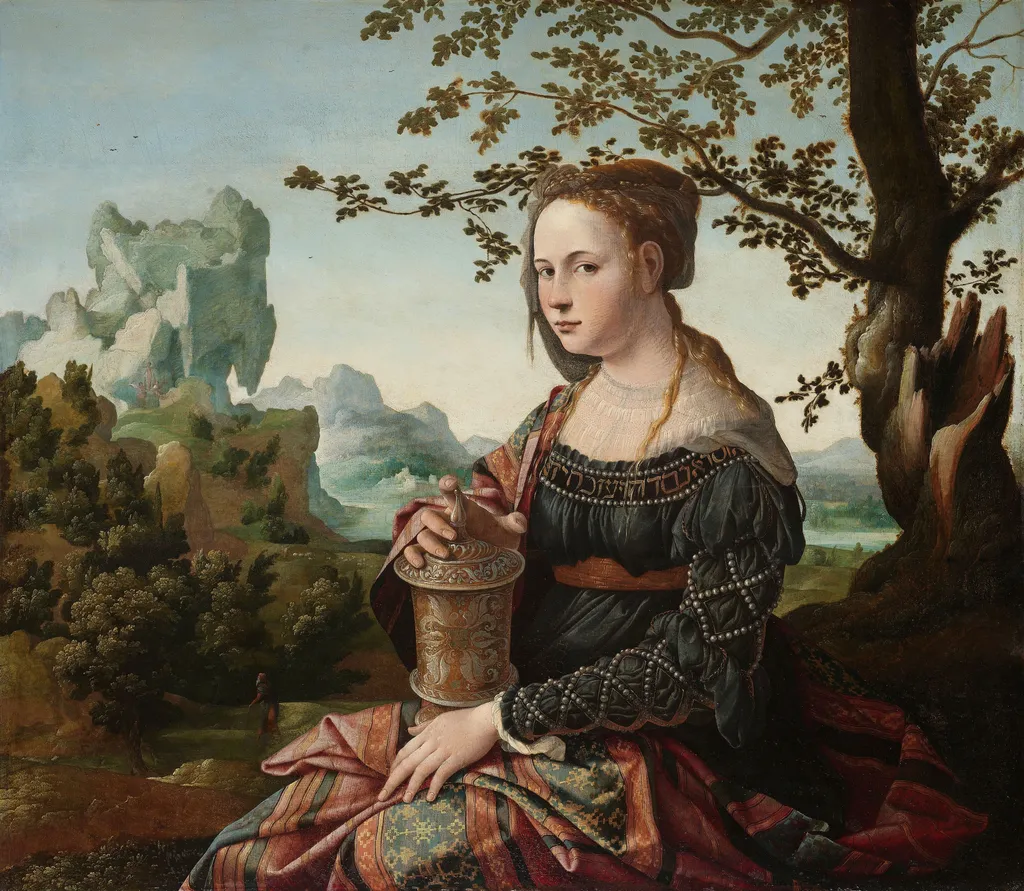
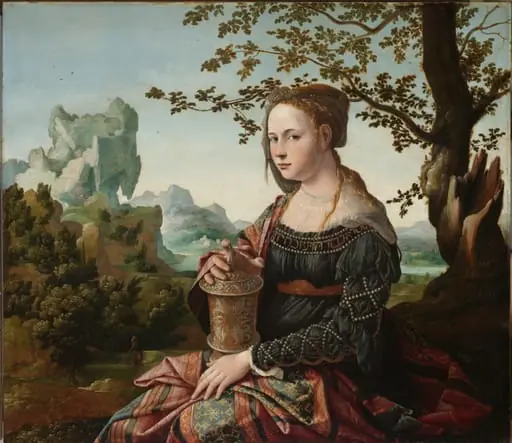
Mary Magdalene is an oil painting by the Early Baroque Italian artist Jan van Scorel. It dates from 1530 and is held in the collection of the Janskerk.
About this work
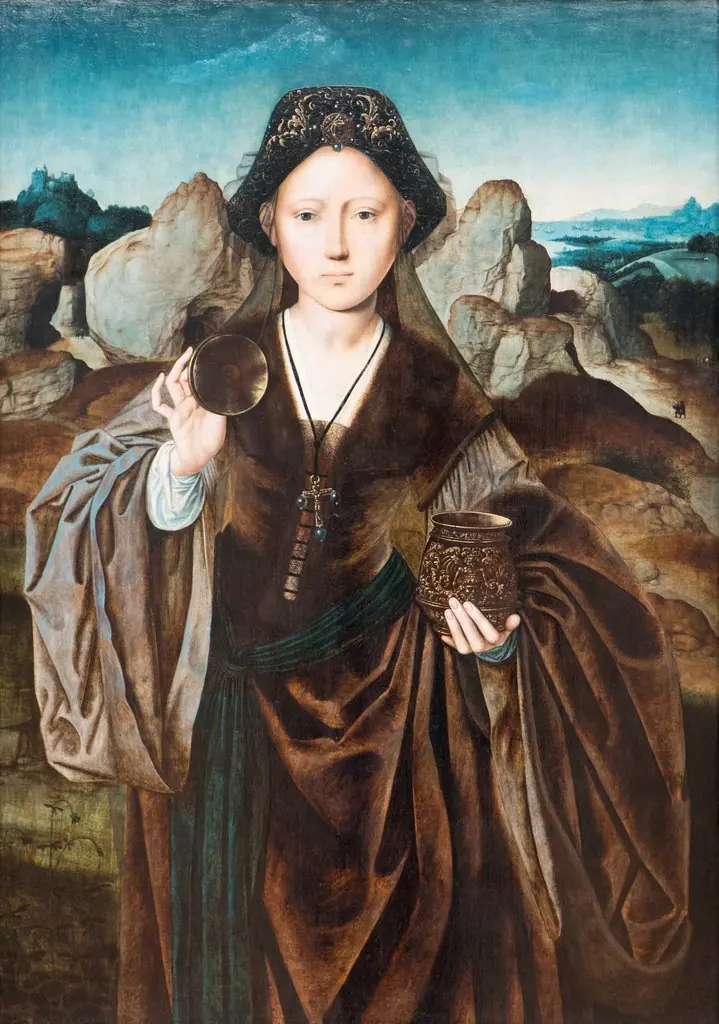
A woman holds a jar of ointment and gazes out from the panel, her colorful robes echoing the time Jan van Scorel spent in Venice and Rome. Painted around 1530, it is one of the earliest Northern Renaissance works to combine Italian figures with Netherlandish landscape, now in the Rijksmuseum as SK-A-372.
Subject & Meaning
A defining iconographic element is the richly decorated pot of ointment she holds, a traditional attribute identifying her role in biblical narratives.
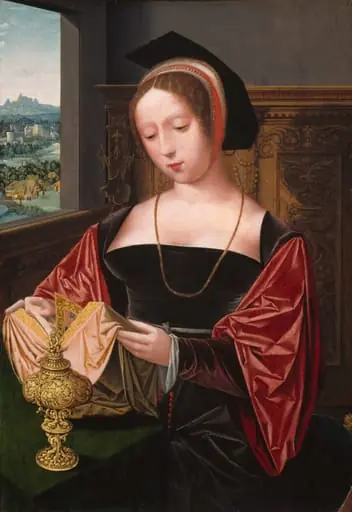
Jan van Scorel's 1530 painting depicts Mary Magdalene seated within an imaginary rural landscape featuring mountains, water, and trees. The saint is portrayed with long, blond hair styled in a braid, wearing a dress with a décolletage and gazing directly at the viewer. A defining iconographic element is the richly decorated pot of ointment she holds, a traditional attribute identifying her role in biblical narratives.
Her bodice features distinctive embroidery containing Hebrew lettering, while her shawl displays a pattern of Haarlem damask, a textile detail also observed in contemporary works by Maarten van Heemskerck. The composition combines these specific material textures and symbolic objects to represent the Magdalene not merely as a penitent figure, but through the lens of Northern Renaissance humanism, integrating local textile traditions and exotic script into a sacred fantasy setting.
Technique & Style
The painting is executed in oil on a wooden panel support, measuring 66.3 cm in height and 76 cm in width. The composition depicts Mary Magdalene seated in a fanciful landscape, holding an ornately decorated ointment jar. Her attire includes an embroidered bodice featuring Hebrew lettering and a shawl patterned after Haarlem damast fabric, a design also found in Maarten van Heemskerck's Saint Luke Painting the Virgin.
The figure's blond hair is styled in a waist-length arrangement, with a pigtail, and her gaze is directed toward the viewer. The drapery and landscape details, including a broad-leaved tree and a watercourse, demonstrate a refined handling of oil paint, emphasizing texture and depth.
History & Provenance
Created circa 1530 by Jan van Scorel, this oil-on-panel work originally belonged to the Commanderij van Sint Jan in Haarlem. After the iconoclastic upheavals of the later sixteenth century, the city took possession of the painting, attributed it to Van Scorel, and installed it in the Haarlem city hall. In 1804 it was transferred to the national collection, at which time it was catalogued as an anonymous work.
It is held by the Rijksmuseum in Amsterdam under inventory number SK-A-372 as property of the Netherlands. During the Rijksmuseum's renovation it was loaned for a period to the Frans Hals Museum, but it remains a recognized part of the national collection and has been on public display since its acquisition.
Context
The work titled Mary Magdalene, painted circa 1530 by Jan van Scorel, exemplifies Dutch Renaissance religious art. Rendered in oil on panel, it portrays the saint seated with an ointment pot amid a fantastical landscape, noted for its embroidered bodice and Haarlem damask detailing. The painting entered the national collection in 1804 after earlier ownership by the Commanderij van Sint Jan and has remained on display at the Rijksmuseum.
Its provenance and scholarly attention reflect its role in studies of Van Scorel's oeuvre and the broader development of Northern European religious imagery.
Legacy
Since its acquisition by the Dutch national collection in 1804, Jan van Scorel's 1530 oil panel depicting Mary Magdalene has been displayed at the Rijksmuseum and, during renovations, at the Frans Hals Museum. The painting has shaped scholarly and public interpretations of the Magdalene motif, reinforcing its status as a key example of the Dutch Renaissance portrayal of the saint.
Overview
Painted in 1530, Jan van Scorel's 'Mary Magdalene' depicts the saint in a half-length format, holding a jar of ointment while gazing directly at the viewer. Executed in oil on panel, the work exemplifies the artist's synthesis of Northern European tradition with the Italian Renaissance styles he absorbed during his travels to Venice and Rome. The figure is draped in vibrant, richly colored robes that demonstrate a mastery of light and texture characteristic of Venetian painting, contrasting with the precise detail typical of Netherlandish art.
Scorel, who served as a court painter and director of the St. John's Cathedral in Utrecht, created this piece during a period when he sought to modernize Dutch art by integrating Italianate figural modeling and classical composition. The direct engagement of the subject and the sophisticated handling of the drapery mark a significant departure from earlier, more rigid Northern depictions of religious figures. This painting stands as a key example of the early 16th-century artistic exchange between the Netherlands and Italy, illustrating how Scorel adapted Italian humanism to Northern devotional contexts.
Own this work as a print
Artist & collection

Artist
Jan van Scorel was a Dutch painter, who played a leading role in introducing aspects of Italian Renaissance painting into Dutch and Flemish Renaissance painting.