Pipe Dance - Assinneboine by Catlin, George
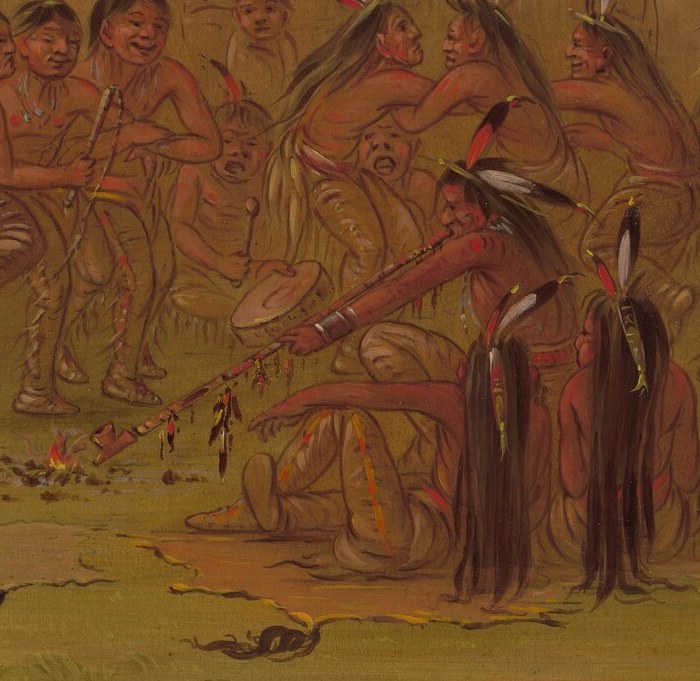
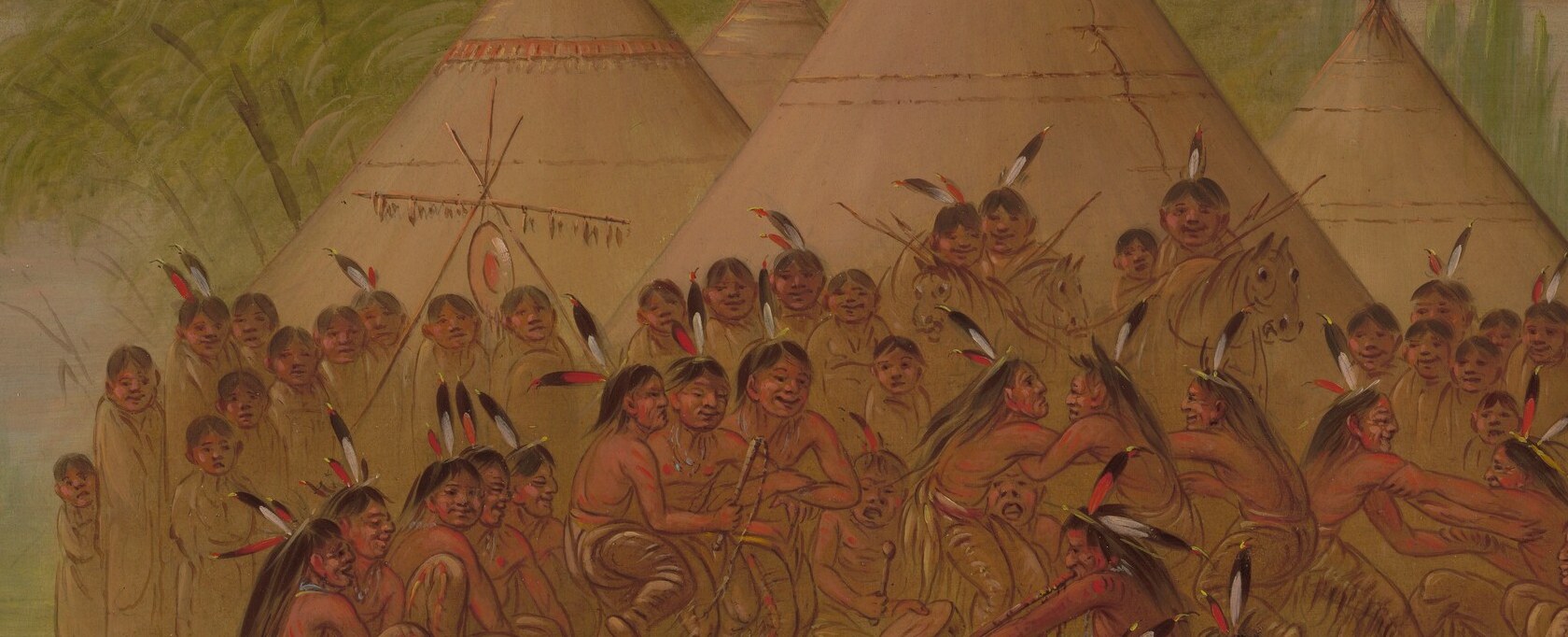
George Catlin, a lawyer turned painter, dedicated his career to documenting Native American life. This painting, *Pipe Dance - Assinneboine*, created between 1861 and 1869, captures a ceremonial moment of an Assiniboine dancer, preserving a visual record of their customs.
Catlin traveled the American frontier extensively in the 1830s, producing portraits and accounts of Plains Indian life. This work, like many others, served his systematic effort to record Indigenous cultures before they were irrevocably changed by settlement.
Notice the dancer's dynamic pose and the surrounding spectators, all rendered with a focus on ethnographic detail. Yet, a small inscription, 'A 302,' in the bottom right corner, hints at the painting's own journey through collections and cataloging. What stories might such a mark tell about its past?
Details
Transcript
This painter tried to document Native American life. Here, an Assiniboine dancer performs a pipe dance. He captured their customs before European expansion. Yet, a small detail suggests another story. Look closely at the bottom right corner. An inscription, 'A 302,' tells part of its journey.