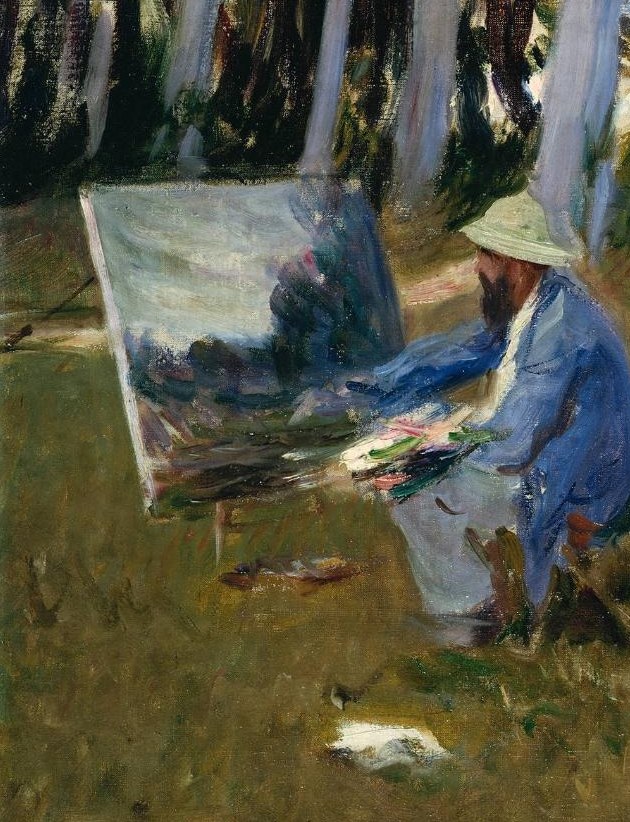
Claude Monet Painting by the Edge of a Wood by John Singer Sargent
John Singer Sargent's "Claude Monet Painting by the Edge of a Wood," from 1885, found at Tate Britain, is a fascinating portrait where the artist experiments with a new style while depicting its master. Sargent, known for his grand society portraits, captures Claude Monet, the father of Impressionism, painting outdoors in the French countryside.
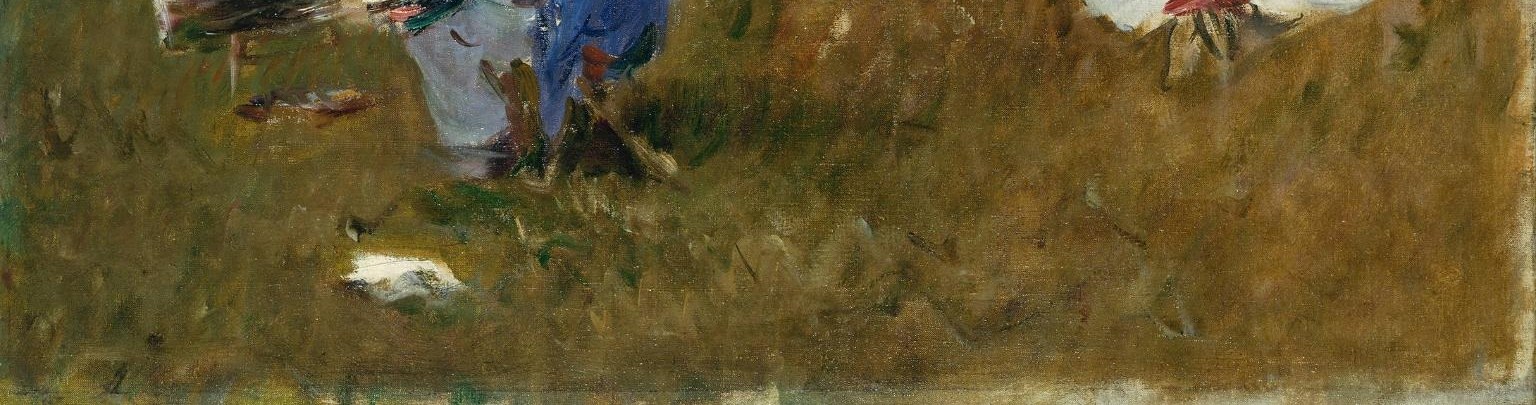
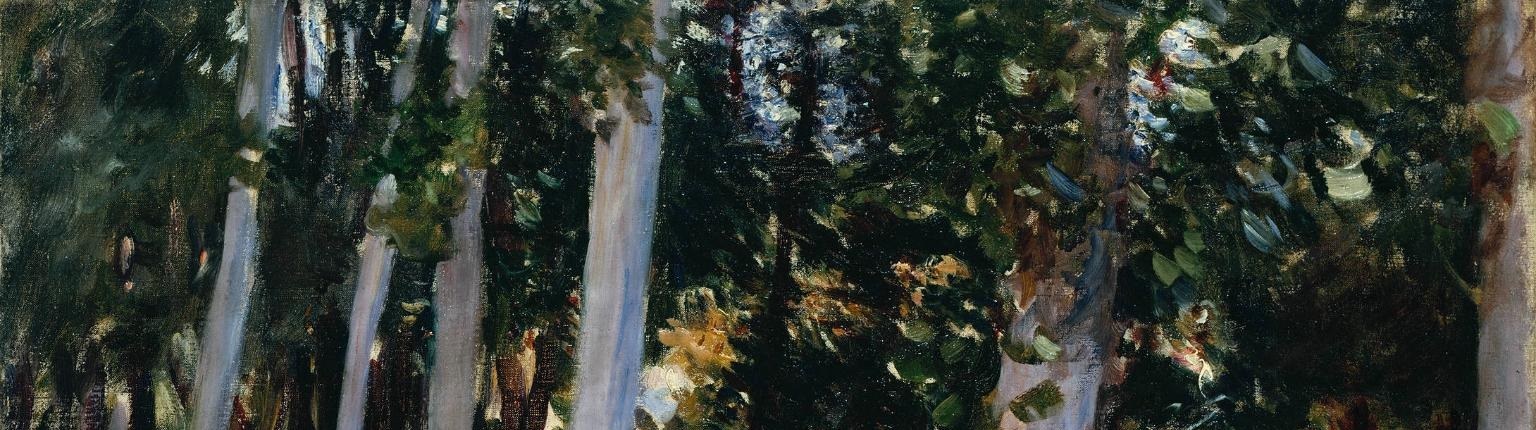
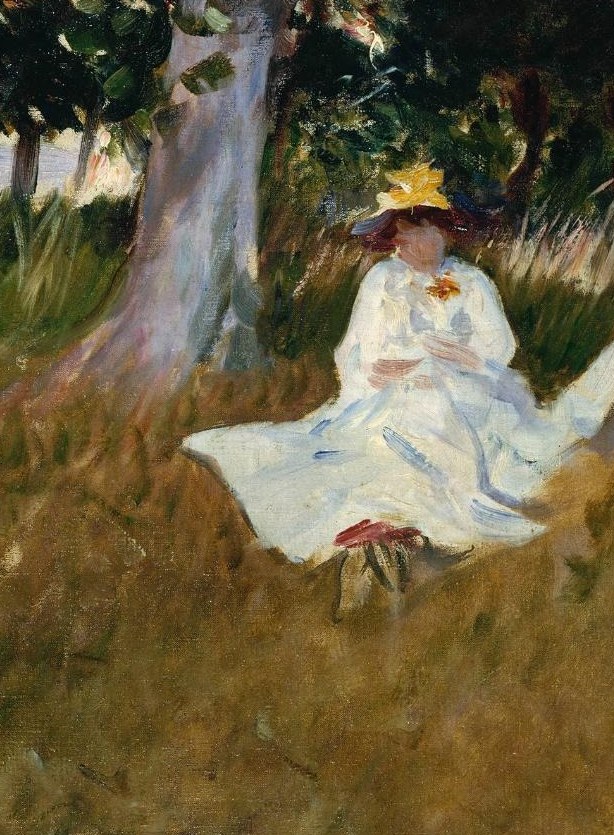
Notice how Sargent uses short, visible brushstrokes in the foreground grass and the overhead foliage. This broken brushwork, a hallmark of Impressionism, allows him to convey the vibrant play of light and atmosphere, making the painting itself a demonstration of the technique.
Sargent's engagement with Impressionism in this work shows his artistic development. The painting was gifted to Tate Britain in 1925 by Sargent's sisters, ensuring its place in a public collection and highlighting a pivotal moment in his career. It's a painting about painting, and about learning.
What do you notice first about Sargent's brushwork?
Details

Transcript
This painter, John Singer Sargent, was trained in Paris. But here, he tries a new style, inspired by his friend. Look how he renders this patch of sunlit grass. Short, rapid strokes of color, not blended. This broken brushwork captures flickering light and air. It is called Impressionism, and he learned it from this man.