The Loge by Degas, Edgar
Edgar Degas’s *The Loge*, painted around 1883, offers a glimpse into a Parisian theatre box, a space where observation was a two-way street. This oil on wood painting, housed in a prominent collection, showcases Degas's keen interest in modern urban life.
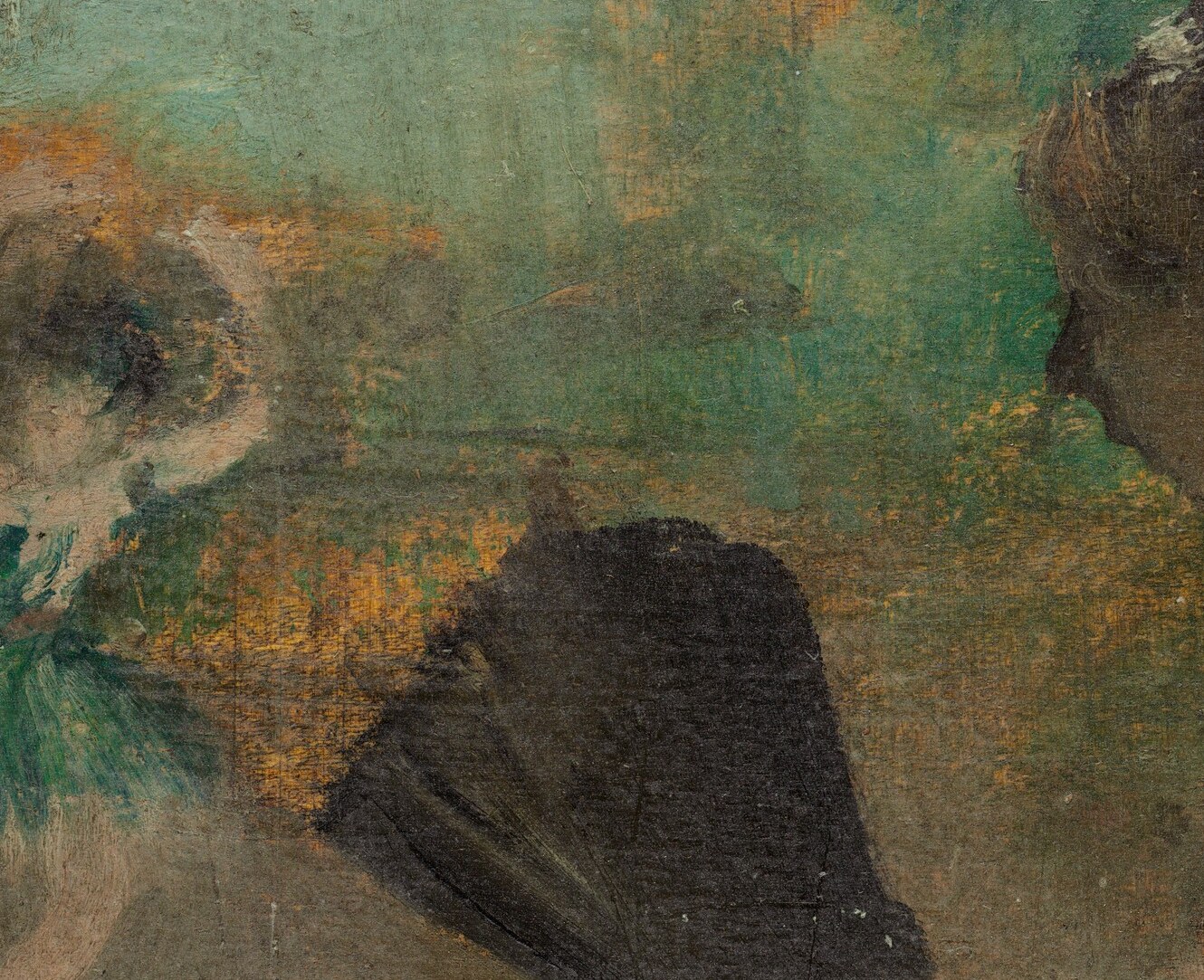
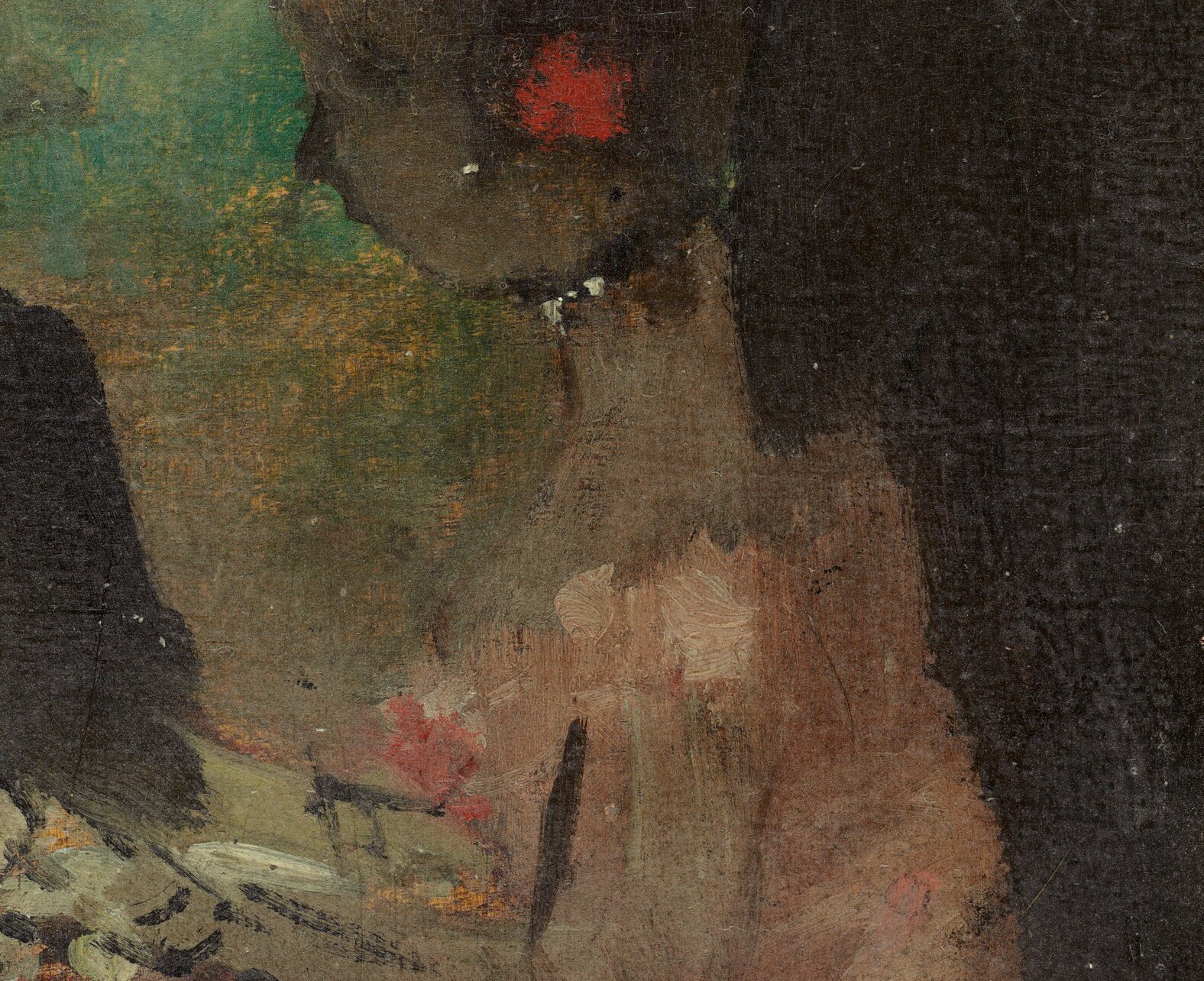
Notice the contrasting postures of the two women. One turns away, her face obscured, while the other, holding opera glasses, looks directly out, inviting us into her act of observation. The vibrant red flower on the first woman’s hat adds a striking detail amidst the darker tones, while the blurred background hints at the theatrical setting without overwhelming the figures.
Though often associated with Impressionism, Degas preferred to call himself a realist, focusing on capturing candid moments and the psychological complexity of his subjects. He rejected plein-air painting, instead bringing his rigorous academic training to bear on contemporary themes like these social rituals of theatregoing.
This painting captures not just a scene, but a moment of human interaction, or lack thereof, within a public sphere. What do you think each woman is truly experiencing?
Details

Transcript
In late 19th-century Paris, the theatre was a place to see. And to be seen. This woman turns away, in shadow. Her vibrant red flower on her hat is a striking detail. But this woman with the fan directly faces us. She holds her opera glasses, ready to observe. The painter Edgar Degas loved depicting these urban scenes. He captures the quiet drama of public and private life.