The lawyer's office by Pieter de Bloot
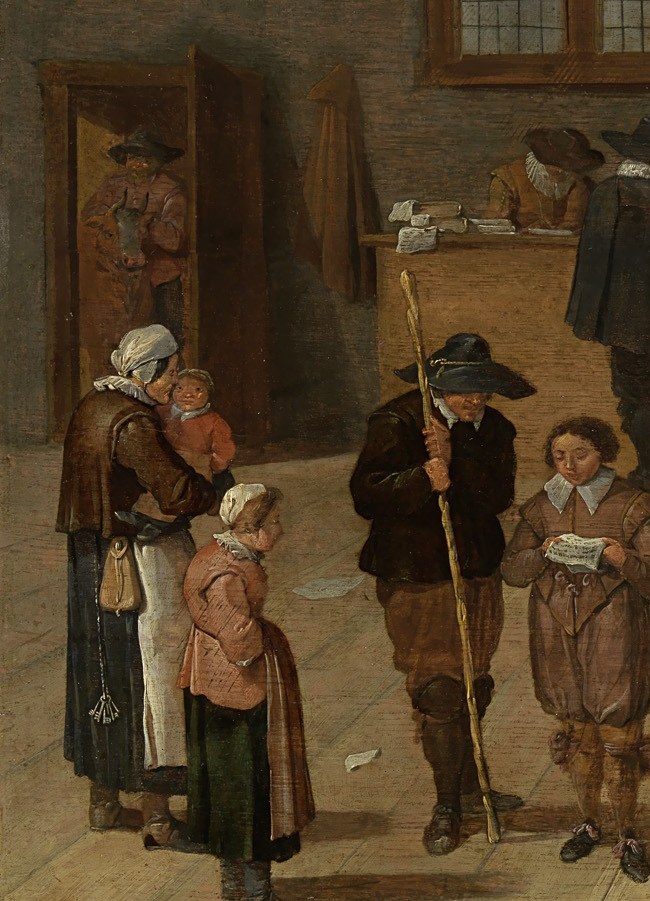
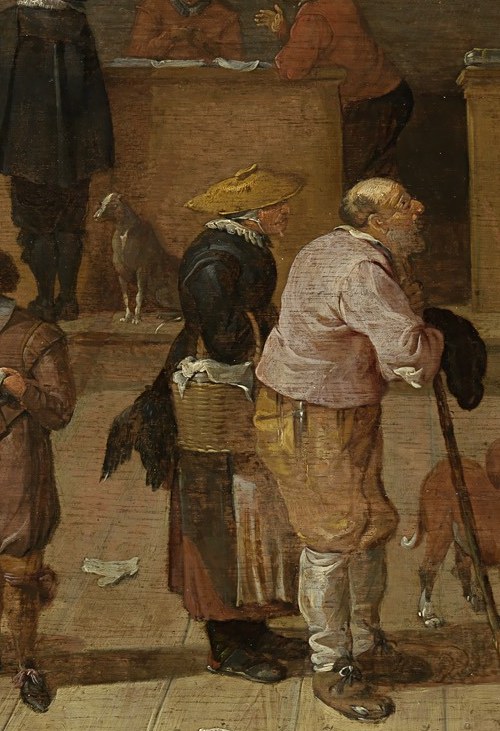
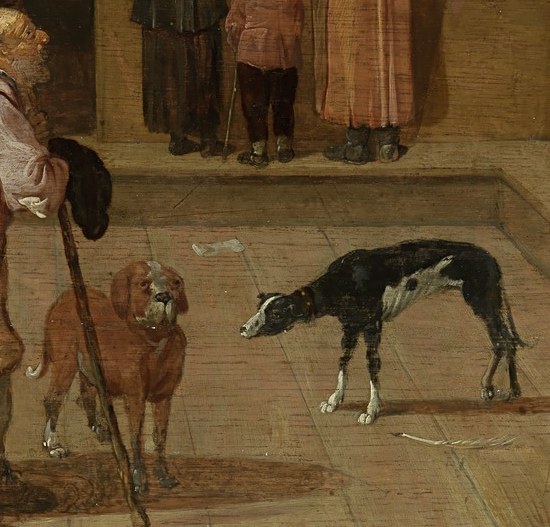
Inside a 1628 Rotterdam law office, a farmer settles his bill. Not with guilders, but with a cow, a child, and a hound.
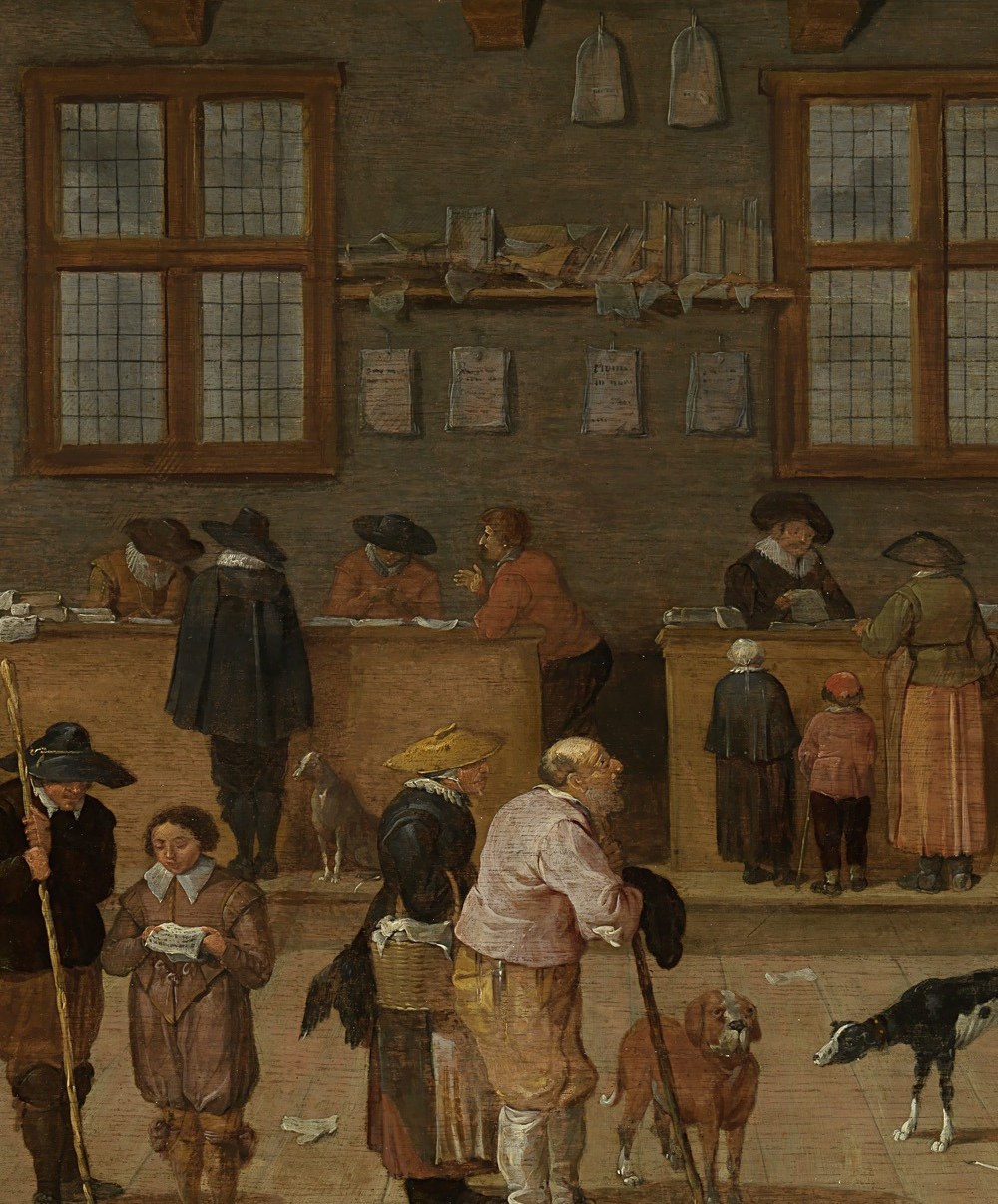
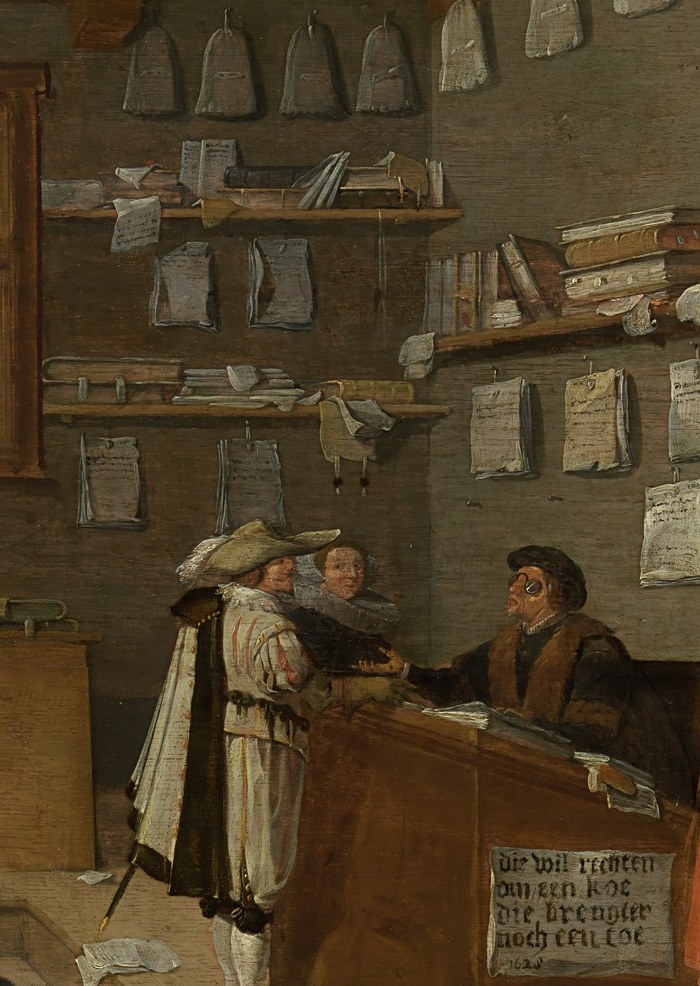
Pieter de Bloot’s The Lawyer’s Office (Rijksmuseum) is a rare, bustling record of how justice actually worked in the Dutch Golden Age. Payment in kind was common. The lawyer at his desk records the transaction while a notary in a vivid red robe anchors the right edge of the composition. Natural light from the back windows cuts through the clutter of rolled documents and shelves.
De Bloot was a Rotterdam native, only 27 when he painted this. His first two wives had already died within months of their weddings. Perhaps that explains why he looked so closely at the chaos of everyday life. He filled the room with simultaneous cases, look past the main group and you’ll spot two more figures arguing in the background.
What would you offer if your wallet was empty?
Details
Transcript
Rotterdam, 1628. A lawyer’s office in full swing. His clients haven’t paid in coin. They’ve brought a cow. A child. And their hound. The Dutch Golden Age ran on credit, barter, and livestock. Pieter de Bloot was 27 and freshly widowed when he painted this. He made a chaotic office feel like a stage.