Still Life with Dead Hare and Partridges by Dirk Valkenburg
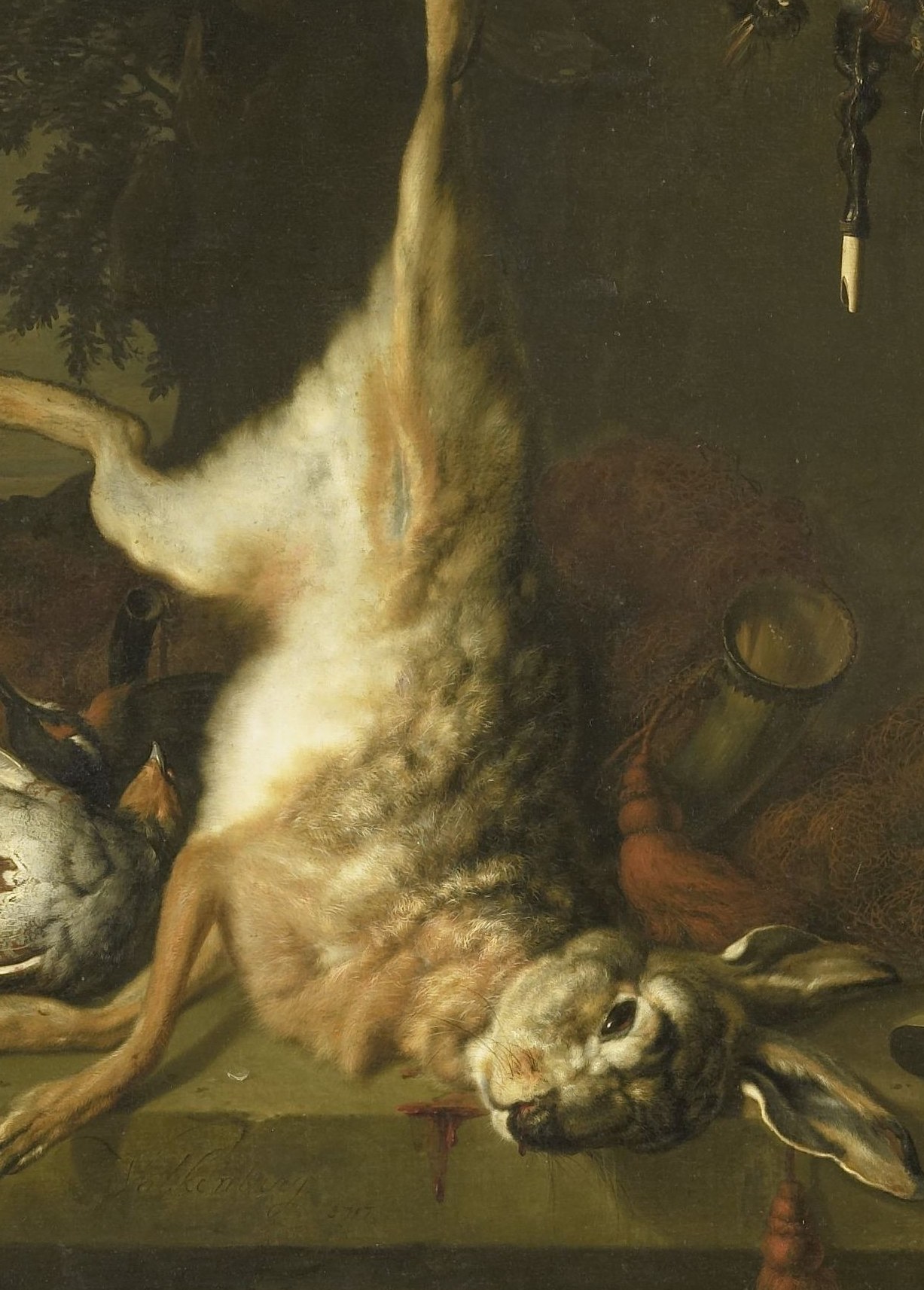
This striking artwork, "Still Life with Dead Hare and Partridges" by Dirk Valkenburg, painted in 1717, offers a window into the naturalistic and artistic trends of the Dutch Golden Age. It is held in the collection of the Rijksmuseum.
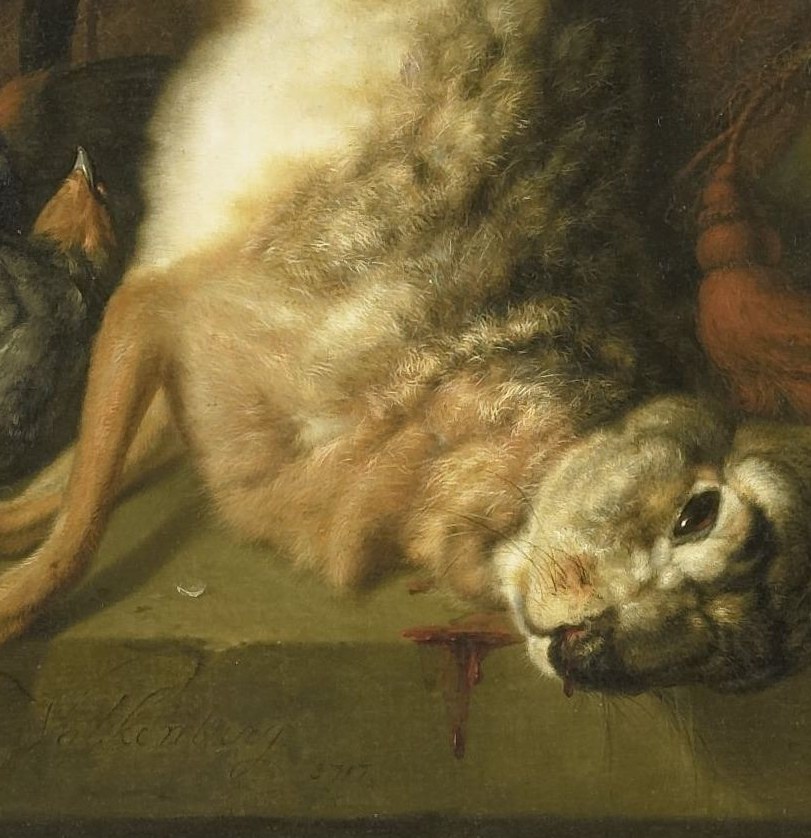
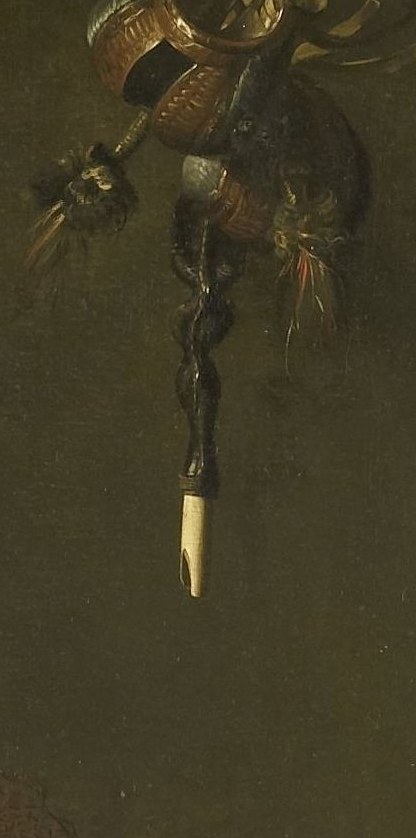
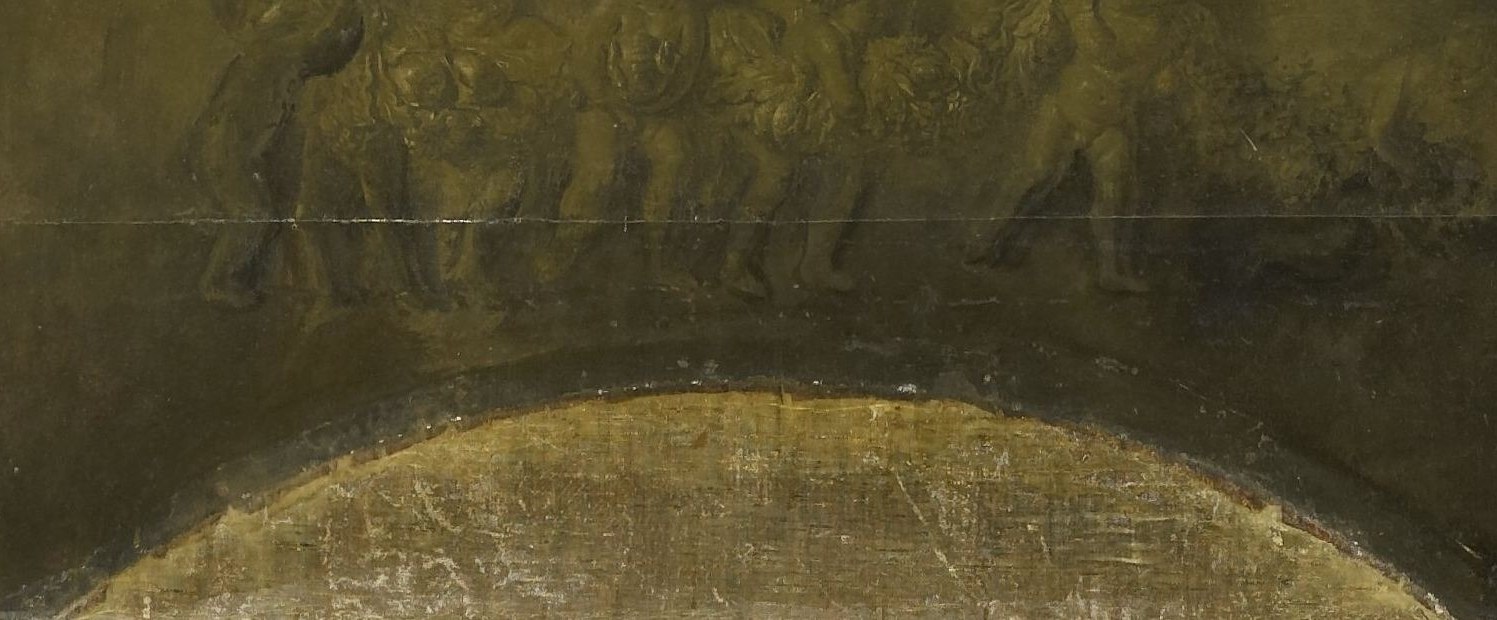
Notice the detailed rendering of the animals, particularly the hare's fur and the partridges' feathers. A subtle bloodstain on the ledge grounds the scene in the reality of the hunt, while a decorative frieze hints at the classical influences often found in Rococo art.
Valkenburg, a student of notable Dutch painters, was known for his bird paintings and even embarked on an expedition to Suriname to document exotic flora and fauna. His work reflects the tastes of the early 18th-century affluent classes, who often commissioned such still lifes to showcase hunting trophies.
The painting invites contemplation on the cycle of life and the presentation of nature's bounty. What details draw your eye most in this scene?
Details
Transcript
This quiet painting from 1717 shows a hunter's bounty. The artist, Dirk Valkenburg, was known for painting birds. He even traveled to Suriname to document local fauna. The dead hare is rendered with incredible realism. A small stain of blood tells the truth of the hunt. These hunting trophies were popular among the wealthy classes.