Patrona Halil by Jean Baptiste Vanmour
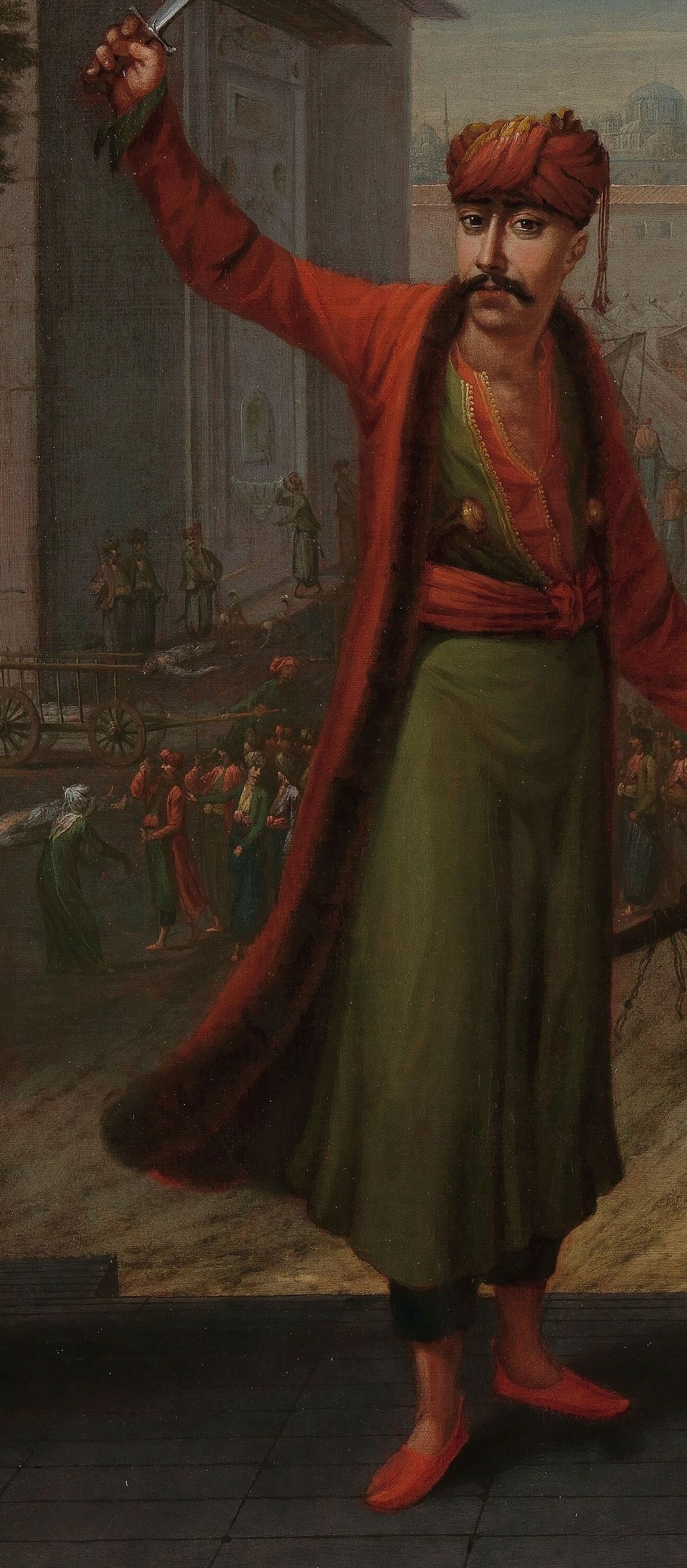
This powerful oil painting, *Patrona Halil* by Jean Baptiste Vanmour (1817), captures the dramatic moment of a real historical revolt. Held in the collection of the Rijksmuseum, it depicts the Ottoman rebel leader whose uprising in 1730 overthrew Sultan Ahmed III.
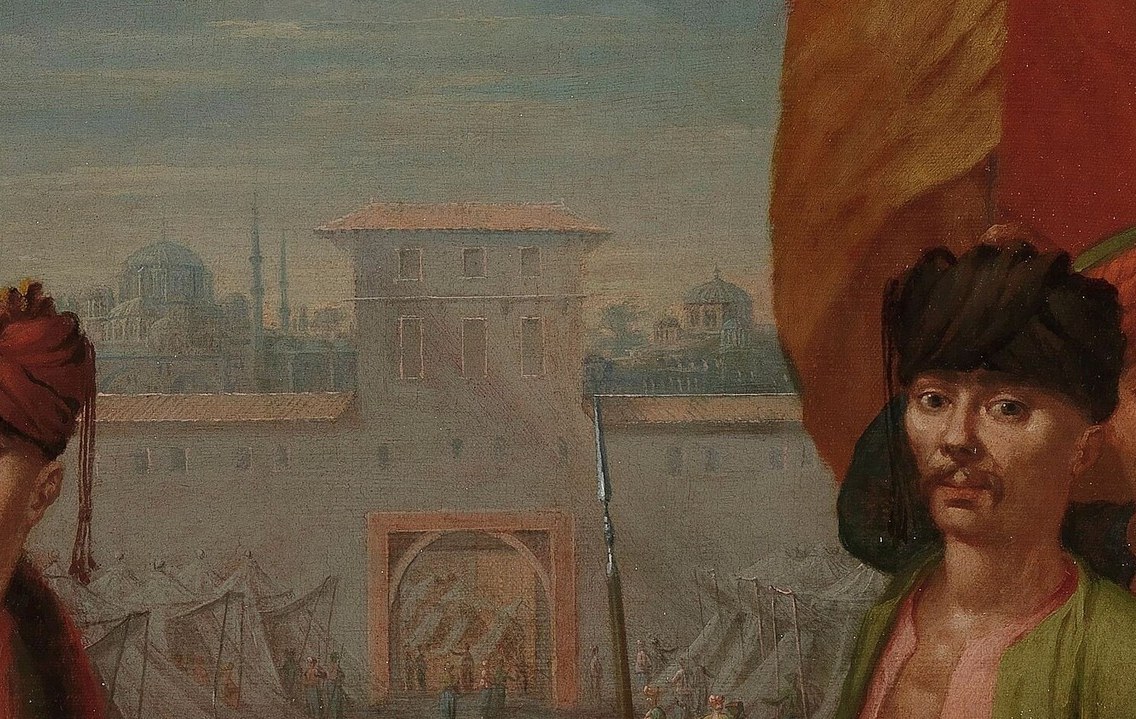
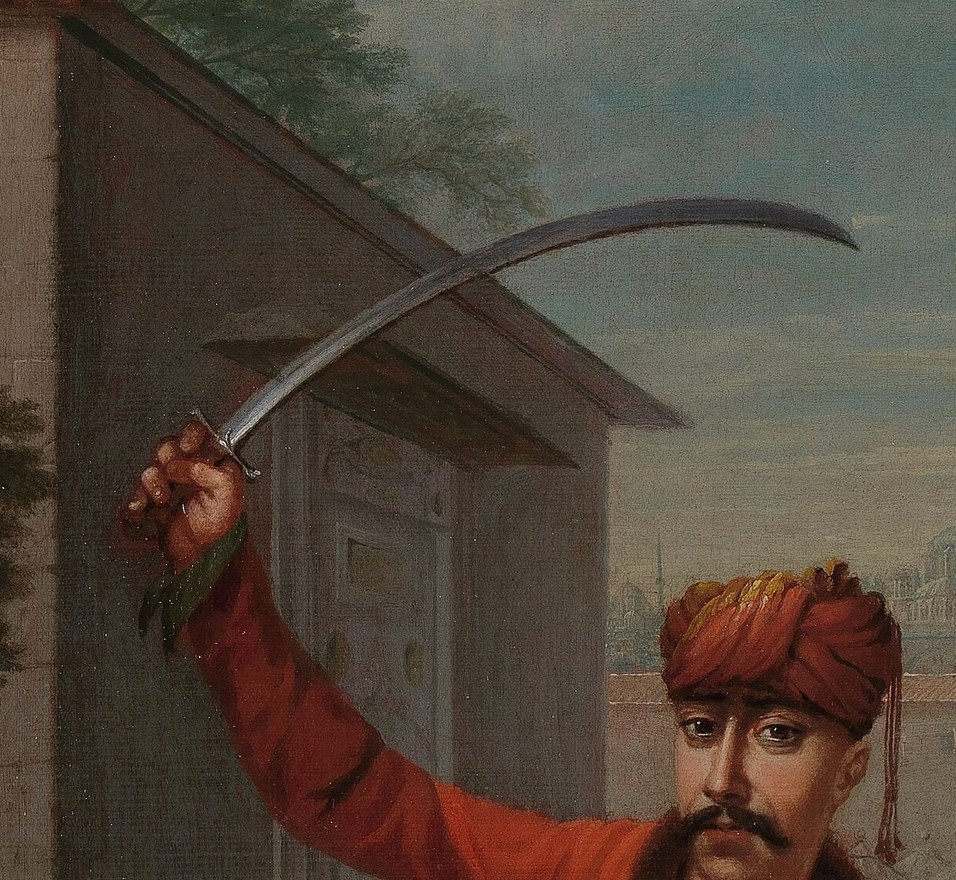
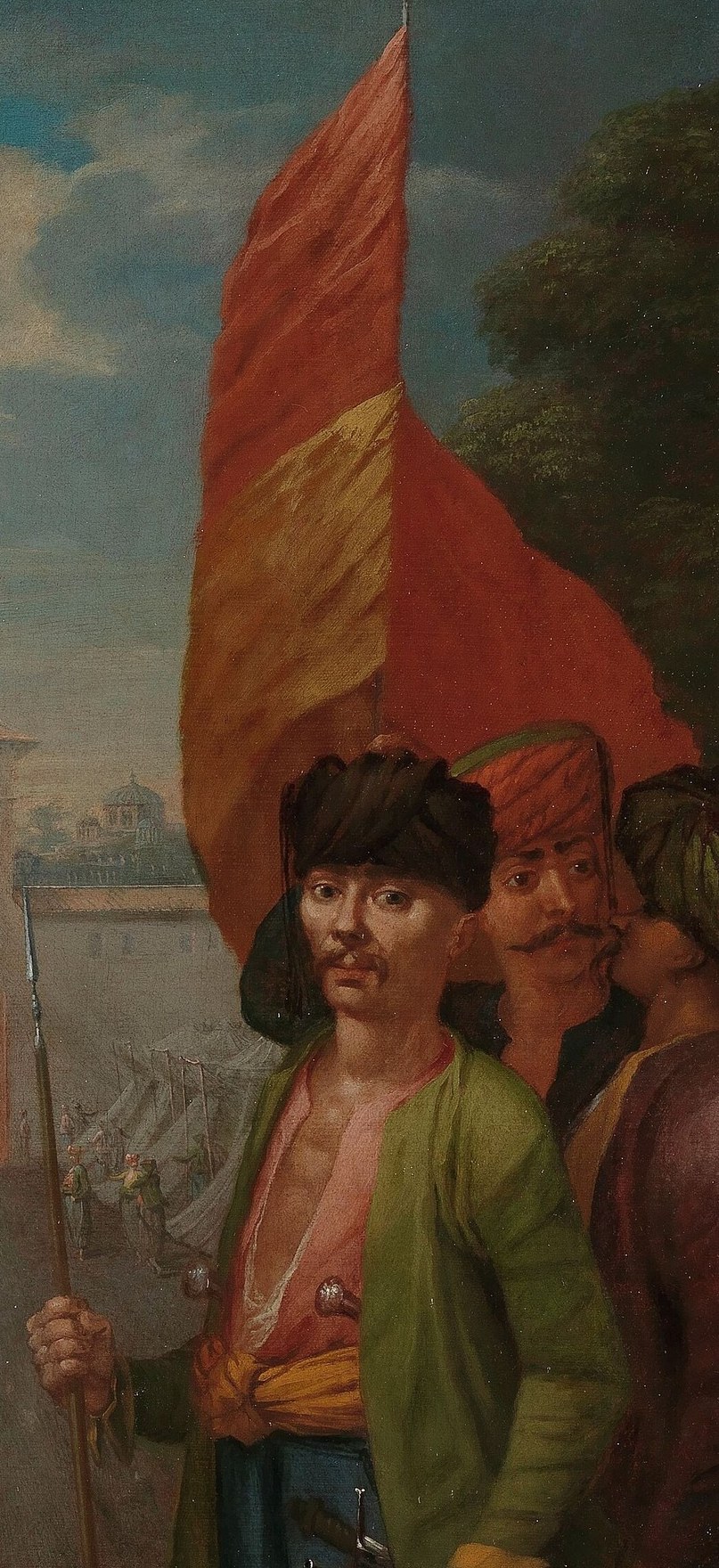
Vanmour's detailed work shows Patrona Halil, an Albanian ex-Janissary, in a commanding pose, his curved sword raised. Notice his determined gaze and the rich green trousers and red turban, which highlight the artist's skill in capturing attire and expression. The distant cityscape and crowd suggest the popular support for his rebellion.
Vanmour was a Flemish-French painter known for documenting Ottoman life during the Tulip Era. Though he painted in the early 18th century, this work was completed in 1817, reflecting Europe's enduring fascination with the Ottoman world and its dramatic political changes.
Halil briefly held power in Istanbul after leading the revolt, a testament to his influence before his eventual assassination. What details do you find most compelling in this depiction of a historical turning point?
Details
Transcript
In 1730, this man led a revolt that toppled a Sultan. He was Patrona Halil, an Albanian ex-Janissary. His uprising began in the Istanbul markets. The painter was a Flemish artist, Jean Baptiste Vanmour. He depicted Halil's determined gaze and martial stance. The curved sword became a symbol of his rebellion. Halil ruled Istanbul for weeks before his assassination.