Untitled by After Jing Hao
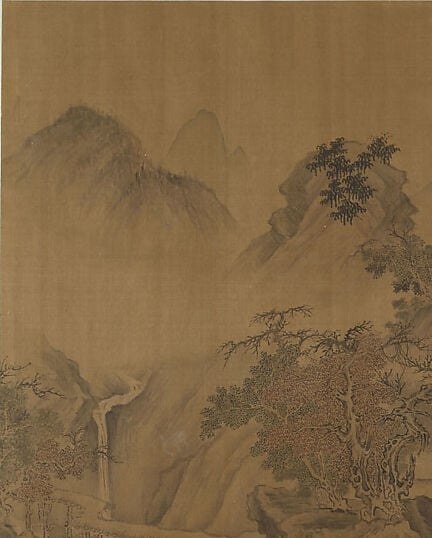
A handscroll painted in 1639, attributed to a follower of Jing Hao, the tenth-century master who wrote the rules of Chinese landscape painting.
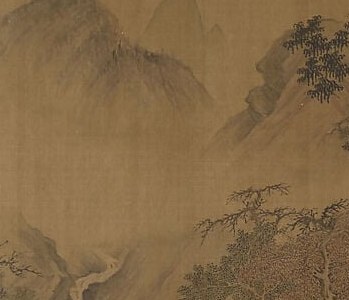
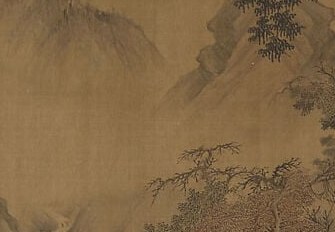
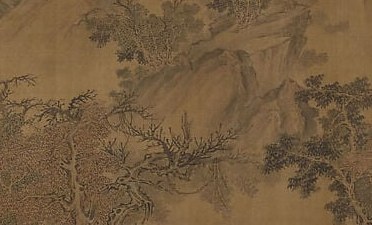
The painting is almost entirely mountain. Jagged cliffs, dense ink textures called cun, pines bolted to bare rock. For a long time, the eye finds only wilderness.
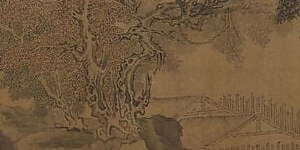
But tucked into the mid-ground trees is a tiny pavilion. It is the only human-made element in the entire scroll. Its size against the peaks is the philosophical point: a human life is a small shelter in an overwhelming natural world.
This scroll is in the collection of the Metropolitan Museum of Art. The painter remains unknown, but the debt to Jing Hao's "spirit resonance" principle is visible in every brushstroke.
Have you ever noticed a tiny detail in a landscape painting that changed how you saw the whole thing?
Details
Transcript
Mountains built entirely in ink. No human trace. Jing Hao founded this monumental style around 900 AD. Those pine trees cling to bare rock. In Chinese painting, that means virtue without nourishment. Mist divides the world. The emptiness does the real work. Now look into the trees on the middle ledge. There. A scholar's pavilion, smaller than a pine cone. The only human thing in the entire scroll. Almost invisible.