Still Life with Dressed Game, Meat, and Fruit by Desportes, Alexandre-François
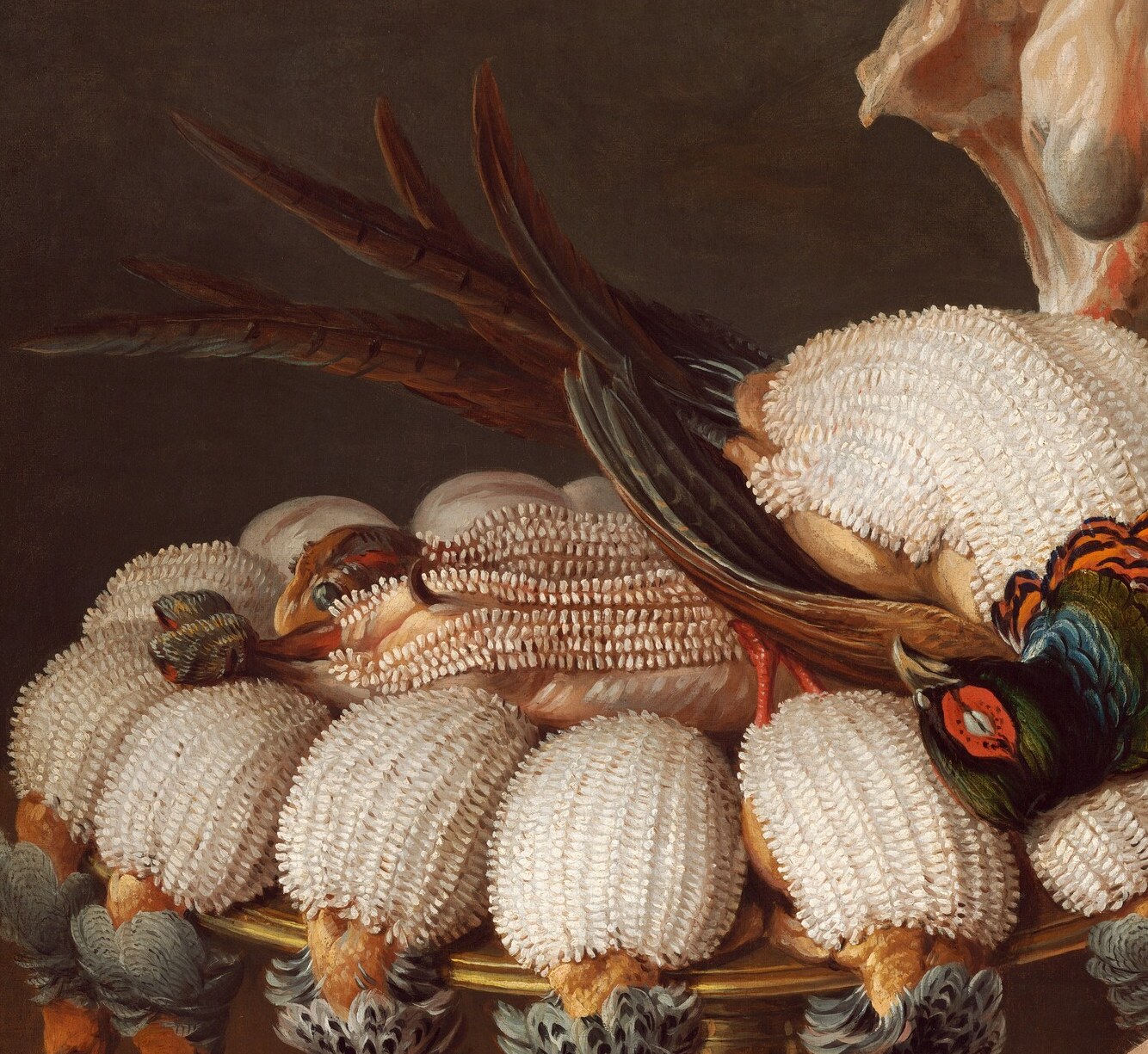
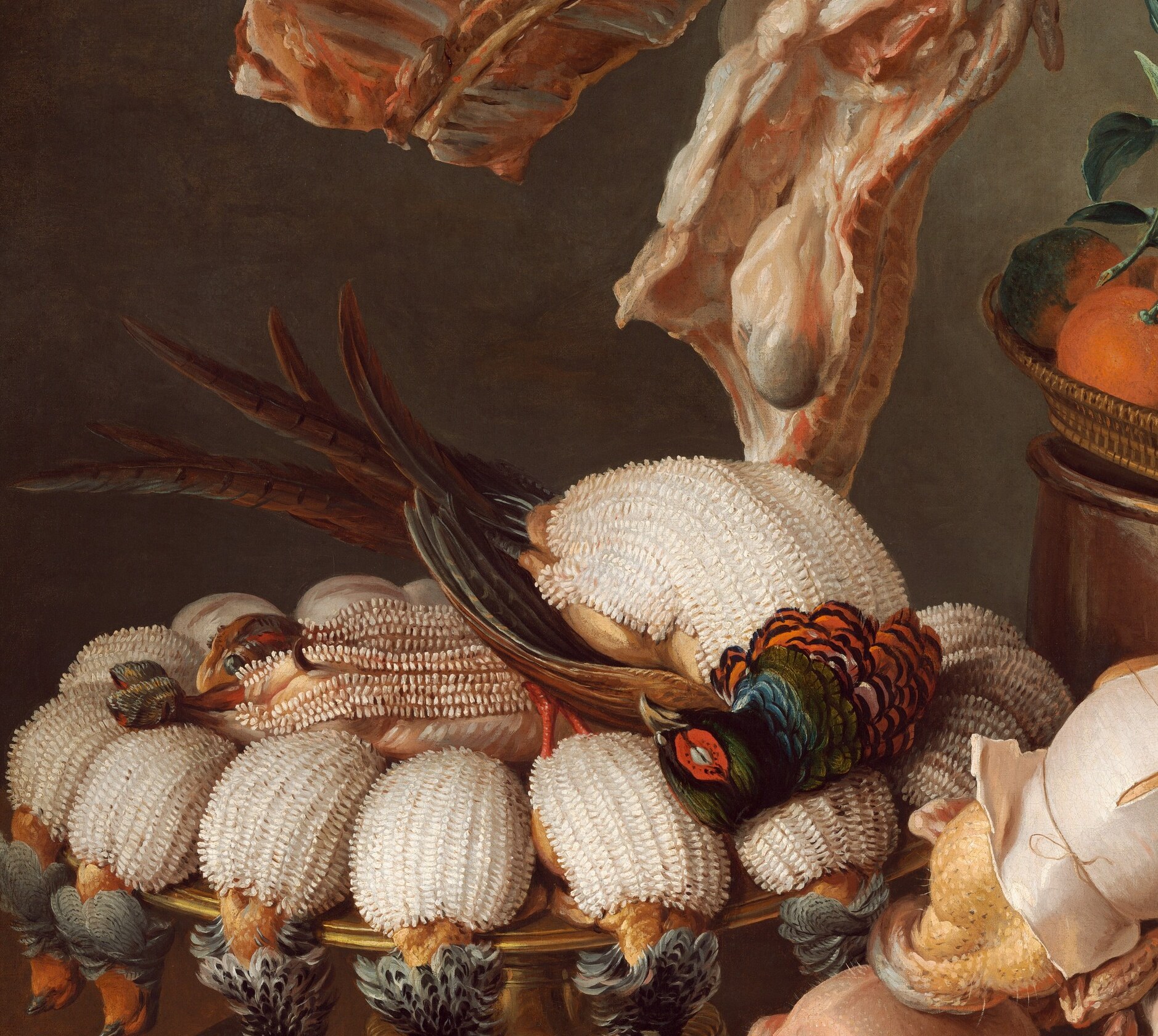
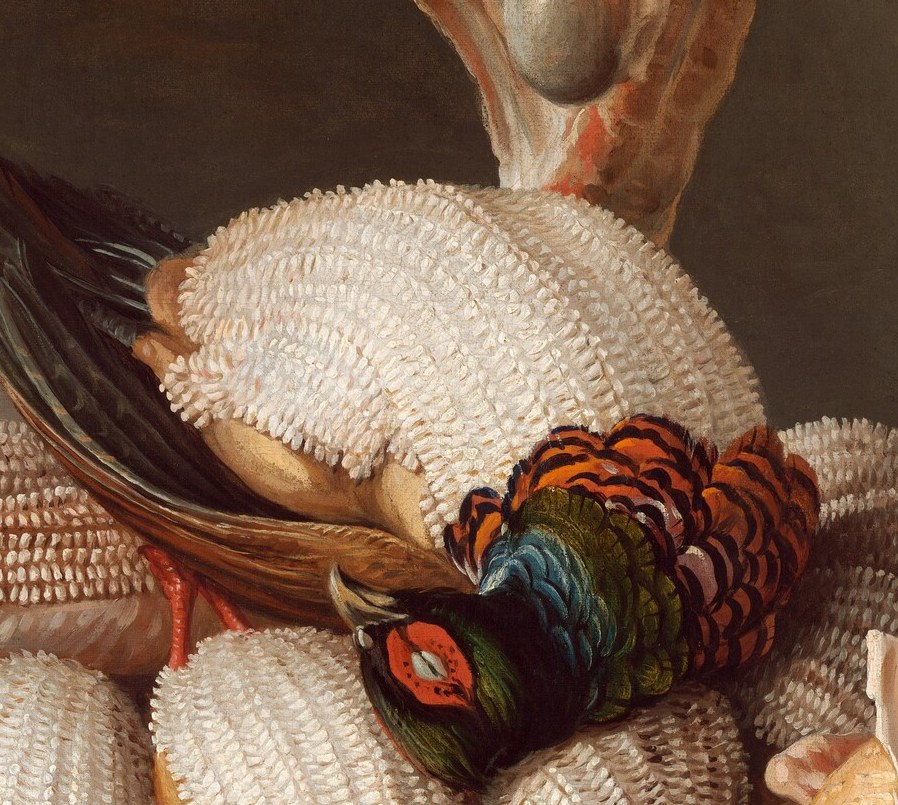
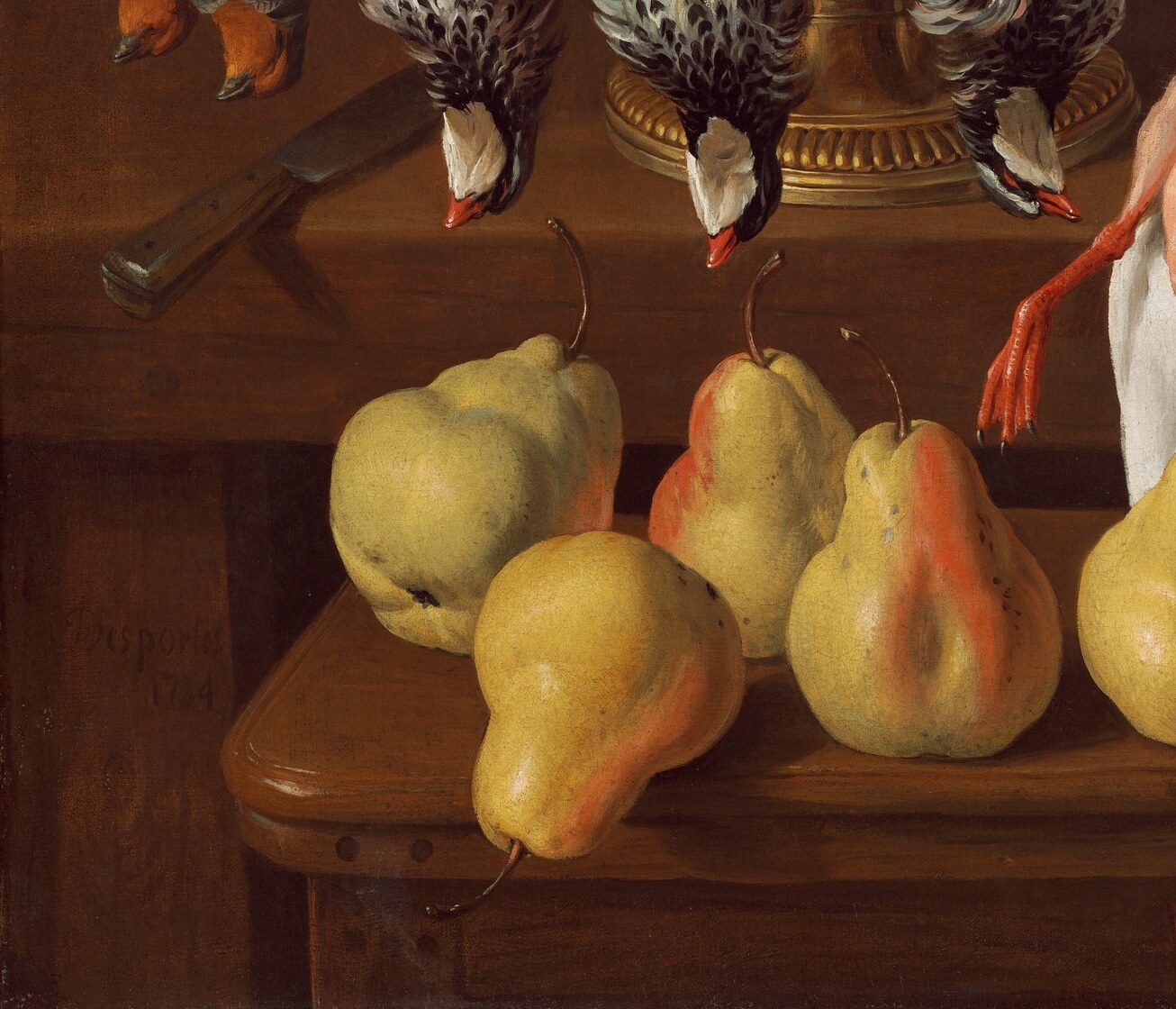
A single open eye stops you cold in Alexandre-François Desportes's Still Life with Dressed Game, Meat, and Fruit (1734). The painting hangs in the National Gallery of Art, Washington, and at first scroll it reads as a lavish kitchen trophy wall: hung meat, citrus, a magnificent pheasant with wings spread for inspection.
But Desportes was not painting decoration. He was painting a document. He followed the royal hunts of Louis XIV and Louis XV with a small notebook, sketching the dead game on the spot so the king could choose which pieces to commission. That eye, glassy and half-open, is not a flourish. It is an observation.
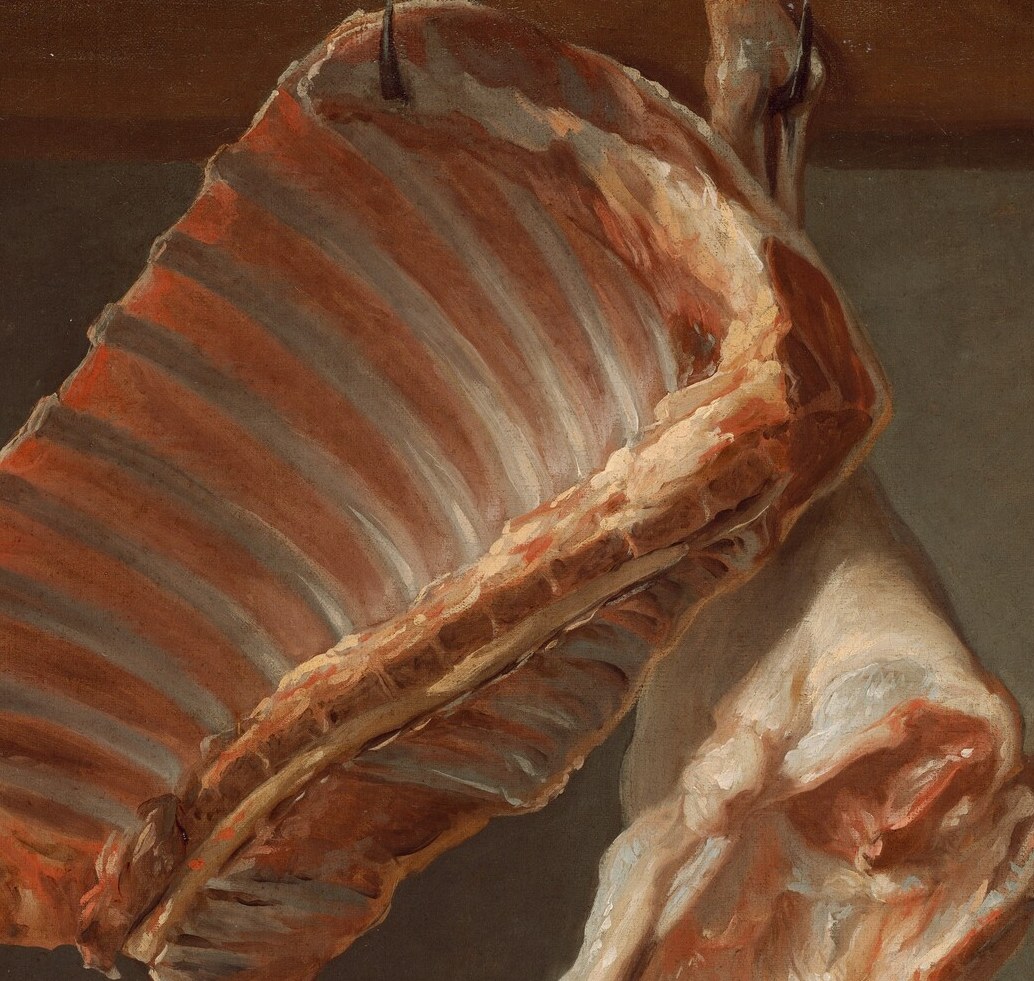
The pheasant commands the center of the canvas. Its feathers are rendered with near-scientific fidelity. The fat marbling on the hanging meat above it is painted with a butcher's understanding of tissue. Desportes trained under Nicasius Bernaerts in the Flemish tradition of Frans Snyders, and he brought that tradition to the French Rococo court.
Look into the dark left margin if you can. The compressed shadow between the hung meat and the edge may hold a hint of architecture or a draped cloth. The painting rewards the close crop. But the eye that holds you is the one that is still open.
Details
Transcript
It looks like a celebration of the hunt. 1734. Desportes was the king's painter of dogs and game. Feathers so precise you can count the quills. Fat marbled into the meat with a butcher's eye. The pheasant is the trophy. Now find its head. Just there. One eye is still open. Desportes followed the royal hunt with a sketchbook.