The Harbor at Lorient by Morisot, Berthe
View the artwork: The Harbor at Lorient →
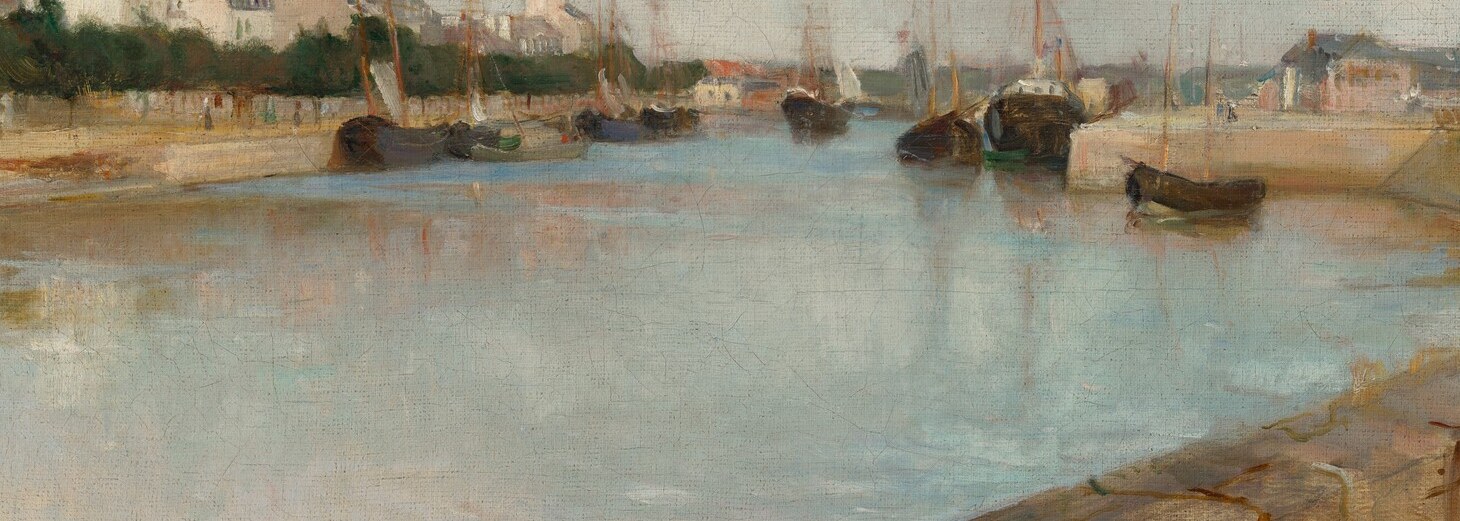
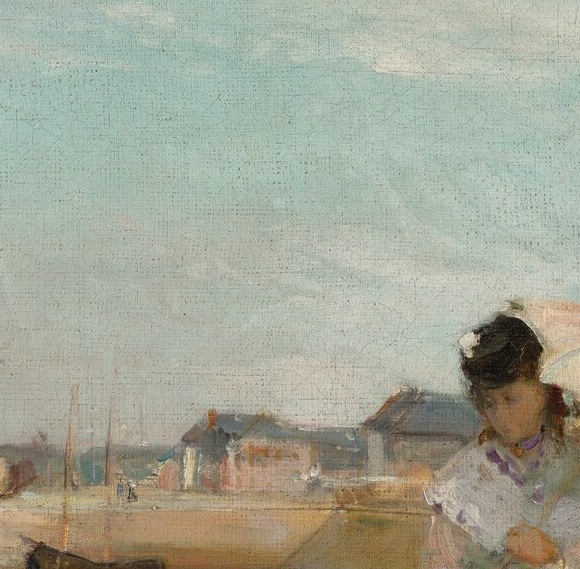
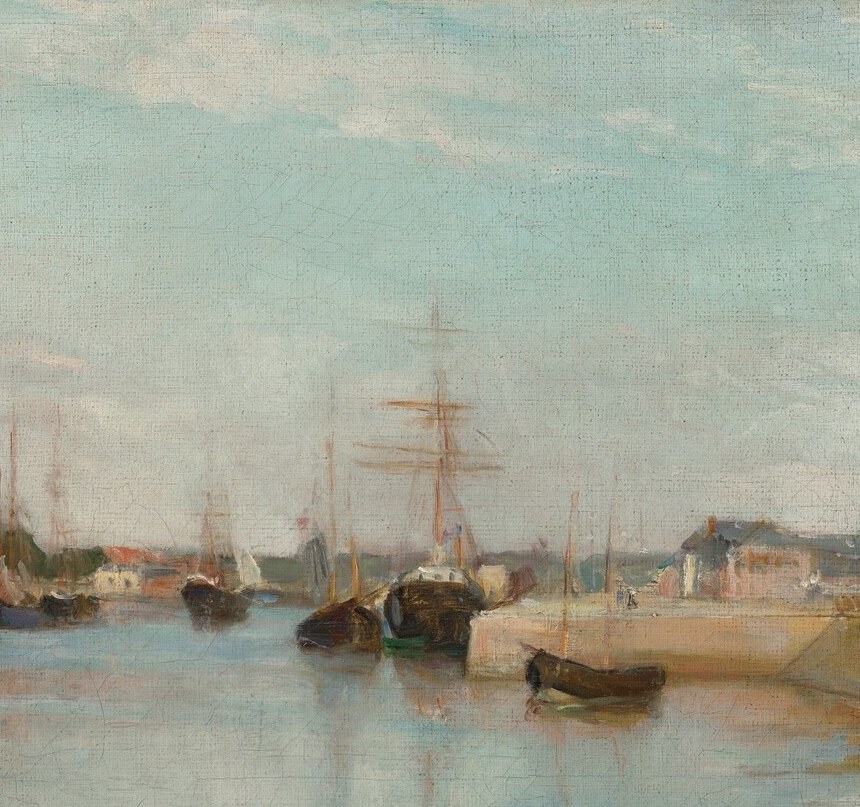
Berthe Morisot painted The Harbor at Lorient in the summer of 1869, during a visit to her sister Edma in Brittany. The painting is small, just 43 by 72 centimeters, and it lives at the National Gallery of Art in Washington, D.C. It captures a working harbor, but the real subject is how paint can describe light and air before anyone had agreed on the rules.
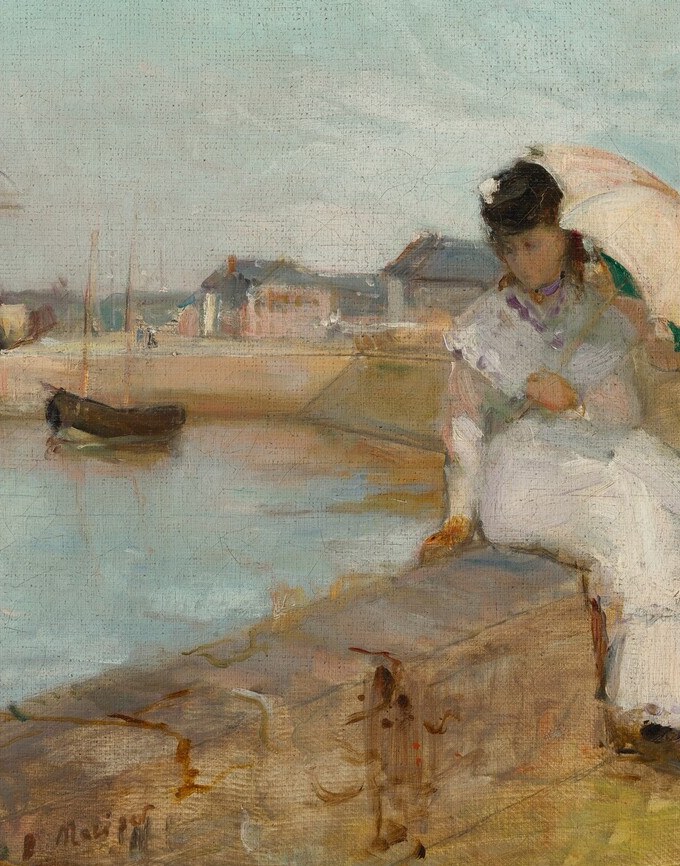
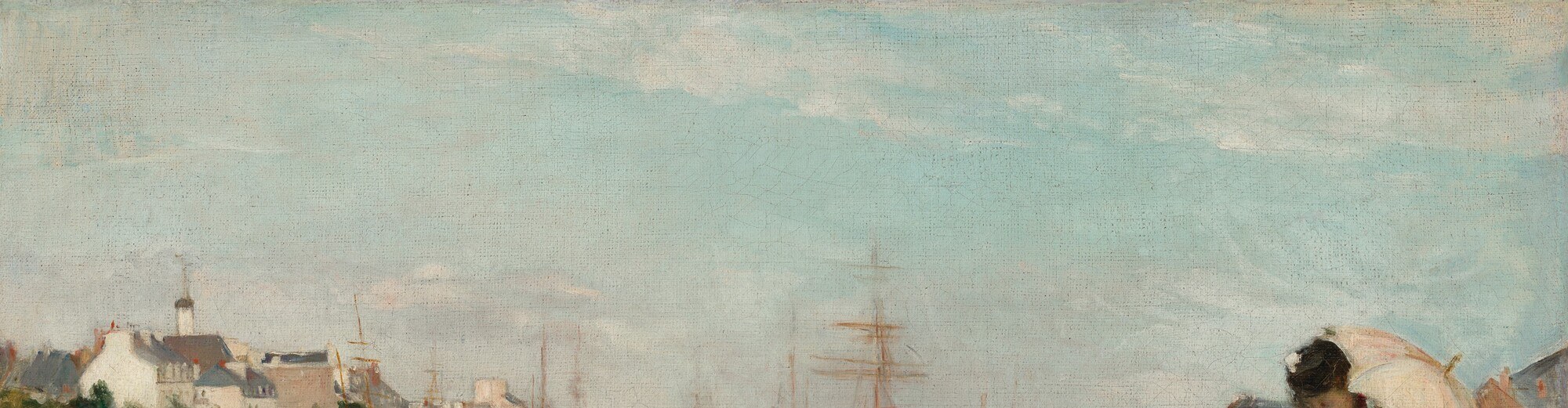
Two passages reward close looking. First, the rigging: those hair-thin diagonal lines crossing the masts are drawn with a brush pulled wet-on-dry across the pale sky. There is no underdrawing visible, no correction, Morisot committed each line in a single stroke. Second, Edma's white dress. What reads as brilliant white from a distance is actually a mosaic of gray, blue, lavender, and cream marks. Morisot builds brightness through color vibration rather than white pigment.
The painting has an unusually close connection to the Impressionist circle. Morisot gave it to Édouard Manet, her friend and future brother-in-law. Manet kept it in his personal collection for the rest of his life. A painting by one Impressionist, owned by another, of the first artist's sister seated on a seawall, the personal history is as layered as the brushwork.
Next time you see a painting with rigging or a white dress, look for the single-stroke confidence. Morisot had it in 1869, before the first Impressionist exhibition even existed.
#arthistory #berthemorisot #impressionism
Details
Transcript
Summer, 1869. A port town on the Brittany coast. The woman in white is Edma, the painter's sister. Now look at the rigging. Those lines are drawn with a brush, wet on dry, over the sky. No pencil, no scraping back, just a loaded brush pulled in one go. And now her dress. White muslin in full sun. Morisot builds it with almost no white at all, gray, blue, lavender, cream. She gave this painting to Édouard Manet. He never parted with it.