Procession or Pardon at Perros-Guirec by Maurice Denis
Maurice Denis's "Procession or Pardon at Perros-Guirec," painted in 1891, is a vibrant example of the Nabis movement's approach to religious art, held at The Cleveland Museum of Art.
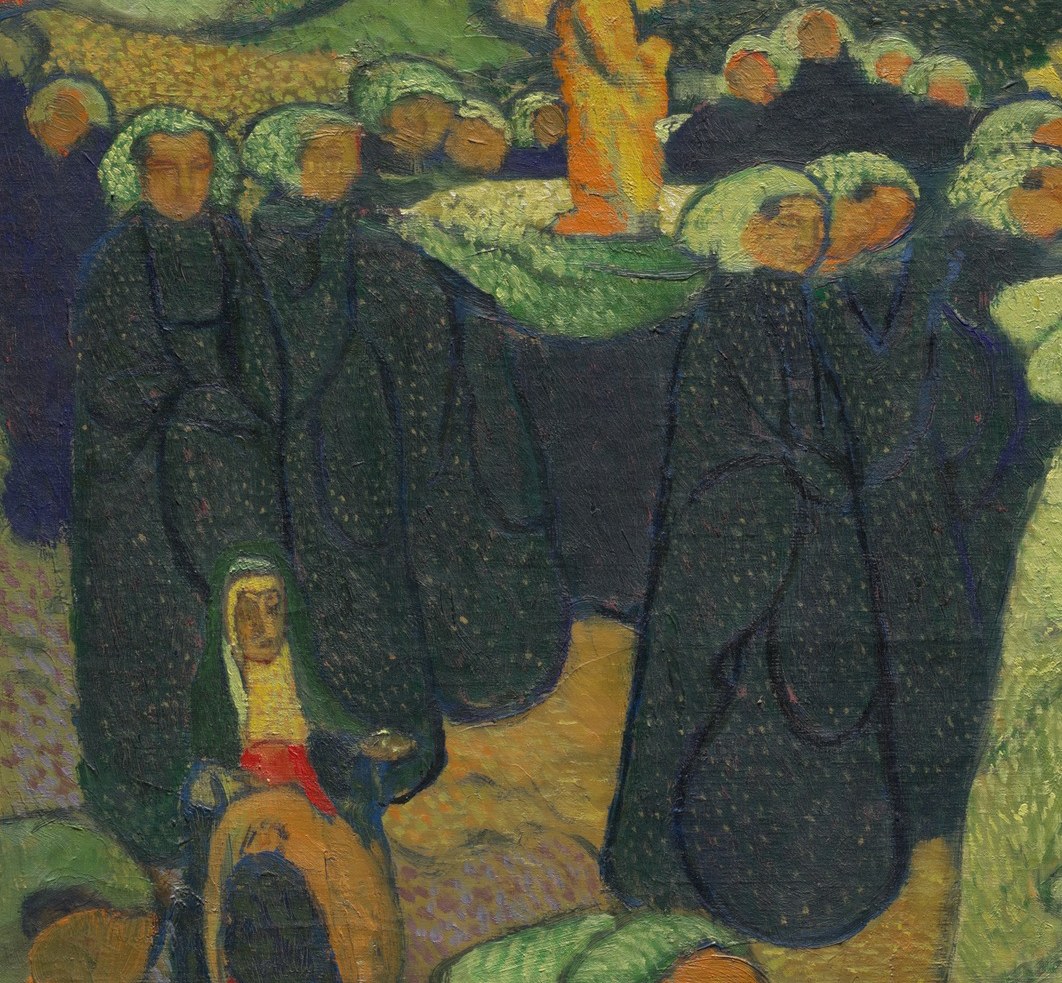
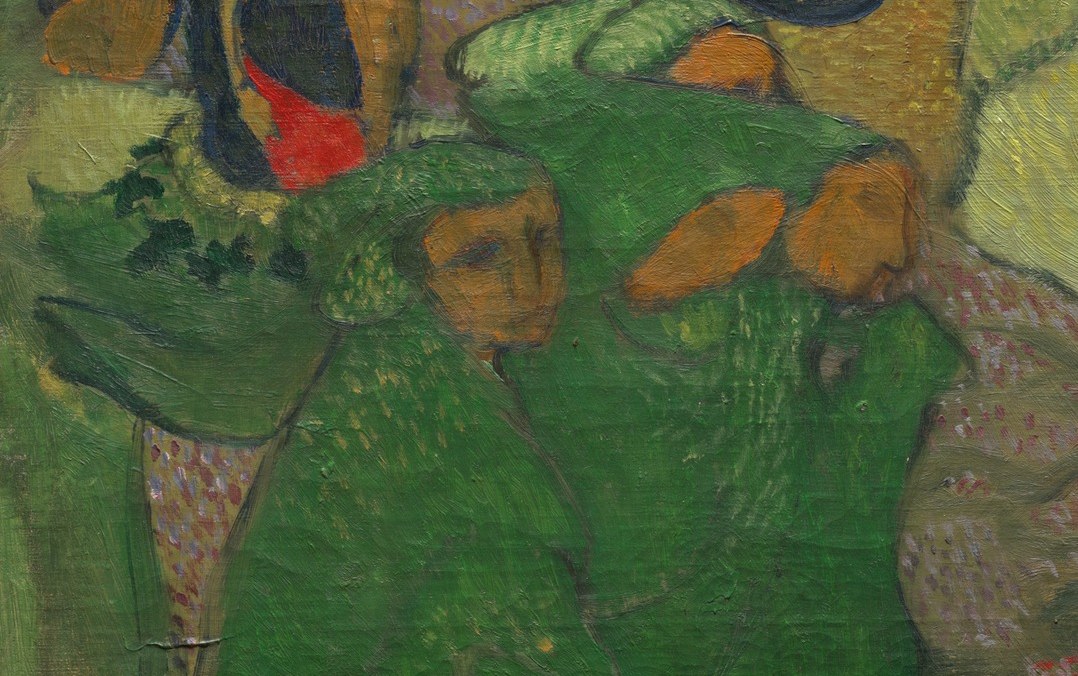
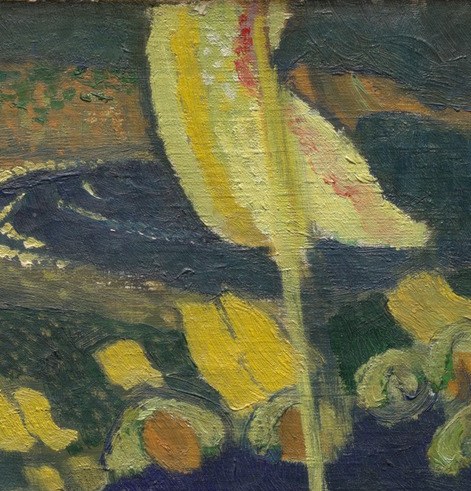
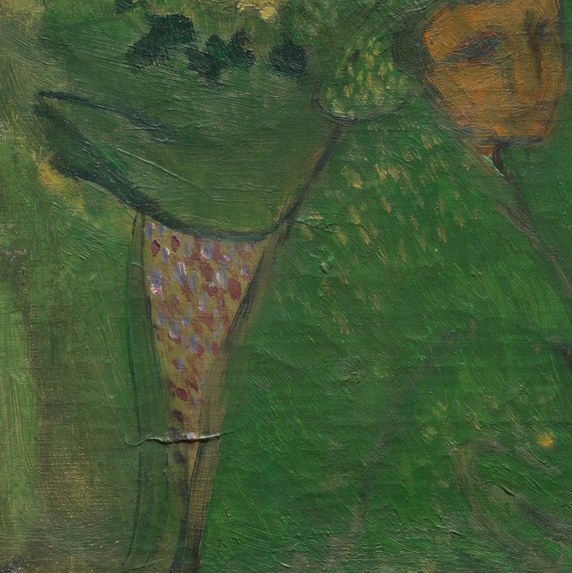
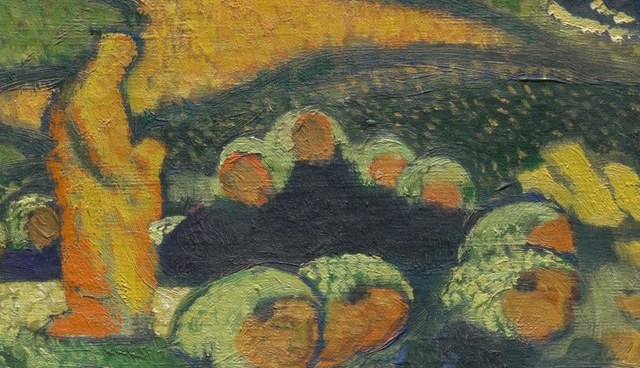
While the painting initially presents a solemn, communal experience with its dark-robed figures, closer inspection reveals the artist's distinctive technique. Denis employs thick, uneven brushstrokes and unexpected bursts of bright color, particularly noticeable in the green ground and yellow banner, creating a textured, almost impasto surface.
Look for the nearly hidden figure in the bottom-left foreground, a quiet observer of the scene. Then, follow the eye to the tiny, indistinct figures in the far background. These details highlight the immense scale of this traditional Breton pilgrimage, bringing the spiritual moment into a broader community context.
Denis was a key figure in the late 19th-century Symbolist and Nabis movements, whose theories profoundly influenced modern art. This work beautifully illustrates his belief in art's decorative and spiritual dimensions. What do you notice first?
Details
Transcript
This painting shows a religious procession in Brittany, France. The muted colors suggest a solemn, communal experience. But the painter uses thick brushstrokes and bright colors. This style was part of a movement called 'The Nabis'. Look closely at the bottom left, almost out of frame. A single figure observes the procession from the foreground. Now, see the small figures in the distant landscape. They reveal the true scale of this sacred gathering.