Countryside of Wood With Saint George Fighting the Dragon by Albrecht Altdorfer (German, c. 1480–1538)
Albrecht Altdorfer's 'Saint George in the Forest' (c. 1510) is one of the earliest Western paintings where the landscape, not the human story, is the main event. Painted in oil on parchment and mounted on a linden wood panel smaller than a sheet of printer paper, it hangs today in the Alte Pinakothek in Munich.
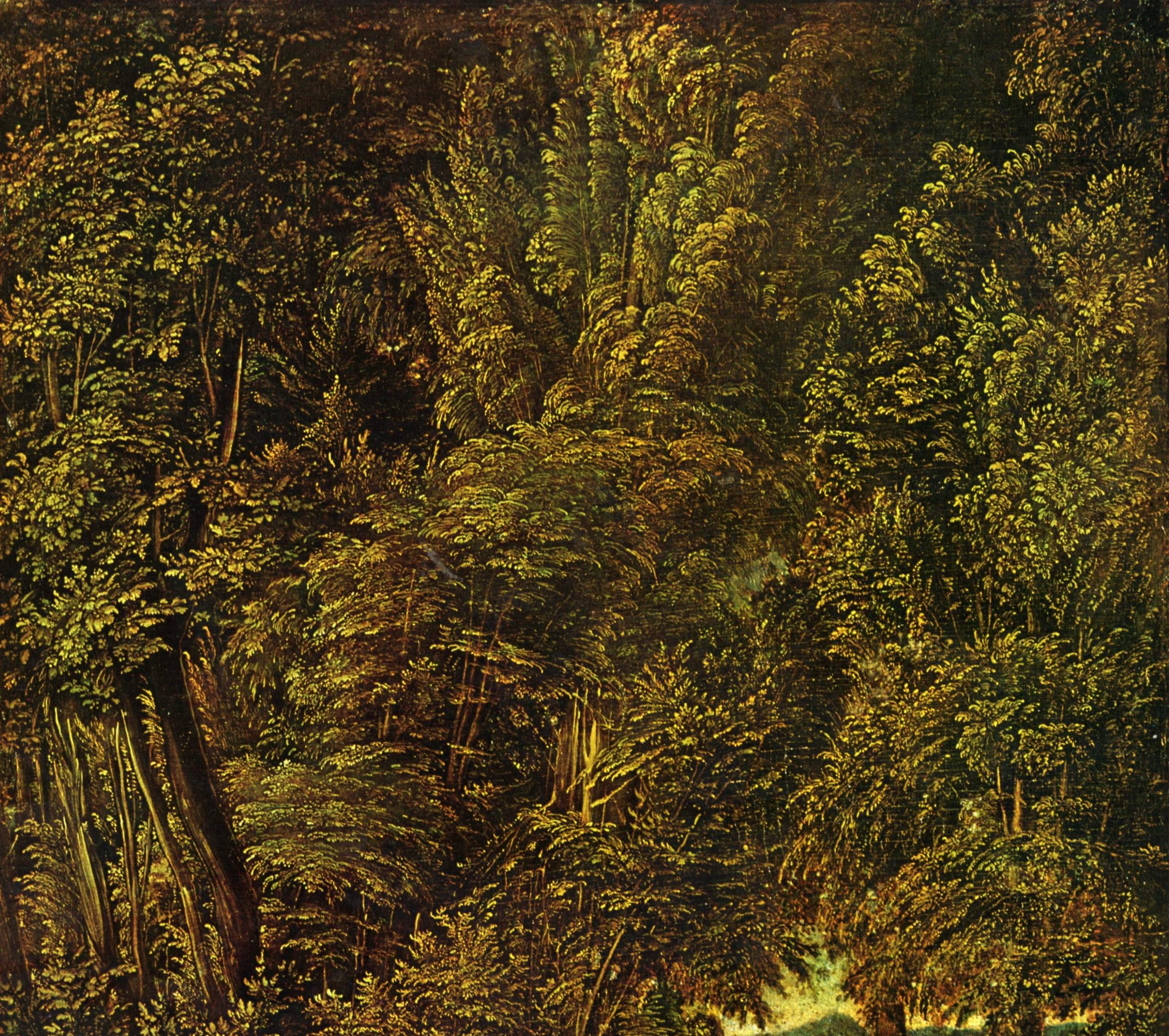
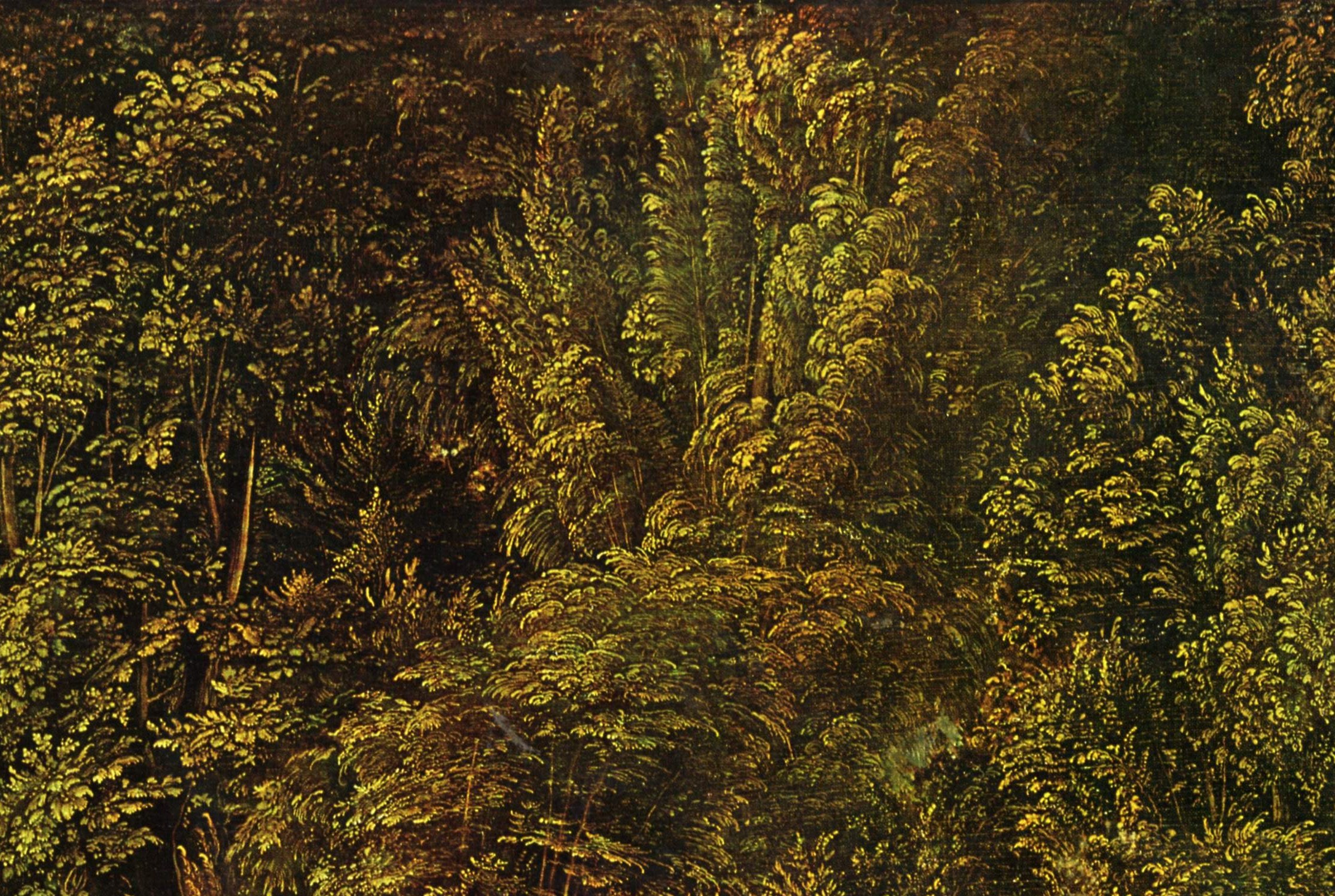
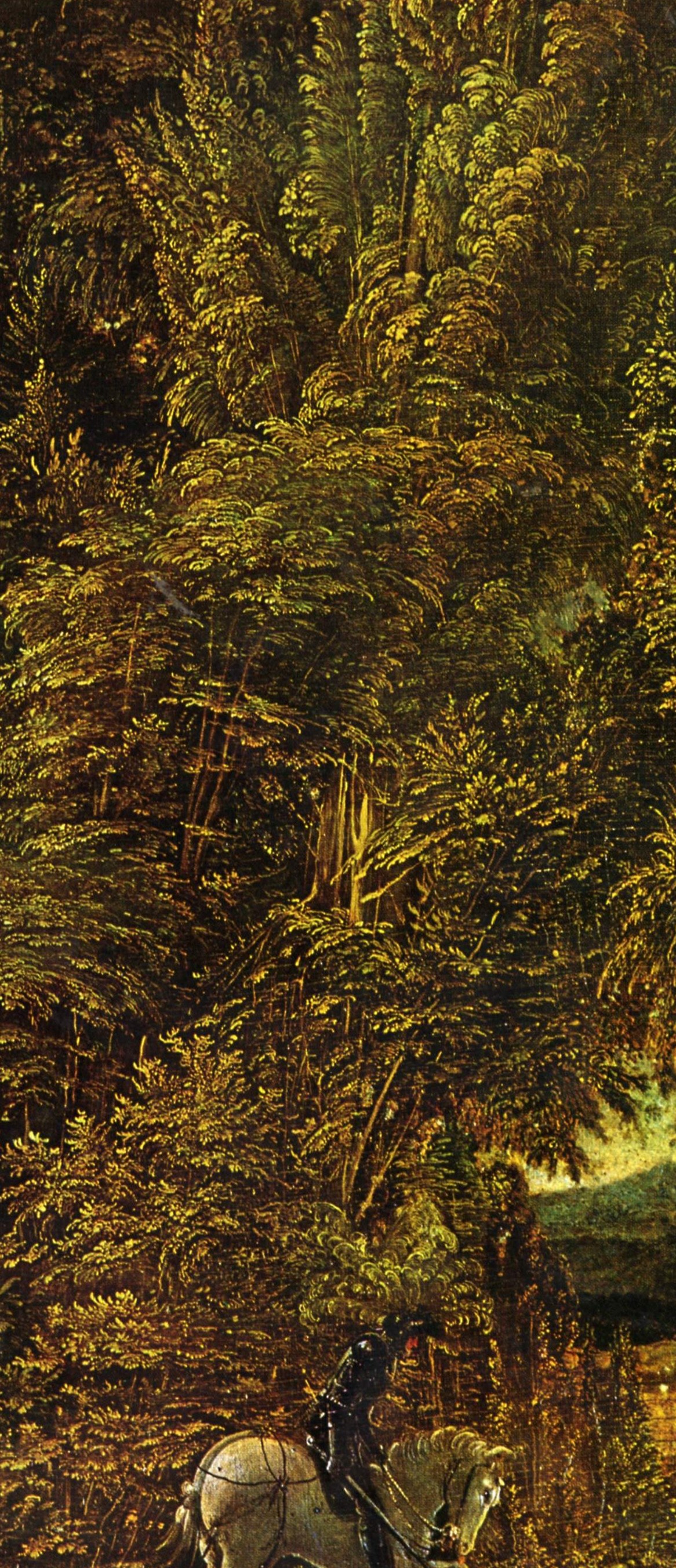
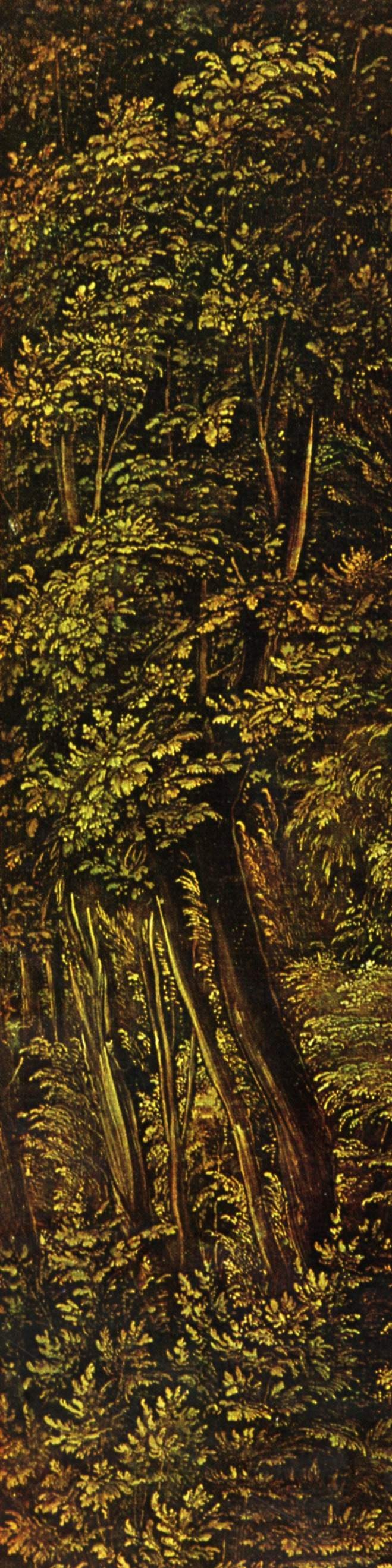
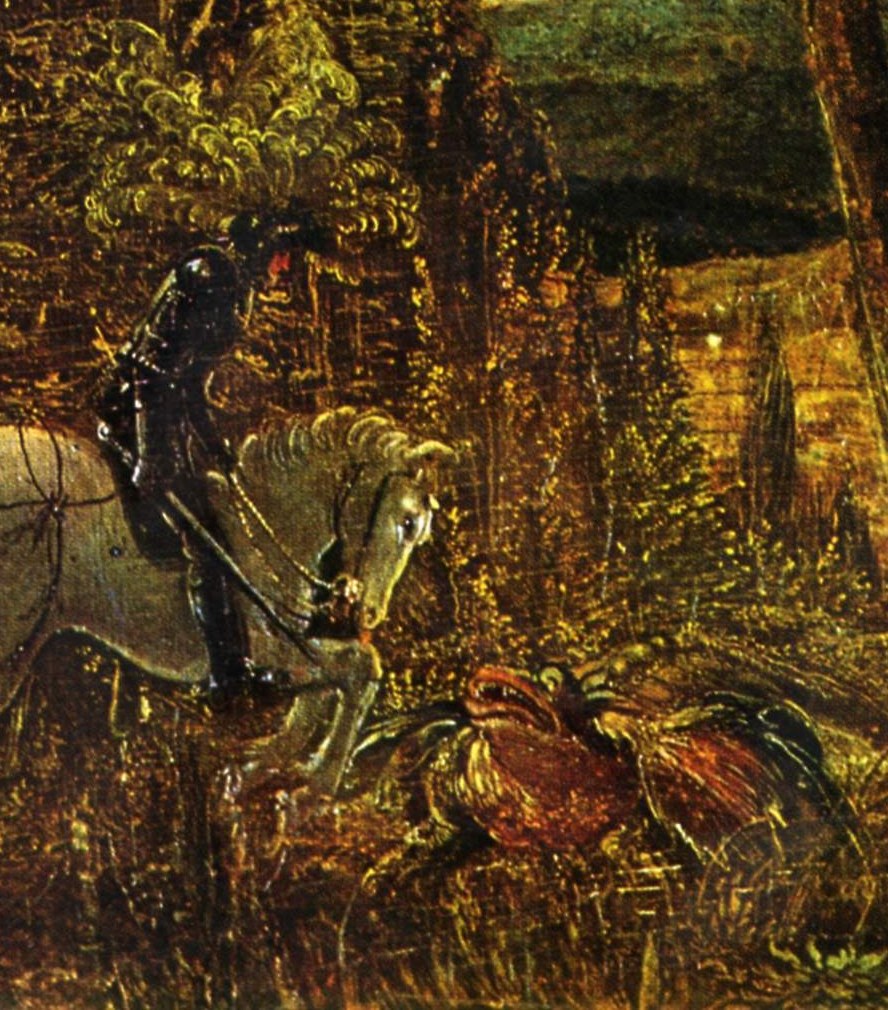
Look at what Altdorfer actually gives you. The saint and the dragon are tiny, pressed into the lower third of the frame. Everything above them is tree, dense, unbroken, and painted with obsessive attention to individual leaves. The dragon is so dark it nearly disappears into the leaf litter, and the left edge of the painting offers no opening at all, only blackened foliage pressing inward. The forest itself is the antagonist.
In 1510, a German forest was not a scenic destination. These were vast, unmapped woods, real places where travelers disappeared, where wolves hunted, and where the boundary between the physical world and older, darker folklore was thin. Altdorfer, a city council member and architect in Regensburg, chose to place a story of divine triumph inside exactly that kind of wilderness, and he let the wilderness win on canvas.
The painting is a founding document of the Danube School, a movement that treated landscape not as backdrop but as an emotional force. Altdorfer would later push this further into pure landscape with no figures at all, but here the saint, tiny in his armor, still fights. What do you notice first when you look at it, the horse and the lance, or the wall of trees closing in?
Details
Transcript
A dragon hunt. But the saint is almost an afterthought. Look what fills the frame: not the hero, but the trees. The canopy consumes two-thirds of the painting. In 1510, this was radical. The trunks rise like cathedral columns, dwarfing the saint. No sky, no horizon. Left is walled in by black foliage. The dragon nearly vanishes, evil camouflaged as forest floor. For people in 1510, forests like this were real. Wolves, bandits, absolute dark. Altdorfer was the first to make the terror of the woods the real subject.