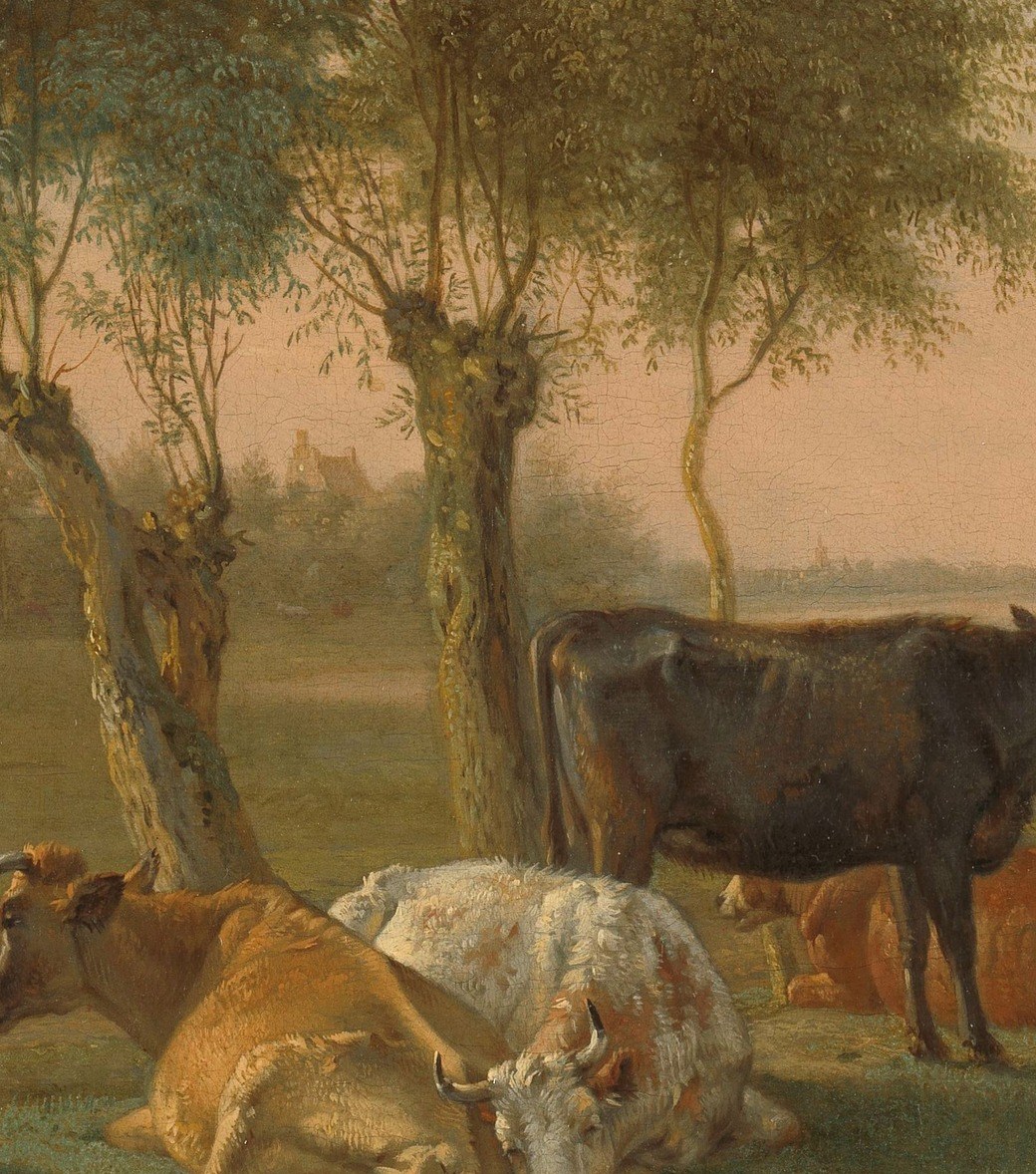
Cows in a Meadow near a Farm by Paulus Potter
View the artwork: Cows in a Meadow near a Farm →
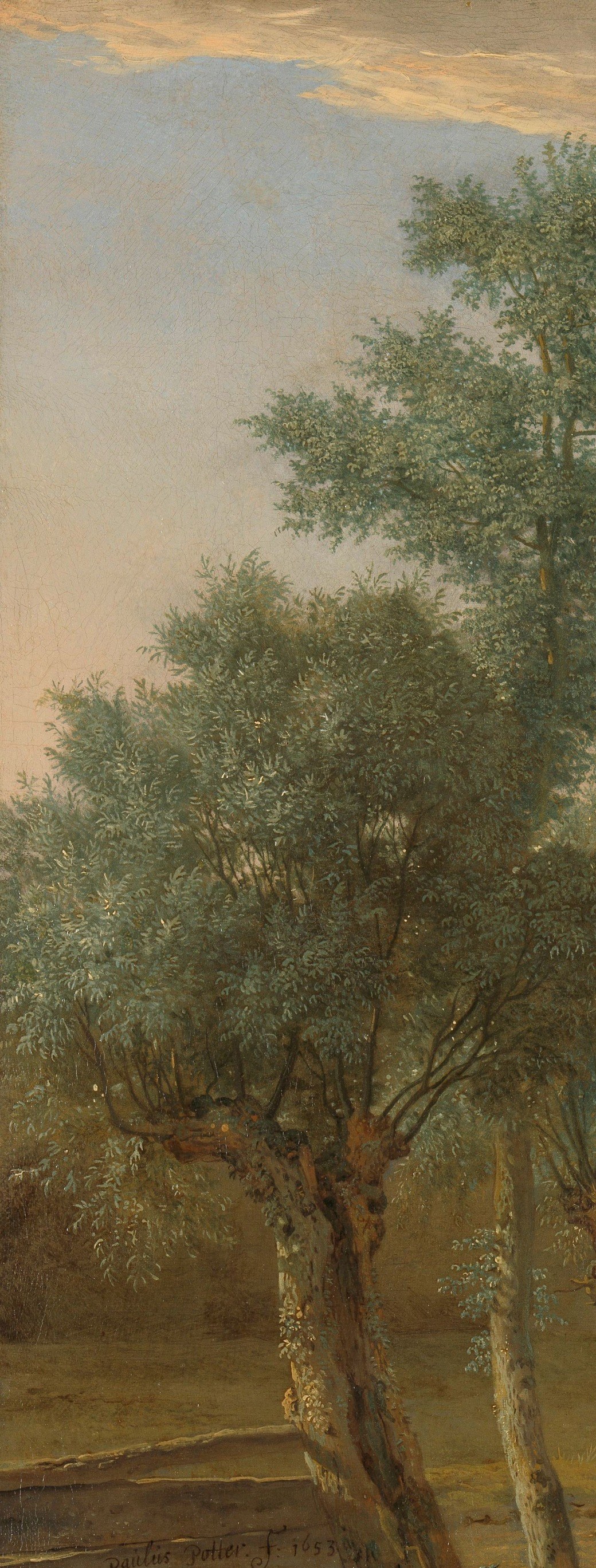
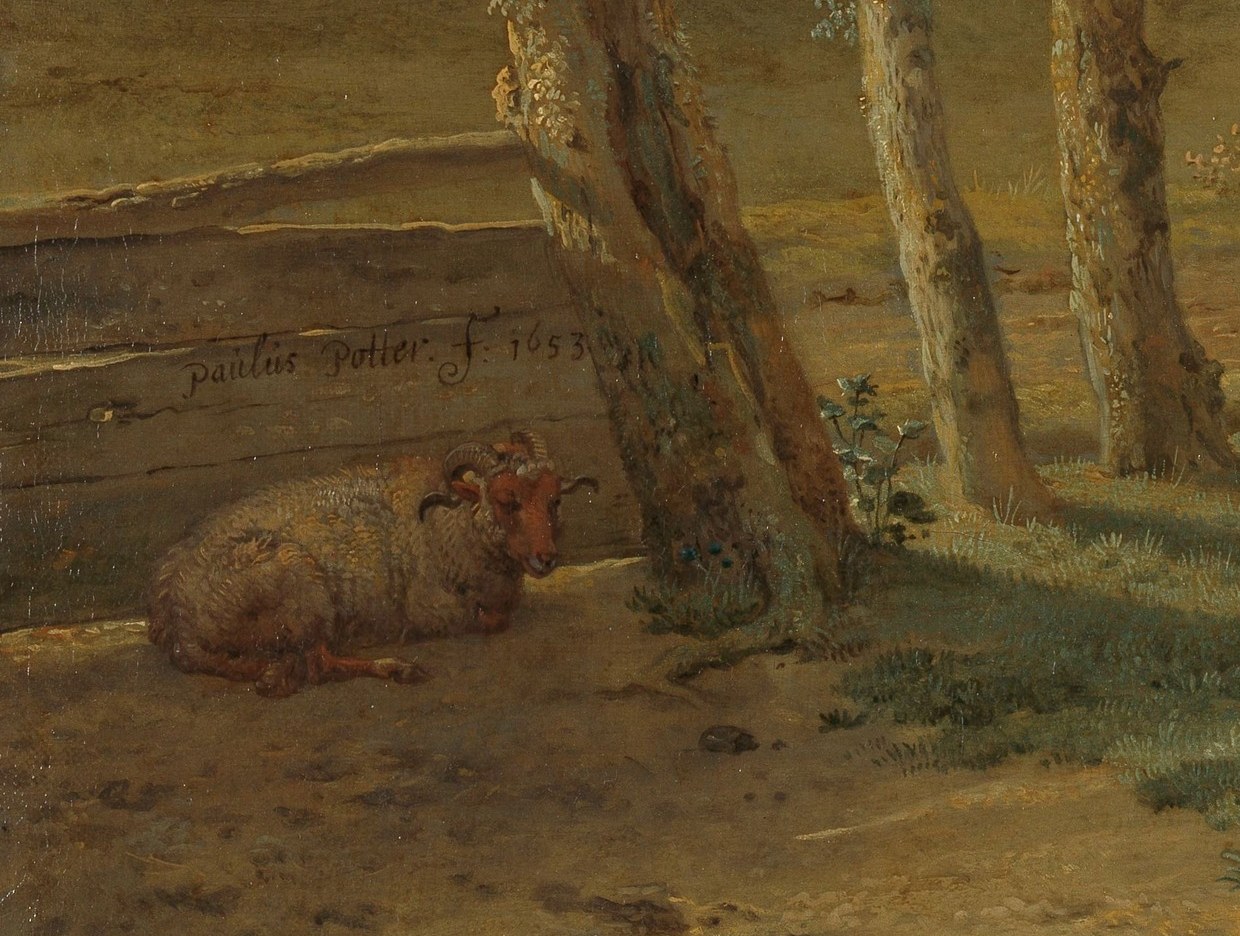
Paulus Potter painted Cows in a Meadow near a Farm in 1653, and then he died of tuberculosis the following year. He was twenty-eight. In about a hundred paintings produced in a career that barely lasted a decade, Potter essentially invented the specialist animal-painter genre. Before him, cattle were props. He made them the main event.
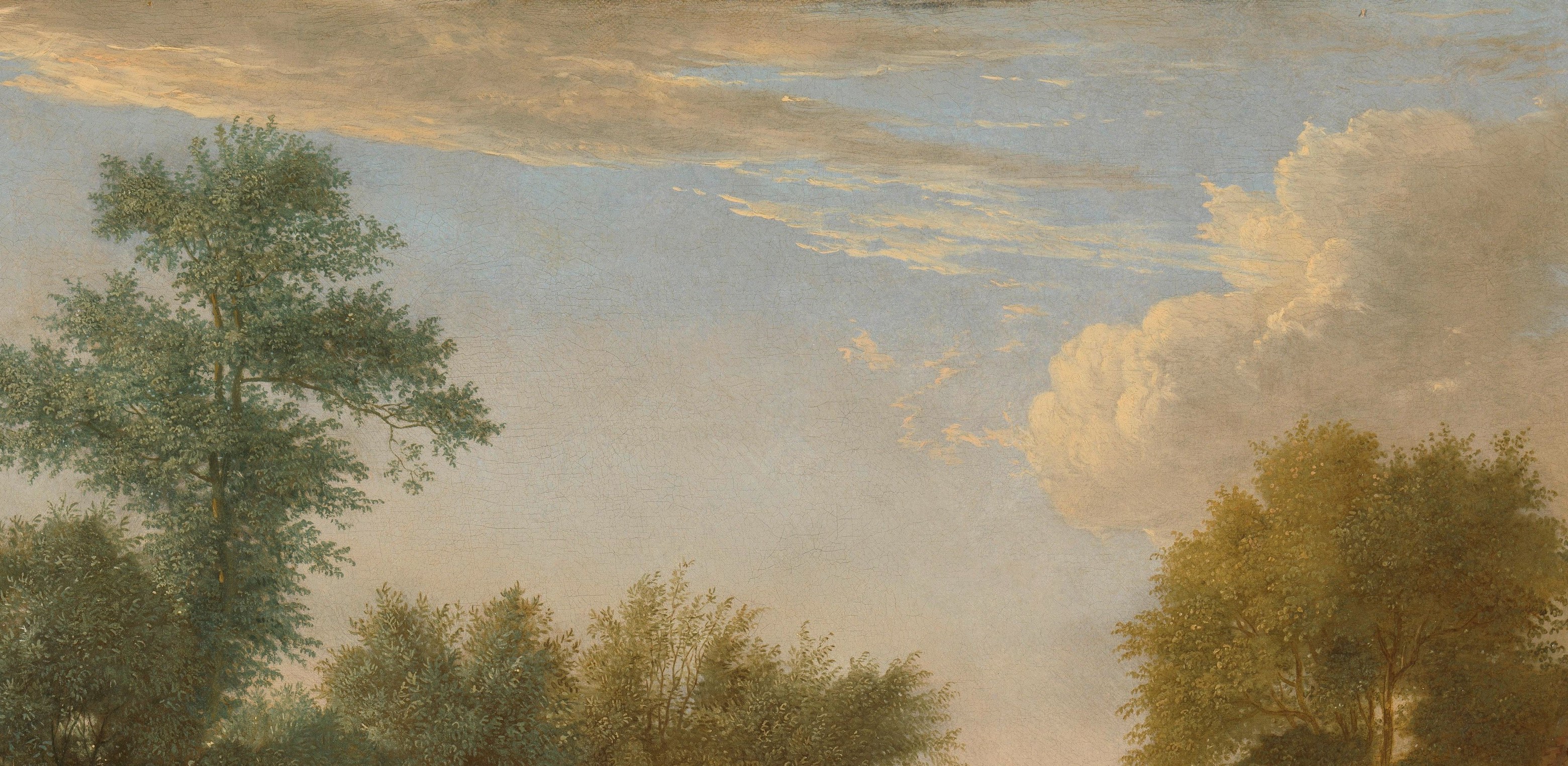
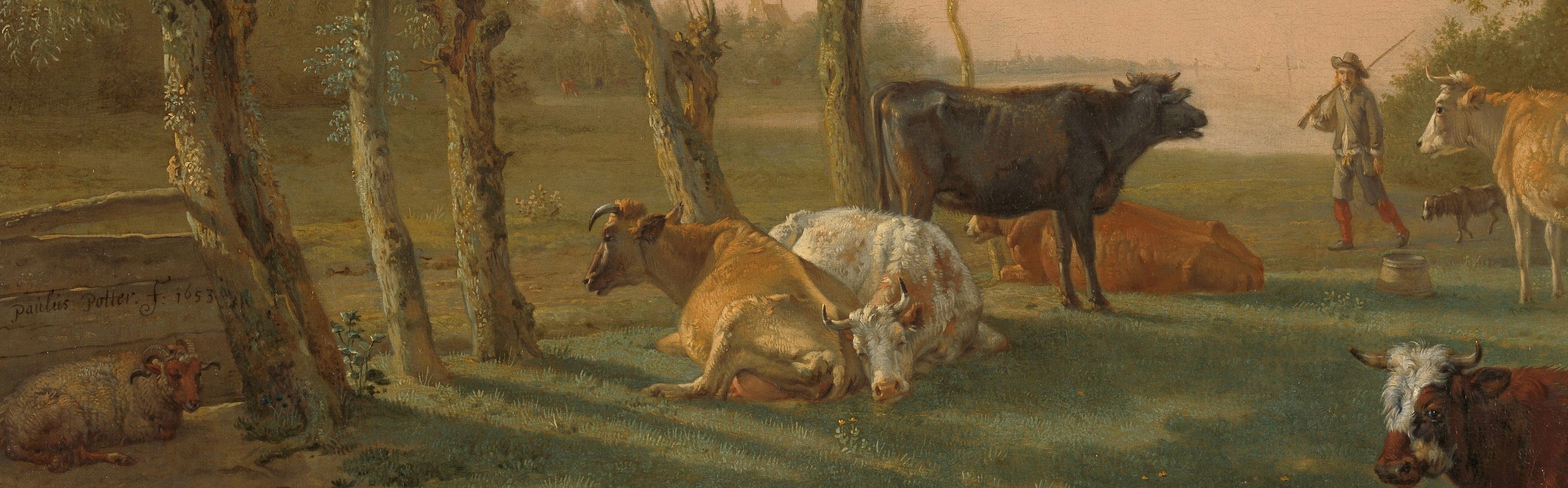
Watch the weight. The reclining cow in the foreground doesn't float on top of the meadow; Potter gives her mass a real sense of settlement into the earth, something almost no animal painter before him had bothered to do. Then scan the herd: each coat is an individual portrait. The dark cow anchors the center, the spotted tawny one catches the low afternoon sun, and every posture differs. He painted animals the way portraitists painted people.
The warm, diffuse light that unifies the whole scene was so ahead of its time that later critics compared it to Corot, who wouldn't be born for another 143 years. The painting came to the Rijksmuseum through the bequest of Jonkheer J.S.H. van de Poll. In a tragic irony, Potter's meticulous observation of living, breathing mass came from a painter whose own lungs were failing him by the time he finished this canvas.
What painter's trick holds your attention here: the individual coats of each animal, or the way the whole scene seems to breathe a single warm afternoon?
#arthistory #dutchgoldenage #pauluspotter
Details
Transcript
1653. No painter had ever made a cow this heavy. Look at how the weight settles into the ground. Every coat is a portrait. Not one animal repeats. The light cow catches the sun. The dark one anchors the herd. Potter painted this and died of tuberculosis the next year. He was 28. Before him, animals were staffage. He made them the subject.