Artwork
Cows in a Meadow near a Farm
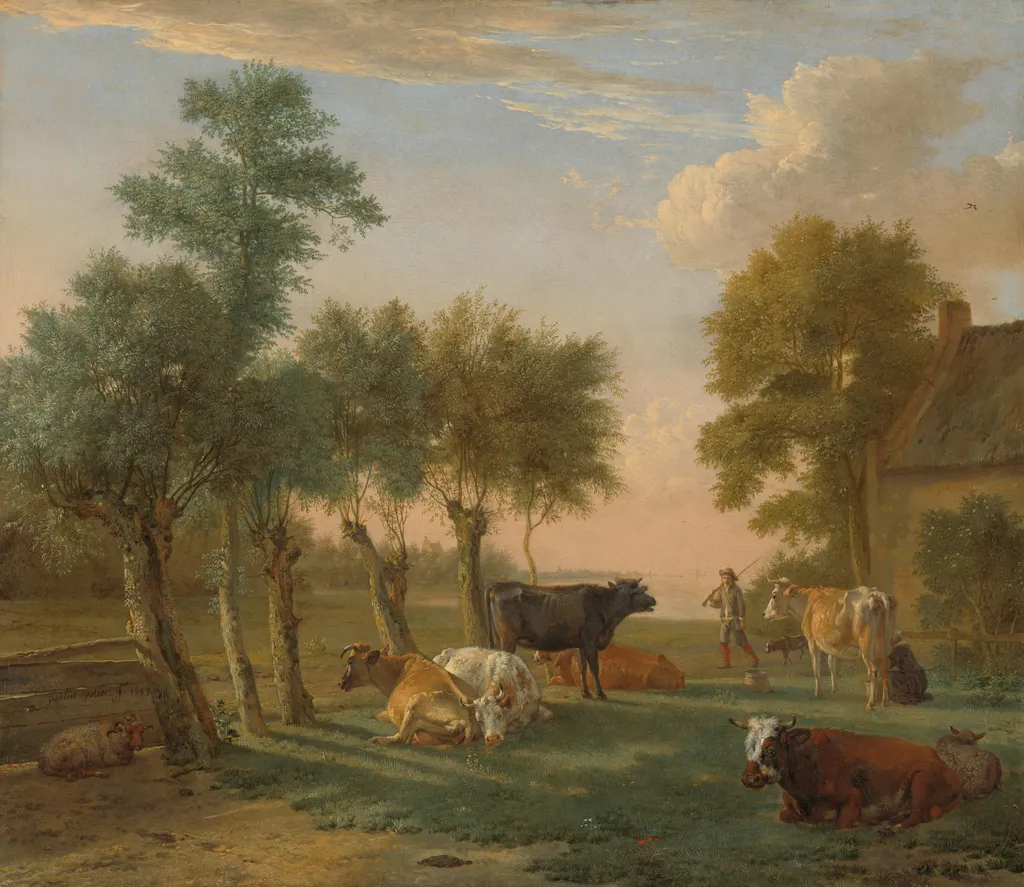
Cows in a Meadow near a Farm is an oil painting by the Dutch Golden Age artist Paulus Potter. It dates from 1653 and is held in the collection of the Rijksmuseum.
About this work
The Rijksmuseum holds the painting, which catches the pollard willows and meadows of the Dutch countryside with quiet precision.
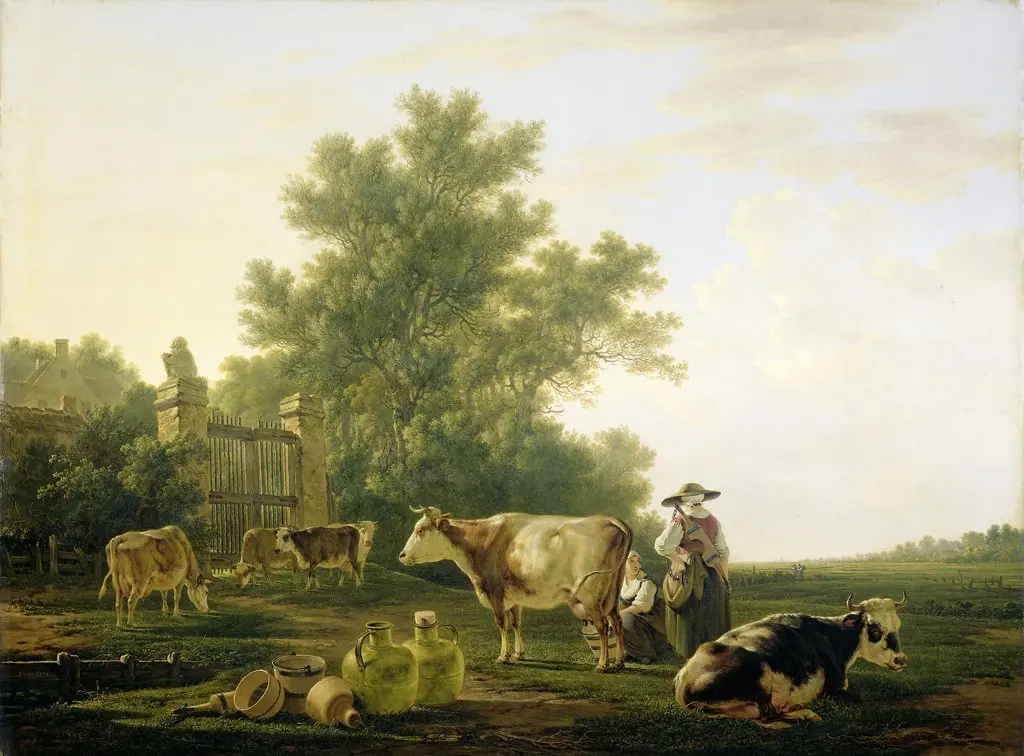
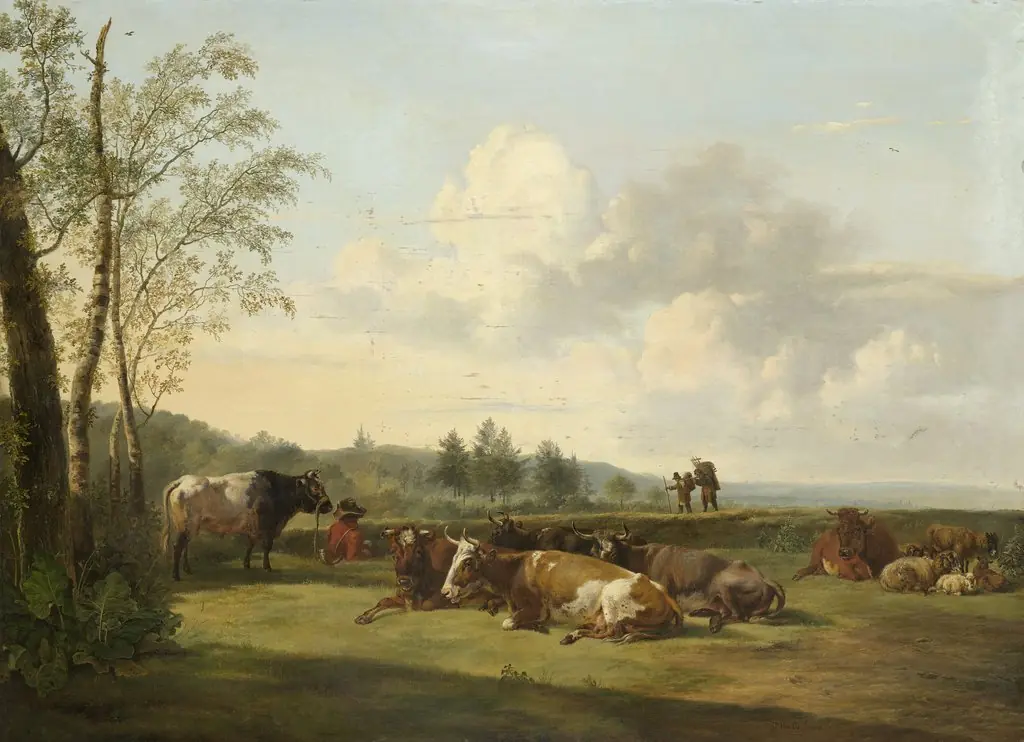
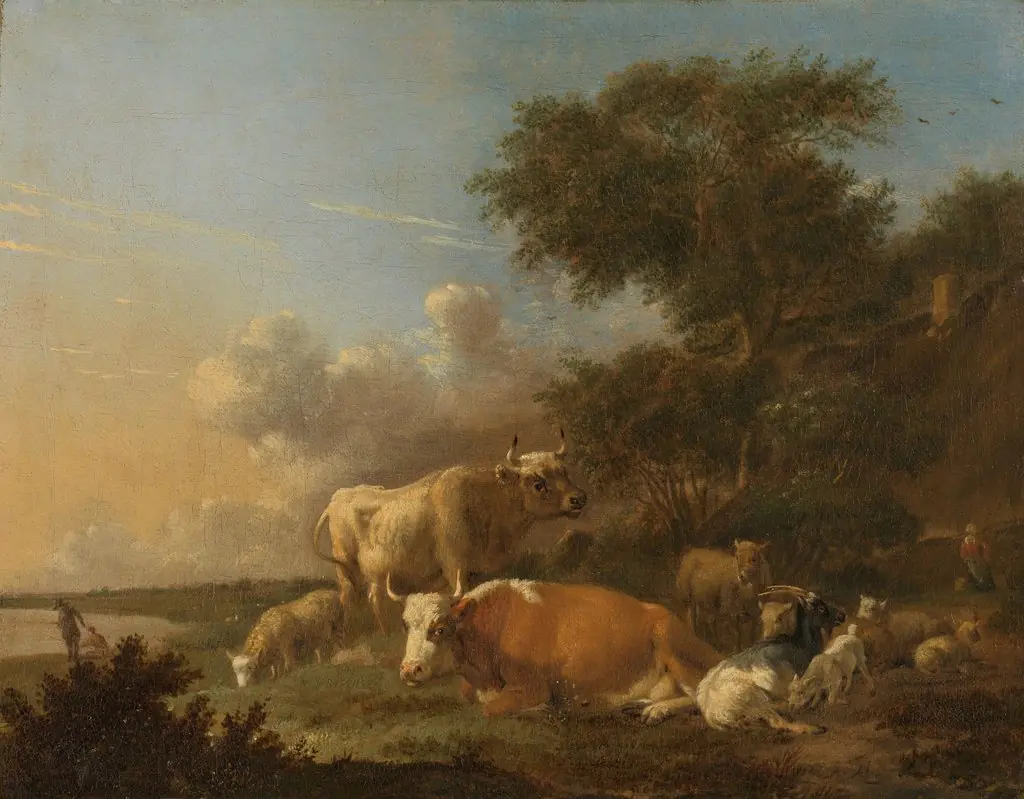
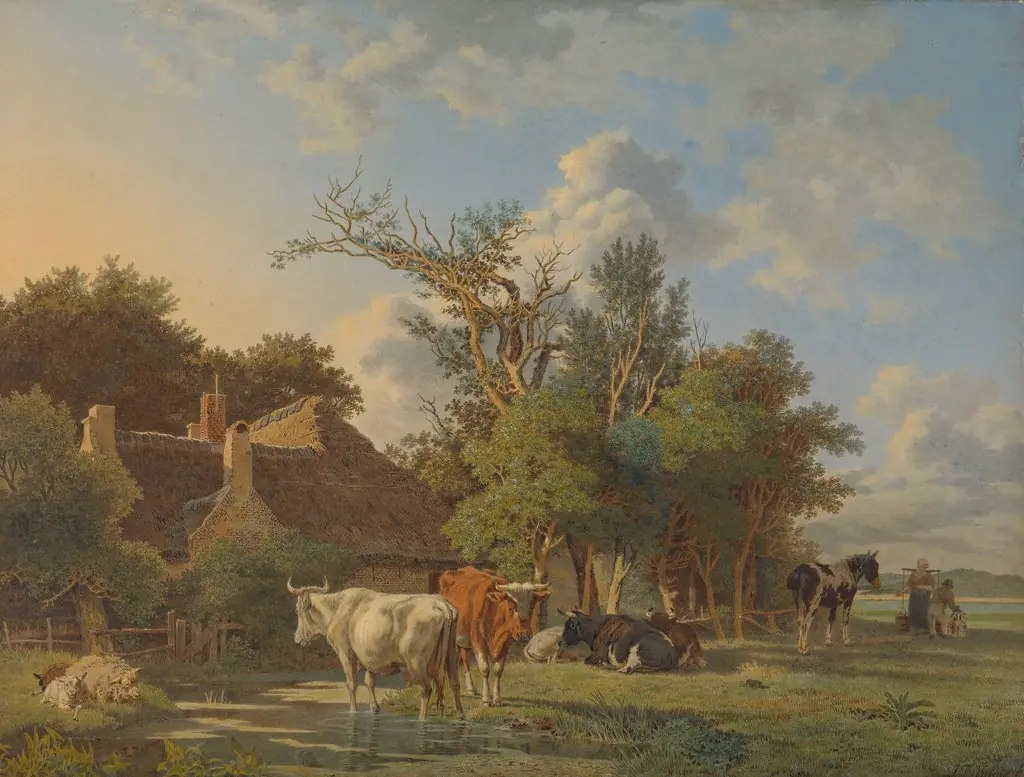
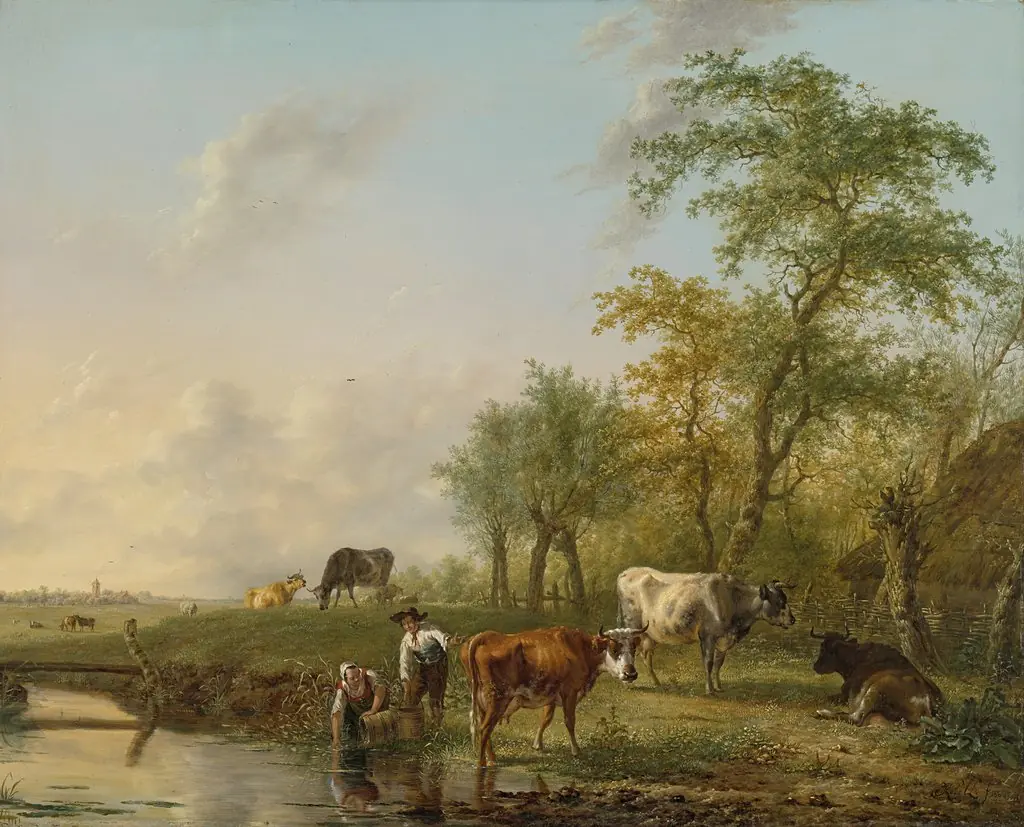
In the low light of a late afternoon, several cows rest beside a Dutch farmstead while a hunter walks his dog past the house and a woman milks a cow at the right. Paulus Potter signed and dated the canvas in the lower left in 1653, a year before his death at twenty-eight. The Rijksmuseum holds the painting, which catches the pollard willows and meadows of the Dutch countryside with quiet precision.
Overview
Paulus Potter's "Cows in a Meadow near a Farm," painted in 1653, exemplifies his specialized focus on animal subjects within the Dutch Golden Age. This oil painting, completed just a year before his early death at age twenty-eight, depicts a serene rural landscape. It showcases a tranquil farm scene under the soft light of late afternoon, featuring livestock and human figures engaged in daily activities. The work is recognized for its detailed observation and atmospheric rendering of the Dutch countryside.
Subject & Meaning
The painting captures a peaceful moment on a Dutch farm during the late afternoon. In the foreground, several cows rest and graze near a modest farmstead, positioned beside a body of water. Further details enrich the narrative: a hunter accompanied by his dog walks past the house, while a woman milks a cow to the right. A lone sheep also appears by a fence on the left, contributing to the quiet pastoral setting.
Technique & Style
Potter's distinctive style is evident in the meticulous rendering of natural elements, such as the pollard willows, expansive meadow, and distant pond. He employed oil paint to achieve a high degree of precision in depicting both the animals and the landscape. The scene is bathed in the warm, low light of a setting sun, creating an atmospheric effect that has drawn comparisons to later landscape painters, highlighting his skill in capturing specific times of day.
History & Provenance
Completed in 1653, this canvas is among the last works by Paulus Potter, who tragically succumbed to tuberculosis in Amsterdam the following year at the age of twenty-eight. Born in Enkhuizen in 1625 into an artistic family, Potter quickly established himself as a prominent animal painter. The painting, measuring 58 by 66.5 centimeters, eventually entered the collection of the Rijksmuseum, Amsterdam, through the generous bequest of Jonkheer J.S.H. van de Poll.
Legacy
Potter's innovative approach to animal painting, characterized by its meticulous observation and realistic portrayal, profoundly influenced subsequent generations of artists. His work set a significant precedent for the genre, particularly impacting later animaliers. Painters such as Constant Troyon, working centuries later, drew inspiration from Potter's detailed and empathetic depictions of livestock and their natural environments, acknowledging his foundational contribution.
Own this work as a print
Artist & collection
Artist
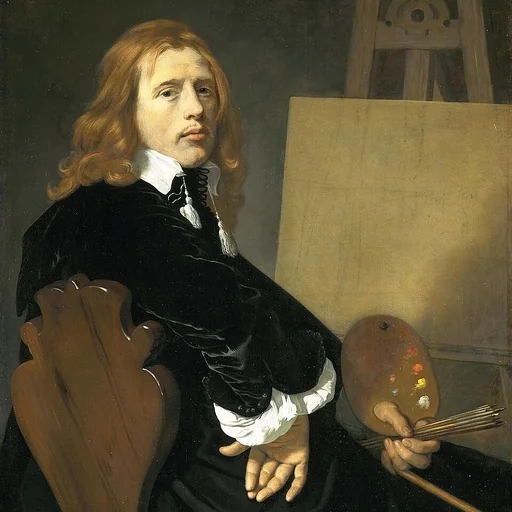
Paulus Potter (Dutch pronunciation:; 20 November 1625 (baptised) – 17 January 1654 (buried)) was a Dutch painter who specialized in landscapes featuring animals, often from a low vantage point.