Charles Emmanuel II, Duke of Savoy, and his family by Charles Dauphin
Charles Dauphin’s 1666 painting, "Charles Emmanuel II, Duke of Savoy, and his family," at the Museo del Prado, is more than just a family portrait; it's a statement of dynastic power and continuity.
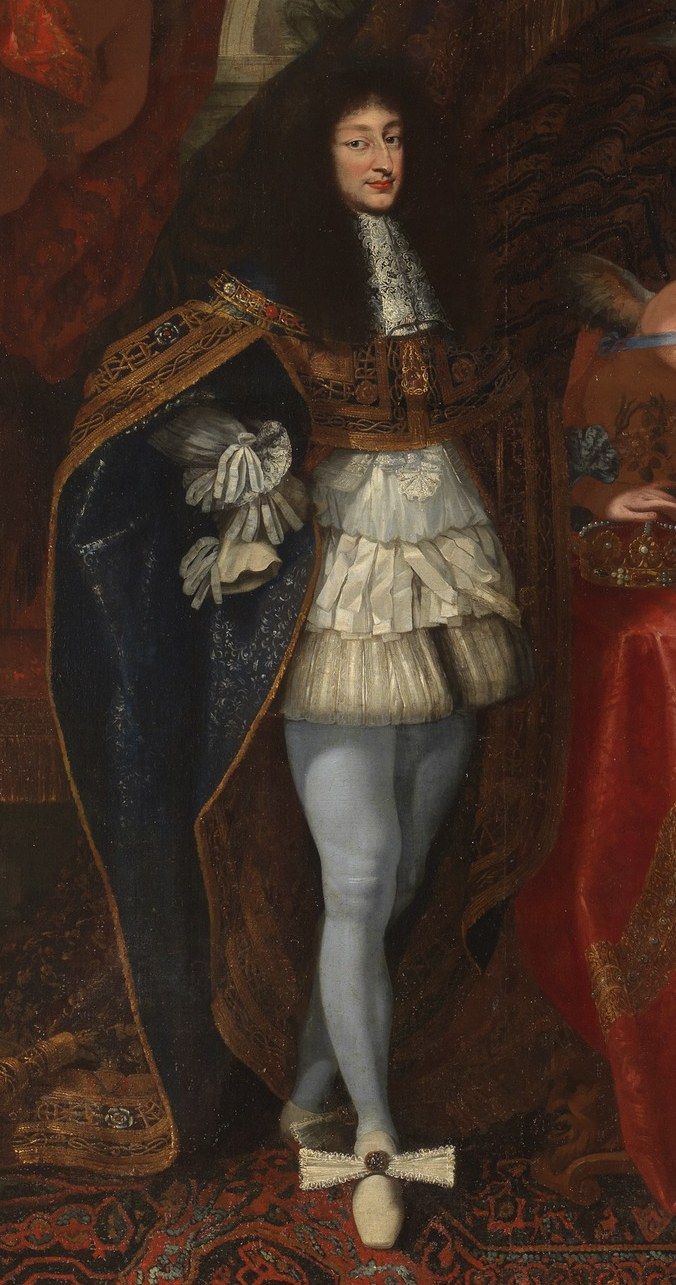
Every element, from the Duke's crown to the opulent red curtains, is carefully placed to convey the family's importance. Look closely at the rich lace and embroidered sash of the Duke, symbols of his immense wealth and status.
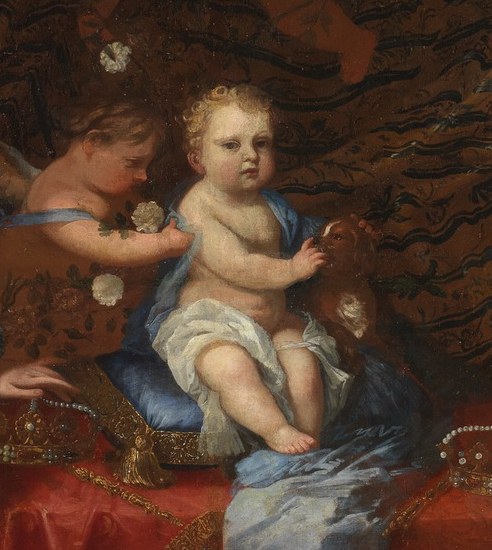
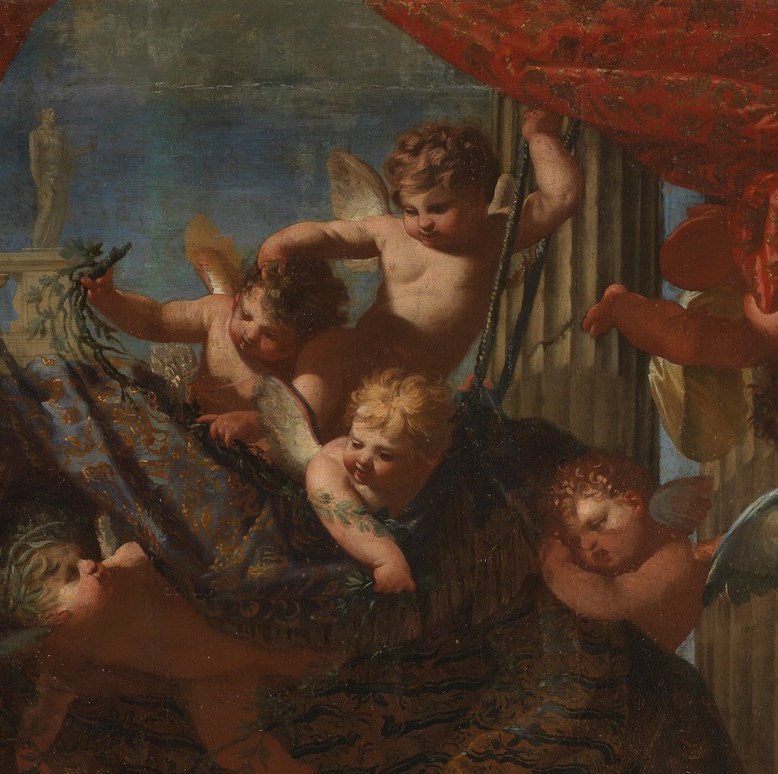
The central focus, however, is on the infant Victor Amadeus II, who represents the future of the Savoyard line. The cherubs above him aren't just decorative; they offer a celestial endorsement, solidifying the family's legitimate claim to power for generations to come.
This painting beautifully illustrates how art was used in the mid-17th century to reinforce political messages and assert aristocratic standing. What other subtle messages do you see?
Details
Transcript
This 1666 portrait tells a story of power. The Duke's crown signifies his absolute rule. His opulent sash and lace collar reinforce his high status. But the real message is in the infant son, Victor Amadeus II. He represents the continuity of the Savoyard dynasty. Cherubs overhead offer a divine blessing on his future.