Forest by Meindert Hobbema
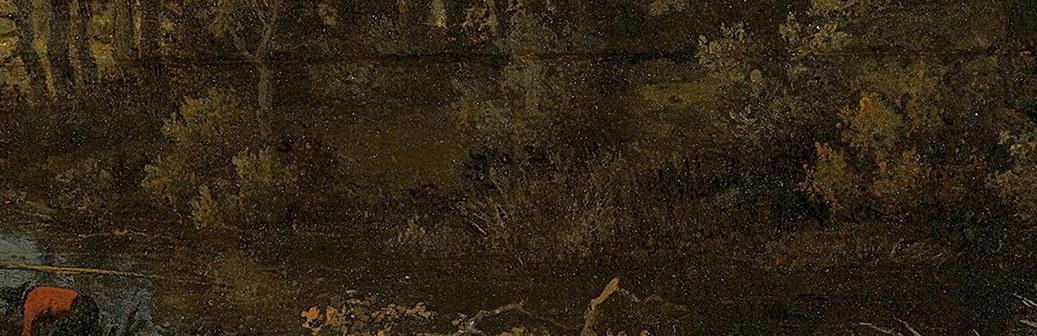
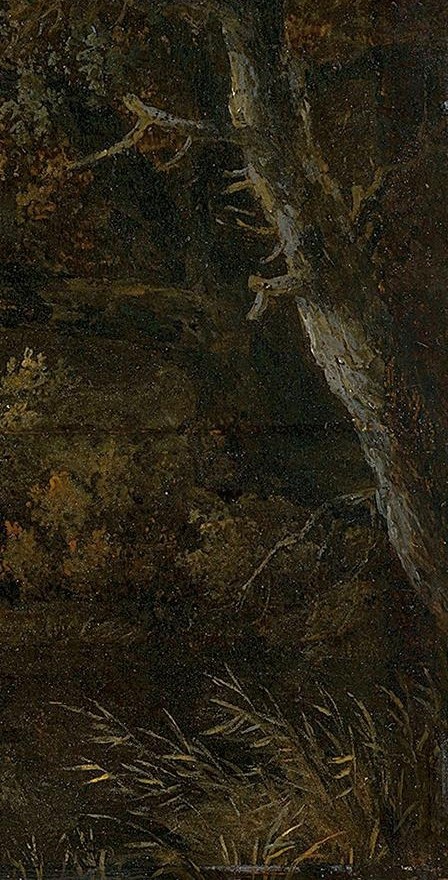
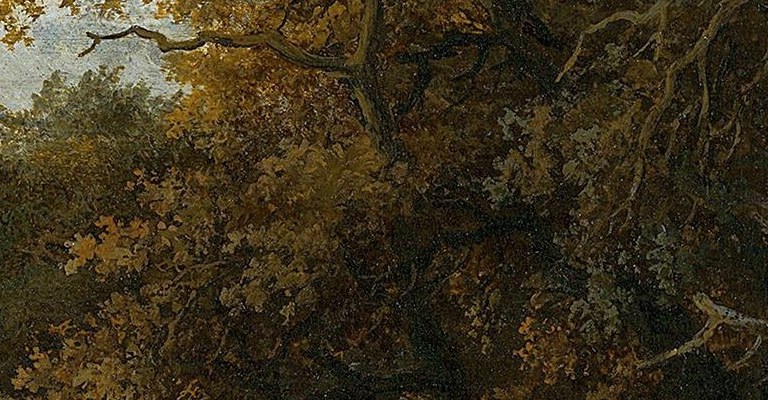
Meindert Hobbema's "Forest" from 1662, housed at the State Hermitage Museum, presents a tranquil woodland scene that holds a surprising modern secret: the calm pond at its center is entirely man-made.
At first glance, the body of water appears to be a natural part of the dense forest landscape. The way it reflects the surrounding trees and sky gives it an organic feel, perfectly blending with the natural elements. However, this pond was an artificial creation, designed for leisure and aesthetic appeal.
Hobbema, a pupil of Jacob van Ruisdael, was known for his sunlit forest scenes with glistening ponds. This painting beautifully captures the 17th-century Dutch appreciation for both wild nature and carefully cultivated landscapes, where man-made elements could seamlessly integrate with the environment. It shows a fascinating intersection of nature and human design.
Isn't it interesting how what appears purely natural often has a human touch?
Details
Transcript
This painter was a master of serene forest scenes. Look closely at the water, reflecting the trees and sky. It looks perfectly natural, a tranquil woodland pond. But this entire body of water was actually man-made. It was an artificial pond, designed for leisure and beauty. A surprisingly modern detail in a 17th-century landscape.