The Edge of the Forest at Les Monts-Girard, Fontainebleau by Diaz de la Peña, Narcisse
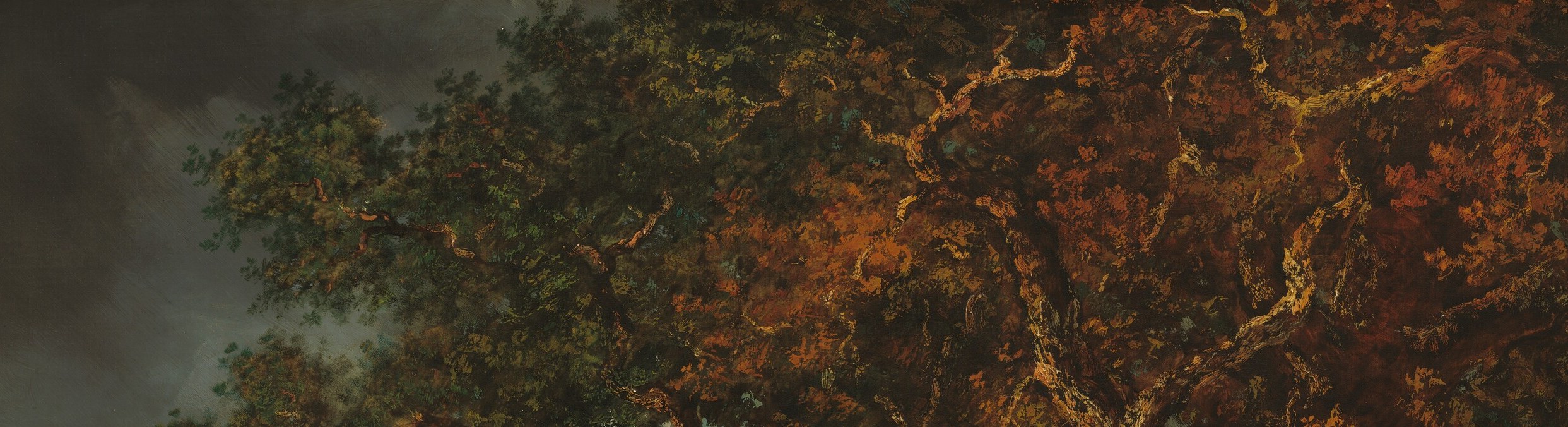
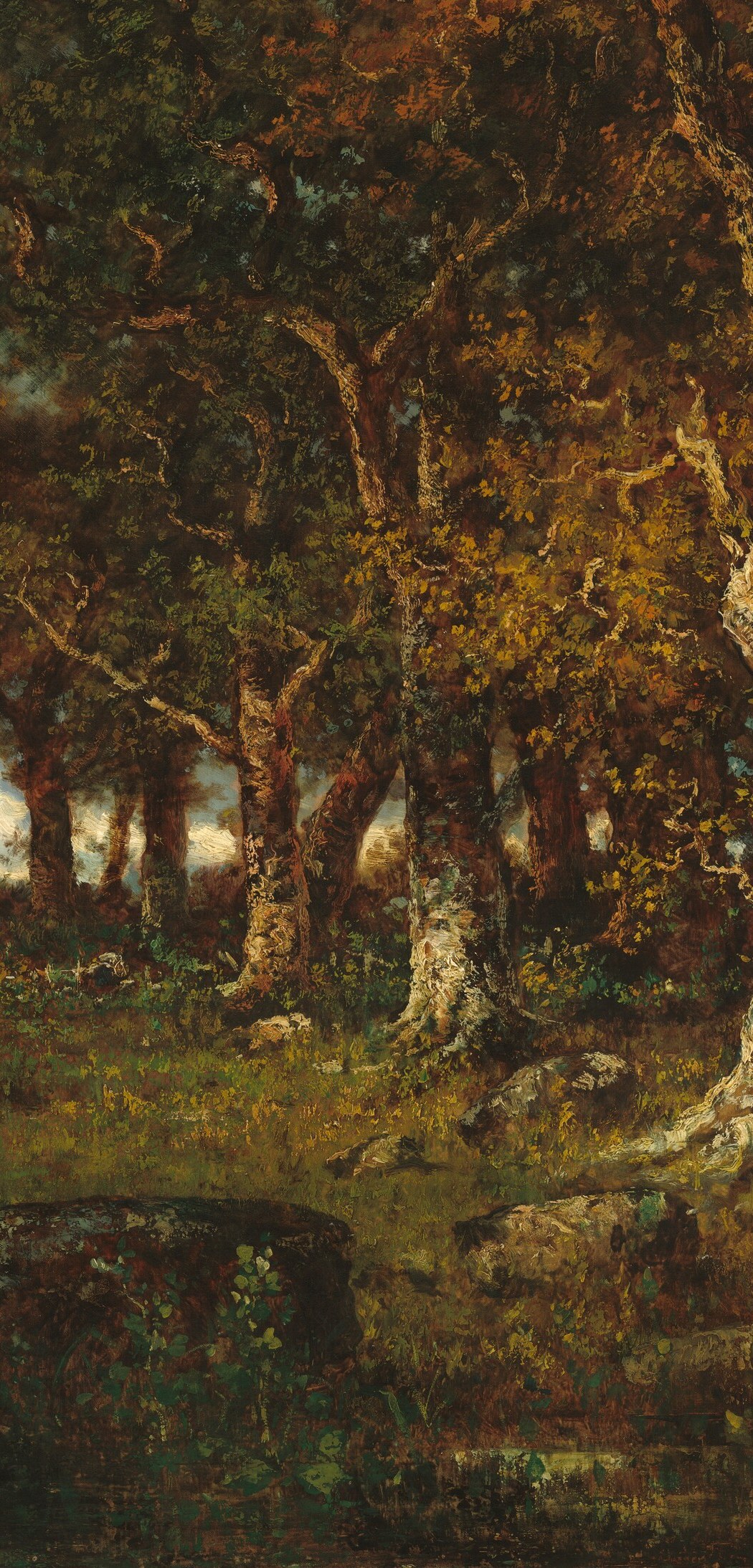
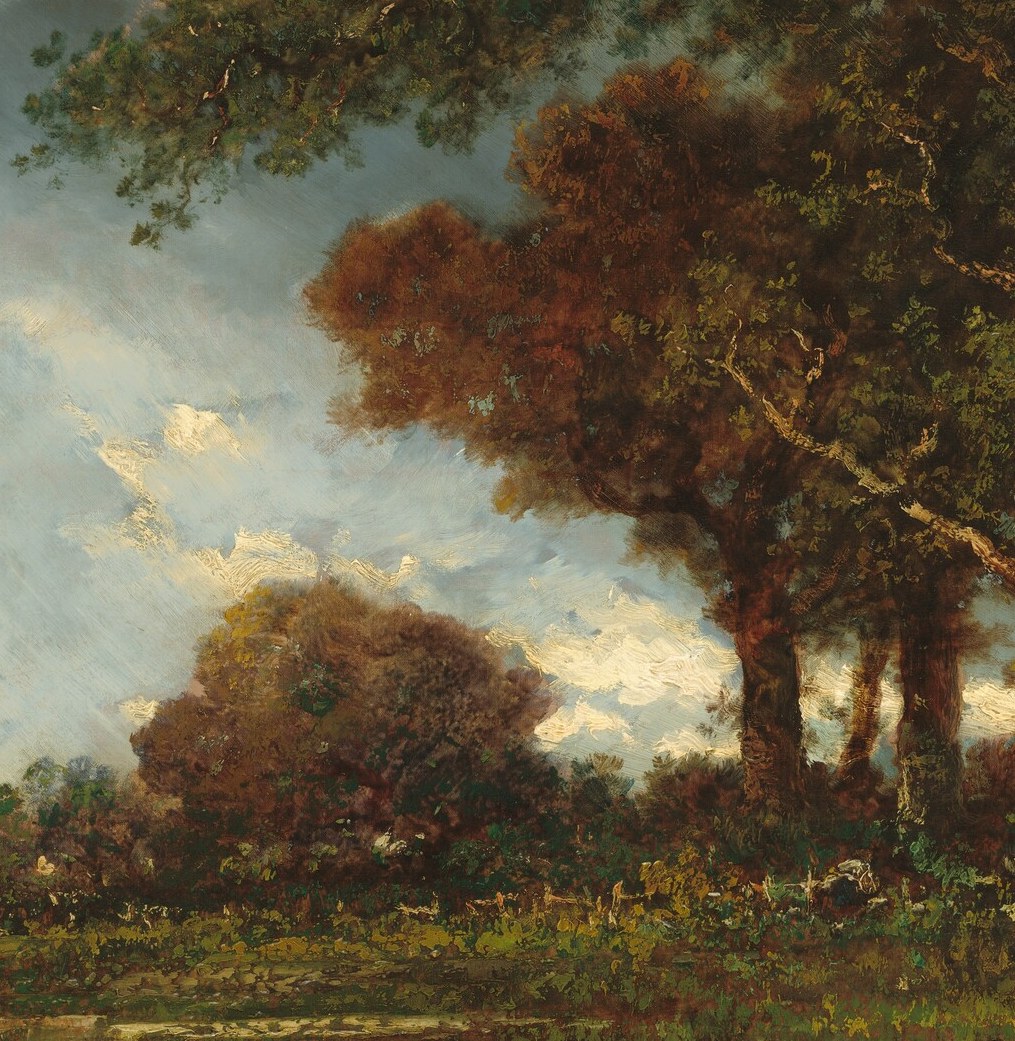
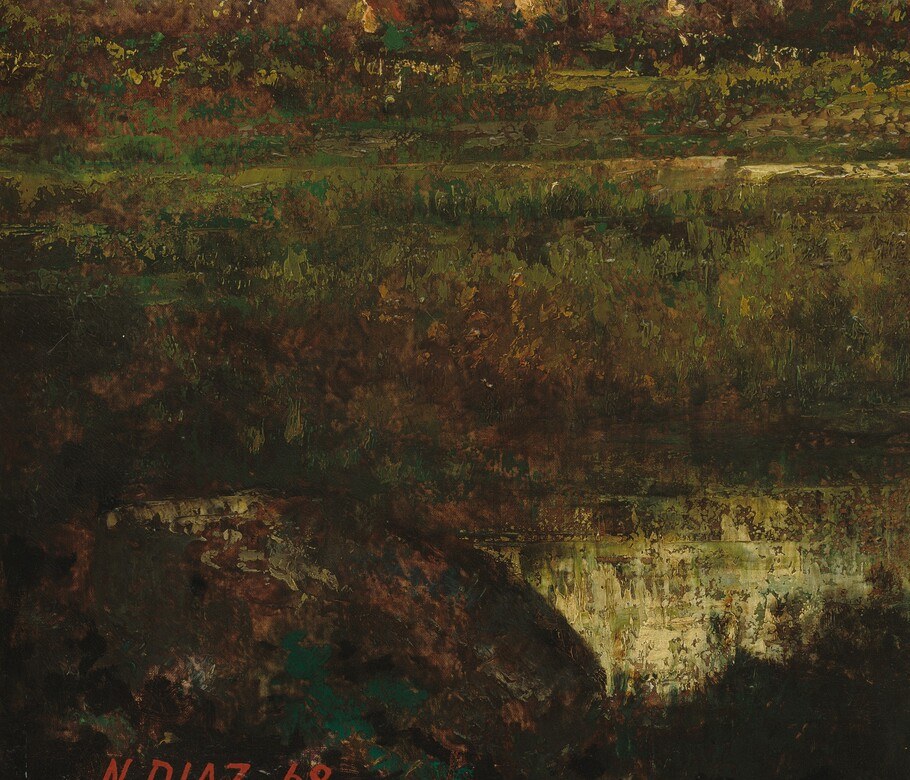
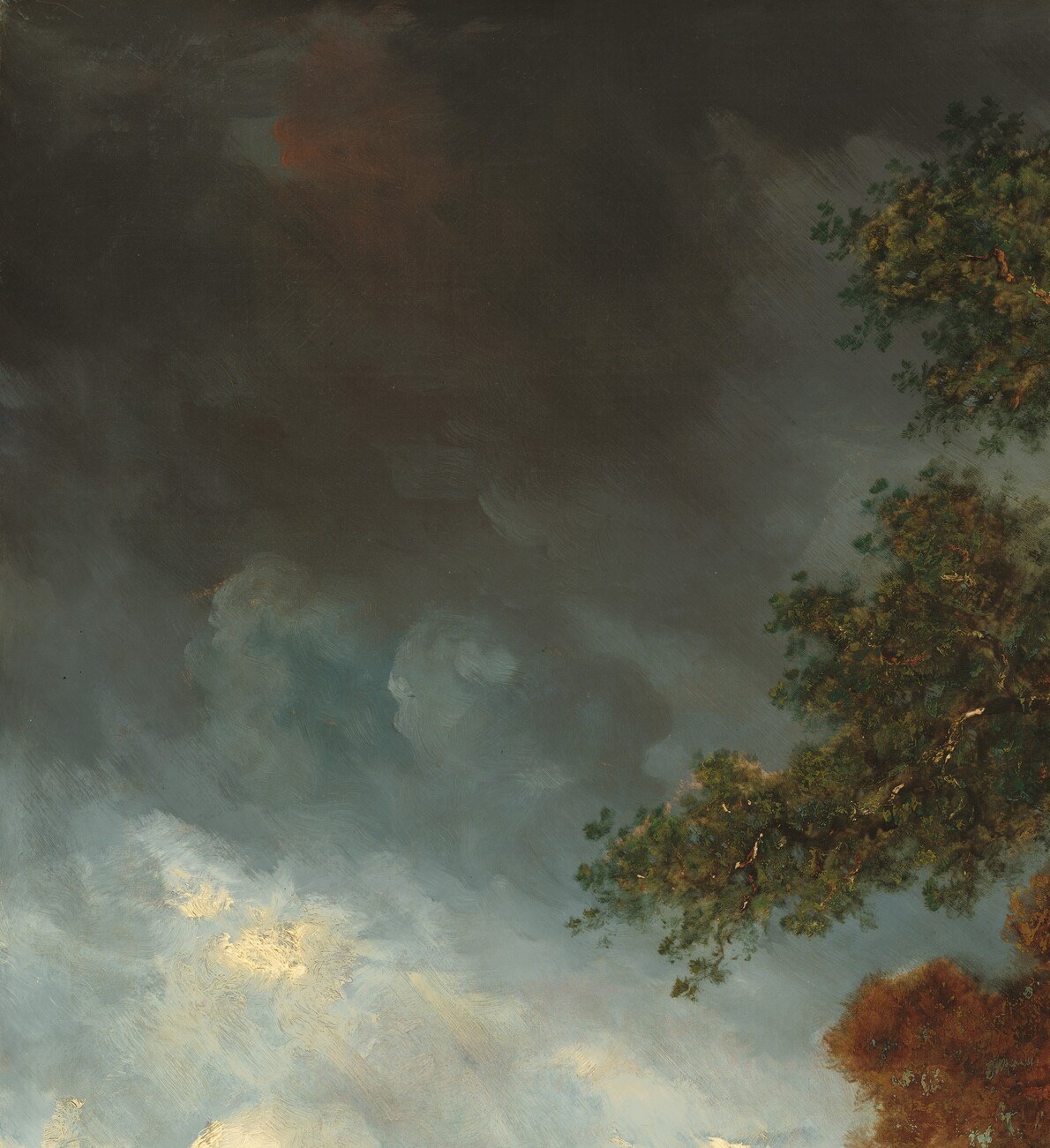
This is 'The Edge of the Forest at Les Monts-Girard, Fontainebleau,' painted by Narcisse Diaz de la Peña in 1868. It is an oil on canvas landscape of the famous Fontainebleau forest, a place the artist returned to constantly as a member of the Barbizon School. Its warm palette and dense woodland composition make it feel like a quiet invitation into nature, but the painting's true story is a crime.
Look at the central oak trunk with its tortured, heavily textured bark. Diaz used thick impasto strokes to build those ridges, a hallmark of his love for tactile paint surfaces. Then let your eye move past it, into the pale clearing visible between the dark trunks. That small, luminous depth is the only real spatial escape in the composition, and it was the last detail the painting's rightful owner would have recognized.
In 1940, the canvas hung in the Paris home of a Jewish collector. When Nazi occupation forces began systematically cataloguing and seizing valuable art, this painting was marked and taken. It disappeared into the chaos of looted objects and was lost to the public and the family for over seventy years. It was eventually recovered and restituted, one of thousands of works still being traced to their pre-war owners.
The Fontainebleau forest is ancient, and Diaz painted its endurance. The trees he depicted are still there. The painting itself, against the odds, is still here too, a small, quiet survivor of a much larger theft.
Details
Transcript
In 1940, this painting hung in the Paris home of a Jewish art collector. German forces occupied the city. His collection was targeted for seizure. Agents catalogued everything of value. This canvas was marked for removal. Look at the dense, dark hollow just beyond these trunks. That passage of pale light was the last thing its owner saw here. The Nazis took it. The painting vanished for over seventy years.