Frances Susanna, Lady de Dunstanville by Gainsborough, Thomas
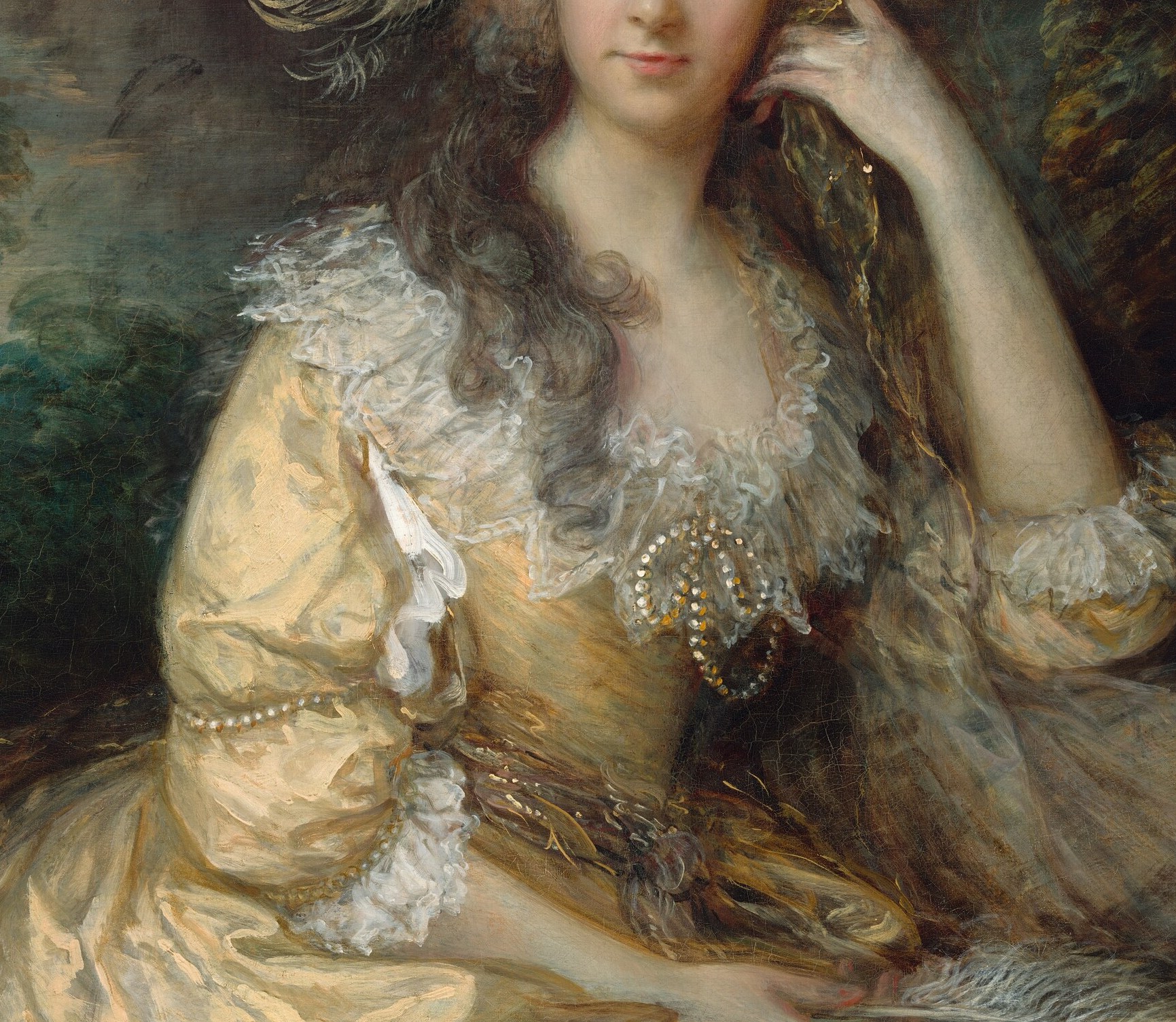
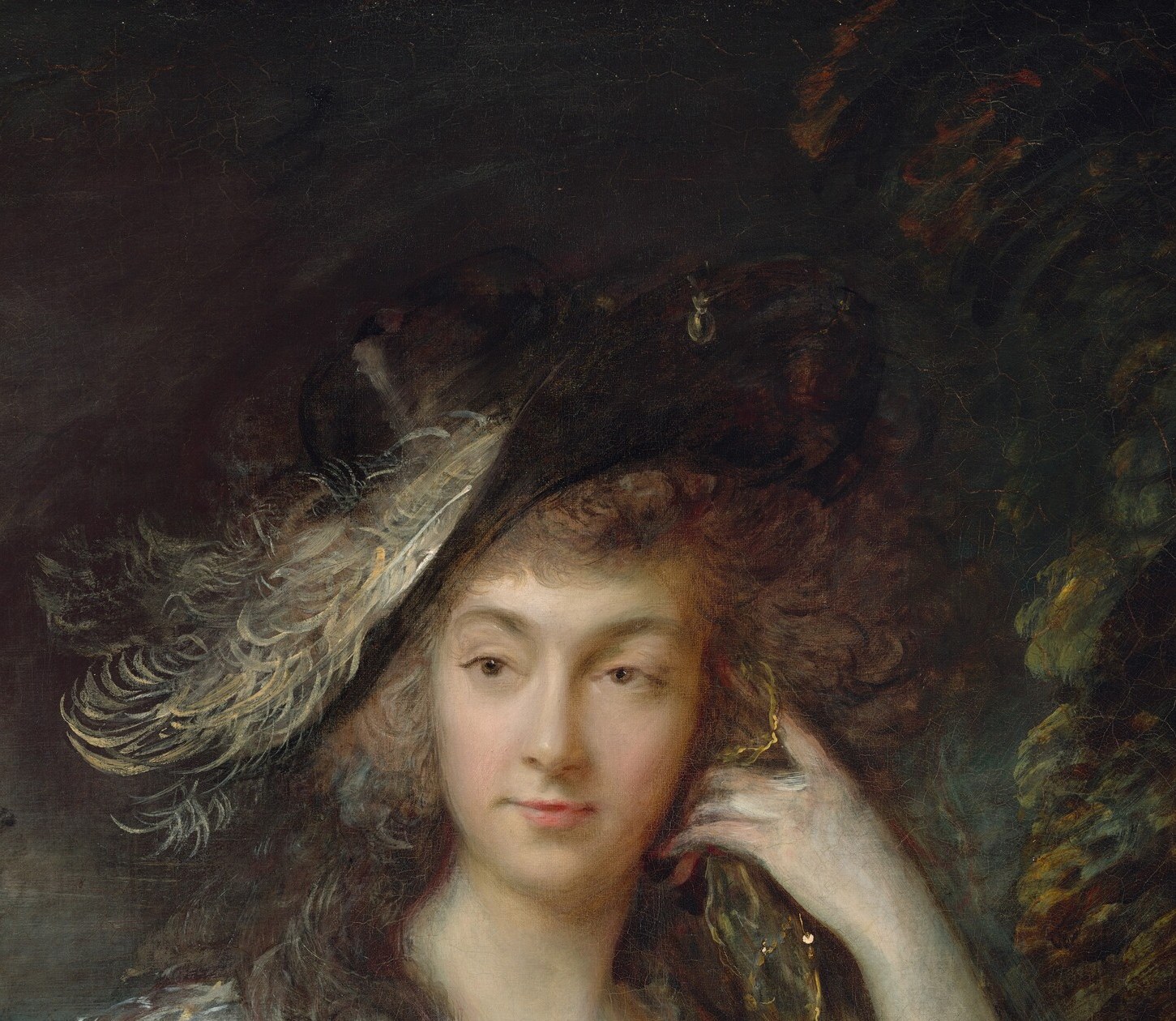
Frances Susanna, Lady de Dunstanville, painted by Thomas Gainsborough around 1786. This portrait has an unusually unguarded quality for a formal aristocratic commission of its time, the kind of psychological insight Gainsborough often found more easily in his landscapes than in his paid portraits.
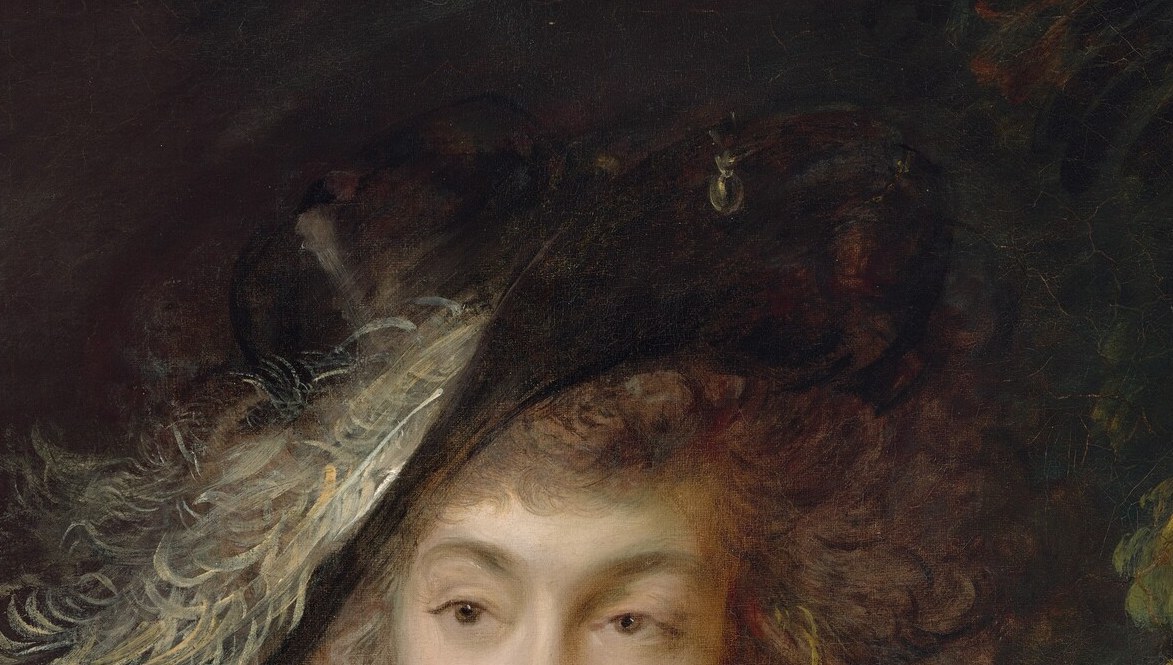
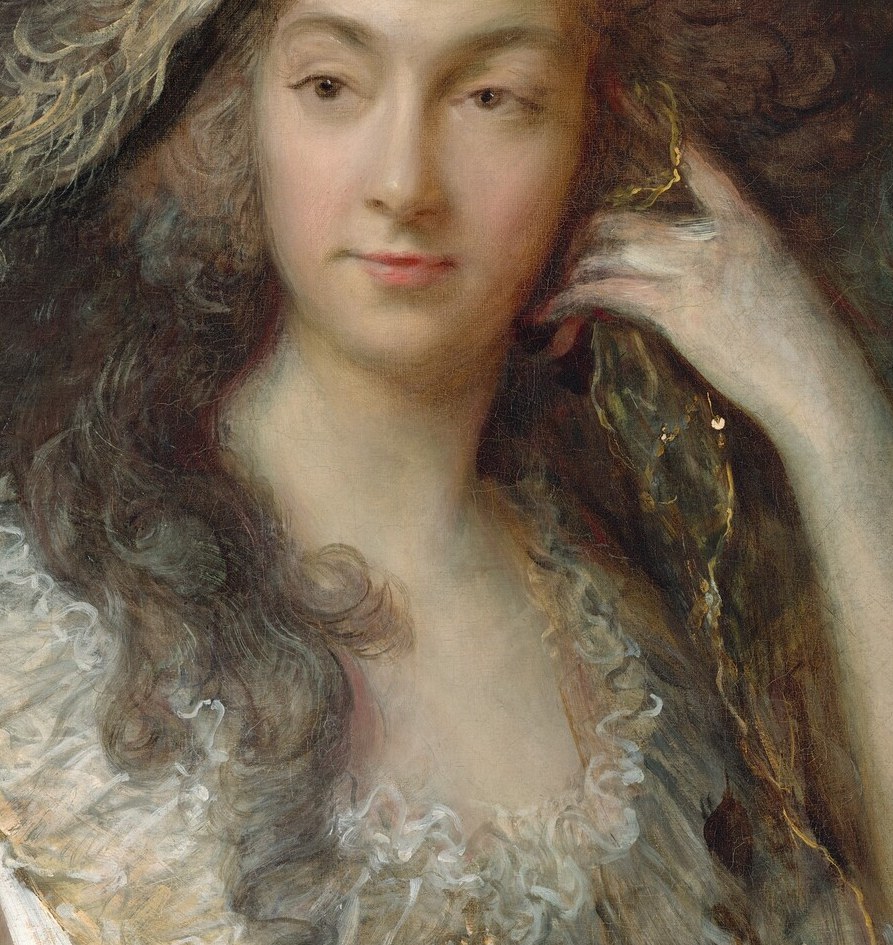
The key is in the contrast: her eyes are rendered with extraordinary liquid precision, deep and slightly dreamy. But move down to her left hand, resting in her lap, and it dissolves into loose, almost abstract strokes, a ghost of a hand, barely finished. Gainsborough was famous for this unevenness, lavishing attention on the face and letting the extremities remain a suggestion.
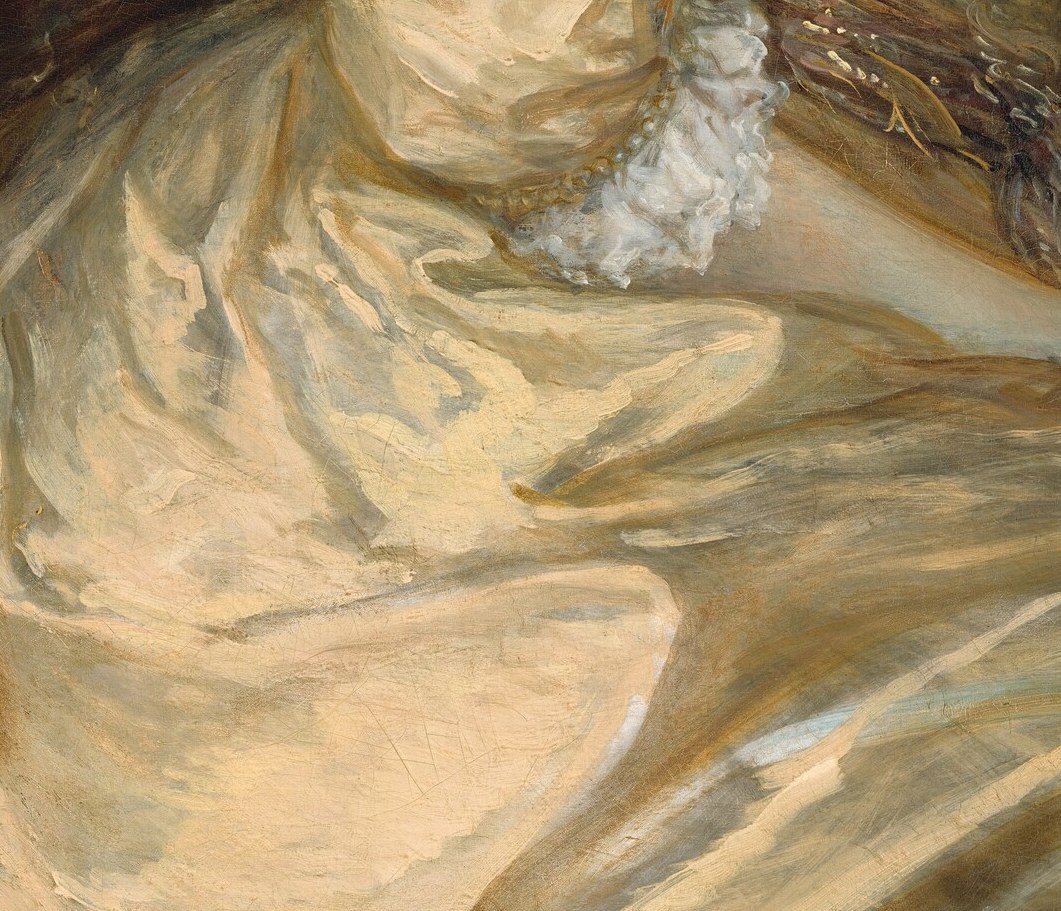
Frances Susanna Hippisley Coxe was painted at the height of her social standing. Gainsborough was in his late fifties and had only a couple of years left to live, he died in 1788. He painted fast, in feathery, calligraphic strokes, and by this period his palette was light and his touch almost impossibly confident.
There is a tenderness here that feels personal. Perhaps it was simply his speed, the painting didn't give him time to stiffen. Perhaps he saw something in her composure that he wanted to preserve. What do you read in her face?
Details
Transcript
She was a wealthy baroness in 1786. Look at the eyes. They are not polished, but liquid, almost fragile. Now look at her hands. The left is barely finished, a ghost of a hand. Gainsborough painted her quickly, in his final years. He died two years later, in 1788.