Jeanne Samary by Renoir, Auguste
This is Renoir's portrait of Jeanne Samary, painted in 1878. She was a star actress at the Comédie-Française and one of the most frequent sitters in the Impressionist circle, Renoir painted her more than a dozen times.
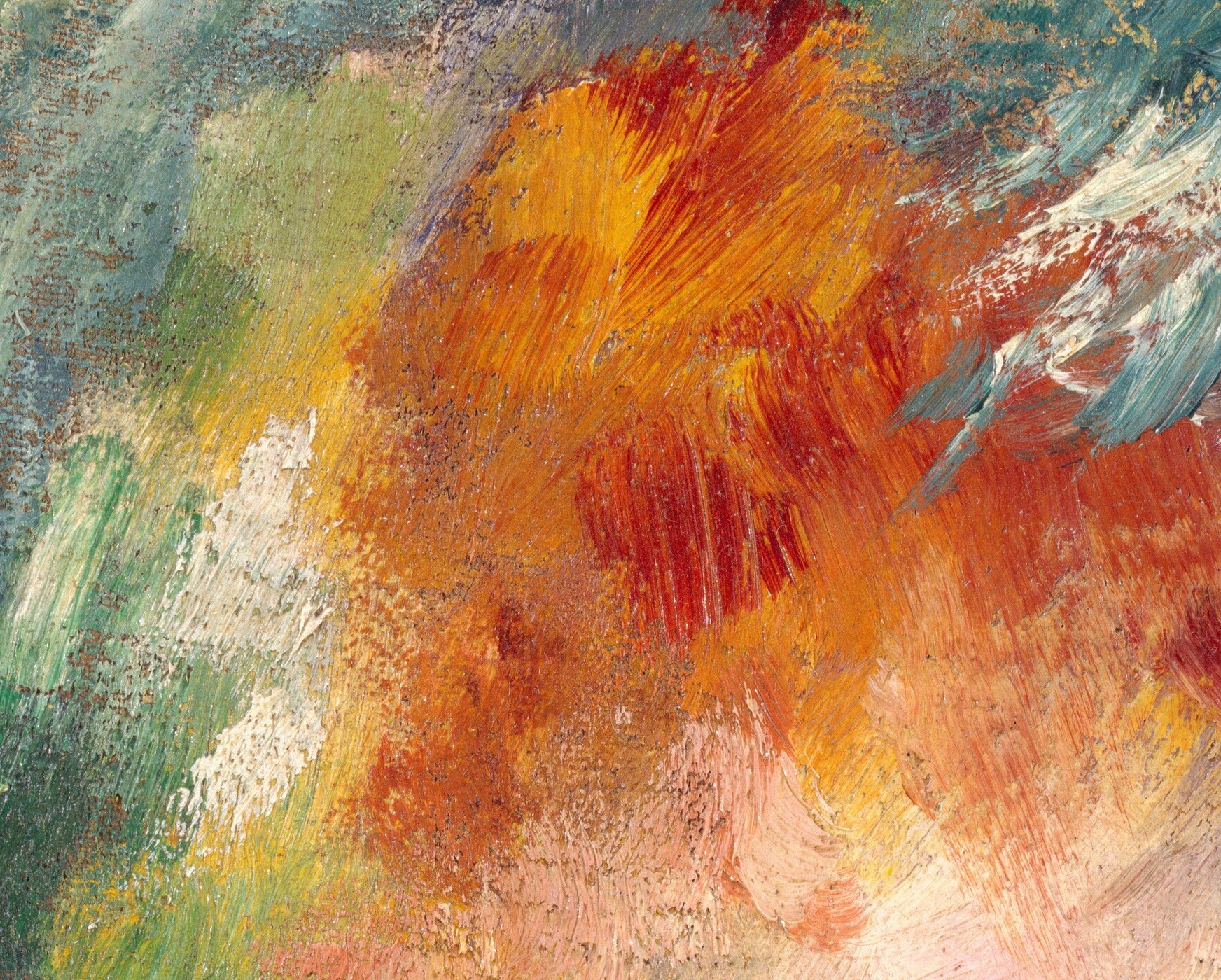
Run your eye over this painting and you will notice something strange: there are almost no outlines. The hat flowers dissolve into her hair. Her chin melts into the lavender collar without a seam. The whole portrait is built from wet strokes layered beside wet strokes, color meeting color directly.
The only hard edge in the picture is the glint of light on her visible eye. That one small point of definition gives the whole face its psychological presence. Everything else is atmosphere. Renoir used a near-white impasto on her cheek to capture gaslit stage warmth, he was not painting a woman in a room but a performer in her element.
Renoir had trained as a porcelain painter as a teenager, learning to build form with thin, luminous glazes. That early discipline never left him, even as he pushed Impressionist dissolution further than almost anyone. This portrait comes from his most confident decade, just after the landmark Bal du moulin de la Galette, when he was inventing a new way for paint to feel like living light.
Details
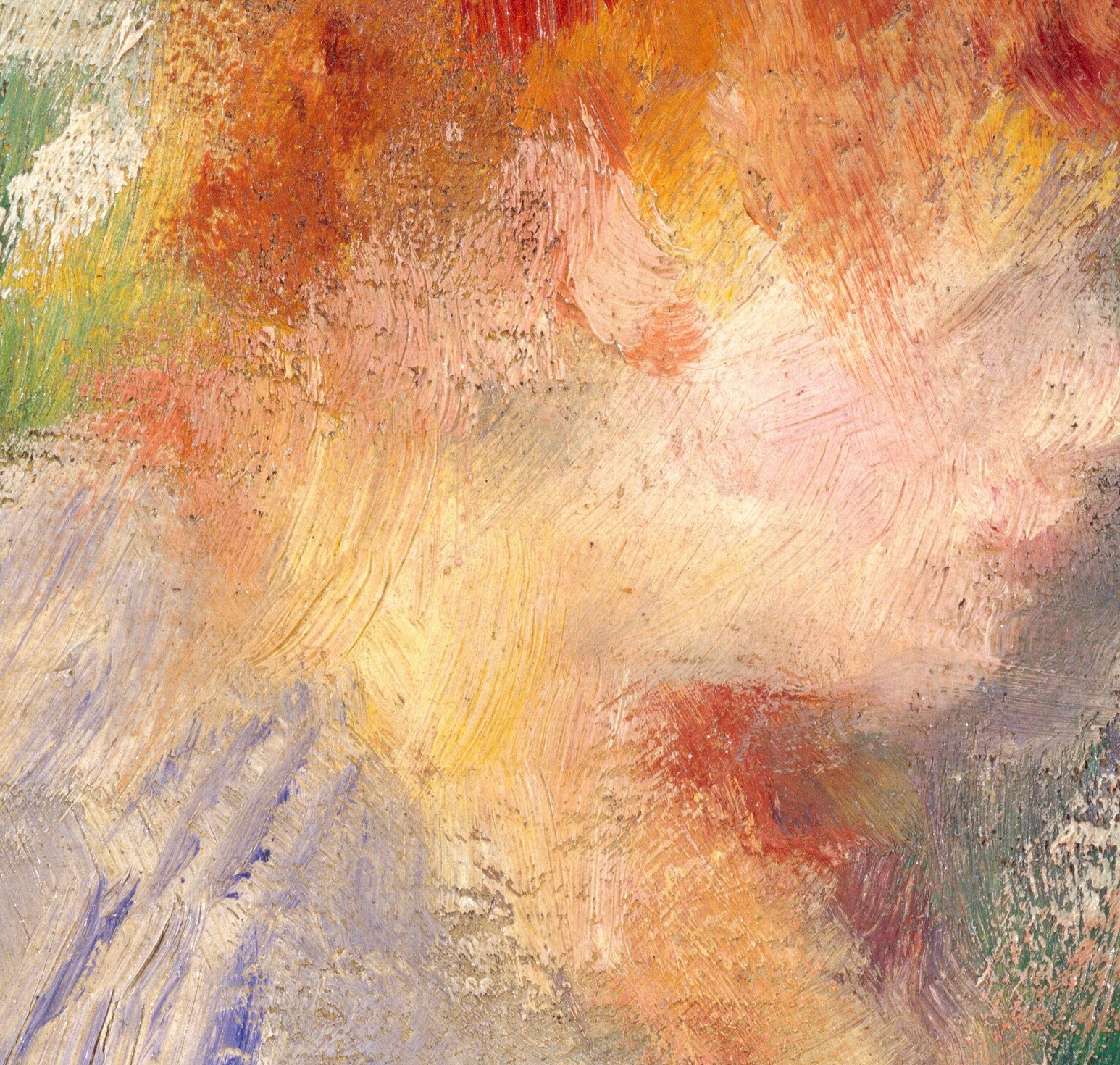
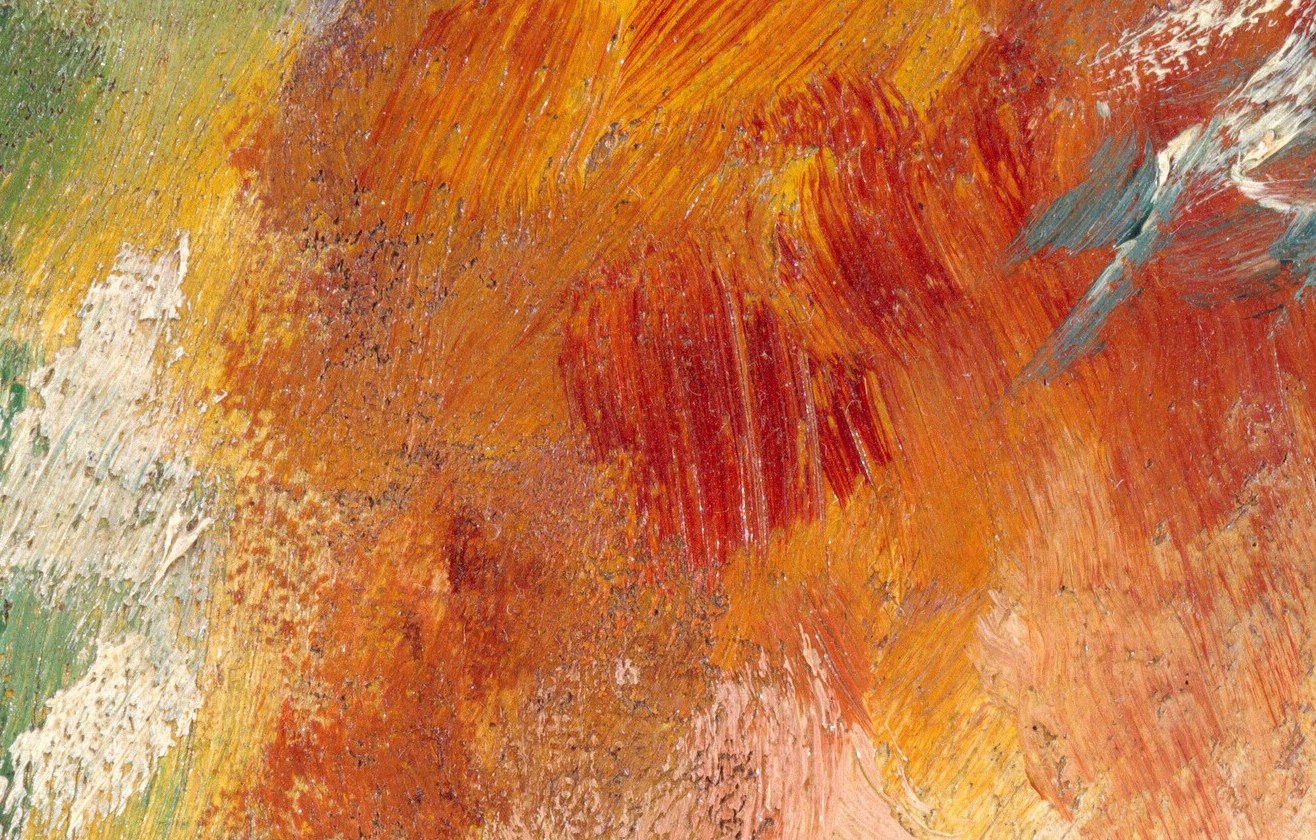
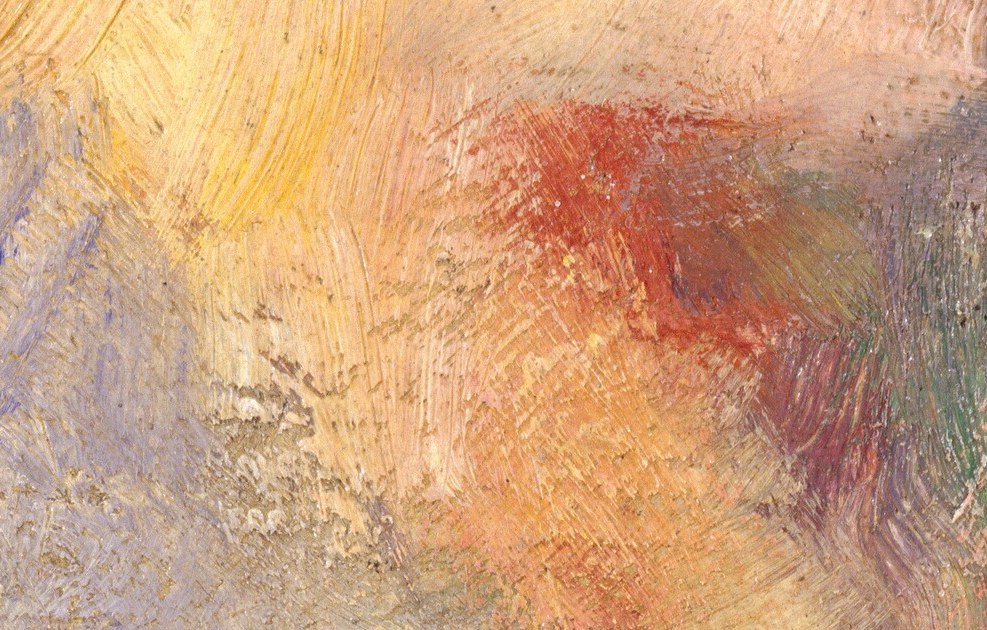
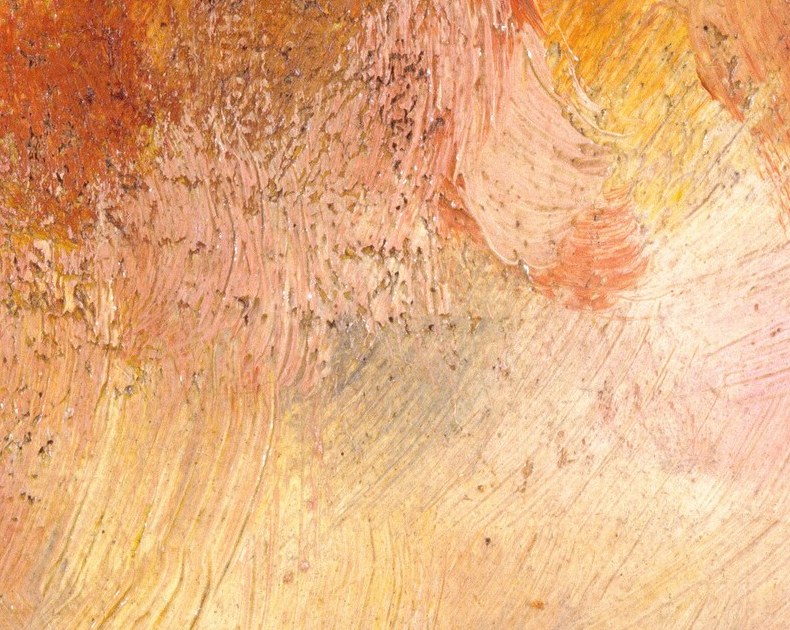
Transcript
You look at her and think: a face, a hat, a dress. But Renoir painted no outlines anywhere in this portrait. Look at the hat flowers bleeding into her hair. Orange, red, ochre, layered in wet comma-strokes, not blended. And where her chin meets the collar, no boundary. Just two colors meeting. The only hard edge in the whole painting is her eye. Jeanne Samary was a star at the Comédie-Française. He painted her surrounded by stage warmth. The whole portrait is an actress dissolving into the light that made her famous.