Wreck of the Aimable, on the Coast of Texas. 1685 by Catlin, George
George Catlin, an artist known for documenting the American frontier, also captured historical narratives like *Wreck of the Aimable, on the Coast of Texas. 1685*. Painted in 1848, this oil on canvas, now in a private collection, recounts a true maritime disaster from 1685.
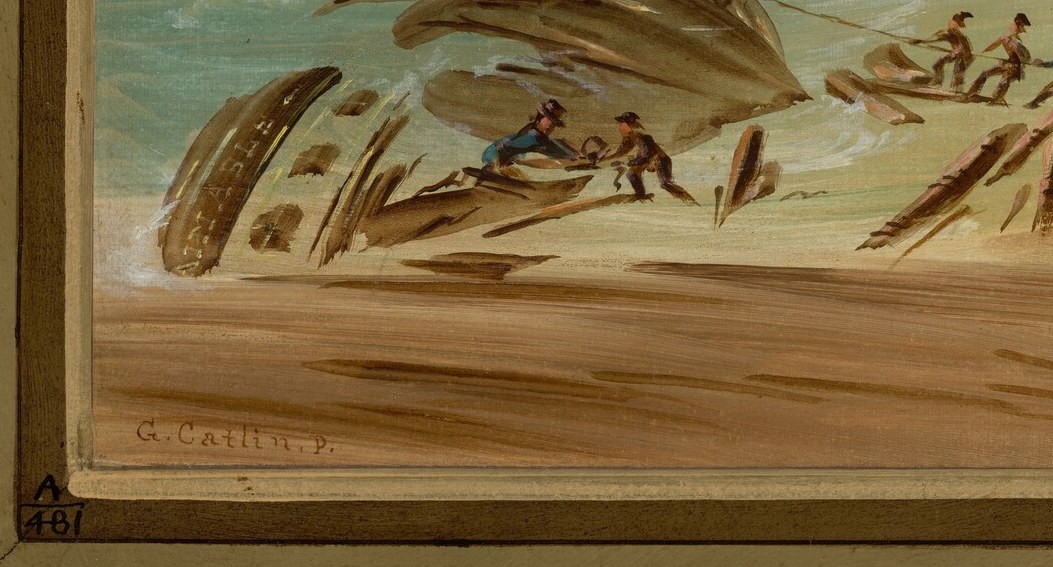
Look at the detailed depiction of the splintered ship hull and the figures working on the shore. These elements highlight the immediate aftermath and the human struggle for survival against nature's power.
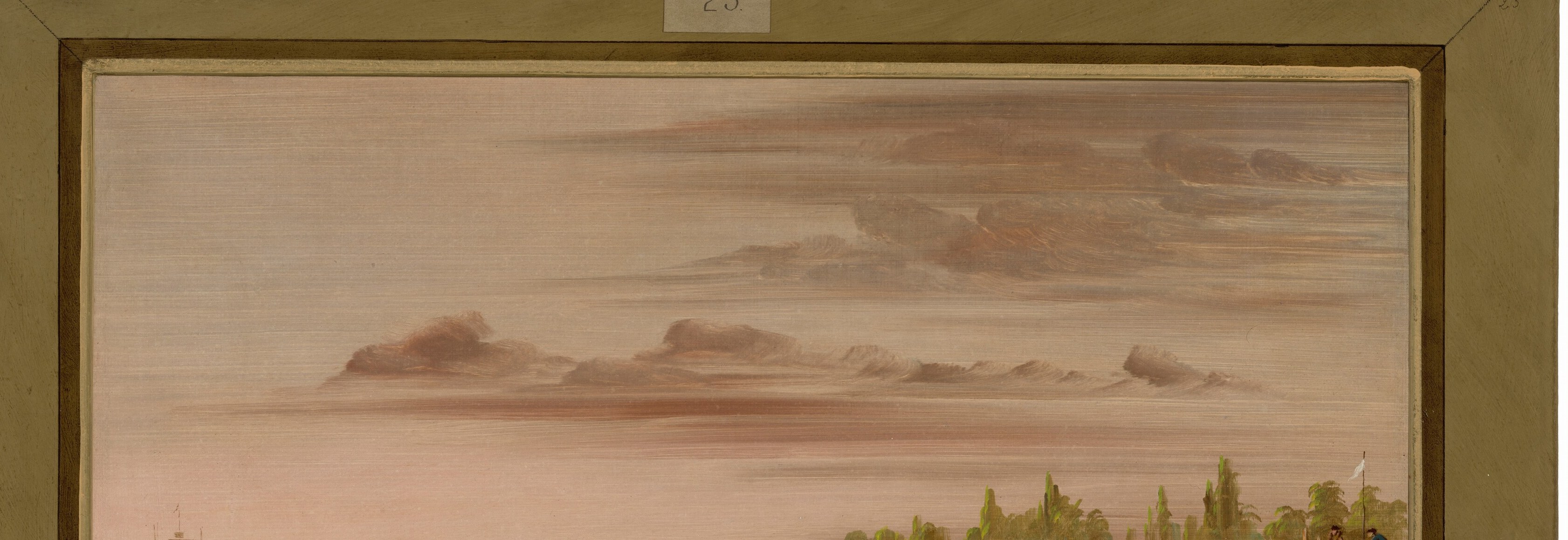
The solitary, windswept tree on the beach is more than just scenery; it stands as a powerful symbol of resilience and isolation. Catlin's choice to depict an event from centuries prior showcases his versatile interest beyond his famous portraits of Native Americans.
What feelings does this desolate yet determined scene evoke?
Details
Transcript
This painting tells a real story of a shipwreck from 1685. Look closely at the splintered hull of the Aimable. The artist, George Catlin, captured the violent aftermath of the disaster. Figures on the beach haul timbers, struggling for survival. This solitary, windswept tree stands as a stark symbol. It represents resilience and isolation against the vast Texas coast. Catlin often painted American frontier life, but also dramatic history.