Saints John the Evangelist and Mary Magdalene by http://www.wikidata.org/.well-known/genid/ec0fbf4400ad5e80a07a1a601edb31bd
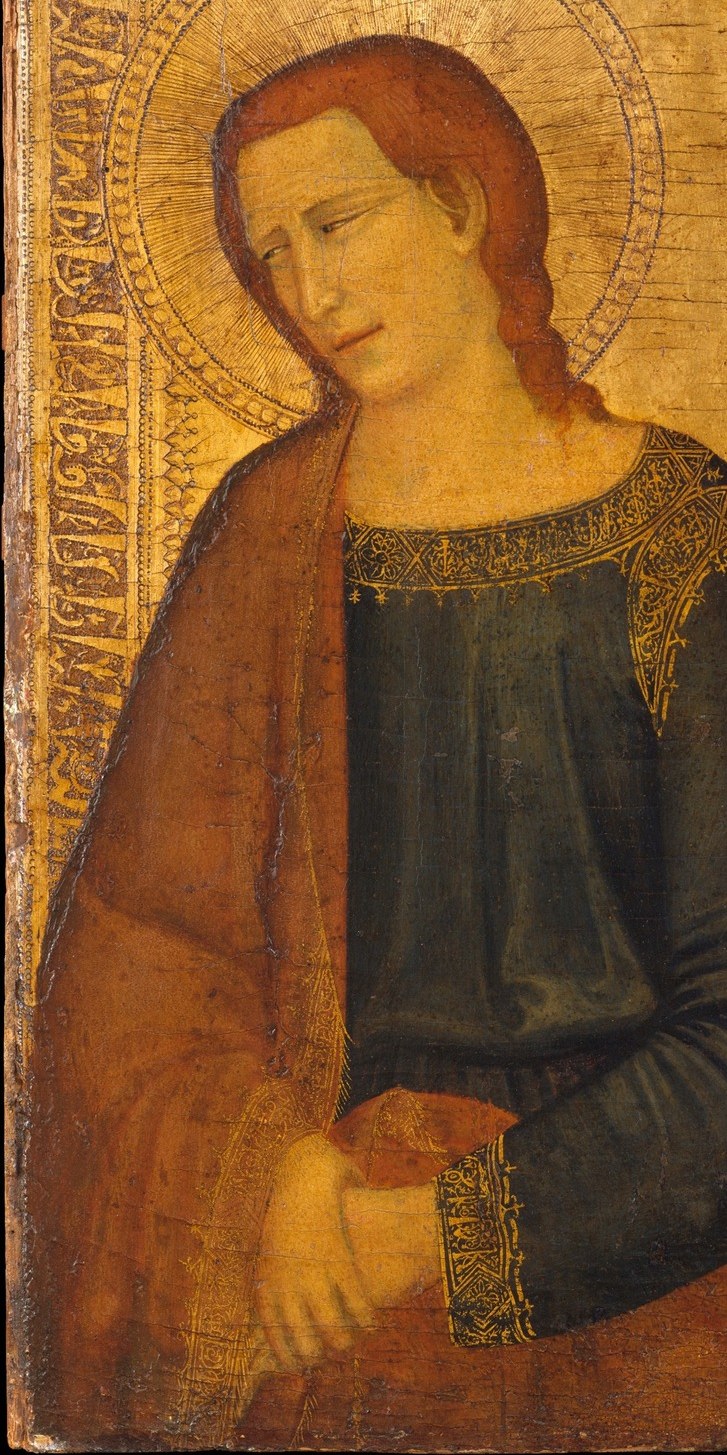
This is 'Saints John the Evangelist and Mary Magdalene,' painted around 1340 by the Sienese master Lippo Memmi. It lives today at a public collection in the United States, quietly, far from the gold-ground walls of Tuscany it was made for. For centuries no one outside Siena knew it existed.
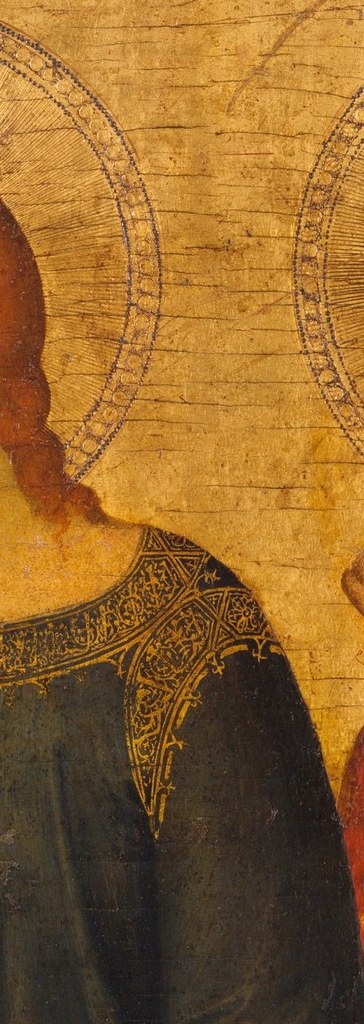
Look first at the pigments. The cobalt blue on John's mantle is ultramarine, made from lapis lazuli that traveled from a single mine in Afghanistan, ground by hand in Venice. In a 14th-century contract, ultramarine was often priced by the square inch, not the ounce. A patron paying for that much blue was making a loud statement.
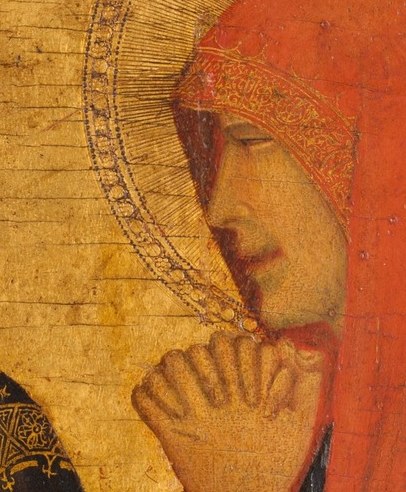
Then look at how the two saints relate. Their bodies do not touch, but their golden halos interlock as if to say: separate in the world, united in the divine. Mary Magdalene's right hand lifts to her chin, the 'manus ad mentum', a gesture classical art reserved for grief and deep reflection. She is the witness to the Passion and the first to see the risen Christ. The painting encodes that weight without a single narrative prop.
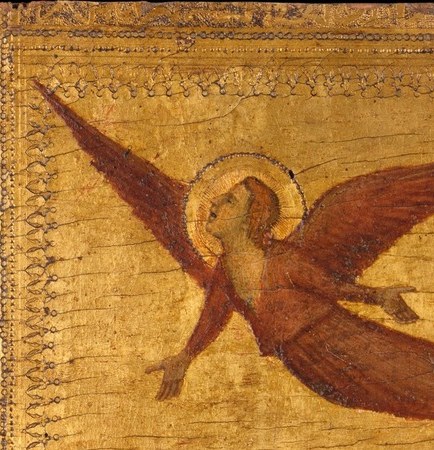
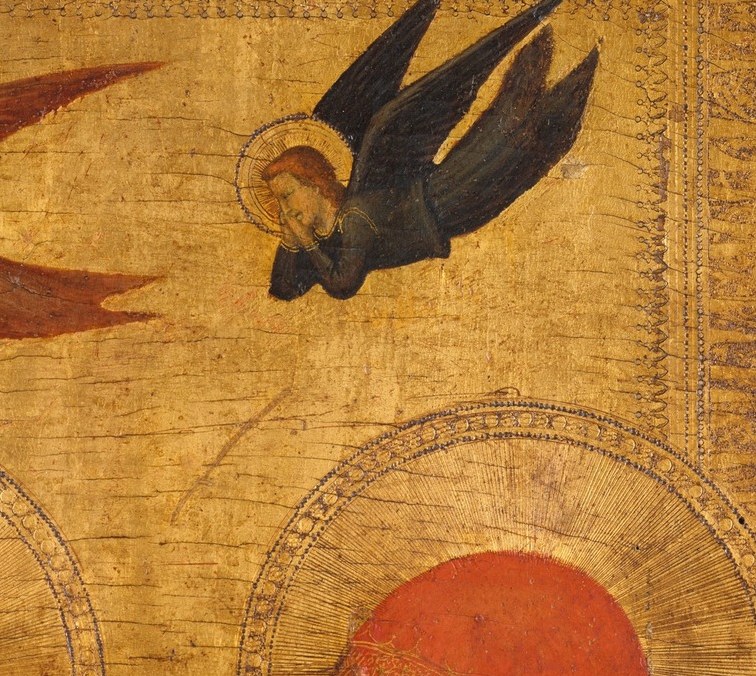
Two tiny angels hover above, almost invisible against the gold. They were likely added to anchor the saints in a heavenly court, a compositional device Memmi used to balance vertical space. Every choice in this panel, color, gesture, space, was a theological argument rendered in tempera and gold leaf.
What do you notice first: the blue, or the hands?
Details
Transcript
Before 1850, no one outside Siena knew this painting existed. John and Mary Magdalene. Side by side, but never touching. John's robe is ultramarine. The most expensive pigment in Europe. Lapis lazuli, ground from stone that came from a single mine in Afghanistan. Her hand lifts to her chin. The ancient sign of grief. Two small angels hover above, easy to miss. The halos interlock so the saints are joined without a single touch. A painter paid by the inch of blue. This panel was an expensive act of faith.