The Art of Painting by Johannes Vermeer
The Art of Painting, by Johannes Vermeer (c. 1667), Kunsthistorisches Museum, Vienna. This complex work is widely considered Vermeer's ambitious allegory of the act of painting itself, a concept rarely explored so profoundly in the 17th century.
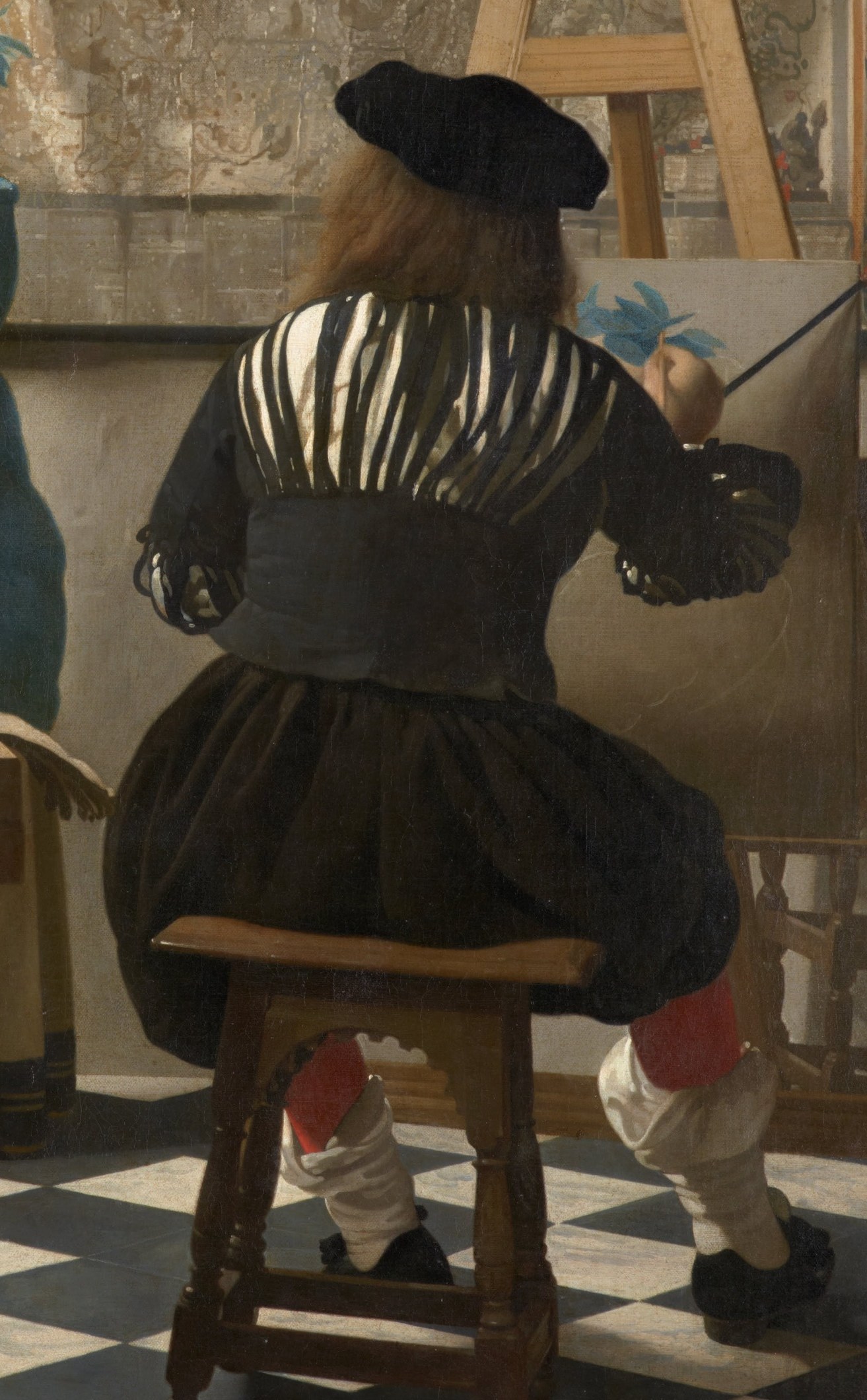
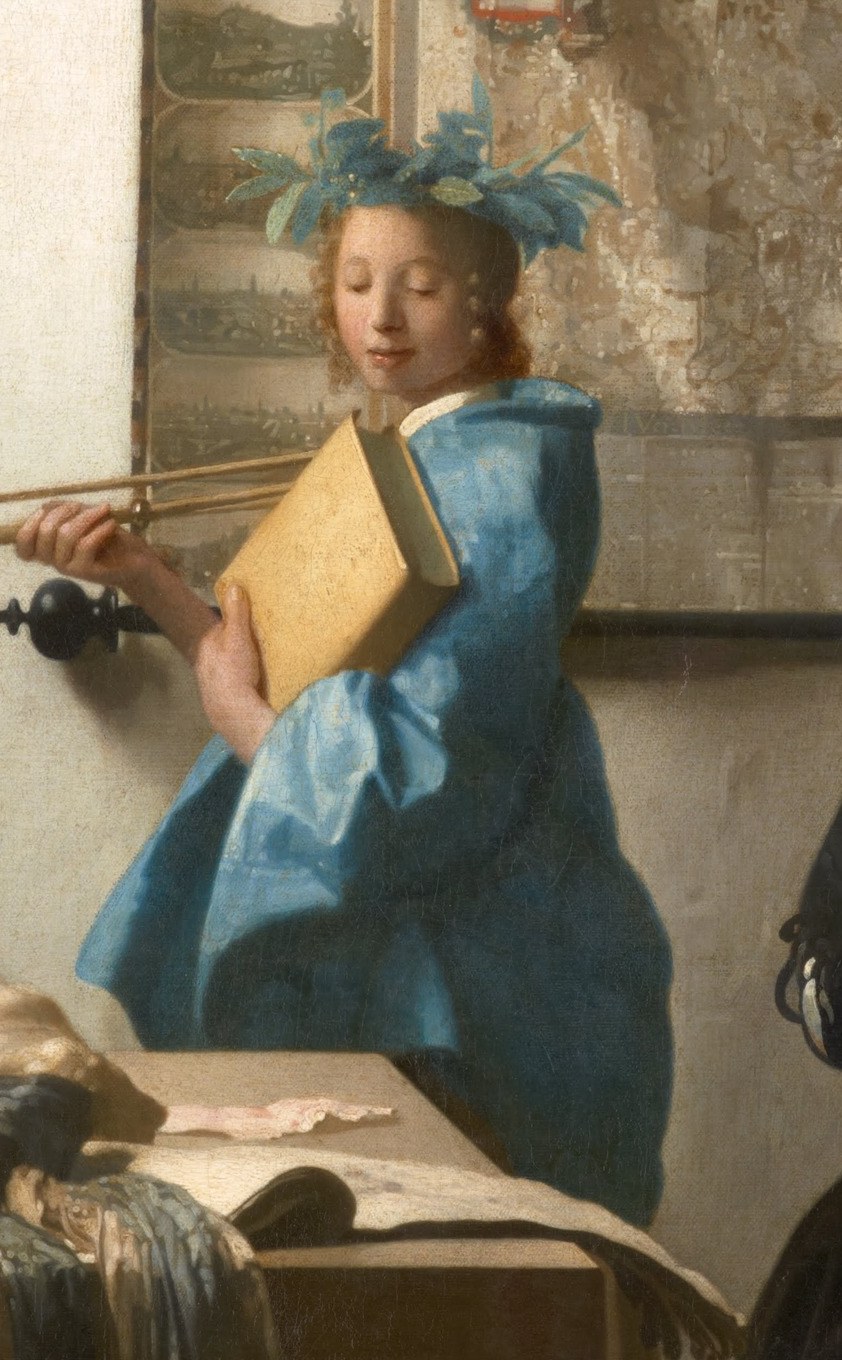
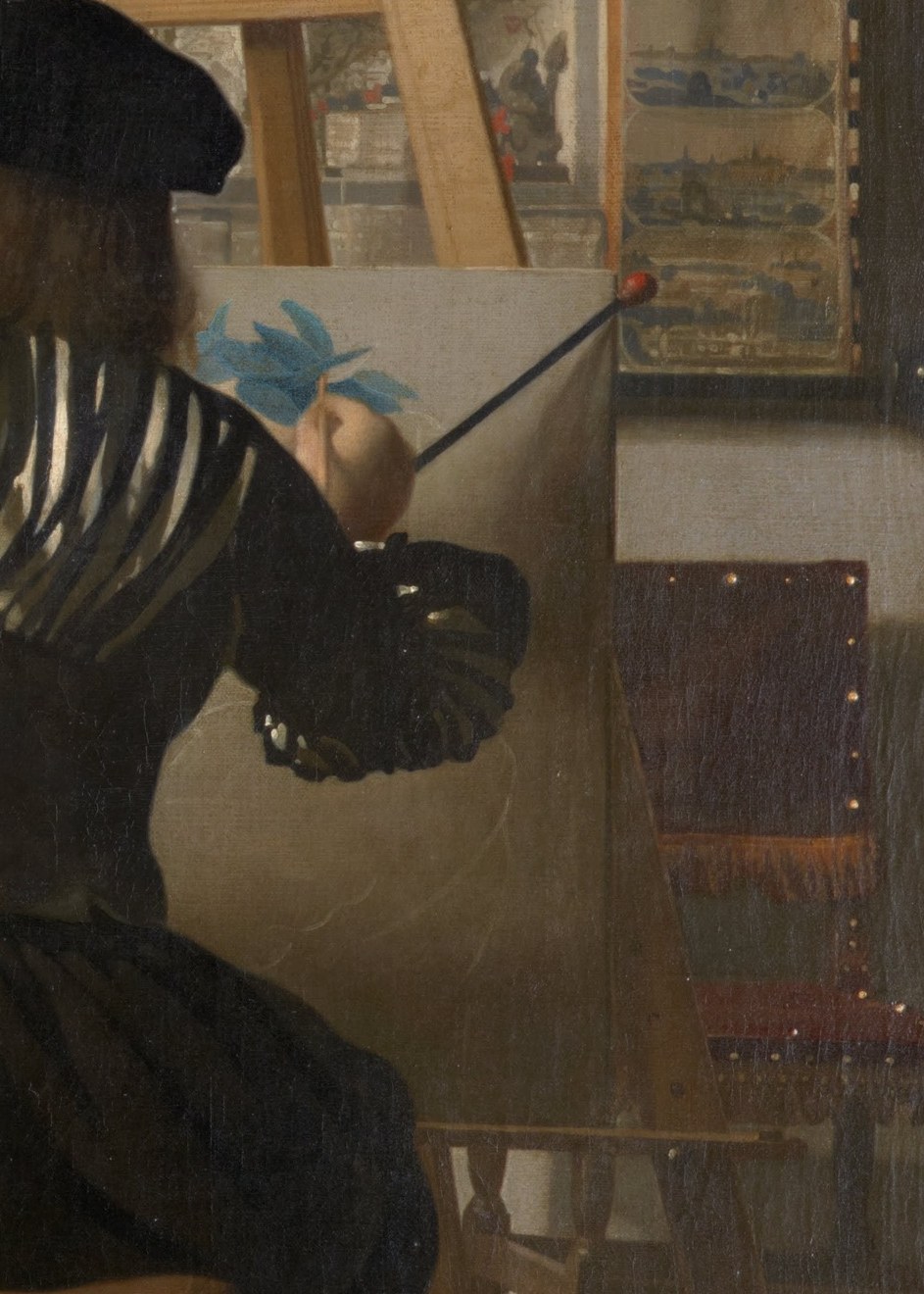
Observe the painter, depicted from behind, meticulously working with his tools. Notice the model, a figure in blue, posed with a symbolic book, evoking the Muses of art and history. The empty canvas on the easel represents the genesis of creation.
Vermeer, a master of light and domestic scenes, created this as his largest work. He was a moderately successful painter and art dealer in Delft, known for his slow, meticulous technique and use of expensive pigments. At his death, his wife was left in debt.
This painting is a testament to Vermeer's virtuosity and his deep contemplation of his own craft.
Details
Transcript
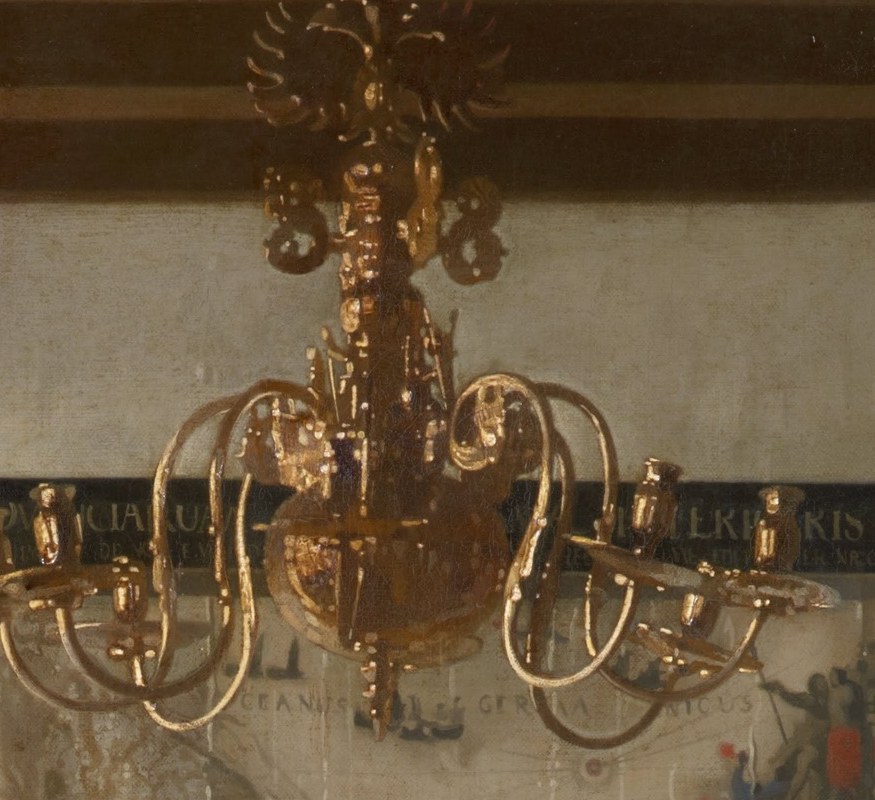
This is Vermeer's ambitious allegory of painting. Look at the painter, his back to us. He holds a palette, brushes, and a sketchbook. The blue-clad model poses like a muse. The empty canvas shows art's beginning. This work is Vermeer's largest painting. He painted this allegory in 1667. The ornate chandelier shows his skill.