View on the Outskirts of Caen by Lépine, Stanislas
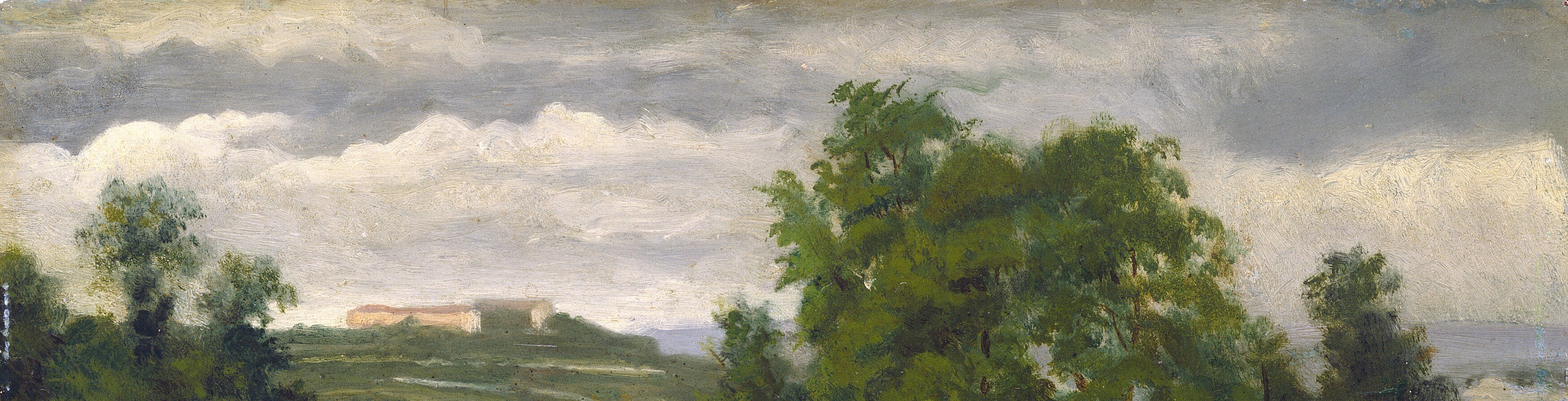
Stanislas Lépine's "View on the Outskirts of Caen" (1874) is a small oil on wood panel that holds an enormous sky. Painted during the height of the Impressionist movement, it shows a quiet periphery of the Normandy city rather than a bustling Parisian street. Lépine returned again and again to these ordinary, unspectacular edges, and this work is one of his most mature examples of observed stillness.
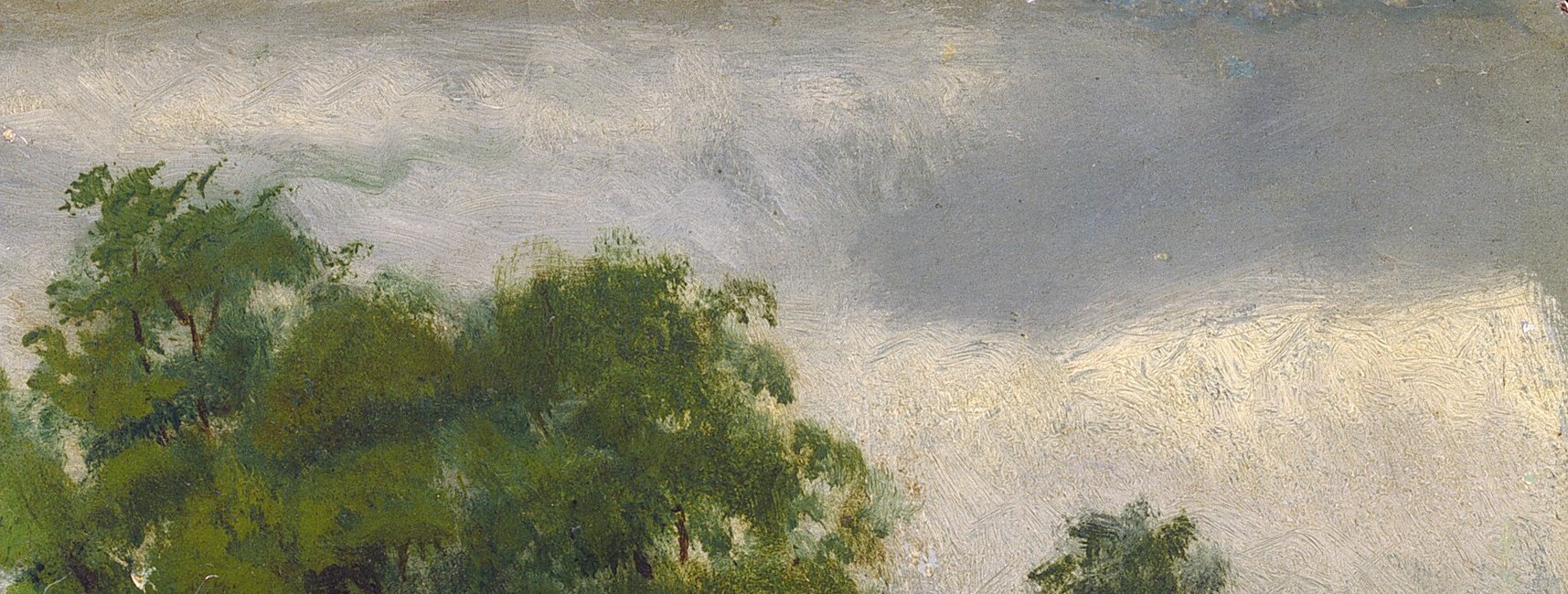
Look at how the cloudmass fills nearly half the panel. Lépine built it with loose, layered brushwork, no hard outlines, just churning gray and white that feels genuinely humid. A pale silver break on the upper right keeps the overcast from feeling heavy. Below, the tree at center-left is made of varied green dabs that read as deep foliage without a single painted leaf.
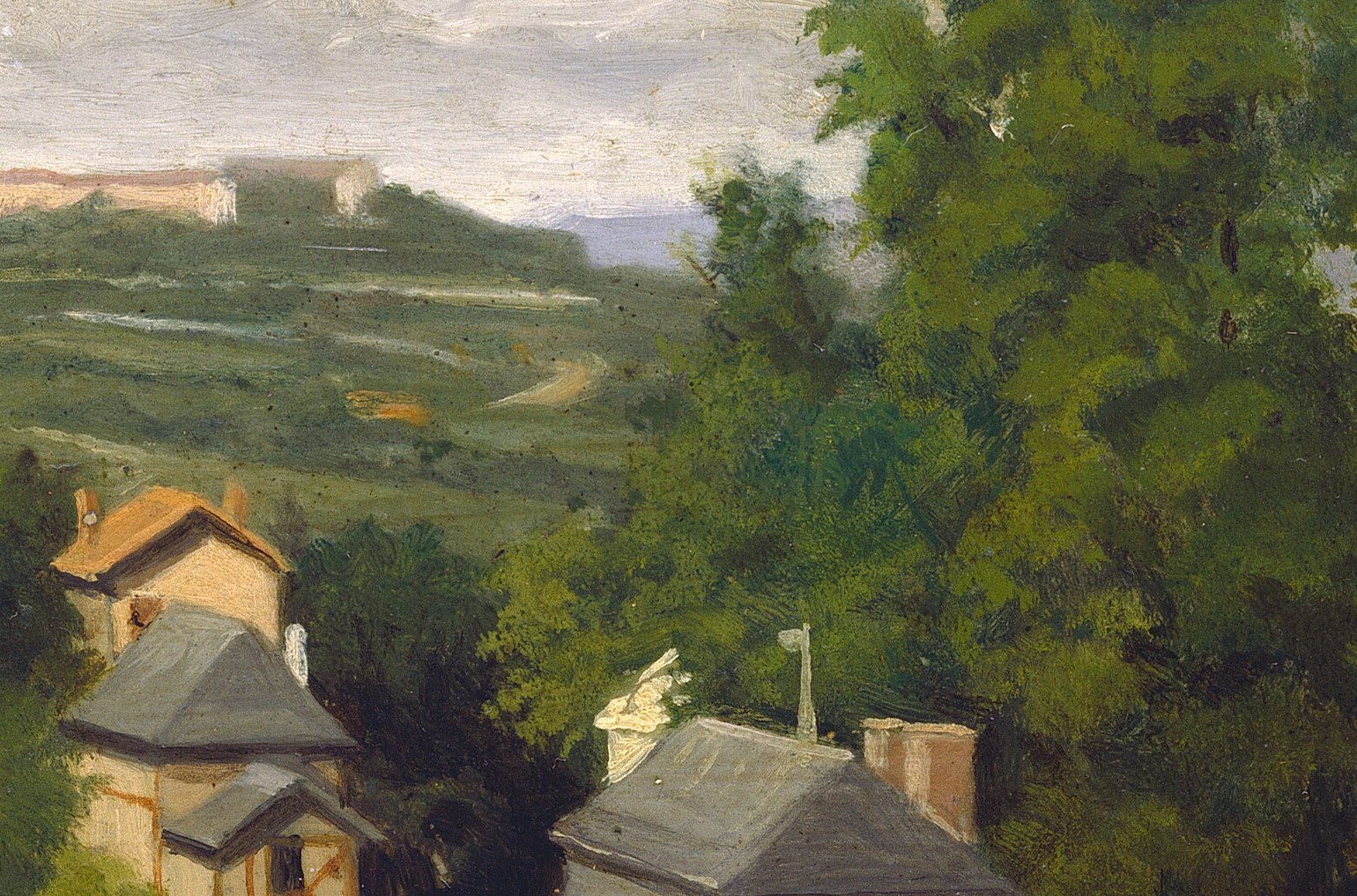
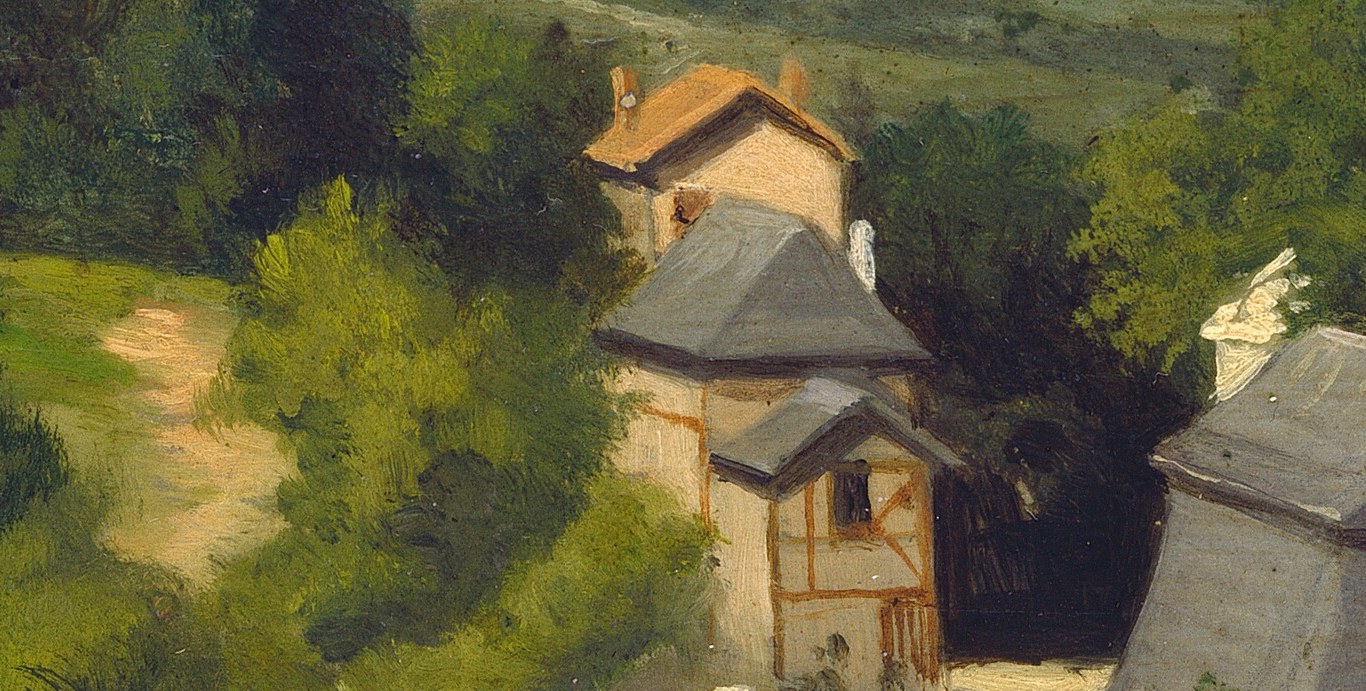
Lépine worked on a wooden panel barely two feet wide. The foreground earth is deliberately rough and gestural, a trick that creates depth by contrast with the tighter middle ground. The distant ridge line hazes out with atmospheric perspective, proving he could compress real meteorological depth into a small, intimate surface.
It is a painting that rewards patience. Everything grand here happens in the simplest materials: oil, wood, and a painter who understood that a truthful sky is built one gray mark at a time.
Details

Transcript
The sky is the whole story here. Lépine painted this on a wooden panel barely two feet wide. Yet the clouds feel humid and true to Normandy. He layered loose, churning grays with no hard edges. A pale silver break lets the sky breathe on the right. He matched the greens using varied dabs, not individual leaves. The rough, gestural foreground pushes your eye into that sky. Atmospheric depth on a small board, built entirely in paint.