Visit to a New Mother by Moritz Calisch
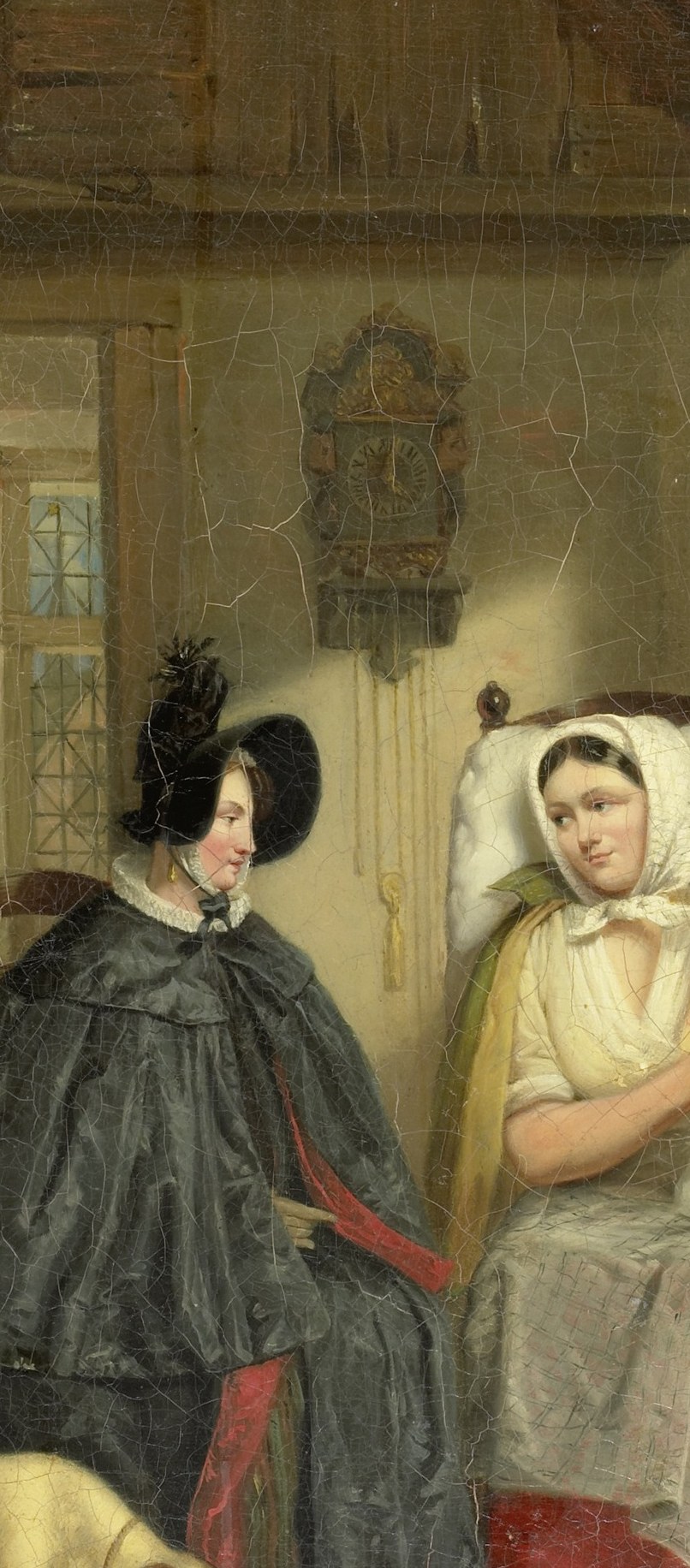
“Visit to a New Mother” by Moritz Calisch (1835) is a masterclass in the language of Dutch domestic painting. An Amsterdam native, Calisch belonged to the Realism movement, and this quiet oil painting, held at the Rijksmuseum, captures the exact moment a household receives a formal social call after a birth. But to a viewer in 1835, this was not just a family snapshot. Every object in the room was a word in a visual grammar everyone understood.
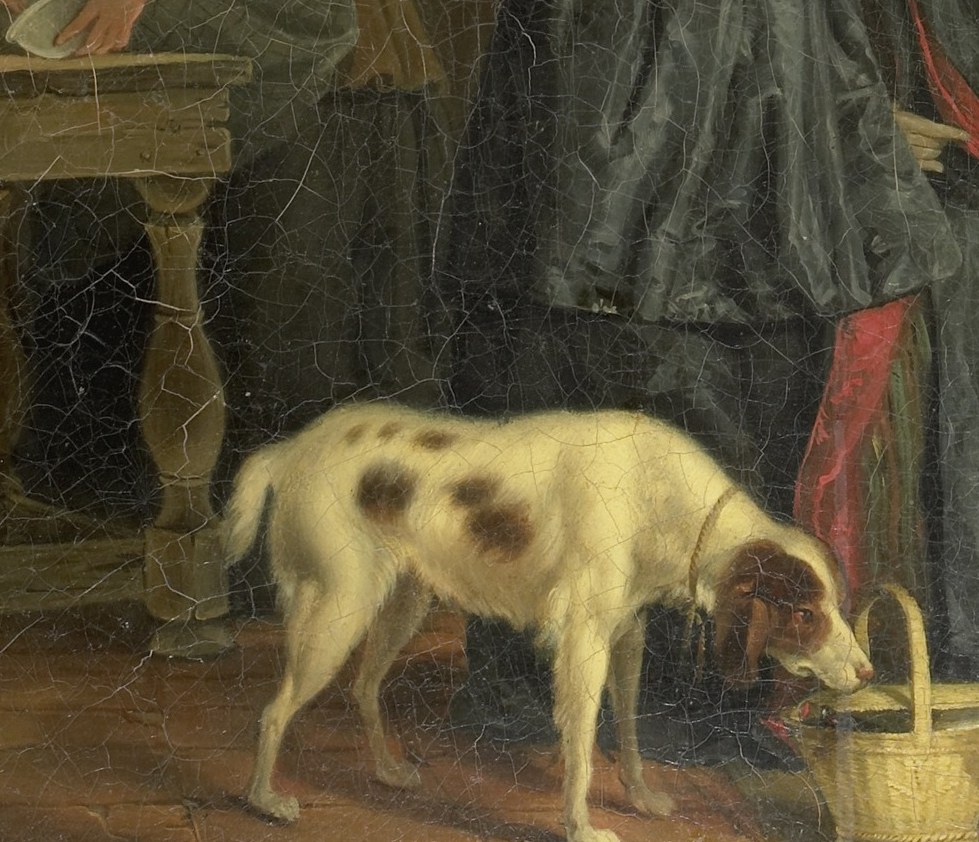
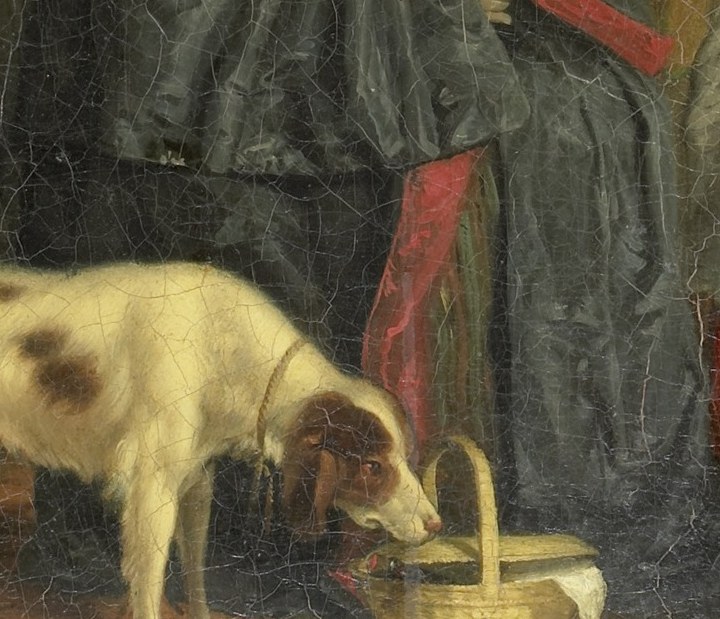
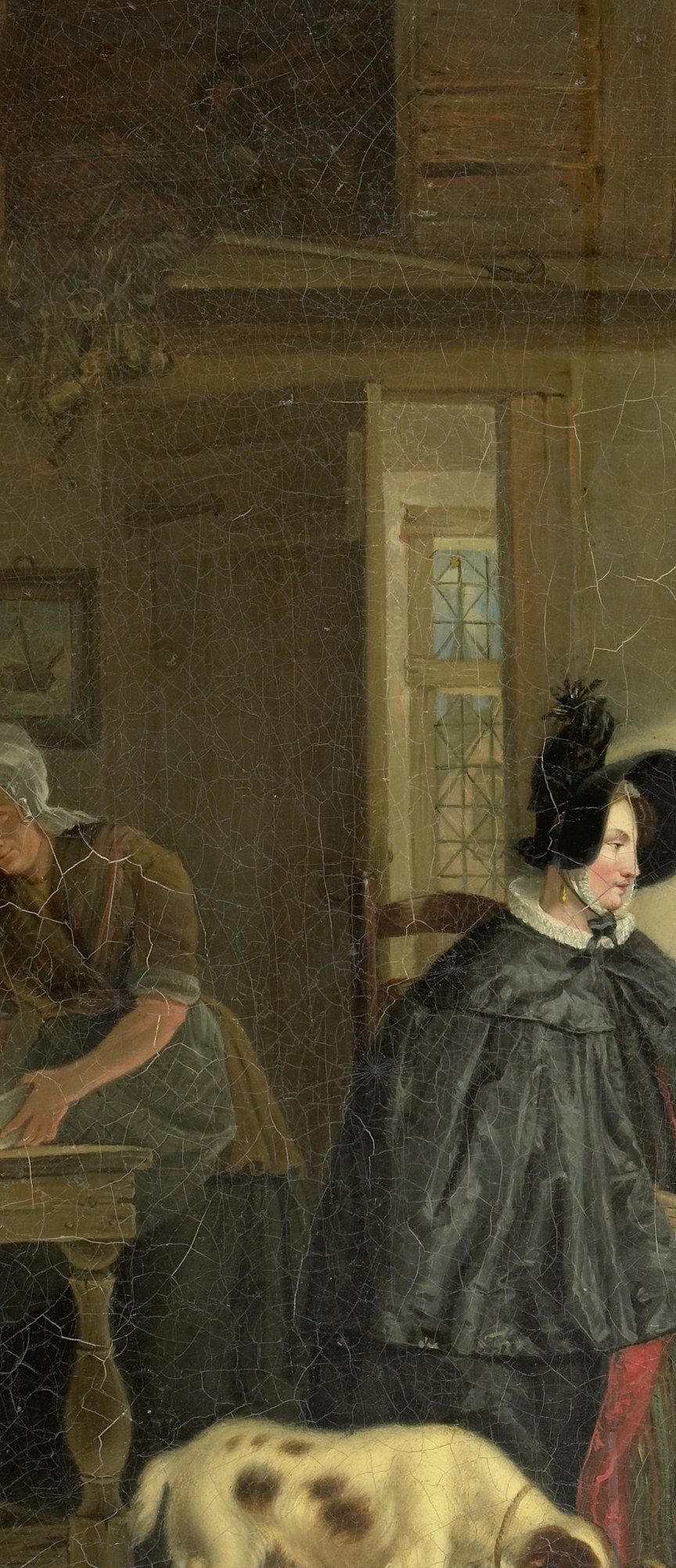
Look at the white spaniel on the floor. In Dutch genre painting, a dog at a woman’s feet was a clear symbol of marital fidelity. The mother’s stark white dress speaks of purity, now channeled into maternal devotion. Across from her, the visitor’s black bonnet and cape mark this as a formal ritual, not a casual chat. And that metal pail on the floor anchors the whole scene: even on a day of celebration, domestic labor persists.
Calisch painted this in Amsterdam in 1835, a period when a rising middle class wanted images of their own virtuous, orderly lives. The empty wicker bassinet tells you the baby has just been lifted out for display. The two children and an elderly figure in the background show that the rest of the household keeps moving around this central event. The artist was just 16 years old when he painted it, a detail that makes the work’s mature, quiet confidence all the more remarkable.
It’s a picture of a moment we almost never see painted: not the birth itself, but what happens the morning after, when the world comes to the door. Which object in the room do you think the visitor noticed first?
Details
Transcript
Morning light falls on a perfect domestic scene. But 19th-century Dutch viewers read paintings like books. The little spaniel on the floor. Unshakable fidelity. The mother wears pure white. Virginity, now transformed into maternal virtue. The visitor is draped in black. Formality, a social contract being honored. And on the floor, an ordinary metal pail. The work of the household never stops. Together, the objects spell out a quiet ideal: a faithful, orderly home.