Boathouse, Winter, Harlem River by Lawson, Ernest
Ernest Lawson's "Boathouse, Winter, Harlem River," painted around 1916, is a striking example of American Impressionism, housed in an unknown collection.
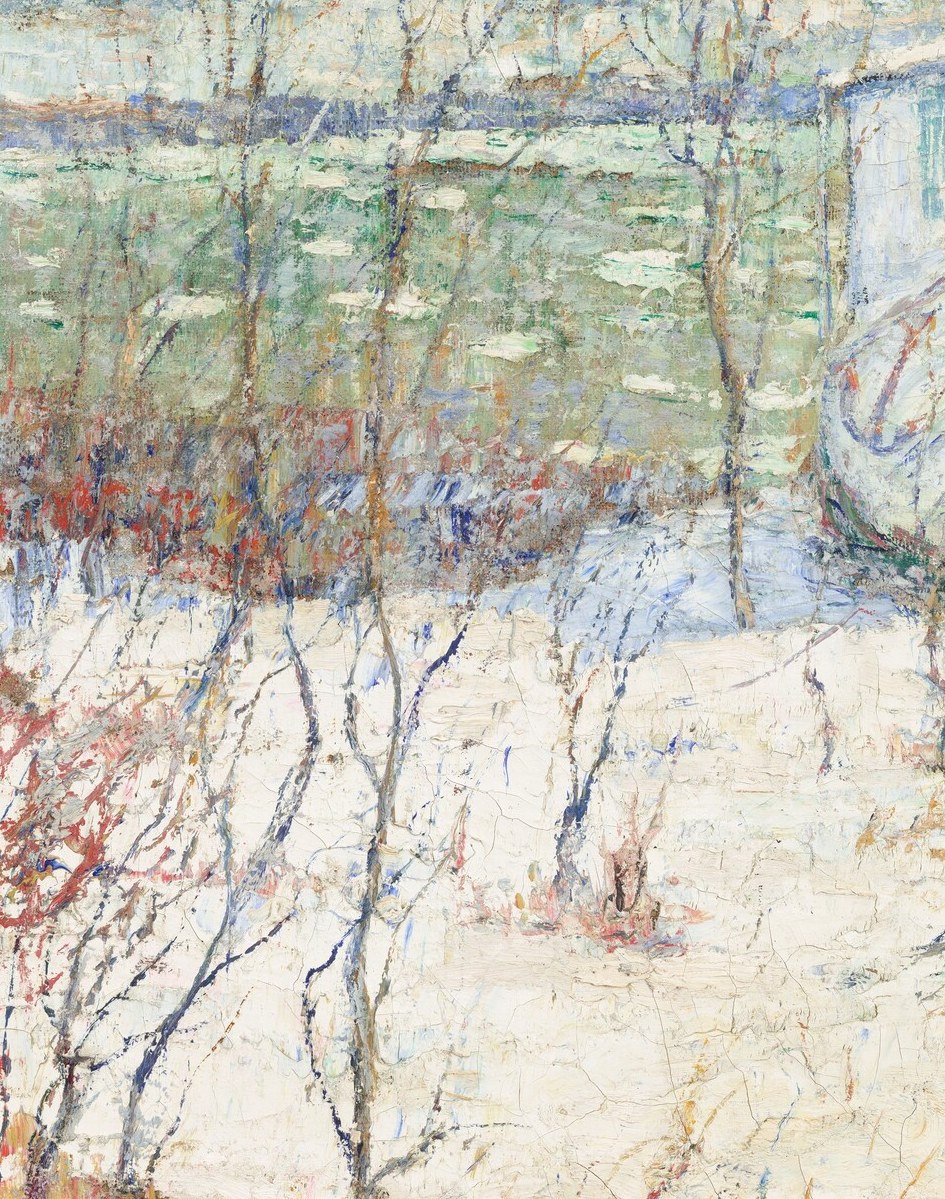
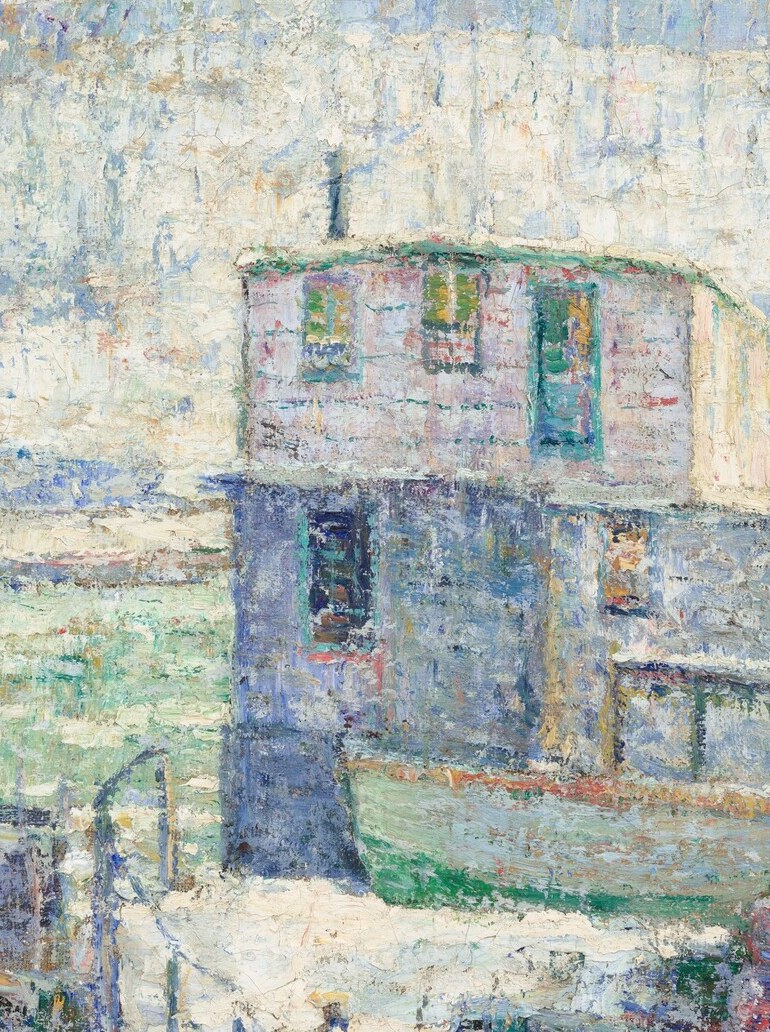
Lawson, known for his New York City landscapes, often depicted the Harlem River. Observe the distinctive impasto technique he used, especially visible in the foreground snow, which creates a rich texture and a tangible sense of cold and depth. Look closer to spot the unexpected, vibrant red brushstrokes scattered throughout the muted winter palette, adding a touch of life and warmth to the stark scene.
This painting captures the unique light and atmosphere of a New York winter, reflecting Lawson's dedication to rendering his immediate surroundings with a loose, expressive style. It bridges realism with Impressionism, showcasing the beauty of the urban landscape.
What details do you notice first in this winter scene?
Details


Transcript
This painter was famous for New York City landscapes. He often painted the Harlem River, even in winter. Notice the thick, textured brushstrokes in the snow. This technique is called impasto. It creates depth and feeling. He used subtle colors to capture the cold atmosphere. But look for the unexpected flashes of red. They add warmth and life to the wintry scene.