Landscape near Painesville by Allen Smith, Jr.
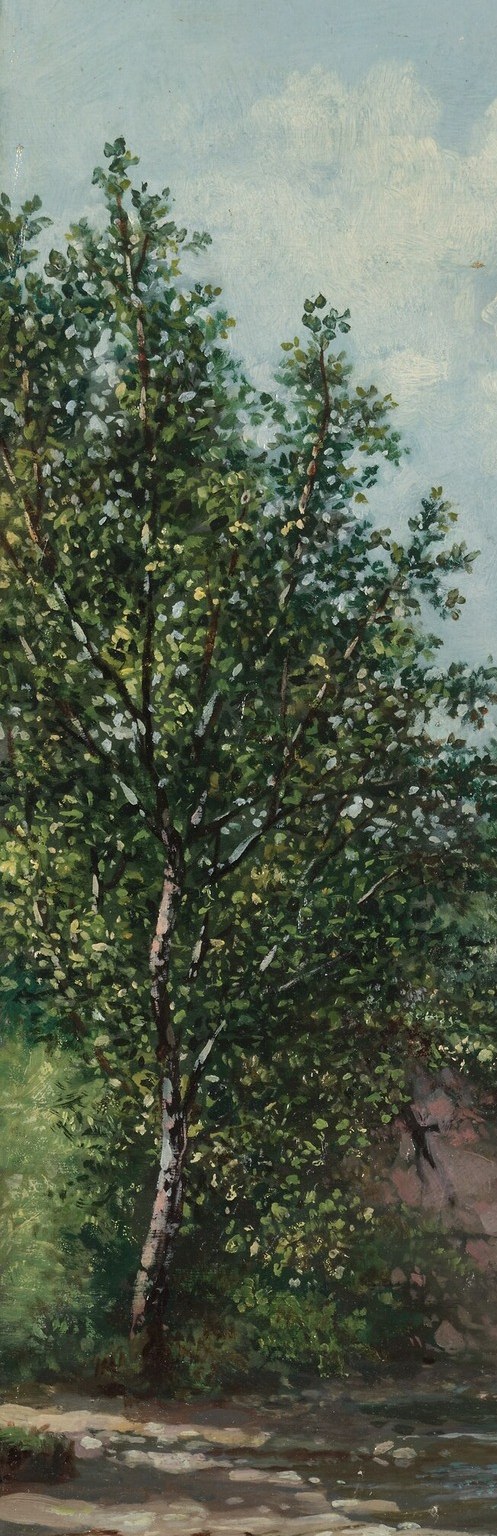
Allen Smith Jr., primarily celebrated as a portraitist, also dedicated significant effort to landscape painting, as beautifully shown in his 1892 work, *Landscape near Painesville*, at the Cleveland Museum of Art. This painting is a testament to his versatility and keen eye for detail.
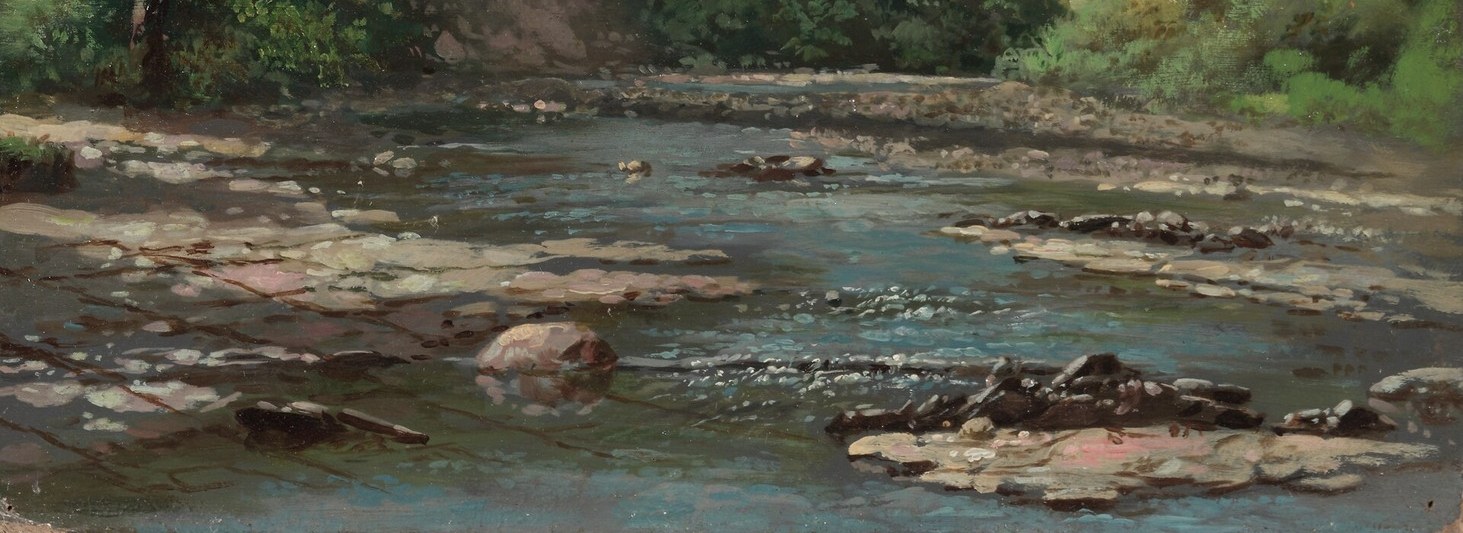
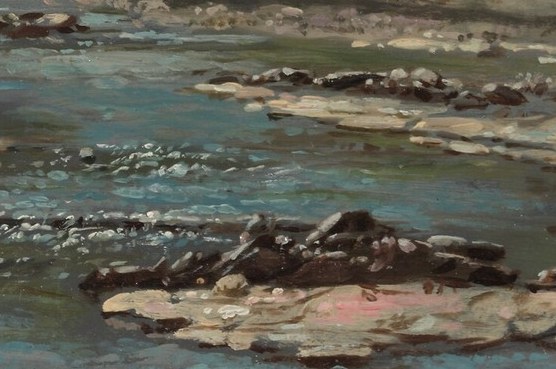
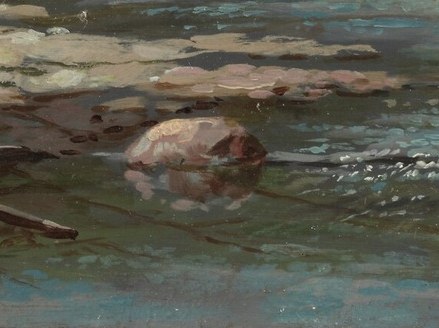
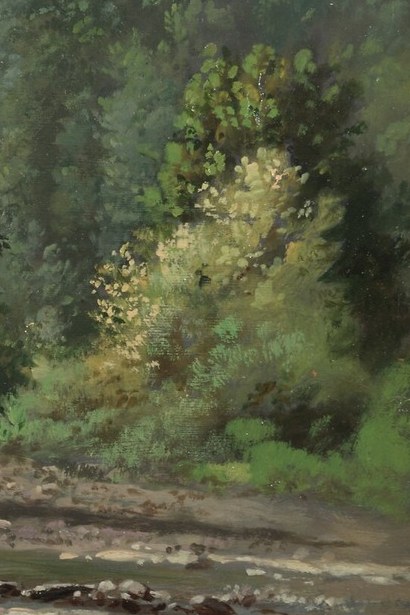
Look closely at the foreground river, where the artist masterfully captures the transparent water revealing the rocky bed beneath. The sunlit foliage on the right showcases his impressionistic handling of illumination, while the distant forest creates a deep green backdrop that enhances spatial depth.
Smith's technique, characterized by loose yet deliberate brushstrokes, especially in the sky, imbues the scene with a luminous and serene quality. Soft shadows define the texture of rocks in the riverbed, adding to the painting's depth and tactile surface. Despite his renown for capturing human likeness, this landscape reveals his profound ability to render natural tranquility.
What details do you notice that speak to the artist's focus on light and texture?
Details
Transcript
This painter was known for portraits, not landscapes. But look closely at how he paints the water. He captures the play of light and shadow. And the soft shadows defining the riverbed rocks. His brushstrokes are loose, but deliberate, even here. He brings the same intensity to this serene nature scene.