An Indian Council - Sioux by Catlin, George
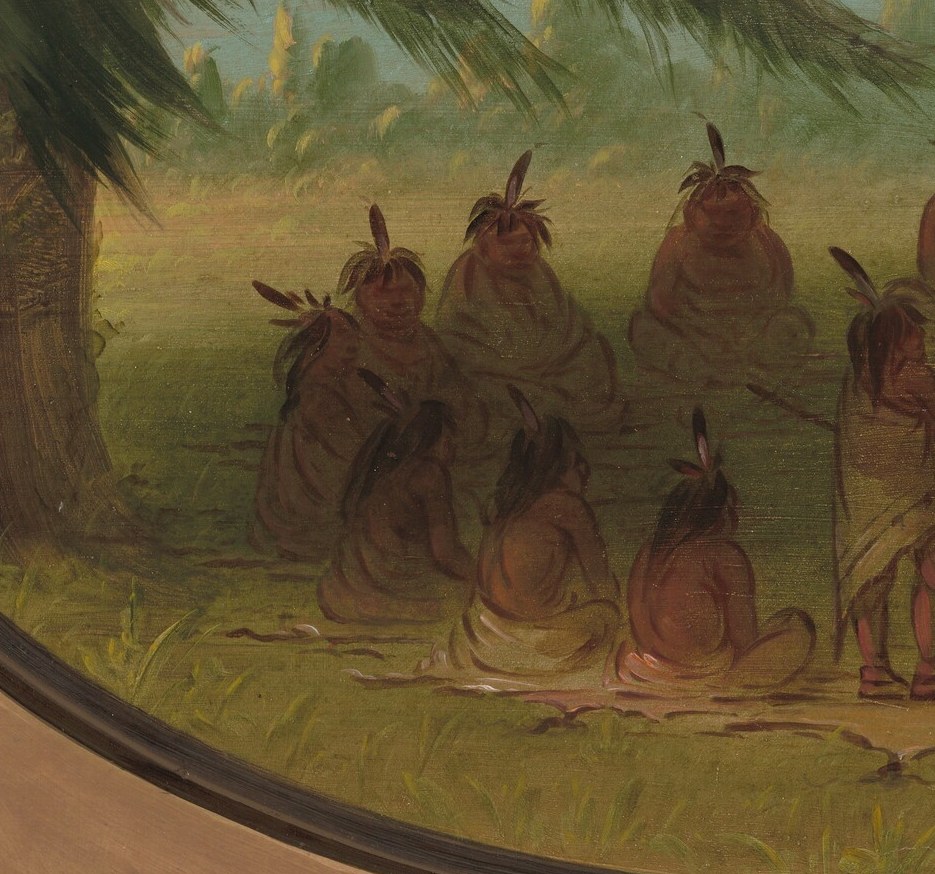
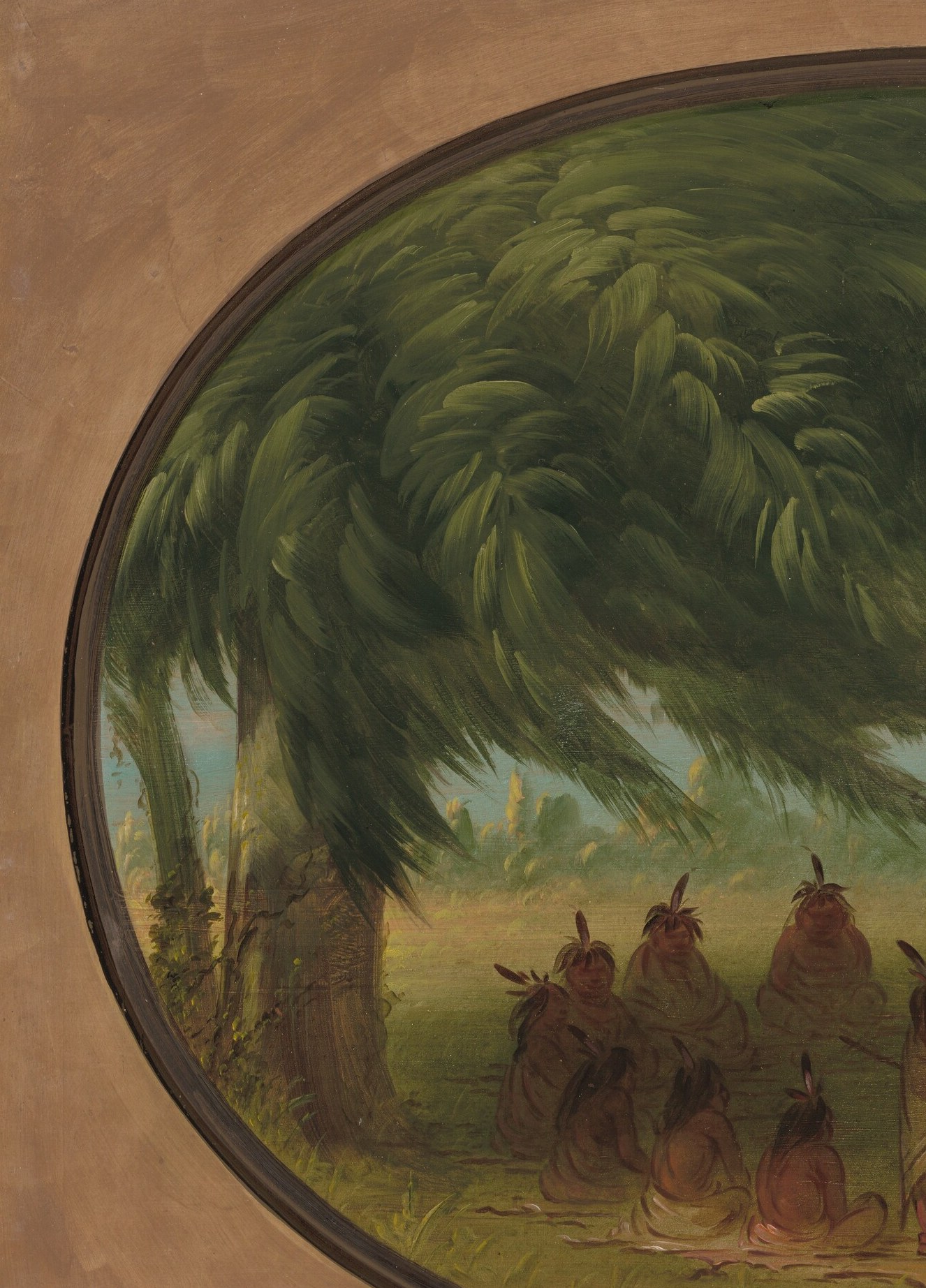
George Catlin's "An Indian Council - Sioux," painted between 1861 and 1869, is housed at the Smithsonian American Art Museum. This oil on card mounted on paperboard captures a gathering of Sioux men under a prominent tree, depicting a ritual or diplomatic exchange involving a pipe.
Catlin, a lawyer turned artist, made five extensive trips to the American West in the 1830s. He dedicated his life's work to documenting the cultures and lives of Native American tribes, fearing their traditions would be lost amidst westward expansion. Though this painting was created years after his direct observations, it relies on his detailed recollections and sketches from that period.
His efforts were pivotal in presenting Native American communities with dignity and specificity to a broad audience, countering prevailing stereotypes of the era. His work remains a significant visual record of a crucial period in American history.
What details do you find most striking in this depiction of a council?
Details
Transcript
This painter traveled the American West in the 1830s. He sought to document Native American cultures before they vanished. This painting, 'An Indian Council,' shows a Sioux gathering. Notice the vibrant attire and the pipe being exchanged. He painted this scene decades after his travels, from memory. His work helped shape public perception of Indigenous peoples.