An Extensive Wooded Landscape by Philips Koninck
Philips Koninck's "An Extensive Wooded Landscape" (1670) lives in a quiet corner of art history, but it hides one of the best scale tricks of the Dutch Golden Age.
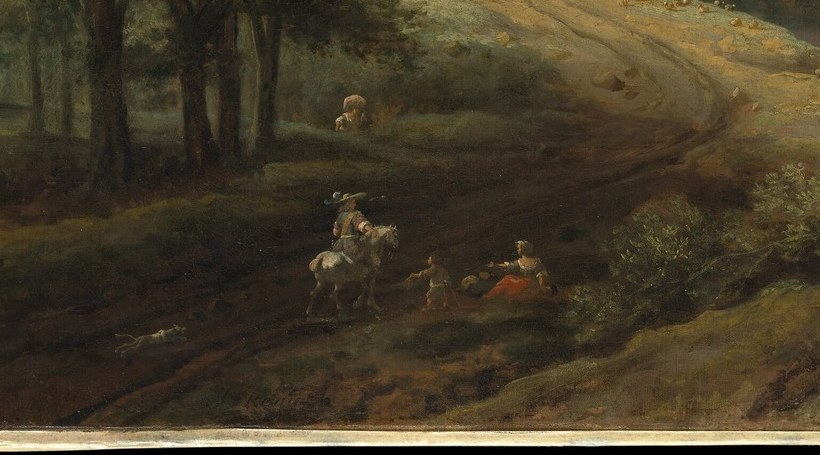
There are people on this road. Start at the sandy path in the lower left and zoom in: two tiny wayfarers, brushed in with a few flicks of ochre. They read as a breath of paint, and that's the point. Koninck learned from Rembrandt that a minuscule human figure makes an ordinary field feel like the whole world.
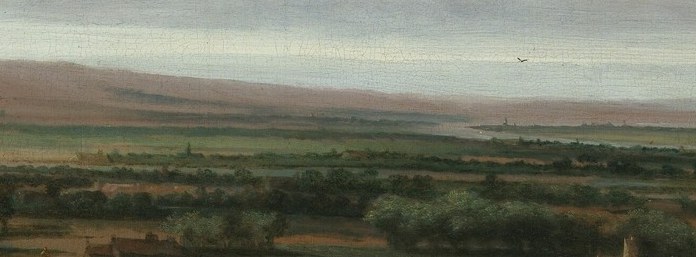
Now push all the way to the horizon. Through the haze, a thread of rooftops and a church spire emerge. At normal viewing distance, this town is almost invisible. It is a reward for the slow viewer, and a wink from a painter who knew that distance and atmosphere are the same subject.
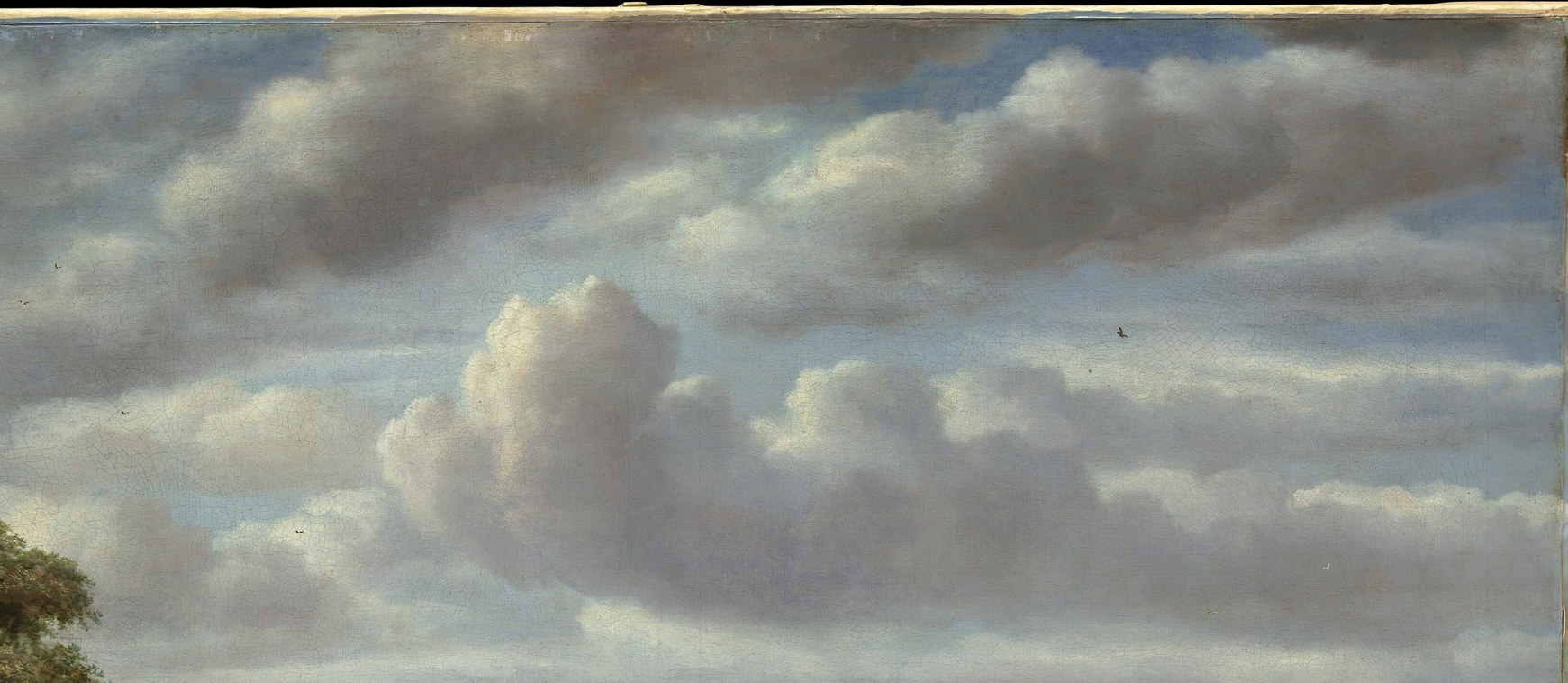
Koninck spent a decade painting panoramas like this, dividing his canvases between equal measures of earth and sky. The result isn't a documentary of countryside; it's a meditation on how light falls across space. Next time you see a big-sky painting, look for the things that almost aren't there. They're usually the reason the painting works.
Details

Transcript
A big sky over a big landscape. You've seen this a hundred times. Koninck trained in Rembrandt's studio. He learned to build a world out of light. The eye slides down the river, and keeps sliding. But stop right here. There are people on this road. Two tiny wayfarers, barely a breath of paint. Koninck used figures this small on purpose: a trick to make the landscape feel vast. Now push deeper. Past the river. All the way to the horizon line. A church spire and rooftops. A whole town, quieter than a whisper, hidden in the haze.