Churchyard at Fløng by Laurits Andersen Ring
Laurits Andersen Ring's "Churchyard at Fløng" from 1904 captures a profound sense of quiet remembrance. This oil painting, now at Statens Museum for Kunst, Denmark, showcases Ring's ability to infuse everyday scenes with deep emotional resonance.
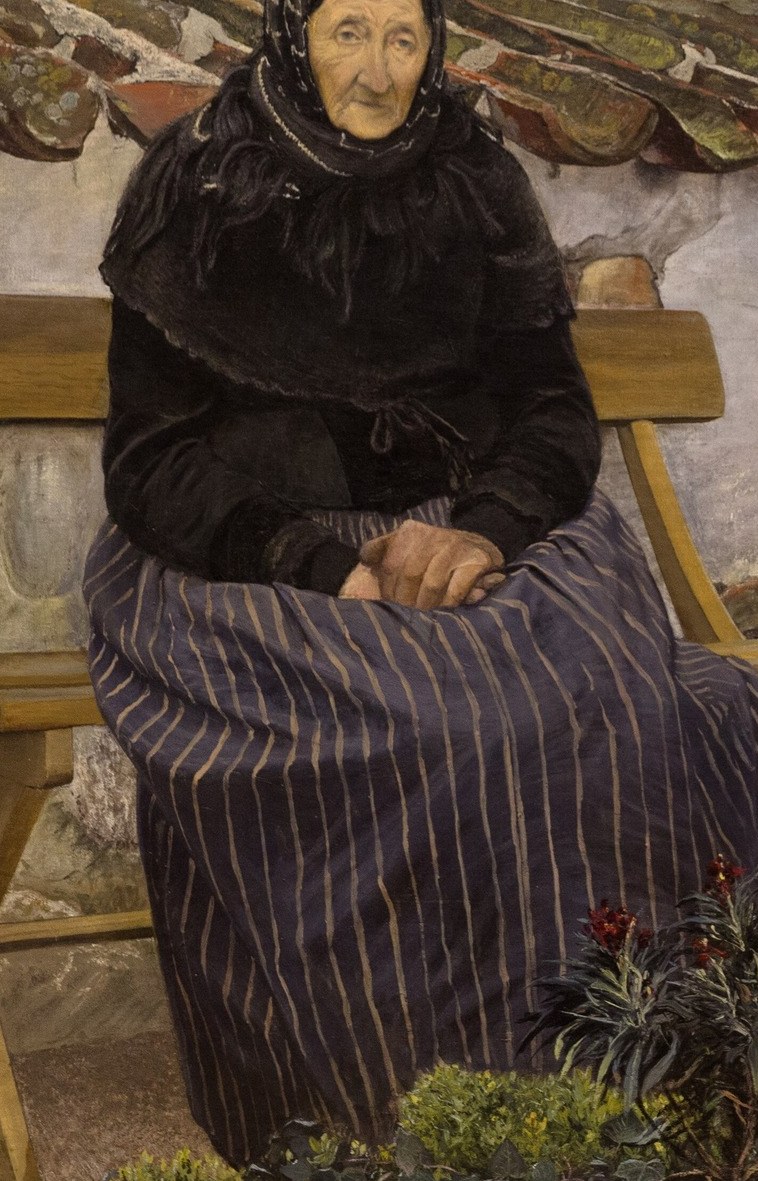
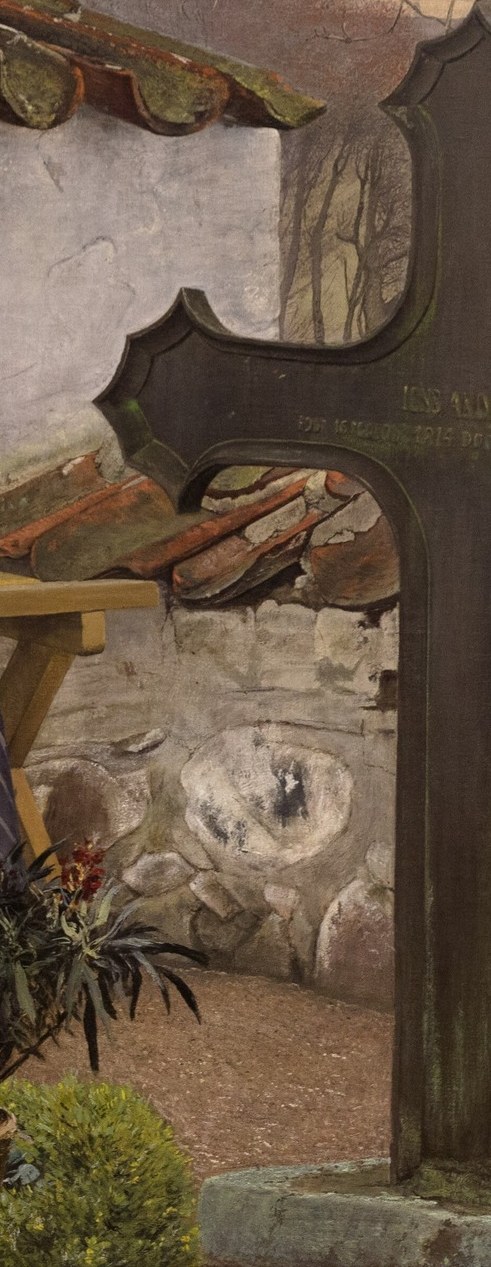
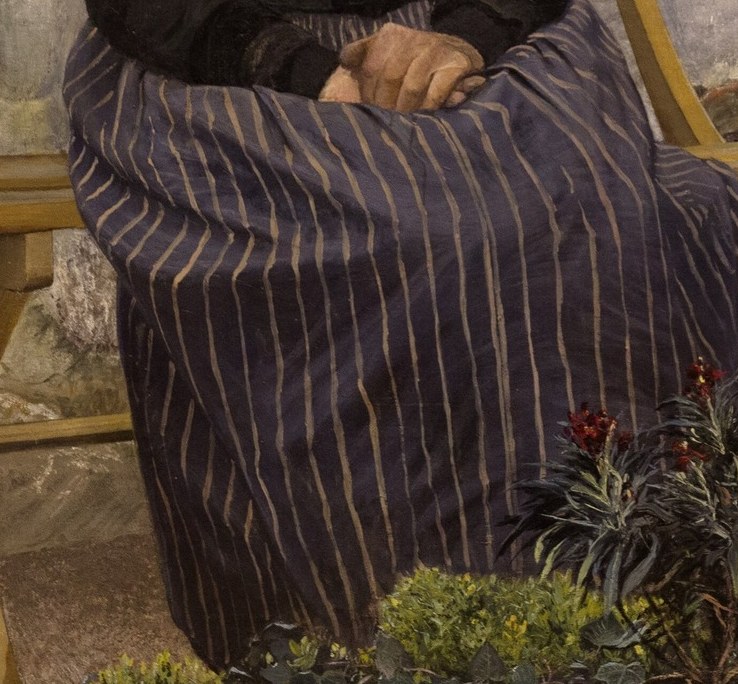
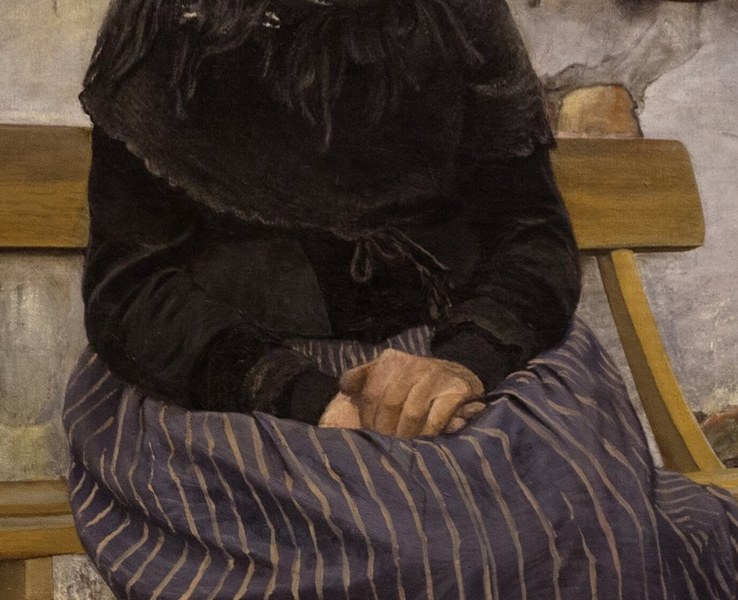
In this work, an elderly woman sits on a weathered bench by a stone cross, her hands clasped in thoughtful stillness. Her contemplative gaze anchors the scene, inviting viewers to reflect on themes of age, memory, and solitude amidst the stark beauty of the churchyard.
Ring was a leading Danish painter of the early 20th century, known for pioneering both symbolism and social realism. His work often depicted Danish life, bringing a nuanced and introspective quality to his subjects. "Churchyard at Fløng" is a poignant example of his mature style.
The bare tree branches and distant church spire contribute to the serene, almost melancholic atmosphere. What quiet stories do you imagine this scene holds?
Details
Transcript
This quiet churchyard scene holds a story of remembrance. The painter was a pioneer of Danish social realism in the early 1900s. He often painted everyday life, imbuing it with deep emotion. Look at the woman's hands, clasped in quiet contemplation. She sits by a weathered cross, a symbol of enduring memory. Her gaze suggests a life lived, reflecting on the passage of time.