Madonna and Child by Bramantino
View the artwork: Madonna and Child →
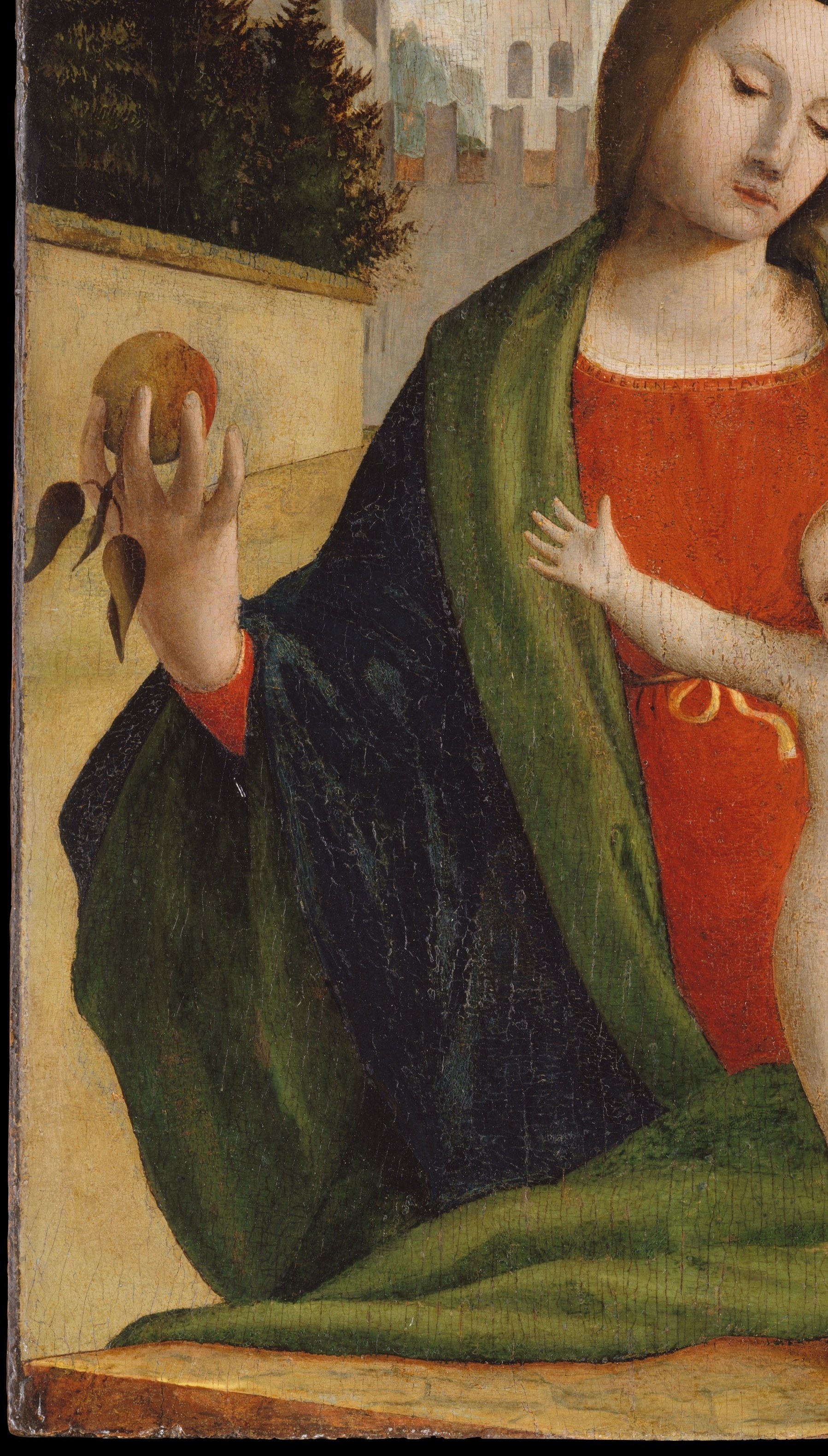
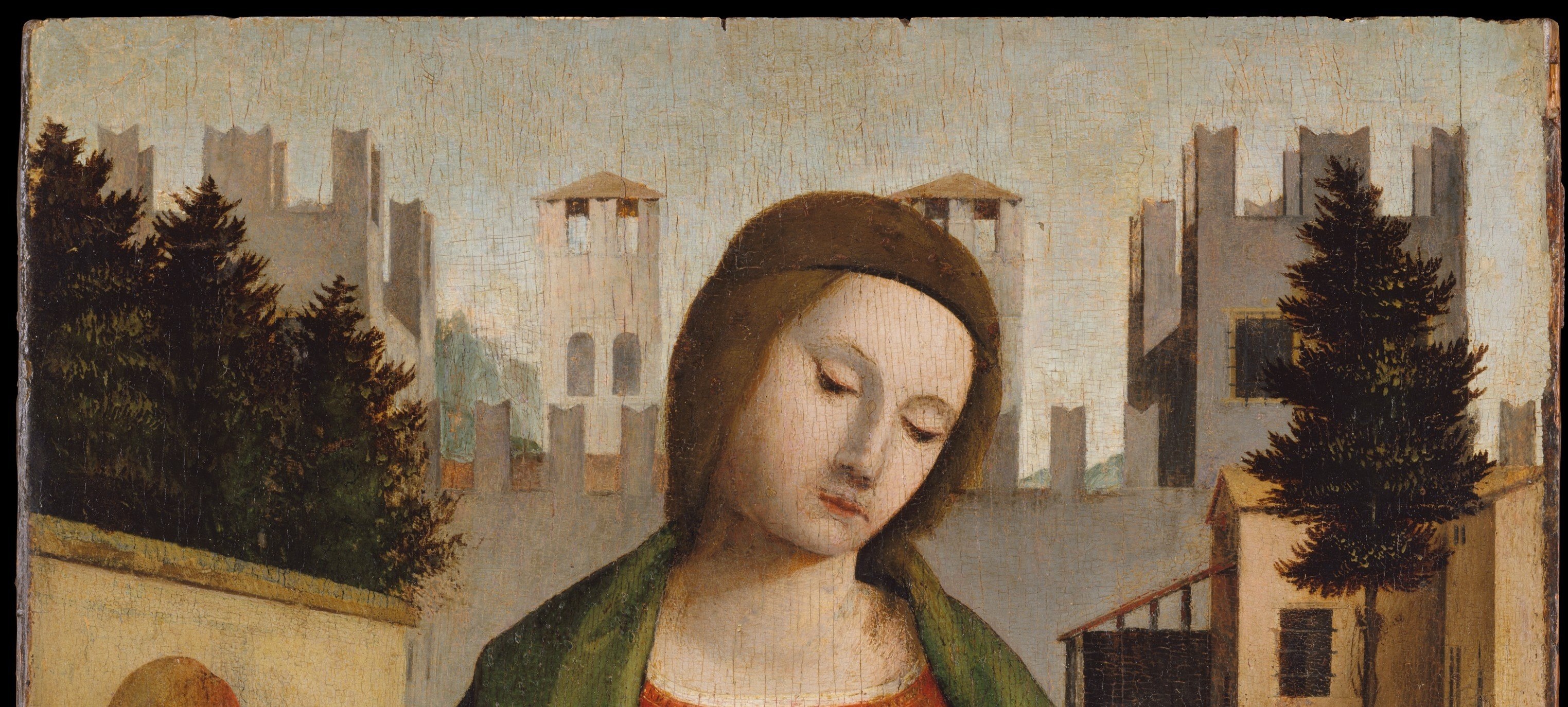
This is Bramantino's Madonna and Child, also called the Kleinberger Madonna, painted in tempera on panel before 1508 and now in the Metropolitan Museum of Art. Its early life is a blank: no record of who commissioned it or where it hung for four centuries.
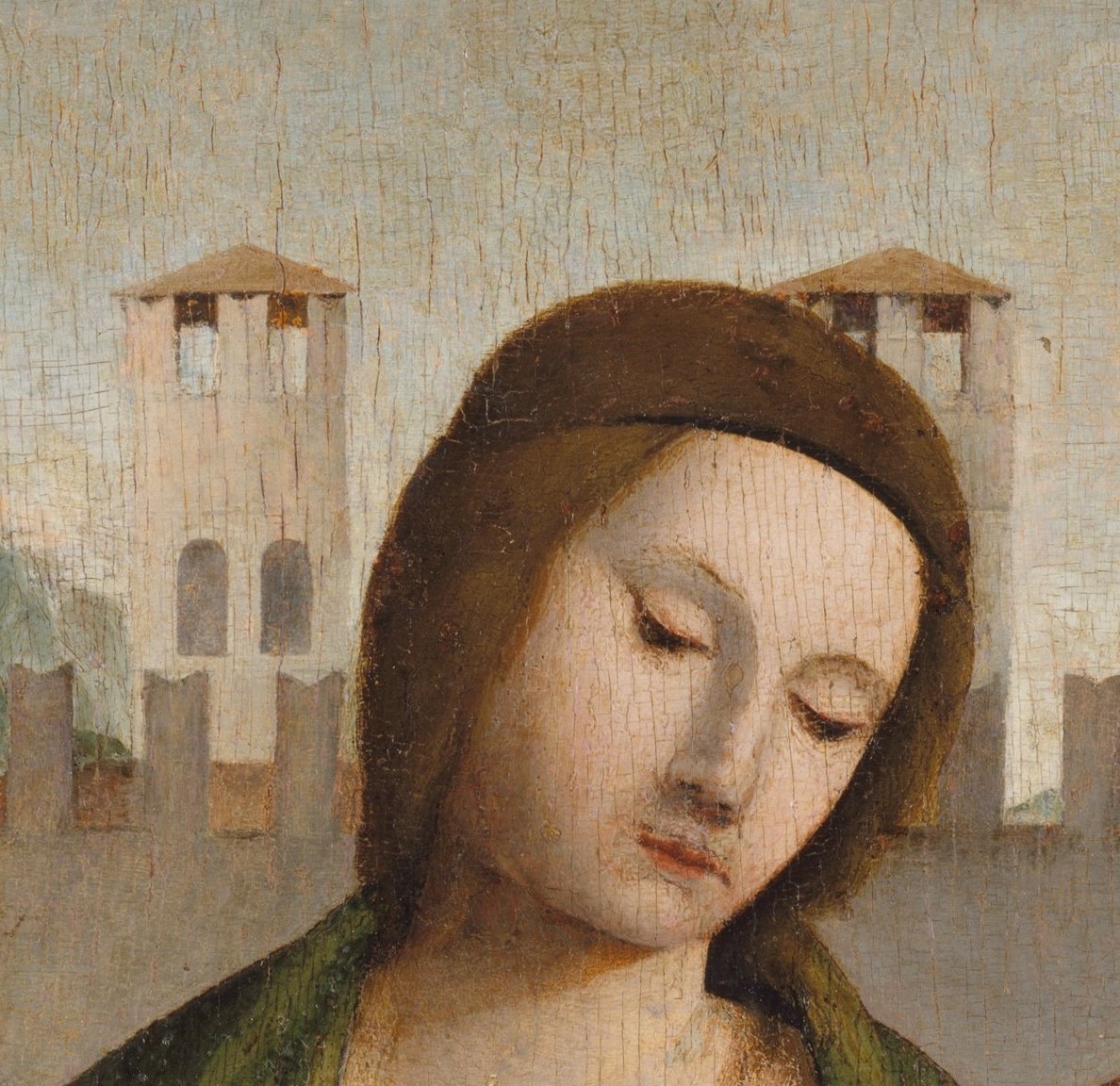
When the painting finally reappeared in the early 1900s, it was in a Paris collection and attributed to Francesco Francia. The misidentification is understandable, the Madonna's face had been partly repainted at some point in its lost history, obscuring Bramantino's hand. Look closely at the simplified oval of her face and you can see why connoisseurs argued.
In 1912, the dealer Kleinberger acquired it from Count Victor Goloubew, corrected the attribution to Bramantino, and sold it to the Met within the same year. The painting is now recognized as a distinctive example of Lombard Renaissance art, built by a painter who was also an architect, and it shows. The figures are constructed from geometric volumes, the drapery falling in near-architectural planes rather than soft folds.
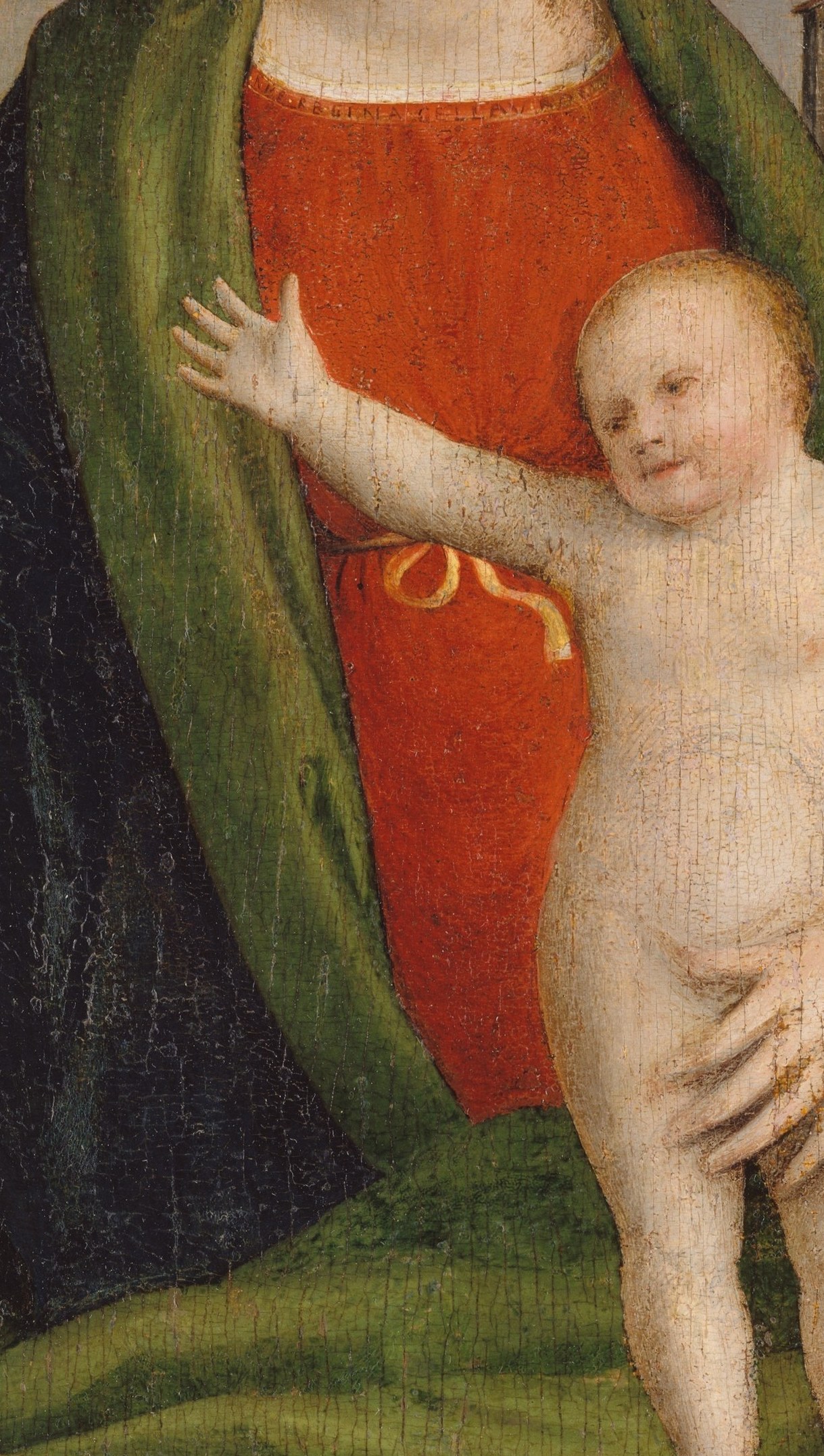
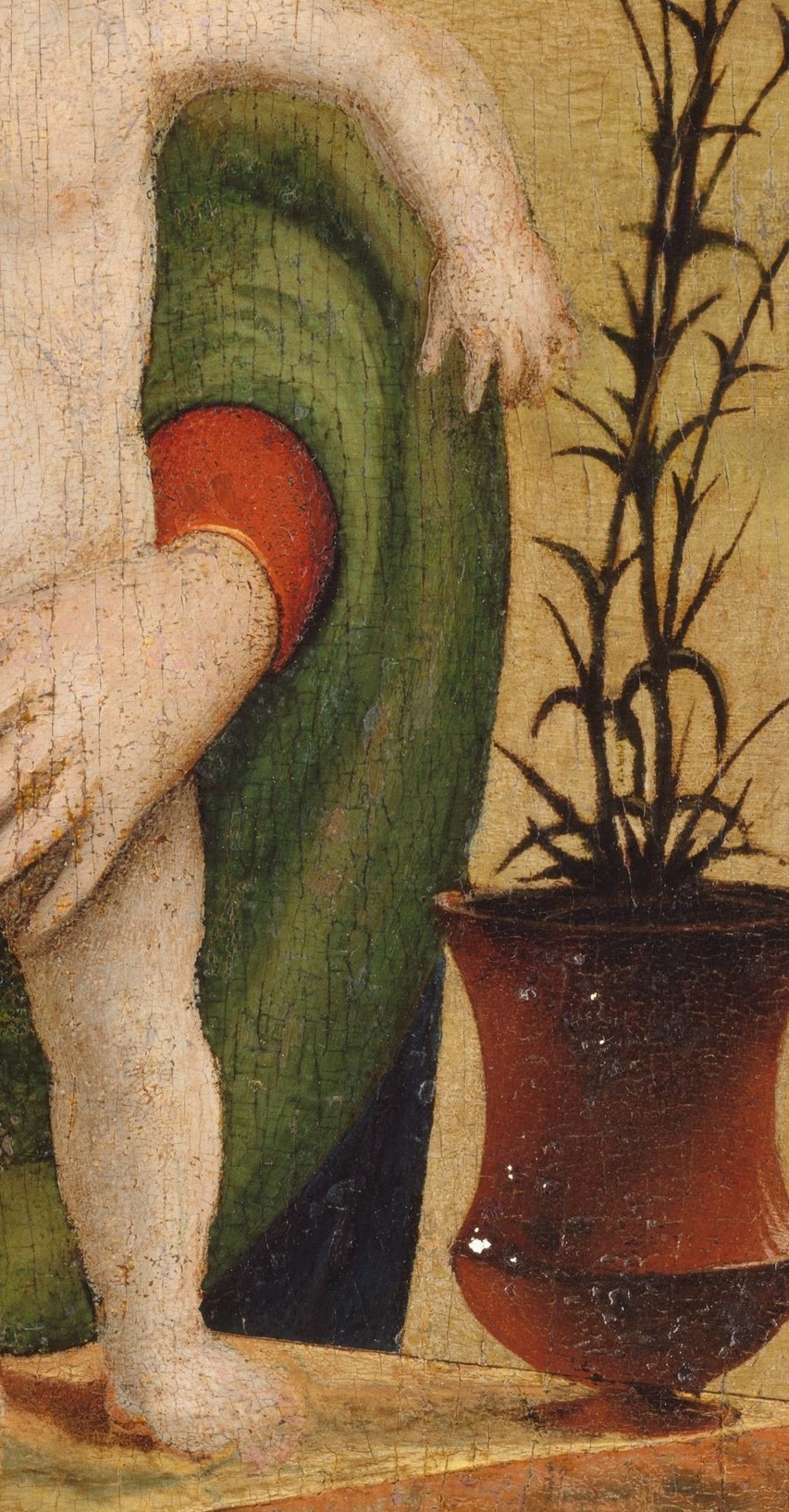
The theological heart of the image is in the child's hands. He stands naked on a granite cube, leaning toward the apple his mother offers. That apple is the fruit of Original Sin, and instead of turning away, the infant Christ extends his arm to accept it. It is a compact, powerful image of willing sacrifice. The red carnations on the right speak the same language: their color prefigures the blood of the Passion.
#arthistory #renaissance #bramantino
Details
Transcript
Before 1508, a painter in Milan finished this panel. Then its story went silent for 400 years. When it surfaced in Paris, experts got the name wrong. They called it a Francia. This face had been partly repainted. A dealer named Kleinberger bought it. Within months, he sold it to the Met. Now look at the child. He leans toward an apple. That is the fruit of Original Sin. He is reaching to take it. A child volunteering for redemption, painted in the geometry of a architect.