Boats Carrying Out Anchors to the Dutch Men of War by Turner, Joseph Mallord William
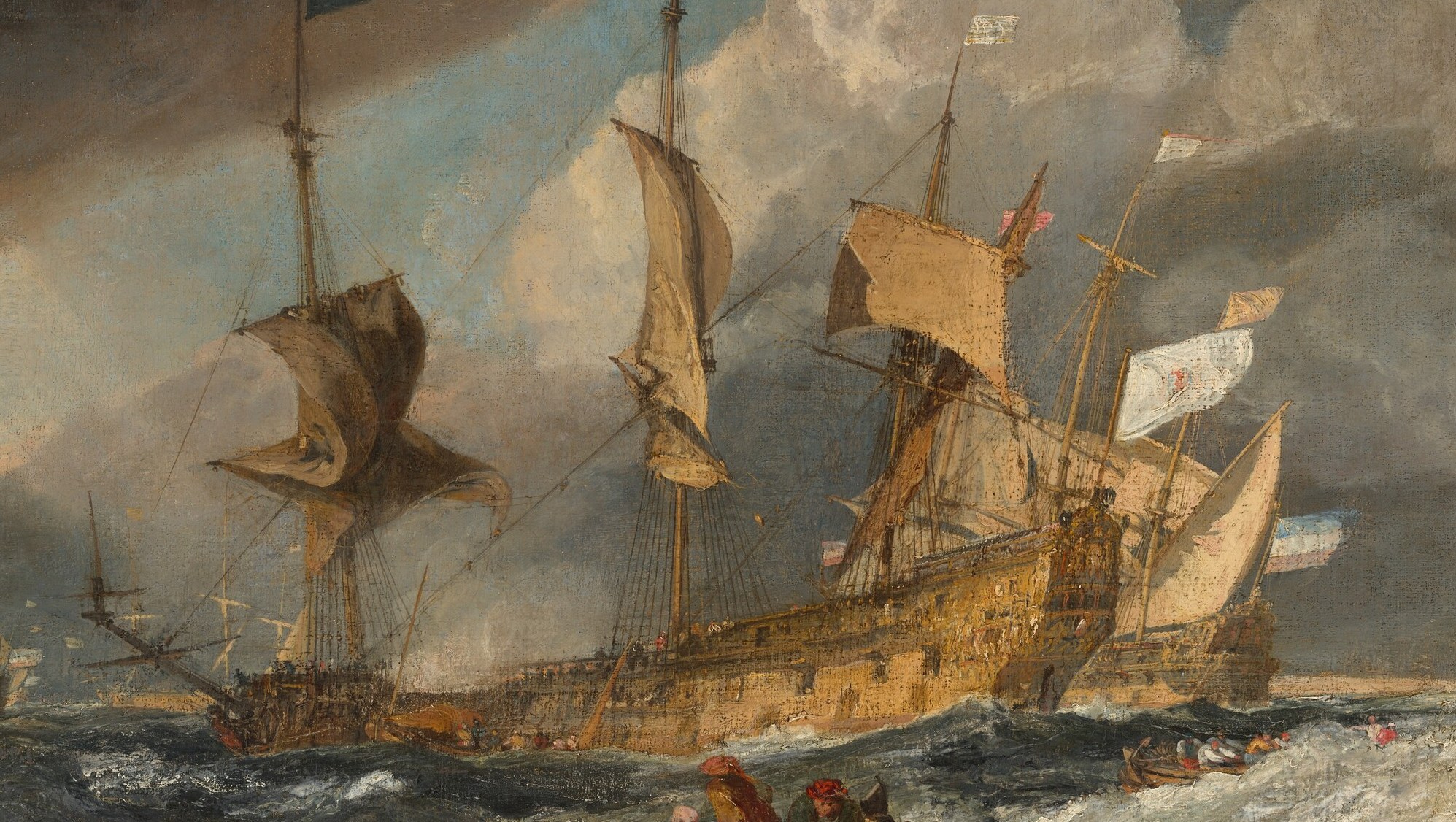
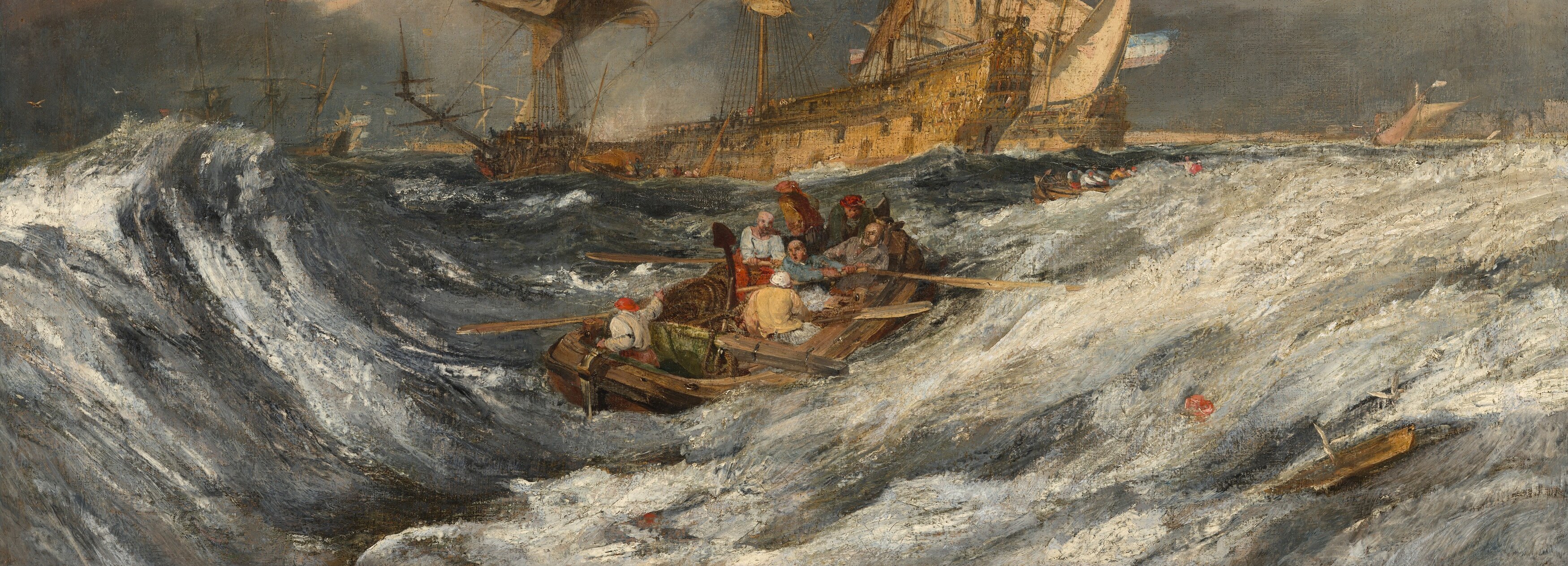
J.M.W. Turner's "Boats Carrying Out Anchors to the Dutch Men of War," painted around 1804 and held at the Tate Britain, is more than a mere seascape. It's a subtle commentary on national anxiety, referencing a 1665 Dutch attack while Britain faced the threat of Napoleonic France.
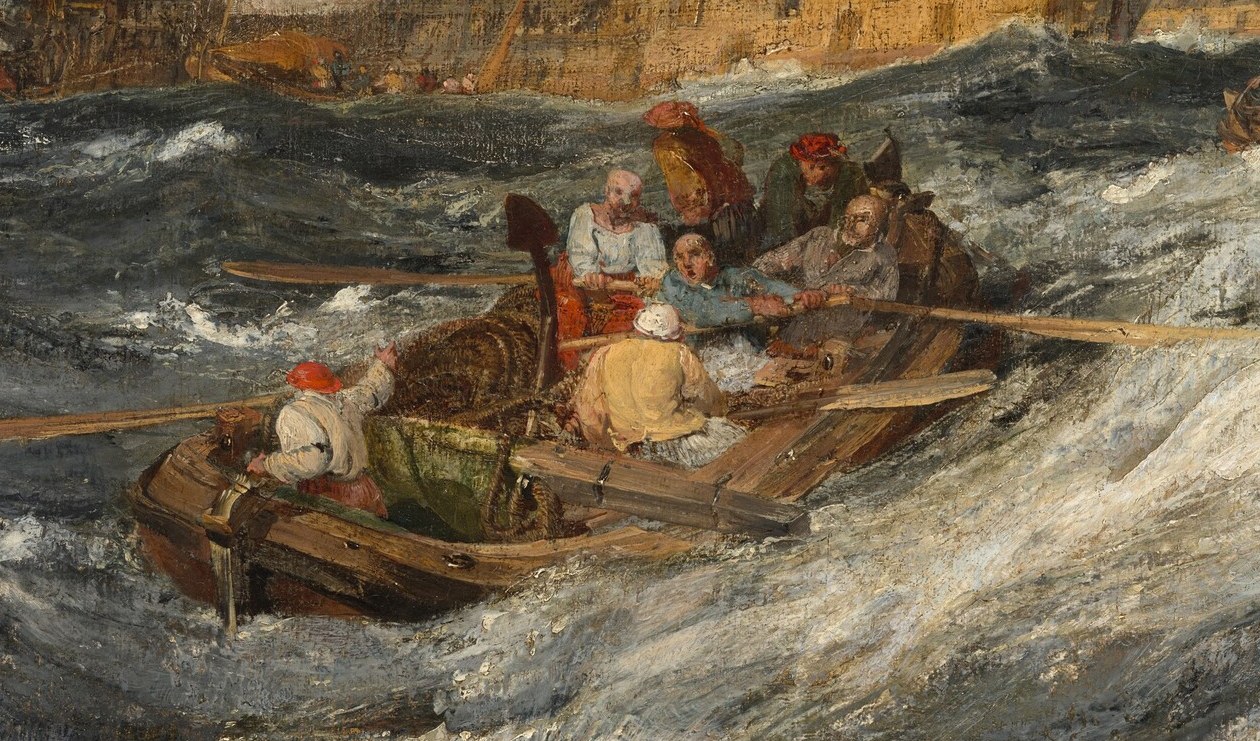
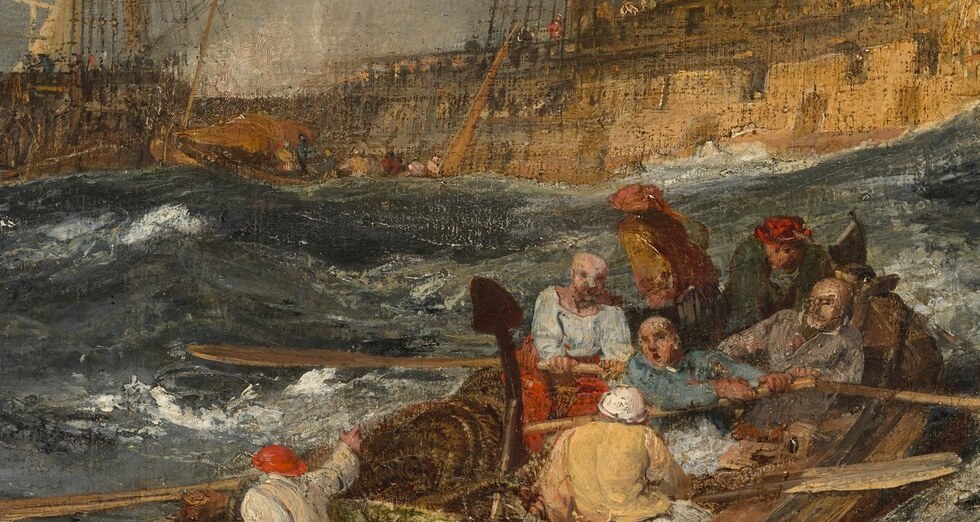
While grand warships dominate the scene, the true heart of the painting lies in the small rowboat. Observe the crew's strenuous effort as they ferry massive anchors and cables across the turbulent water. These figures, though tiny, underscore the immense human labor behind naval preparedness.
Turner, known for his evolving atmospheric style, painted this work amid significant geopolitical tension. It reminds viewers of the continuous need for vigilance and preparation, a theme as relevant in the early 19th century as it was in the 17th.
The detailed depiction of the waves and sky, combined with the focus on human resilience, elevates this painting beyond a simple historical reference. What details do you notice first?
Details
Transcript
In 1804, Britain feared a new attack on its fleet. This painting recalls a historical Dutch raid from 1665. Massive ships prepare for battle, or to moor. But look closer, at the human effort below. This small crew strains to carry huge anchors. They represent the unseen labor of naval power.