Little Miss Fairfield by Prior, William Matthew
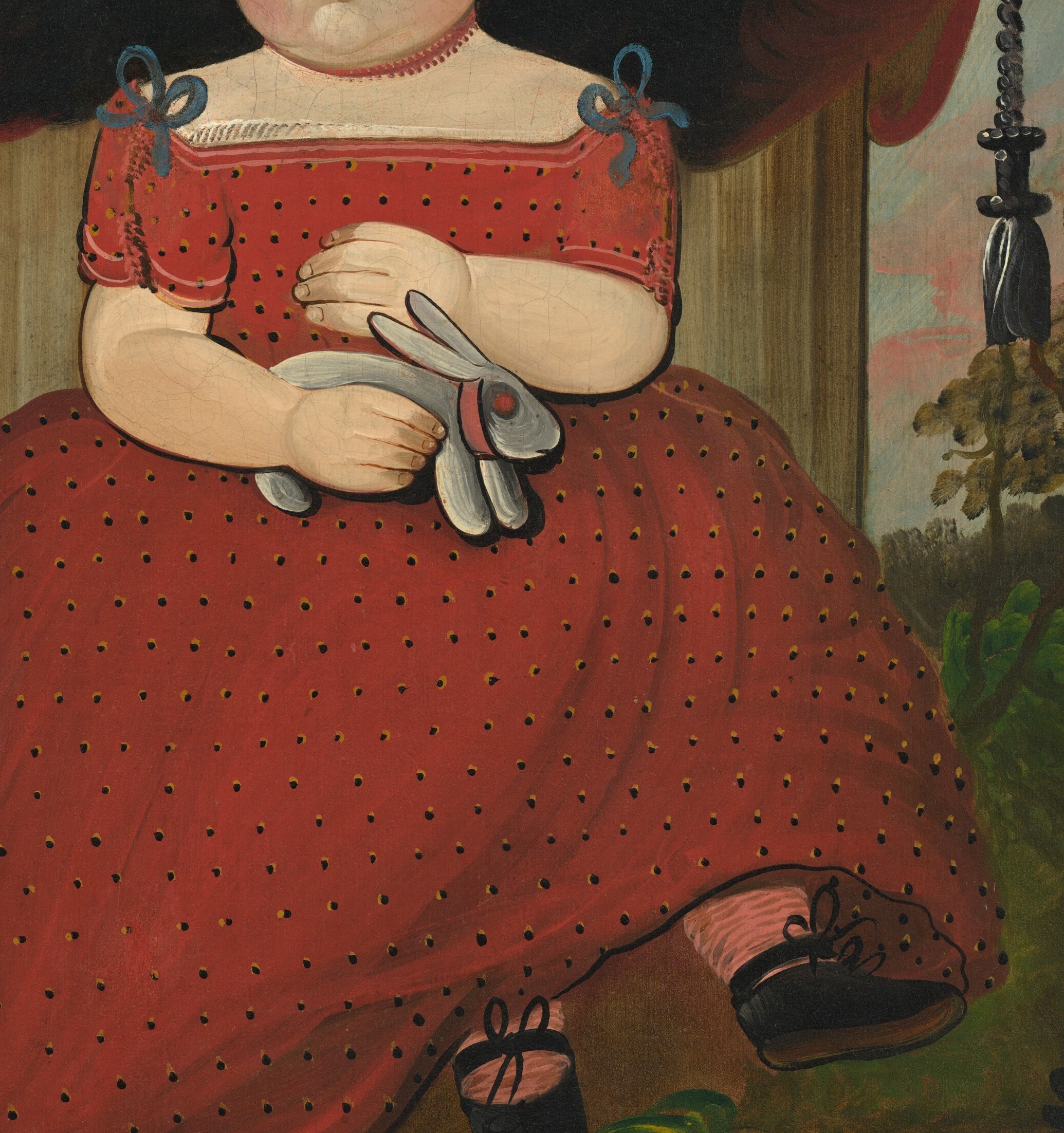
William Matthew Prior's "Little Miss Fairfield," painted in 1850, is a charming example of 19th-century American folk art, now housed in an undisclosed private collection. Prior was known for his ability to capture the likenesses of everyday people, particularly children, with a straightforward and engaging style.
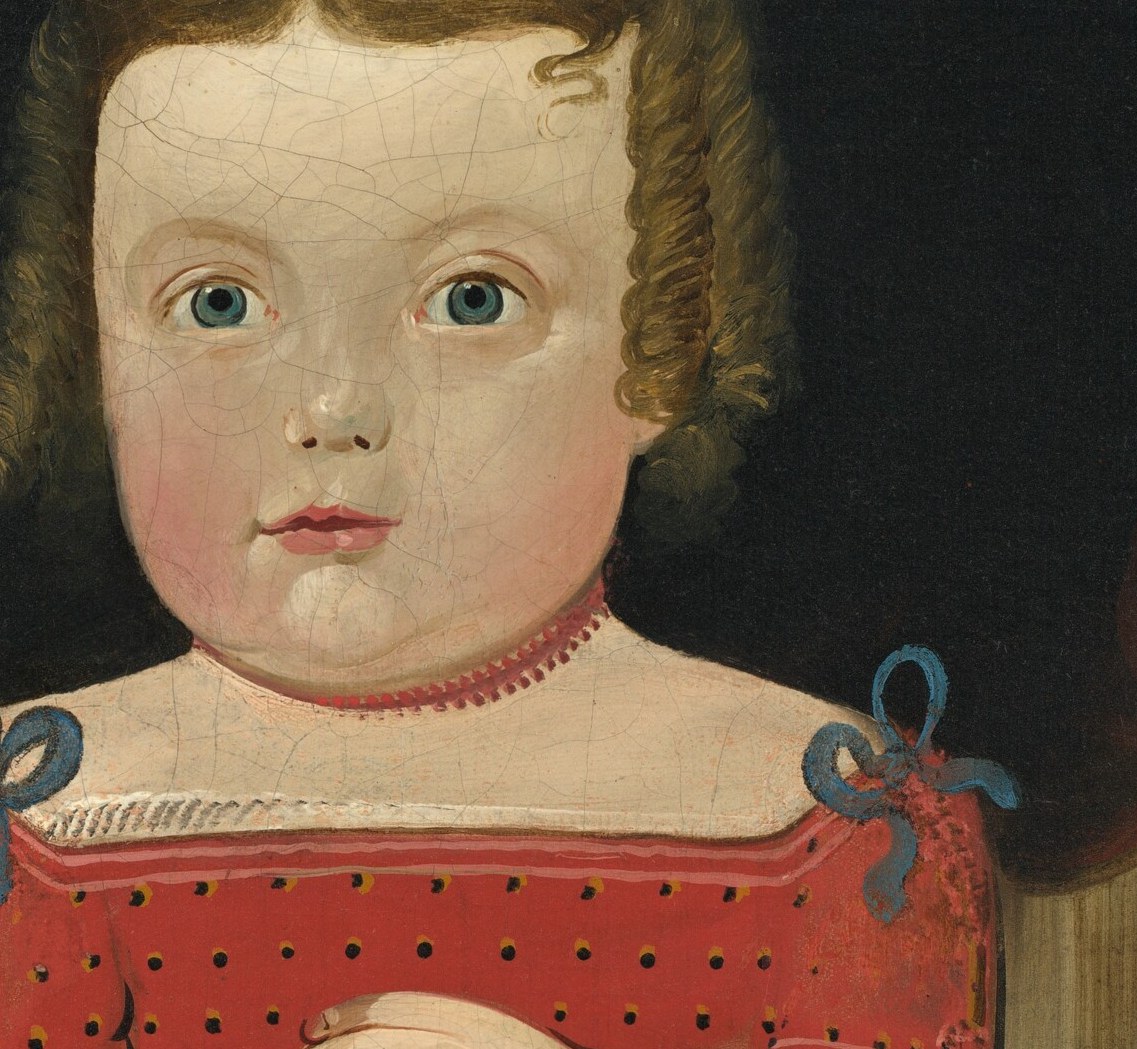
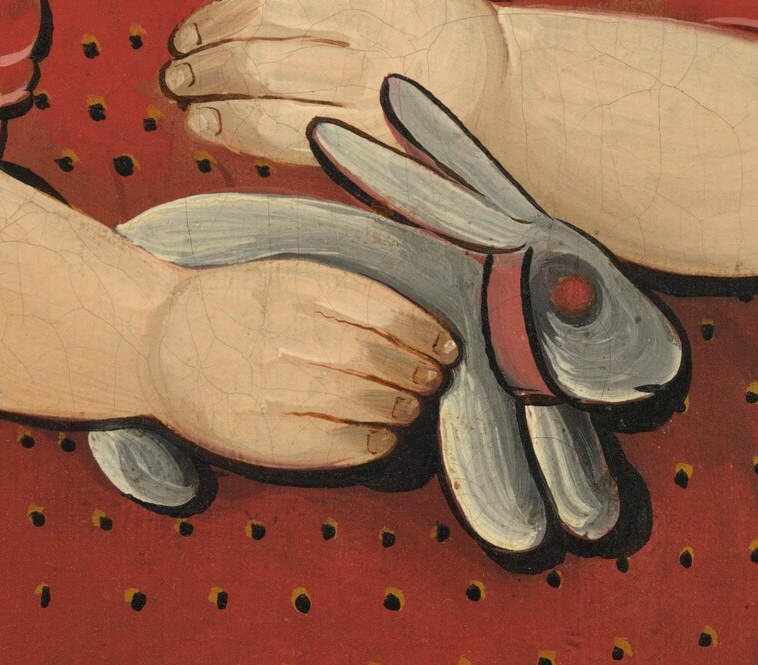
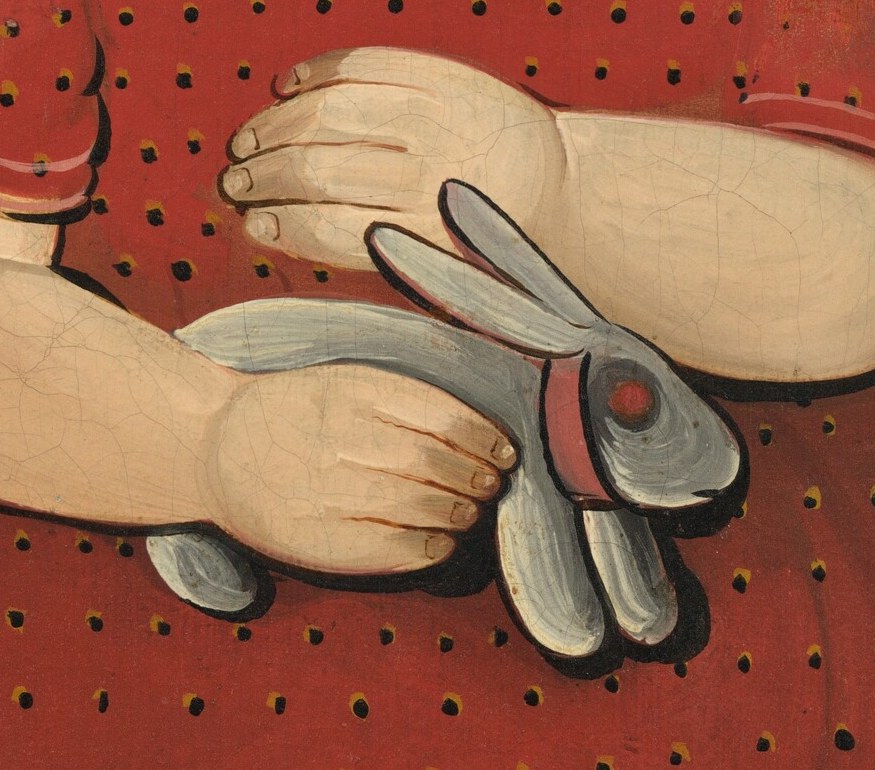
Look at the little girl's direct gaze and the simplicity of her features, a hallmark of Prior's approach. She clasps a toy rabbit, a detail that speaks to her youth and innocence, while her polka-dotted red dress adds a vibrant touch to the portrait.
Prior offered different levels of detail in his portraits, allowing more people to afford a painted likeness. This accessibility made him a significant figure in American art, capturing the faces of a growing nation outside of traditional elite circles.
His work reminds us that art has always sought to reflect the lives of ordinary people. What do you notice first about her?
Details
Transcript
This painter was known for capturing ordinary people, especially children. He offered portraits at various price points, depending on detail. A common request was for simplified faces, which he excelled at. The little girl holds a toy rabbit, a simple childhood comfort. Her red dress, dotted with black, is a vibrant detail in the painting. This focus on everyday subjects made his work widely accessible.