Joséphine-Éléonore-Marie-Pauline de Galard de Brassac de Béarn (1825–1860), Princesse de Broglie by Jean Auguste Dominique Ingres

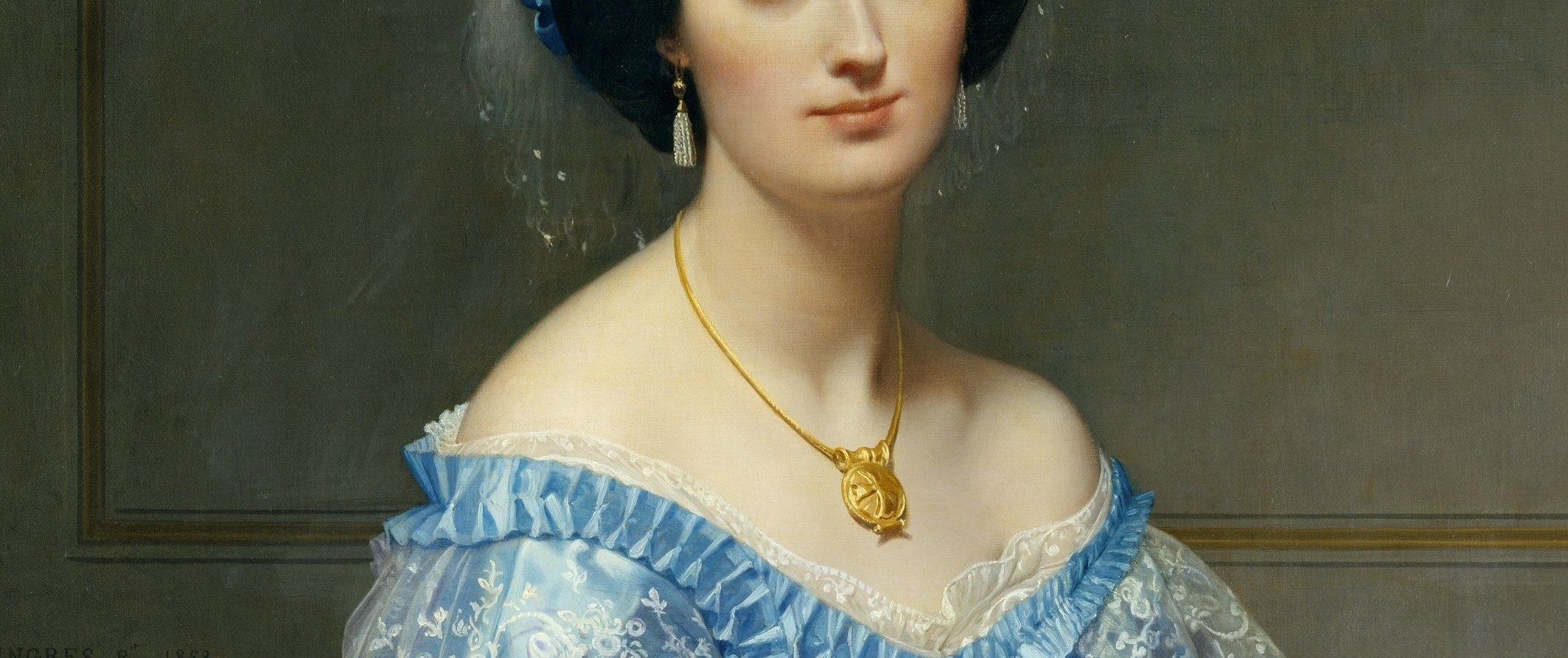
Jean-Auguste-Dominique Ingres painted the Princesse de Broglie between 1851 and 1853, and the portrait hangs today in the Metropolitan Museum of Art. Pauline de Galard de Brassac de Béarn was twenty-eight years old, married to a future prime minister of France, and known throughout Paris for her intelligence and striking beauty. Ingres captured exactly what made her compelling: a luminous face, a magnificent blue satin gown, and a gaze that refuses to meet ours.

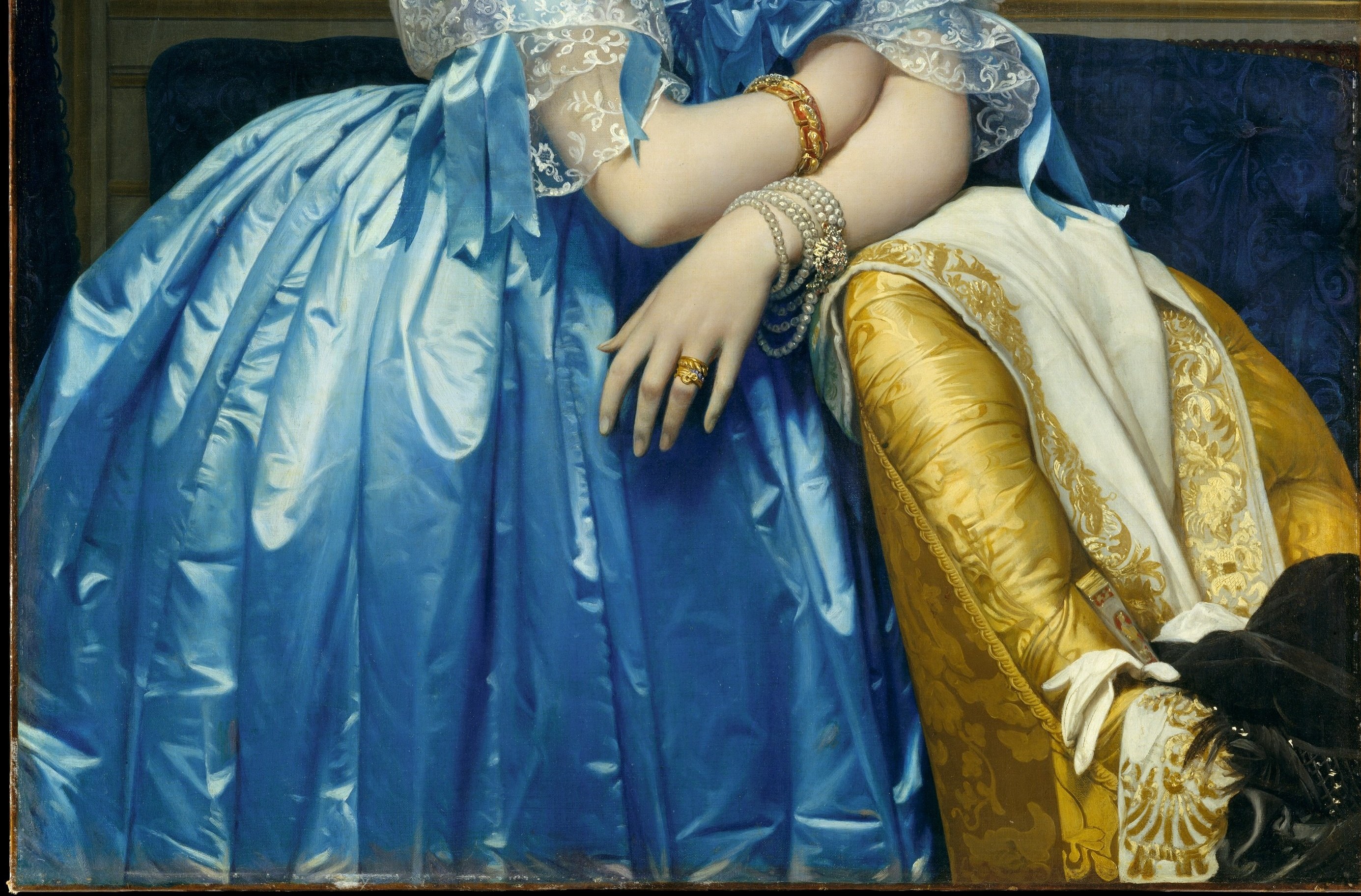
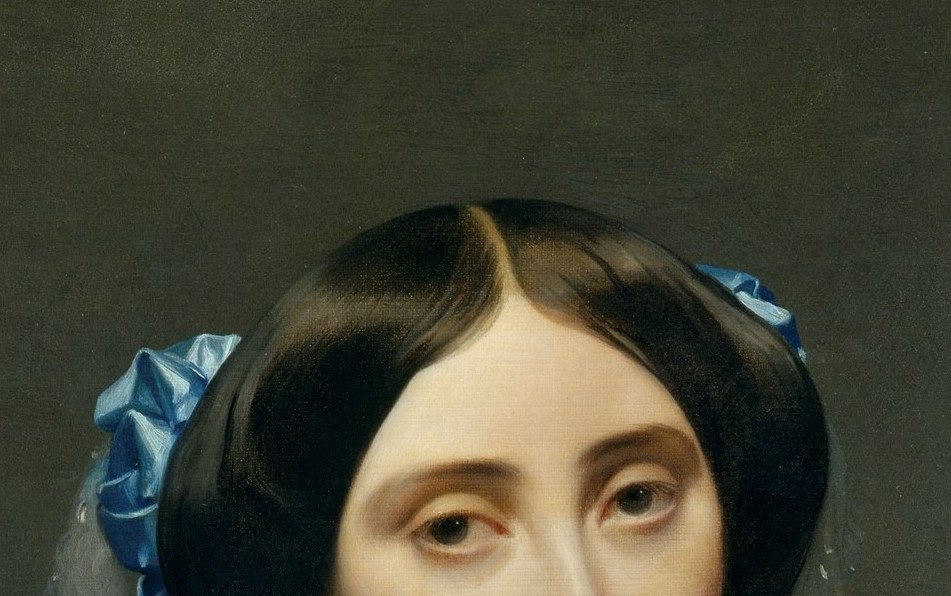
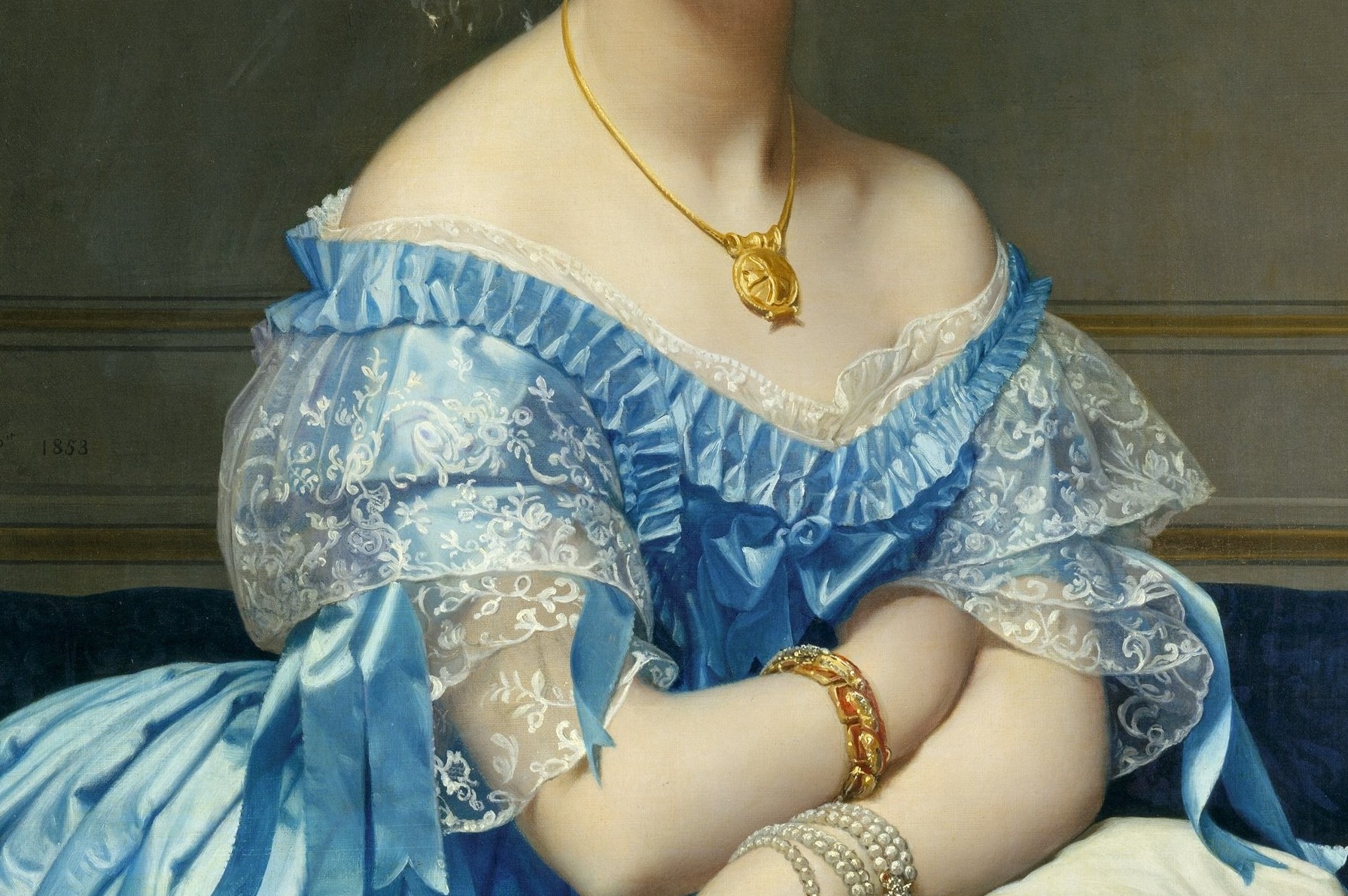
Look at her eyes. They are half-lidded, averted, distant. Pauline was profoundly shy, and Ingres did not override that condition for the sake of a grand society portrait. Her hands rest without grasping anything, passive in her lap. The whole composition is still. The chair arm is gilded Empire, the jewelry is Etruscan revival, and the dress swallows half the canvas: a princess structurally upheld by her own gown.

Pauline contracted tuberculosis in her early thirties and died in 1860, just seven years after the portrait was finished. She was thirty-five. Albert de Broglie, who would serve as France's 28th prime minister, lived until 1901 and did not remarry. The portrait became a relic of a marriage cut short.

The Metropolitan Museum calls it one of Ingres' finest late portraits. The satin alone rewards a long look: the light folds are rendered with an almost unbelievable three-dimensionality for oil paint. But the portrait's real power is psychological. Ingres gave us a woman who knows she is being watched and retreats inward anyway. Spend a minute with her eyes and see if she doesn't make you feel it.

#arthistory #ingres #19thcenturyart

Details
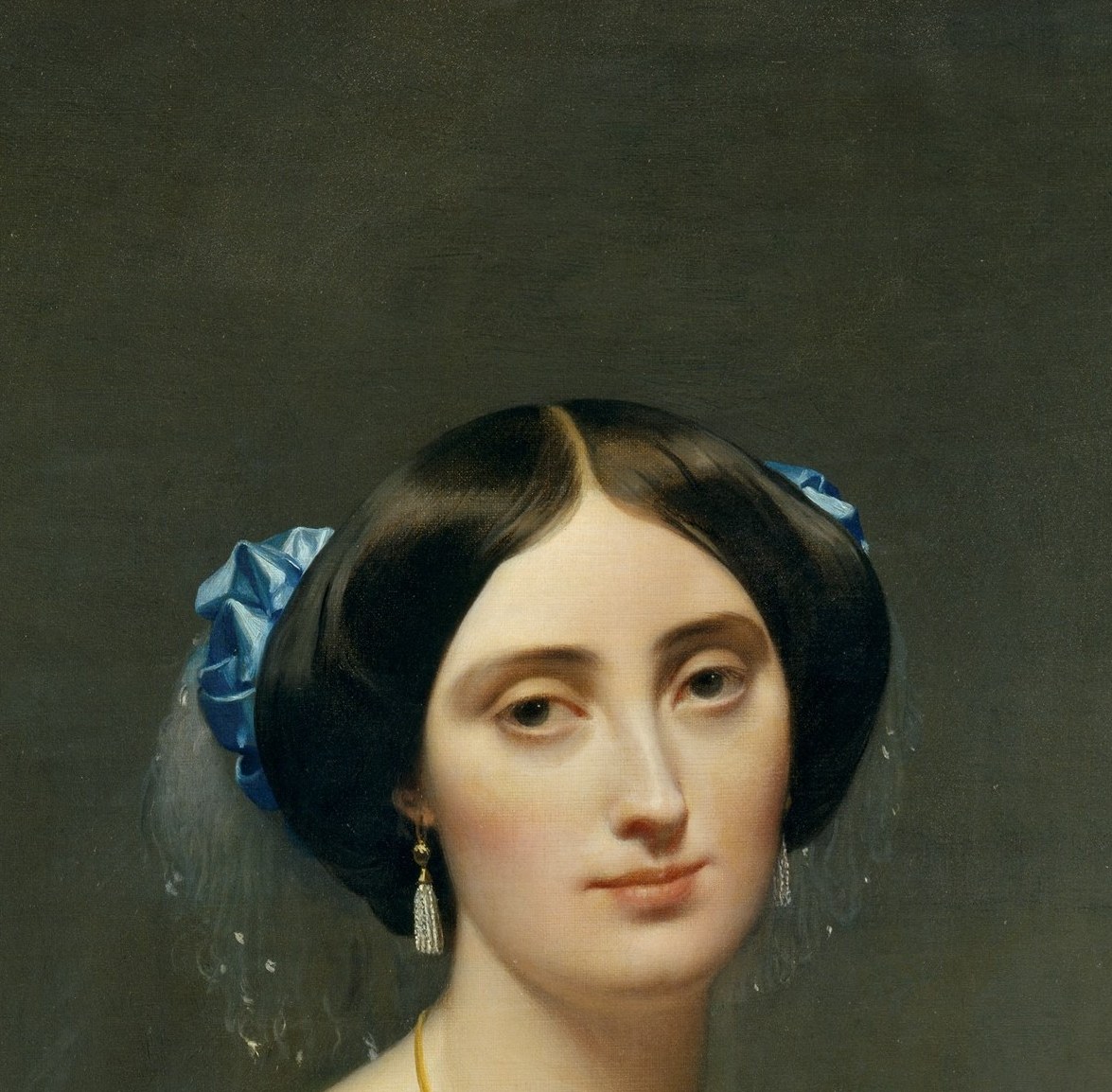
The portrait's psychological core: Ingres captures documented shyness and melancholy in the slightly averted, heavy-lidded gaze , a face that knows it is being observed and retreats anyway, prophetically elegiac for a woman who died at 35.
An almost architectural presence , the dress occupies nearly half the painting's total area, a formal strategy that literalizes status: the princess is structurally upheld, even subsumed, by her own gown.
The eyes do not meet ours, creating emotional distance that reads simultaneously as shyness and quiet sorrow; the most intimate and psychologically loaded element in the painting.
Ingres' signature technique passage: flesh rendered with porcelain smoothness, the skin tone set against cool blue satin , a painterly contrast that made his portraits instantly recognizable and which rewards extreme close-up viewing.
Ingres' most celebrated achievement in fabric painting; the light modeling of the satin folds creates extraordinary three-dimensionality and is one of the finest passages of textile rendering in 19th-century painting.
Transcript

Paris, winter of 1853. The Second Empire is newly born. In a hushed salon, a princess sits for her portrait. She was known for her beauty and her profound shyness. Her hands rest passively; the pose is still, interior. Ingres labored over this portrait for two full years. Seven years later, Pauline was dead of tuberculosis. She was thirty-five. Her husband never remarried.