Artwork
Joséphine-Éléonore-Marie-Pauline de Galard de Brassac de Béarn (1825–1860), Princesse de Broglie
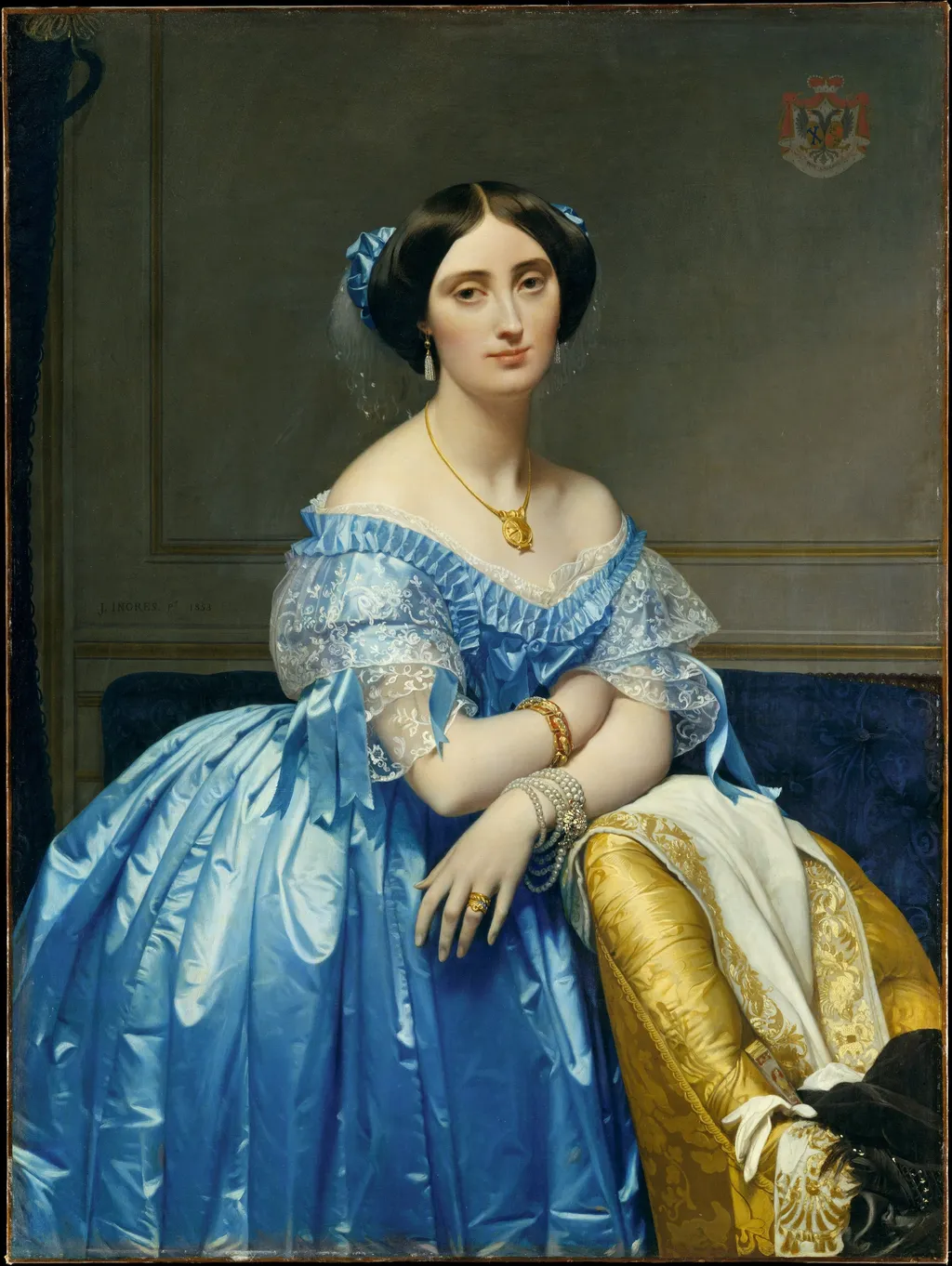
Joséphine-Éléonore-Marie-Pauline de Galard de Brassac de Béarn (1825–1860), Princesse de Broglie is an oil painting by the Neoclassicist artist Jean Auguste Dominique Ingres. It dates from 1853 and is held in the collection of the Metropolitan Museum of Art.
About this work
In a gray-paneled Parisian salon, the twenty-six-year-old Princesse de Broglie folds her seemingly boneless hands, her gaze cool and reserved. Jean Auguste Dominique Ingres began the canvas in 1851 and labored over the damask, lace, and Etruscan-revival jewelry for two years. It was among his last society portraits before the sitter died of tuberculosis at thirty-five.
Subject & Meaning
The sitter, renowned for her intelligence and beauty, was profoundly shy, a trait Ingres captured through her melancholic expression and averted gaze.
The portrait depicts Pauline de Galard de Brassac de Béarn (1825–1860), styled Princesse de Broglie after her marriage to future Prime Minister Albert de Broglie. The sitter, renowned for her intelligence and beauty, was profoundly shy, a trait Ingres captured through her melancholic expression and averted gaze. Her opulent blue satin evening dress, gold-embroidered shawl, pearls, and marabou feathers signify her aristocratic status, while the cross pendant necklace (possibly by Castellani or Mellerio) symbolizes her devout Catholicism.
The painting is thus both a meticulous record of Second Empire fashion and a psychological study, foregrounding the subject’s inner melancholy and piety over mere social display.
Technique & Style
Executed in oil on canvas, the portrait measures 121.3 × 90.8 cm and is signed and dated 1853. Ingres followed his typical Neoclassical working method: he first produced multiple preparatory graphite studies, including nude figure studies, to establish the sitter's underlying anatomy before designing the lavish costume and accessories. The final painting displays the artist's hallmark precision in rendering the sumptuous blue satin evening dress, gold-embroidered shawl, lace trimmings, pearl jewelry, and marabou feathers, while the figure's body appears to lack a solid bone structure, a characteristic noted in many of Ingres's female portraits.
The handling of the background, which caused the artist considerable effort, is painstakingly detailed. The princess's melancholic expression and three-quarter pose contribute to the portrait's formal and psychological depth.
History & Provenance
Albert de Broglie commissioned the portrait of his wife, Pauline, around 1850 after being impressed by Ingres's 1845 portrait of his sister, the Comtesse d'Haussonville. Ingres dined with the family in January 1850 and then executed numerous preparatory pencil sketches, including nude studies, between 1850 and 1853. The painting was completed and signed in 1853.
Albert kept the portrait draped and hidden behind a velvet curtain after Pauline's death in 1860, lending it only to select exhibitions. After Albert's death, the painting remained with the family until 1958, when it was sold to the Metropolitan Museum of Art via the banker and collector Robert Lehman.
The painting is held at the Metropolitan Museum of Art in New York with accession number 1975.1.186. It was acquired in 1958 by banker Robert Lehman through Wildenstein, bequeathed to the Lehman Foundation in 1969, and donated to the museum in 1975. During the family's ownership following the sitter's death, the portrait was rarely exhibited, kept draped in fabric and hidden behind a velvet curtain, lent only to select exhibitions. Since entering the Met's collection, it has been displayed in the Lehman Wing.
Context
The portrait is widely regarded as one of Ingres’s finest late female portraits, alongside the Comtesse d’Haussonville, Baronne de Rothschild, and Madame Moitessier. It is his penultimate female portrait and final society commission, executed after Ingres had achieved sufficient acclaim in the 1840s to reduce his reliance on portraiture, which he considered a distraction from his primary interest in history painting. Scholarly discussion emphasizes the painting's melancholic expression and the precise rendering of costume, contrasted with the sitter's seemingly substanceless anatomy, a hallmark of Ingres’s mature portraits.
The work holds a key place as a late masterpiece of Neoclassical portraiture, capturing the social and psychological tensions of its era.
Legacy
The Princesse de Broglie is widely regarded as one of Jean-Auguste-Dominique Ingres's finest later-period portraits of women, standing alongside his portraits of the Comtesse d'Haussonville, Baronne de Rothschild, and Madame Moitessier. Its legacy is further marked by its poignant history: following the sitter's death in 1860, her husband, Albert de Broglie, kept the painting hidden behind a velvet curtain, exhibiting it only on rare occasions. After his death, the portrait remained in the family until 1958, when it was acquired by Robert Lehman and eventually donated to the Metropolitan Museum of Art in 1975, where it remains a celebrated work in the collection.
Overview
Jean-Auguste-Dominique Ingres painted this oil portrait of Joséphine-Éléonore-Marie-Pauline de Galard de Brassac de Béarn, Princesse de Broglie, between 1851 and 1853. The work captures the subject at age twenty-eight, known for her intellect and beauty, yet also her profound shyness. Ingres’s meticulous attention to detail is evident in the rendering of her attire and the elegant Parisian salon setting, making it a notable example of his later society portraiture.
Own this work as a print
Artist & collection

Artist
Jean-Auguste-Dominique Ingres was a French Neoclassical painter. Ingres was profoundly influenced by past artistic traditions and aspired to become the guardian of academic orthodoxy against the ascendant Romantic…

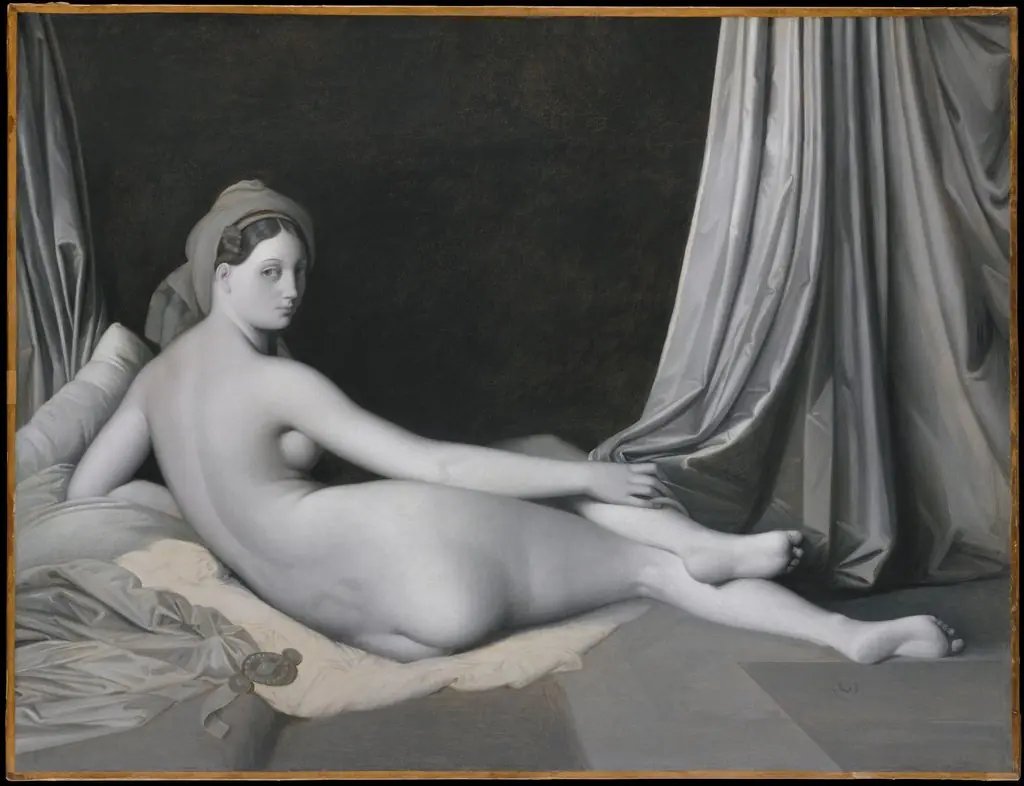
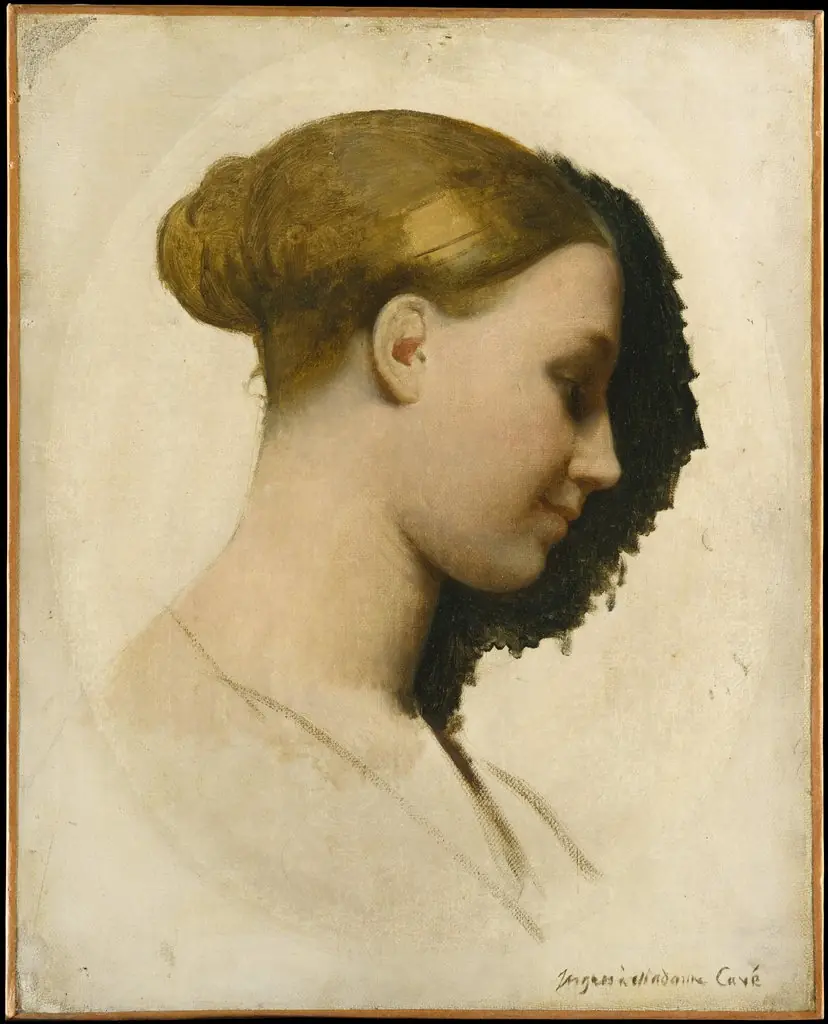
- Portrait of Countess Varvara Musina-Pushkina
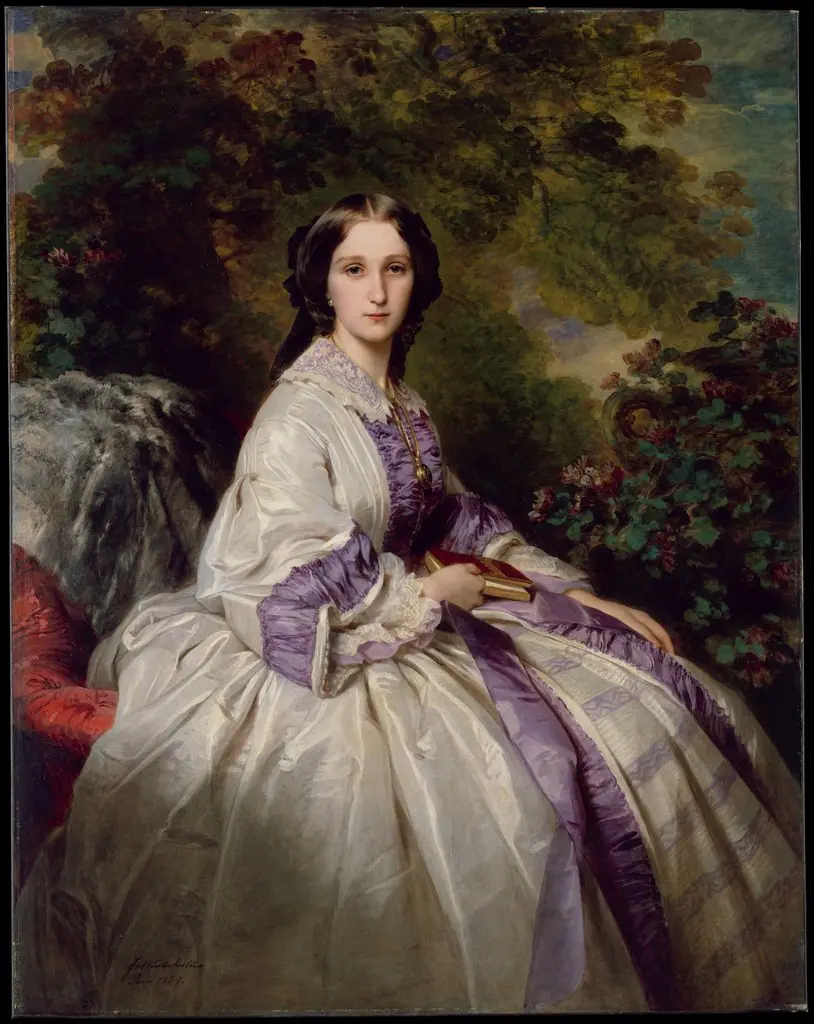 Portrait of Countess Alexander Nikolaevitch Lamsdorff
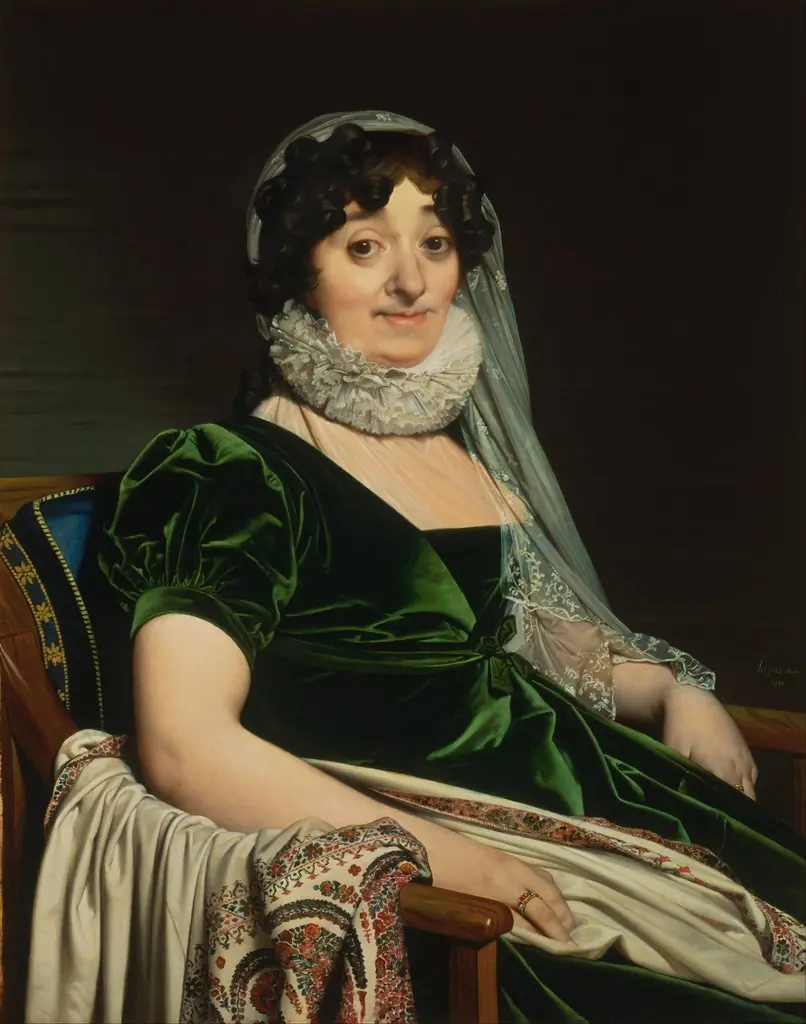 Portrait of the Countess of Tournon
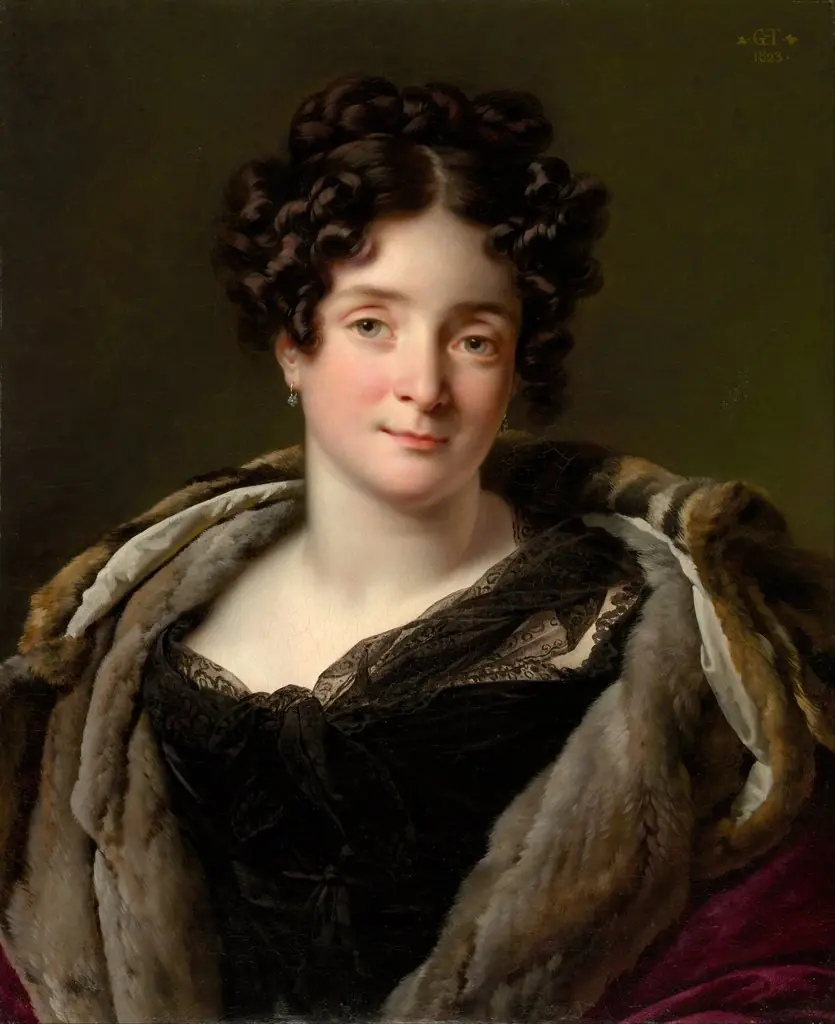 Madame Jacques-Louis-Étienne Reizet (Colette-Désirée-Thérèse Godefroy, 1782–1850)
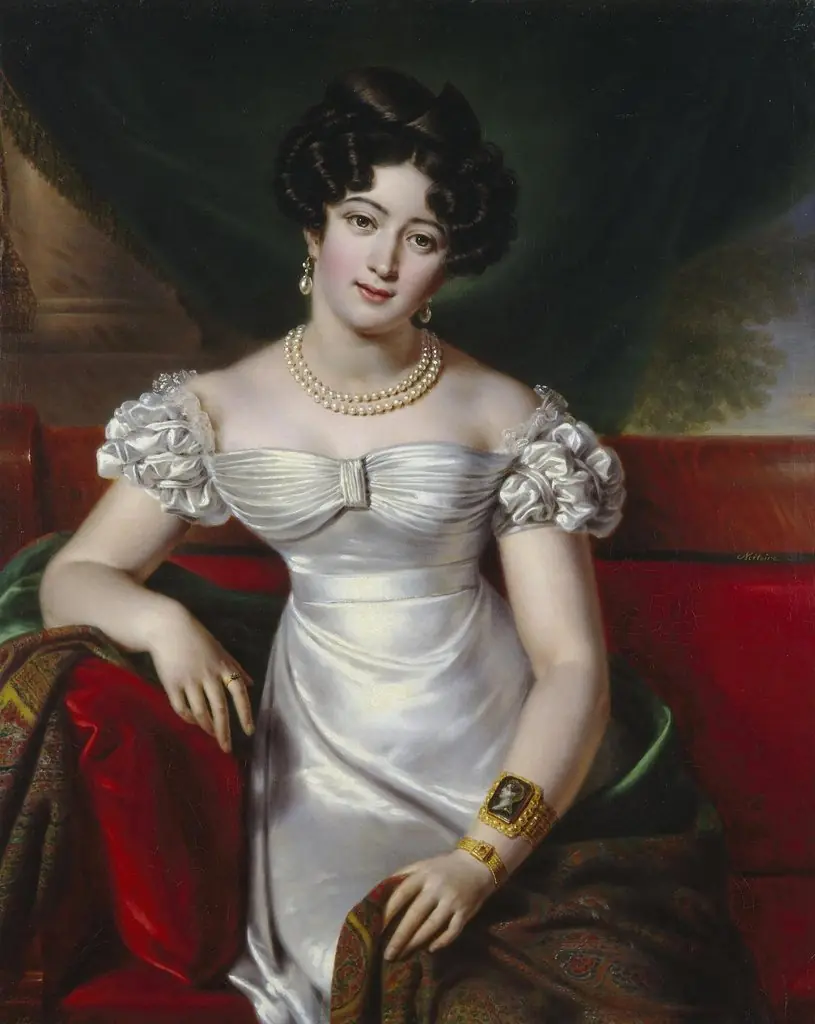 Portrait of Countess Yulia Samoilova
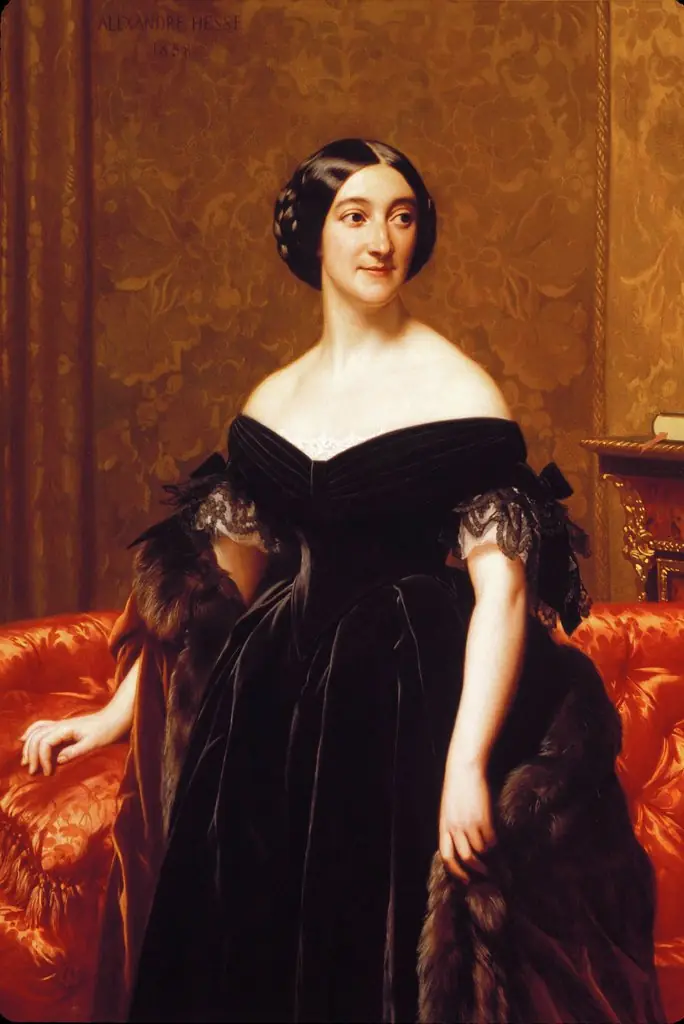 Young Woman
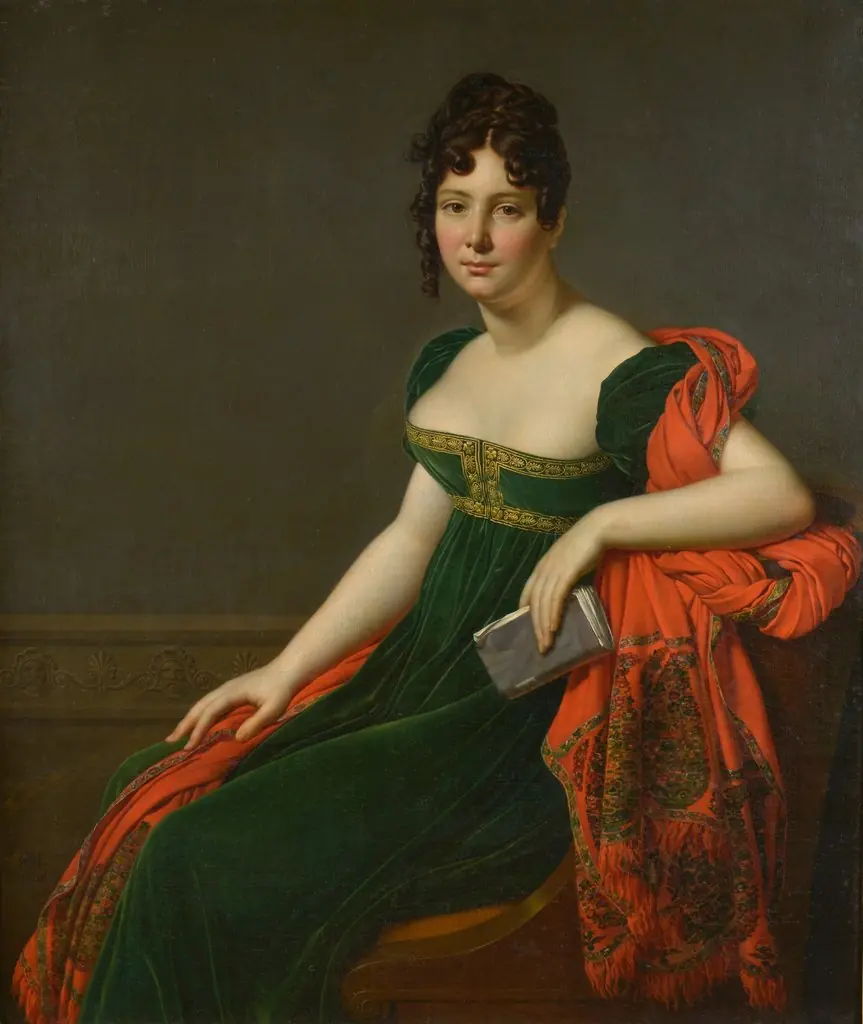 Portrait of Madame Augustine Bertin de Veaux
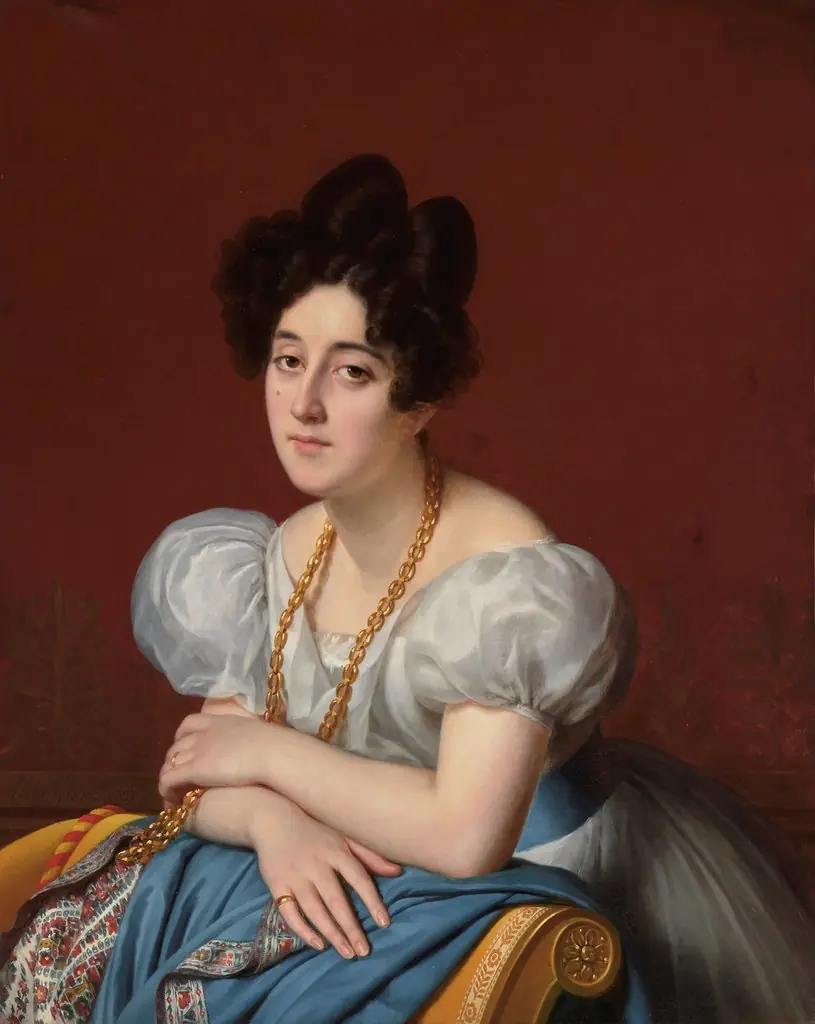 Portrait of a young woman leaning on a meridienne
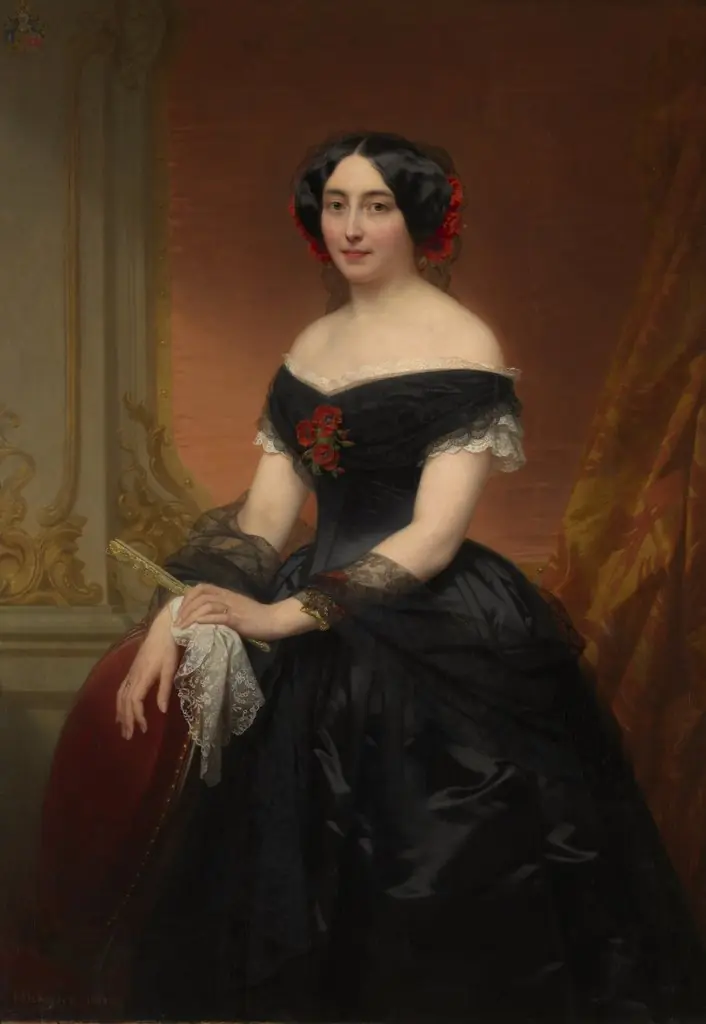 Madame Mols-de Brialmont
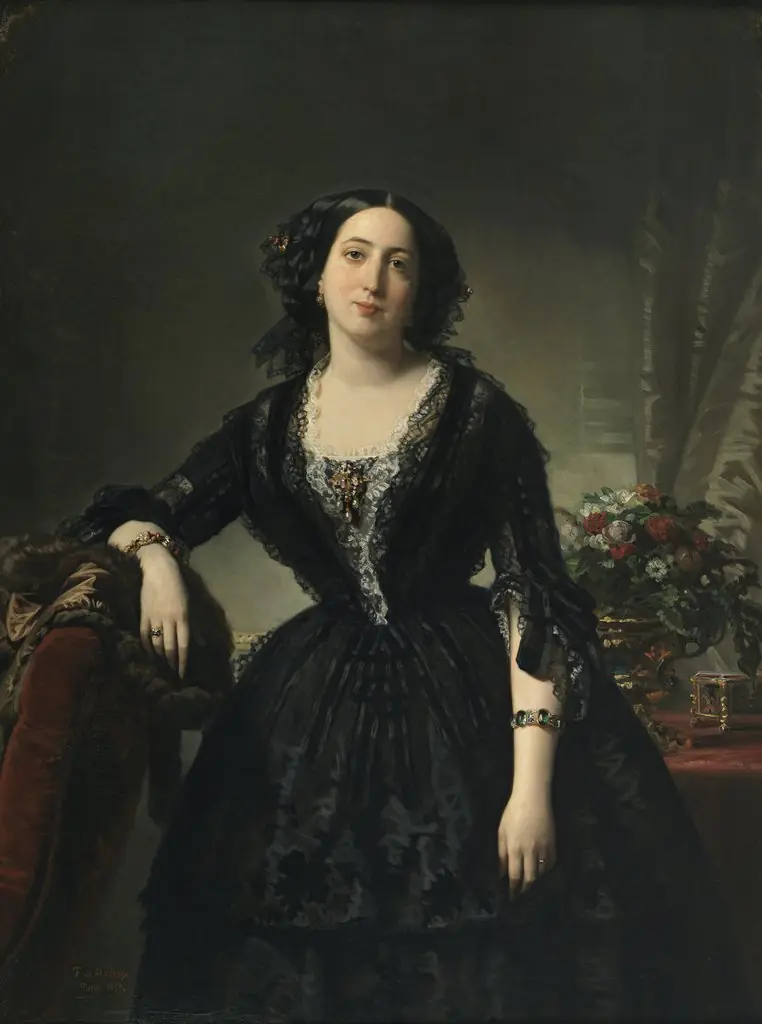 María Dolores de Aldama, Marchioness of Montelo
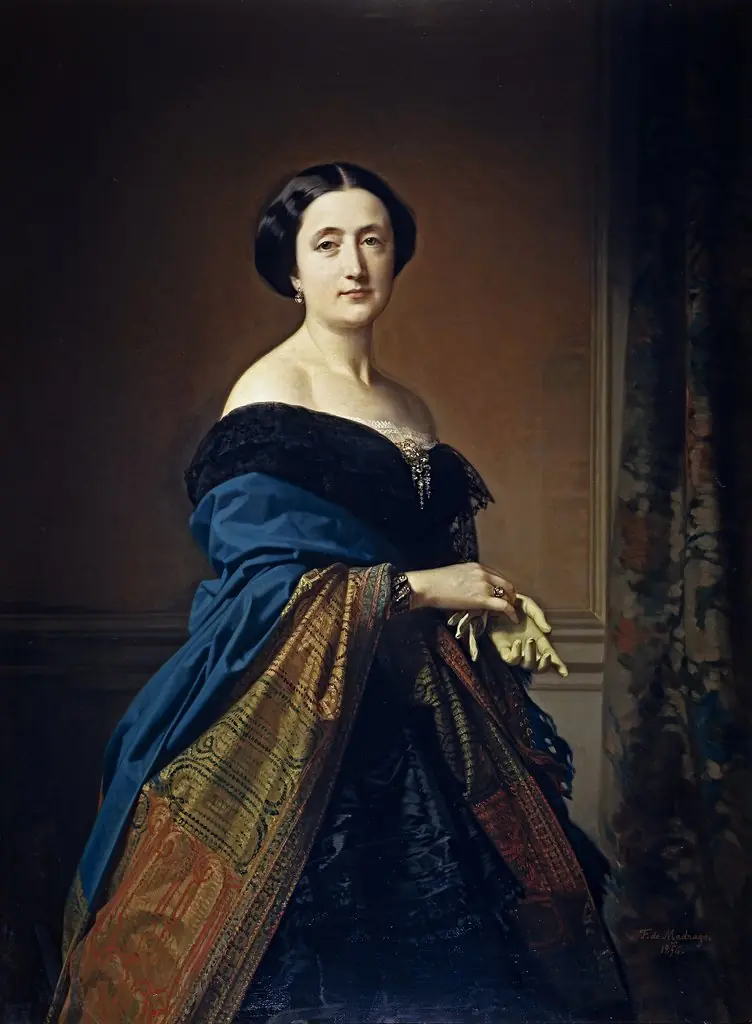 Saturnina Canaleta de Girona
 Portrait of Empress Maria Alexandrovna