New York Bay and Harbor by J. C. Wales
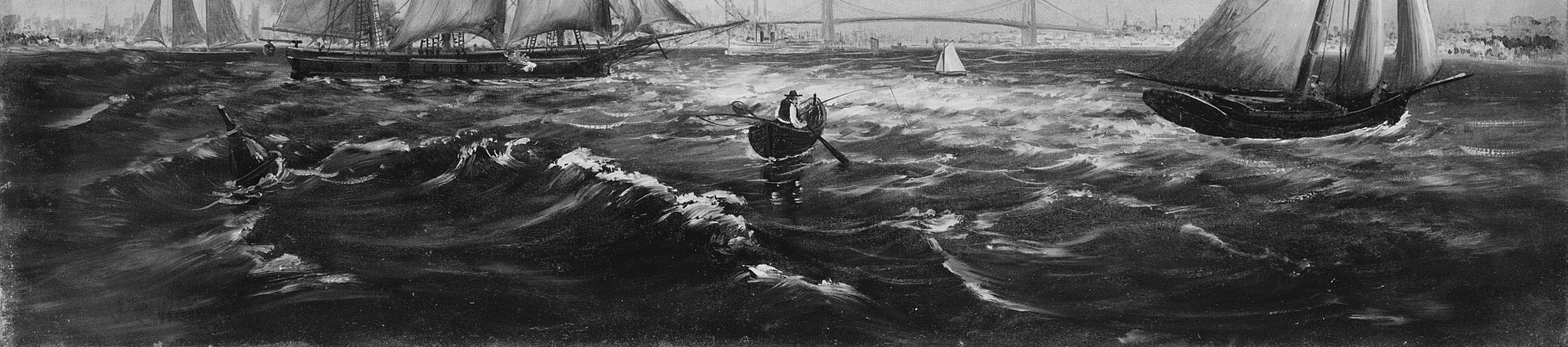
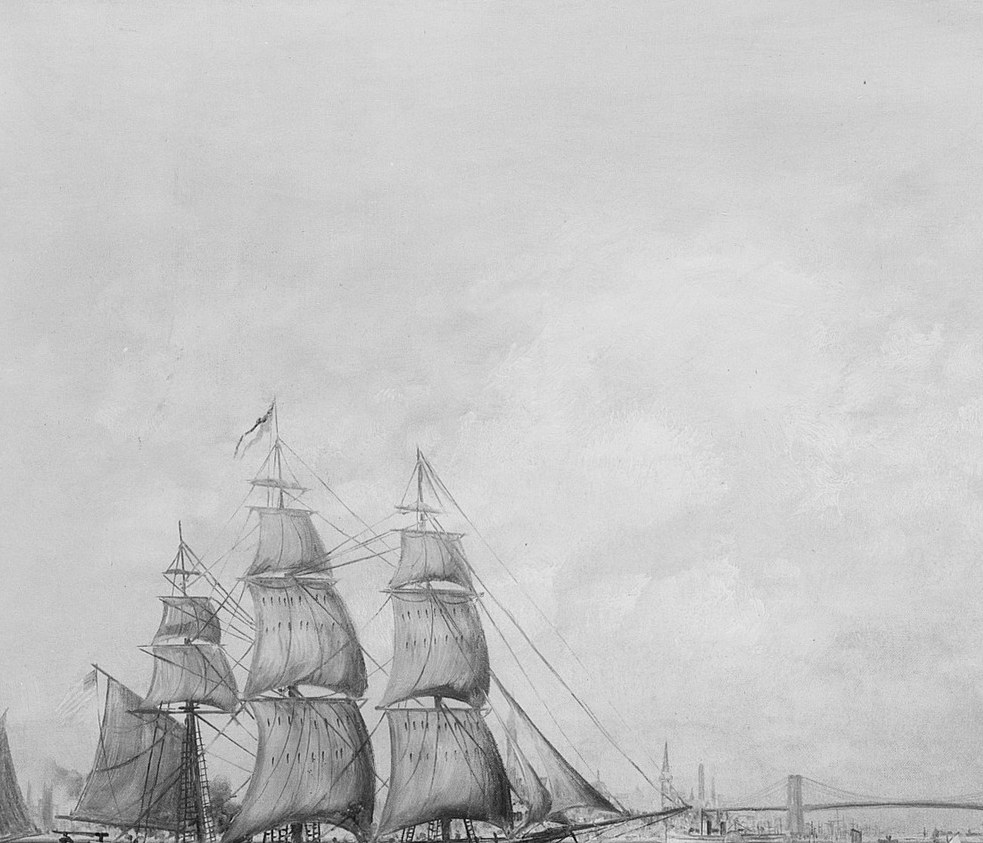
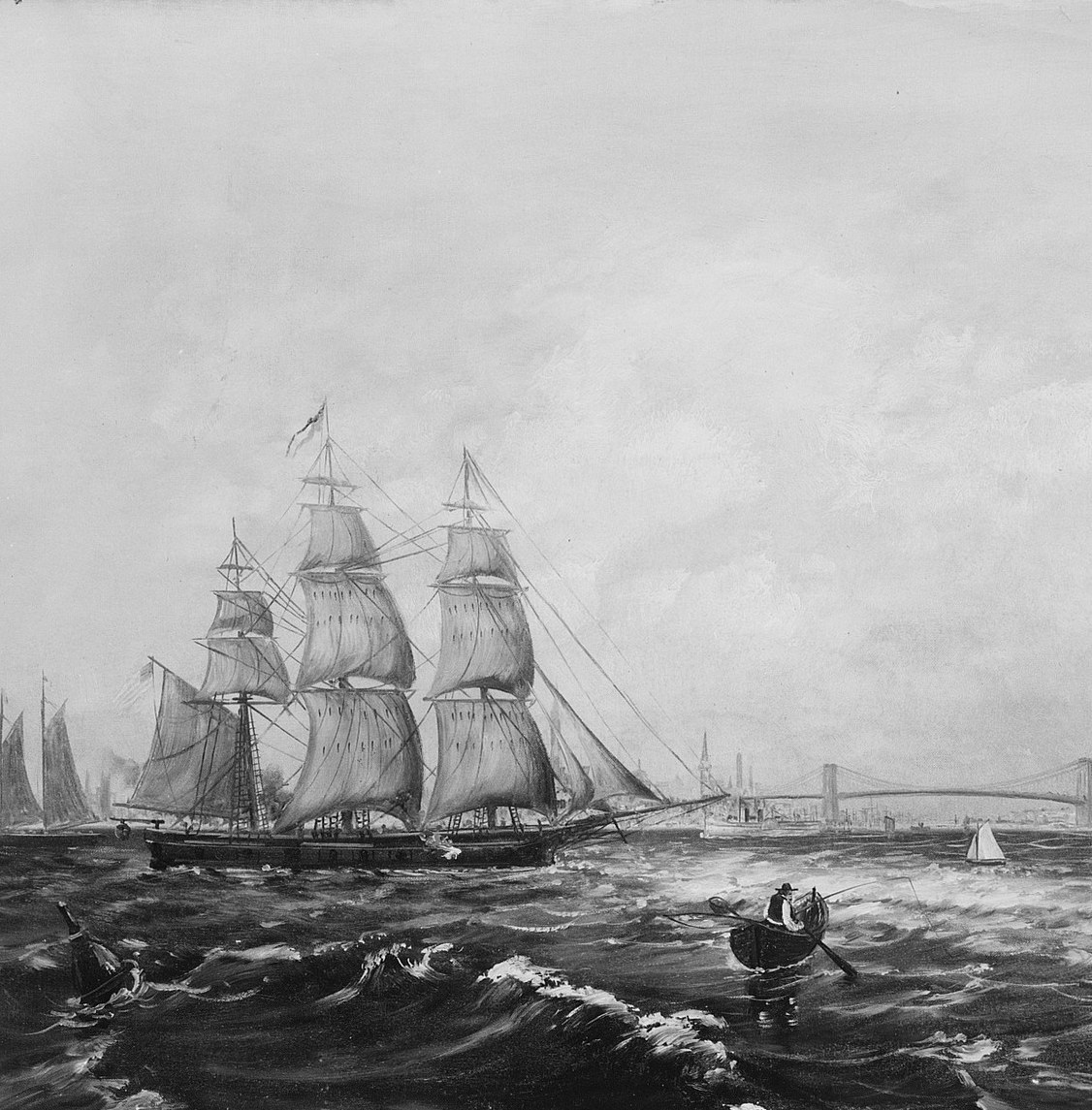
This is 'New York Bay and Harbor' by J. C. Wales, painted in 1883. It hangs in the Metropolitan Museum of Art, but its most extraordinary detail is hiding in plain sight: the barely-visible towers of the Brooklyn Bridge, painted the very year the bridge opened after 14 years of construction.
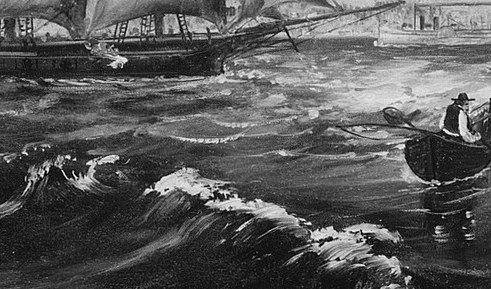
The painting looks like a standard maritime scene at first, a trio of grand sailing ships dominating New York's choppy waters. A tiny rowboat in the foreground makes the scale of the harbor feel immense. But the real payoff is on the horizon, just right of center. Wales captured the bridge's towers in a ghostly silhouette, still so new they feel like a mirage over the water.
Wales created a literal eyewitness document of a world-changing moment. Before the bridge, Brooklyn and New York were separate cities, linked only by ferries that battled these exact rough waves. The sailing ships in the foreground represent a centuries-old tradition; the faint towers behind them represent the industrial future that would soon make those ships obsolete.
It is rare to find a painting that captures the exact hinge point between two eras. What else do you think a painter today would include in the hazy distance of a city skyline to mark this specific moment?
Details

Transcript
Three grand ships, their sails full of a working wind. But the real story isn't on the water. Look past the rigging toward the distant shore. What looks like haze is actually the future. Those towers are the Brooklyn Bridge. Unfinished in this light. 1883. The year the longest suspension bridge on earth opened. This painter watched a massive harbor wake up to the modern age.