The prince and Nikfal are joined by Khalis and the Mukhlis who are the grateful snake and frog in human form, from a Tuti-nama (Tales of a Parrot): Eighteenth Night by http://www.wikidata.org/.well-known/genid/73486457ba8a43f2d342bf61ac0f3552
This painting, "The prince and Nikfal are joined by Khalis and the Mukhlis who are the grateful snake and frog in human form," from a Tuti-nama (Tales of a Parrot): Eighteenth Night, created by the Indian School around 1560, is housed at The Cleveland Museum of Art.
It illustrates a captivating scene from the *Tuti-nama*, a collection of ancient Indian fables. Here, a prince and Nikfal are met by two figures, Khalis and Mukhlis, who appear in human form but were once a snake and a frog, transformed through gratitude. Notice the detailed expressions on their faces and the intimate gesture of the prince and Nikfal's hands.
This artwork is a single page from a larger illuminated manuscript, showcasing the rich tradition of visual storytelling in South Asian art. The vibrant colors and stylized landscape bring the narrative to life, emphasizing themes of interspecies connection and the rewards of compassion.
The painting stands as a testament to the enduring power of fables and the belief that empathy can extend to all creatures. What tale do you see hidden in its details?
Details
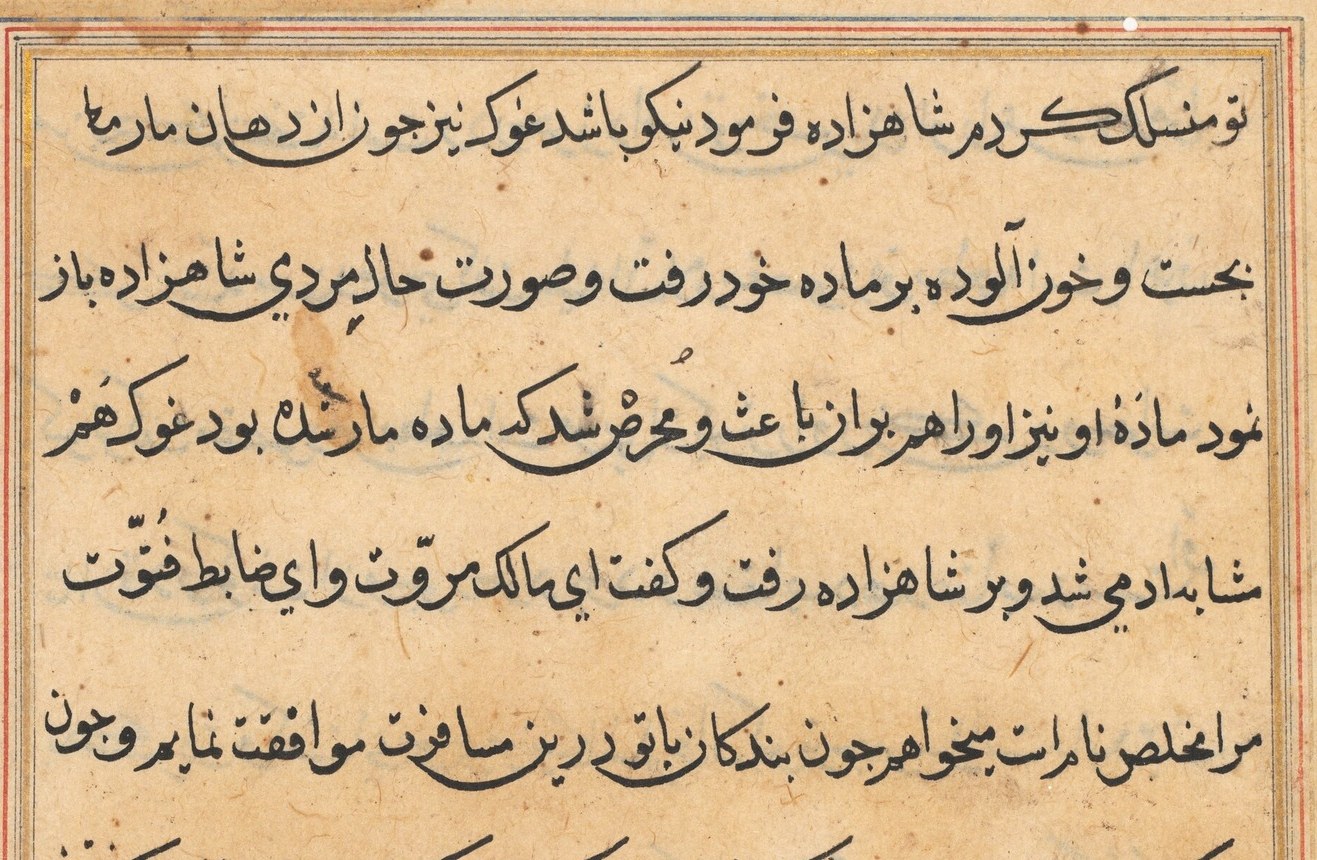
Transcript
This painting illustrates a tale of ancient India. A prince and his beloved, Nikfal, share an intimate moment. Suddenly, two strangers appear, startling them. The man in red, Khalis, was once a grateful snake. His companion, Mukhlis, was a frog transformed. Their stories were told in the Tuti-nama, or Tales of a Parrot. A moment where humanity meets the extraordinary.