The Nativity by Zanobi Strozzi
View the artwork: The Nativity →
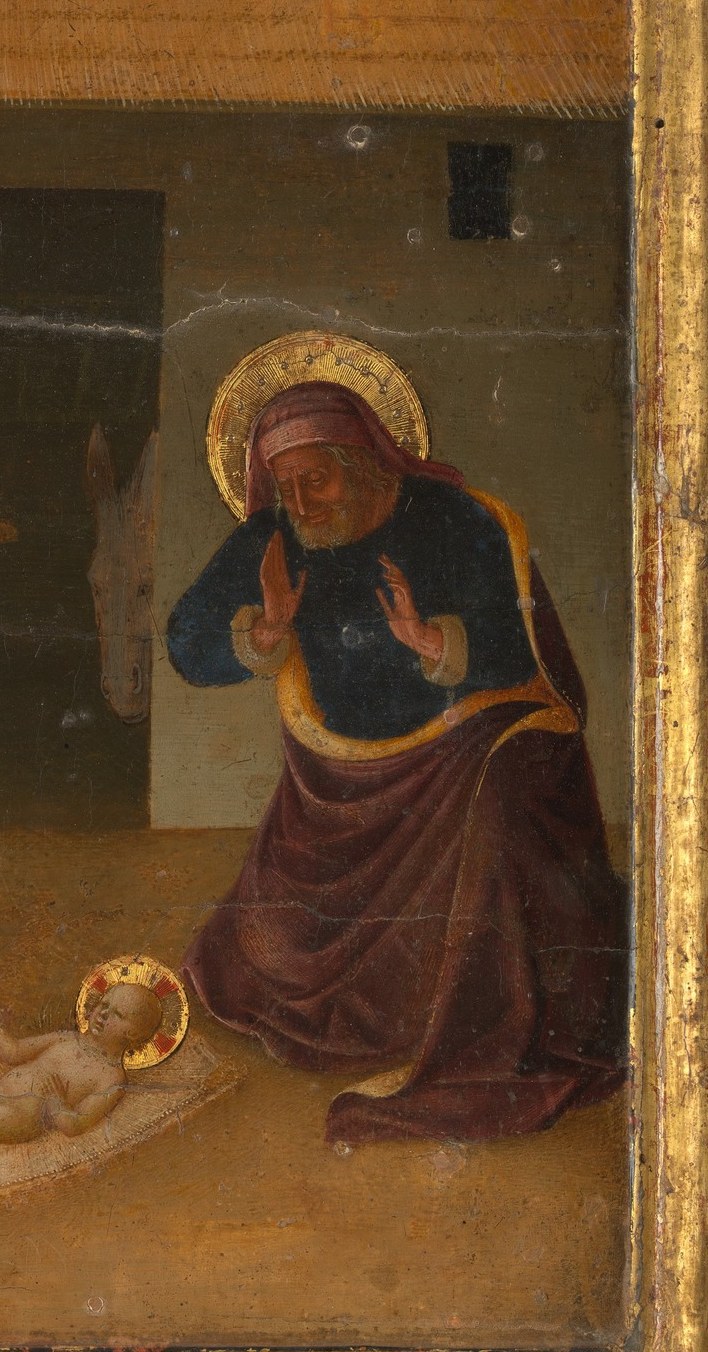
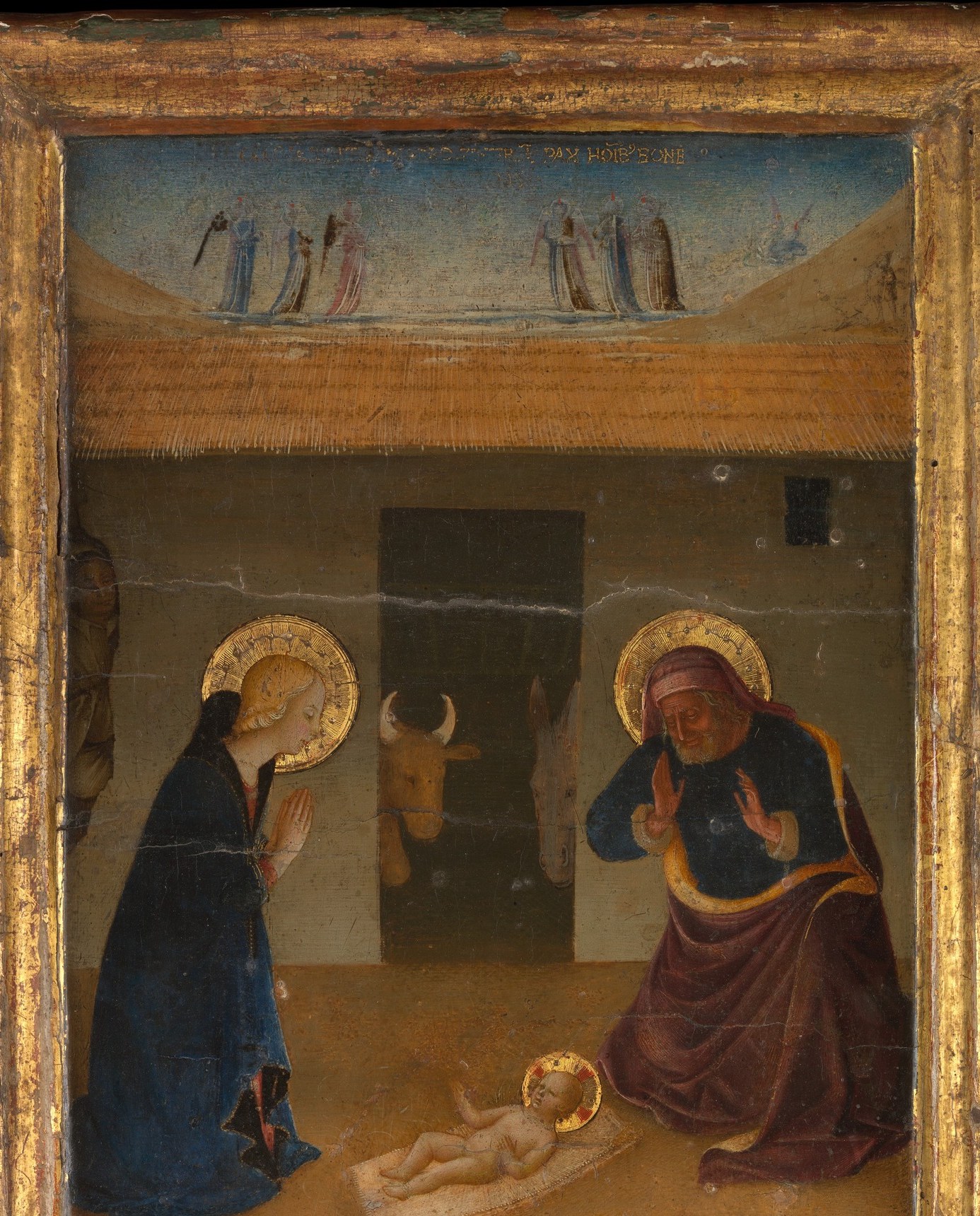
Zanobi Strozzi's *The Nativity* is a pocket-sized panel built for private devotion, now in the collection of the Metropolitan Museum of Art. Painted in tempera and gold leaf on wood around 1436, it measures just thirteen by nine inches. Strozzi was primarily a manuscript illuminator and a close associate of Fra Angelico, and this is one of very few surviving panel paintings firmly attributed to his hand.
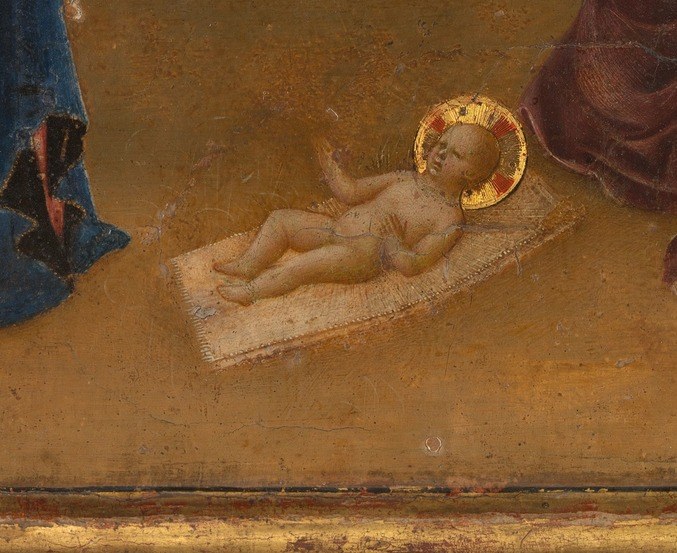
The first thing to notice is where the infant lies. He is placed directly on the bare stable floor rather than in a manger, a deliberate Florentine theological choice that underscores humility. From there, let your eye climb to the warm ochre arch framing the scene. At its crown, nearly invisible from a distance, a small cluster of seraphim hovers in the gold, connecting heaven to the earth below.
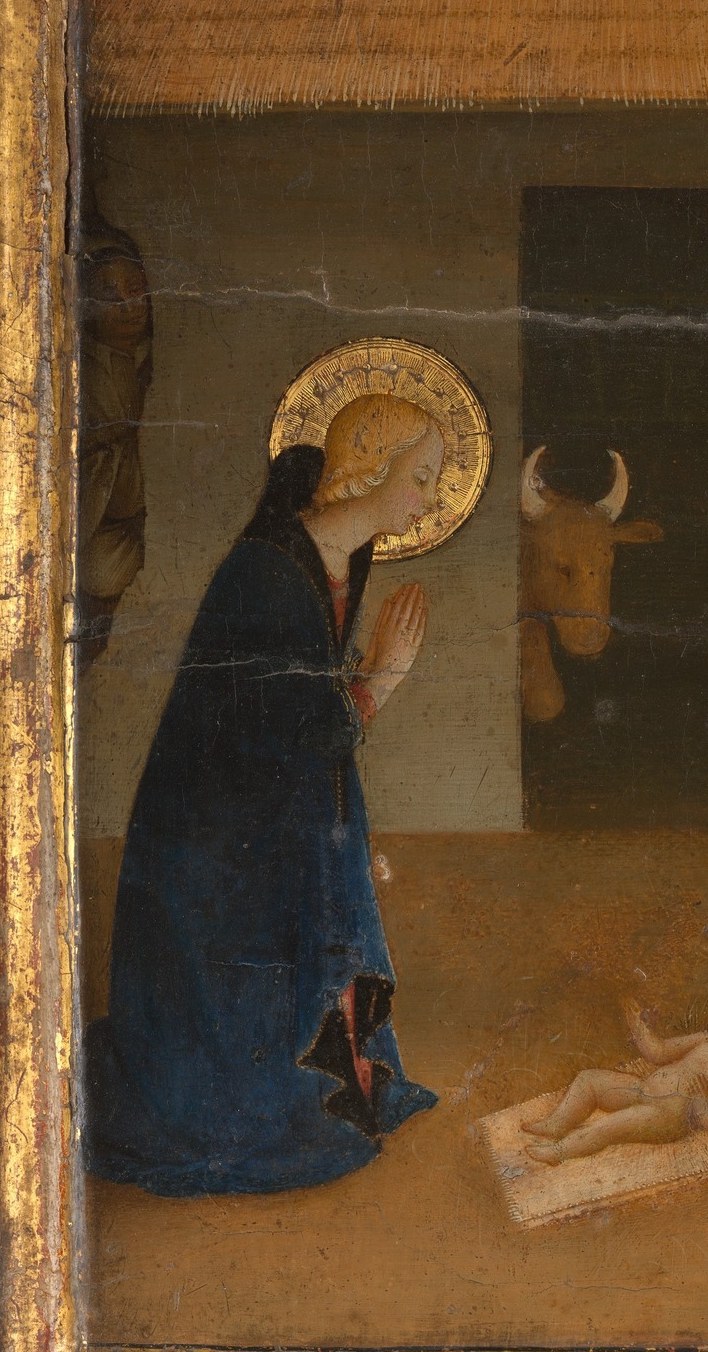
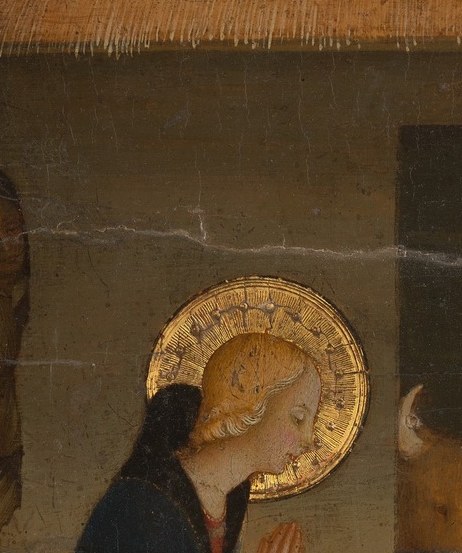
Strozzi trained as an illuminator, and the evidence is everywhere in the delicate punchwork of the gilded halos and the precision of Mary's downturned face. The panel entered the Met in 1924 through the Rogers Fund, giving a public audience access to a painting that was originally made for one person's quiet contemplation.
There is something moving about a painter known for tiny books making a panel that still asks you to lean in close. When you do, the angels are waiting.
#arthistory #renaissanceart #italianpainting
Details
Transcript
A small tempera panel for private prayer. At its heart, the Christ Child lies not in a manger but on bare earth. Mary kneels in luminous indigo, her face turned inward. The painter was Fra Angelico's pupil and a master illuminator. Now look up into the warmth of the arch. There is a hidden audience watching from above. Tiny seraphim, easy to miss, link heaven to this stable floor.