Madonna and Child by Bouts, Dirck
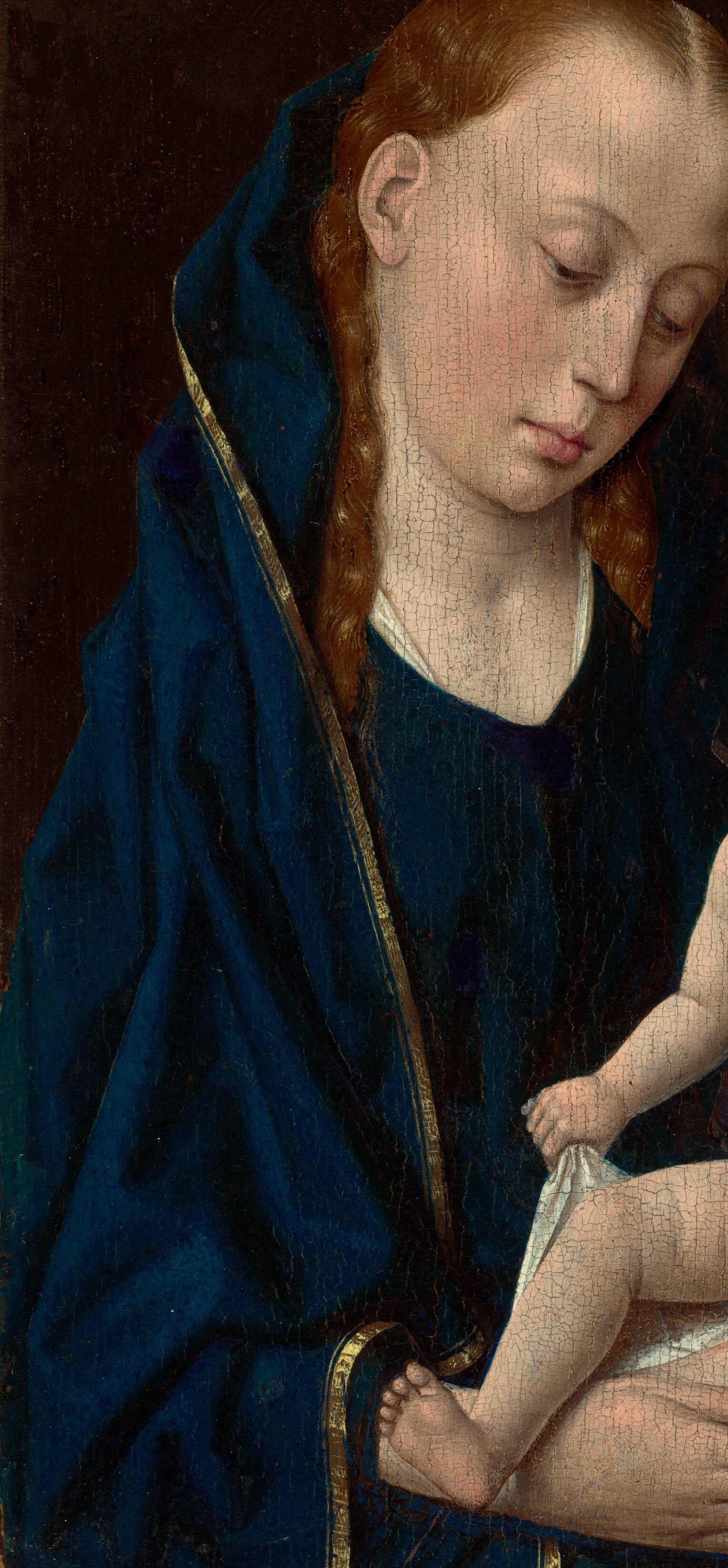
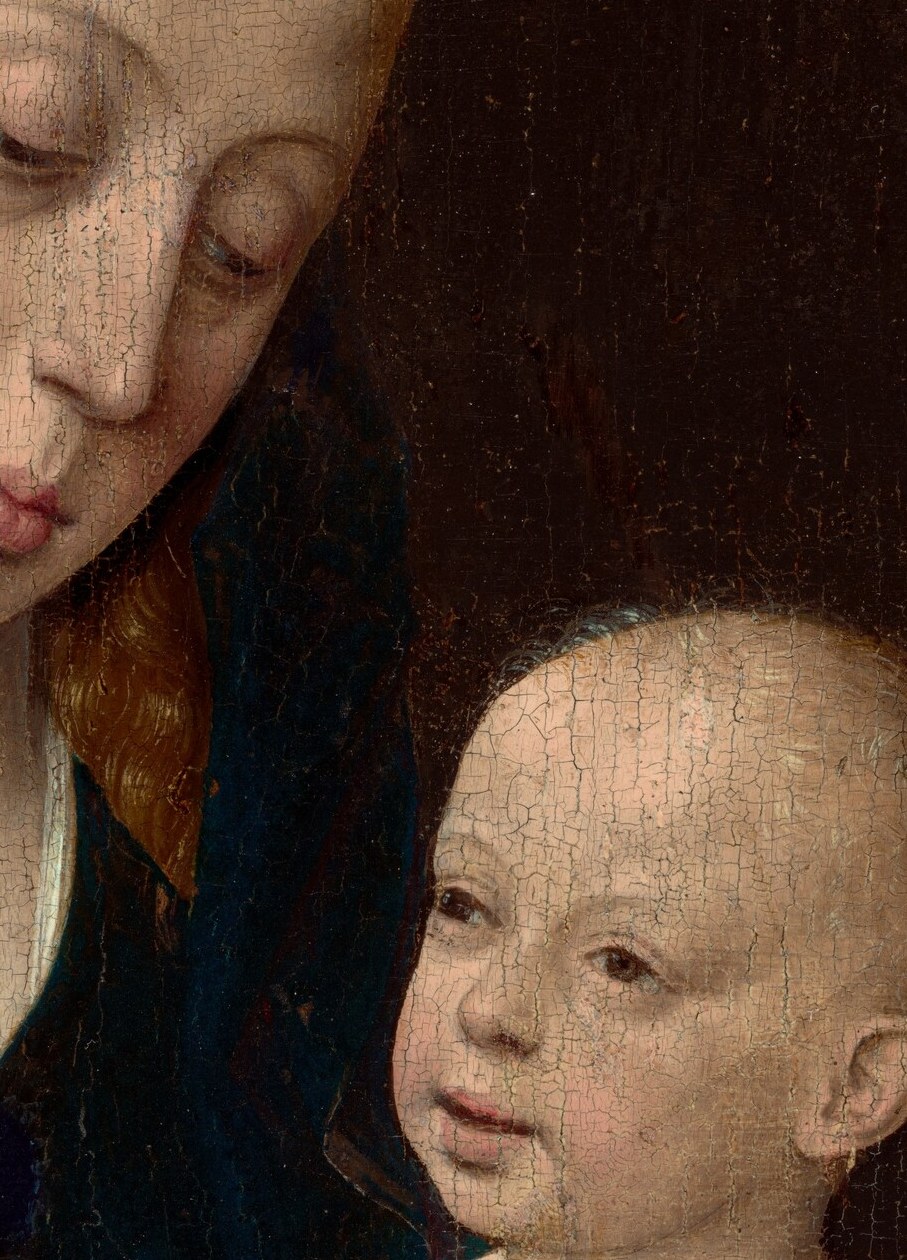
This is Dirck Bouts's "Madonna and Child," painted around 1465 in the Netherlands. It looks at first like a quiet devotional image of Mary holding the infant Jesus. But the three colors on her body were a deliberate, legible code to a 15th-century viewer, a compressed version of the entire Christian story.
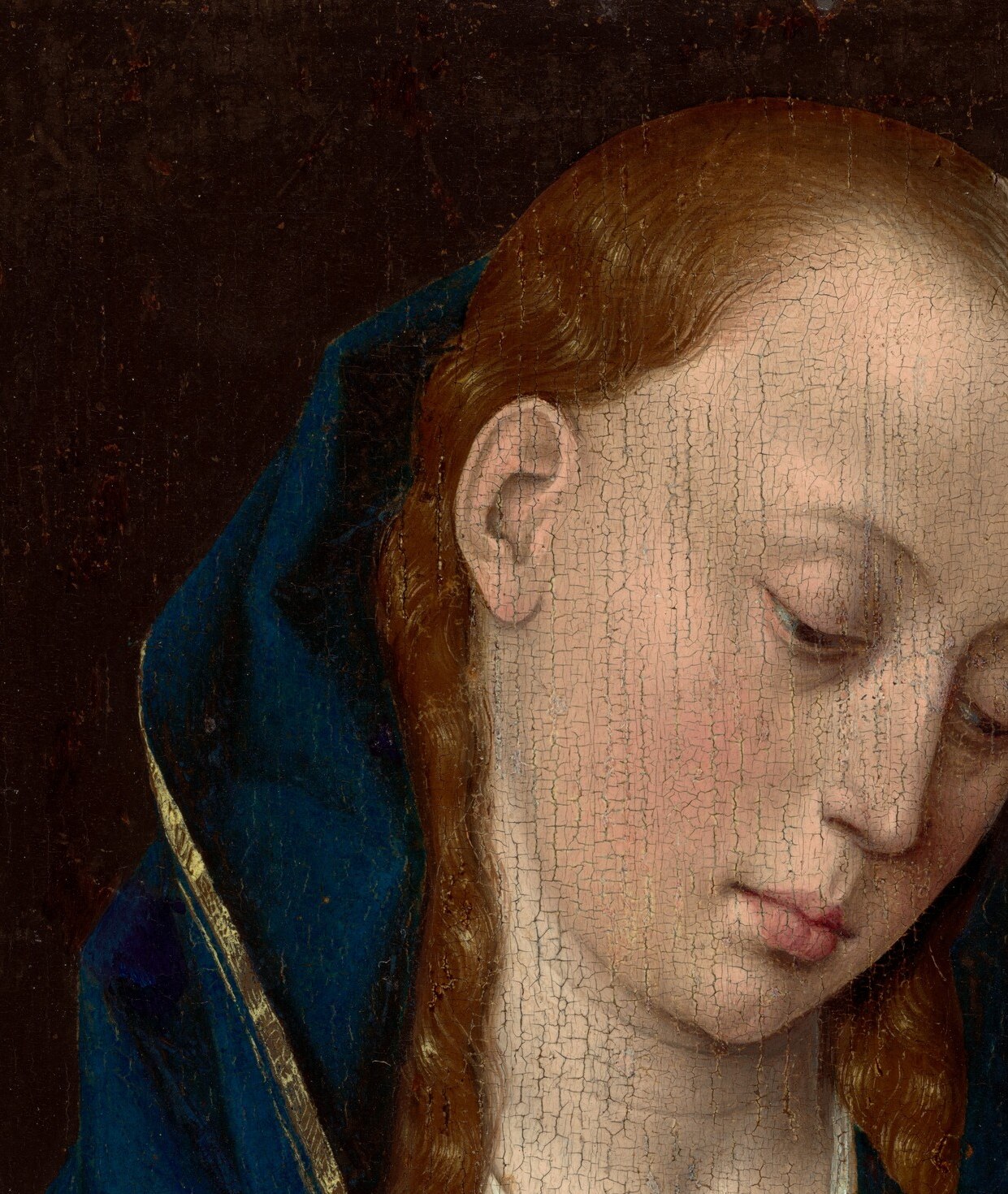
The first thing to notice is Mary's deep blue mantle. Ultramarine was made from ground lapis lazuli, imported from Afghanistan, and it cost more than gold by weight. By custom it was reserved for the Virgin alone. Beneath it, at her chest, you see a strip of crimson, the dress that reads as the blood of the Passion, the sacrifice foretold even in this moment of infancy.
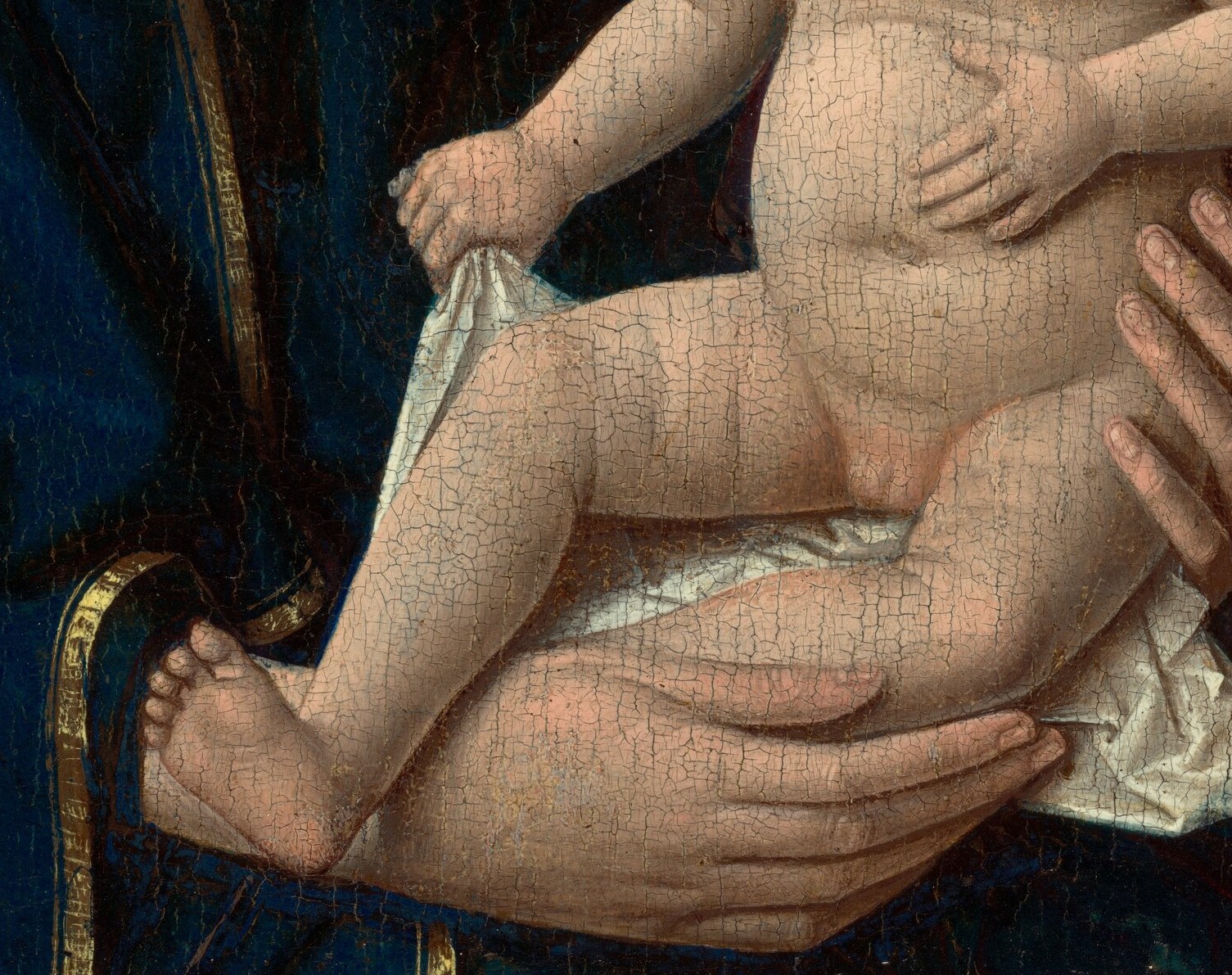
Then look at the white linen beneath the child. The crisp folds double as a baptismal cloth and a burial shroud. The painting gives you the Nativity, the Crucifixion, and the Resurrection in three pieces of fabric.
Bouts was one of the great early Netherlandish oil painters, working in Leuven, and he was known for this exact kind of restrained, unsentimental precision. The panel eliminates all narrative background, there is no stable, no landscape, so that nothing distracts from the theological message carried by color alone.
Details

Transcript
A mother holds her child in the dark. Her mantle is deep ultramarine blue. The most expensive pigment of the 15th century. Blue was reserved almost exclusively for the Queen of Heaven. Now look beneath it, at her chest. Crimson. Red here is the color of blood and the Passion. The sacrifice already present at the Nativity. And the white linen under the child. Baptismal cloth. Burial shroud. Blue, red, white. The full arc of the story, worn on one body.