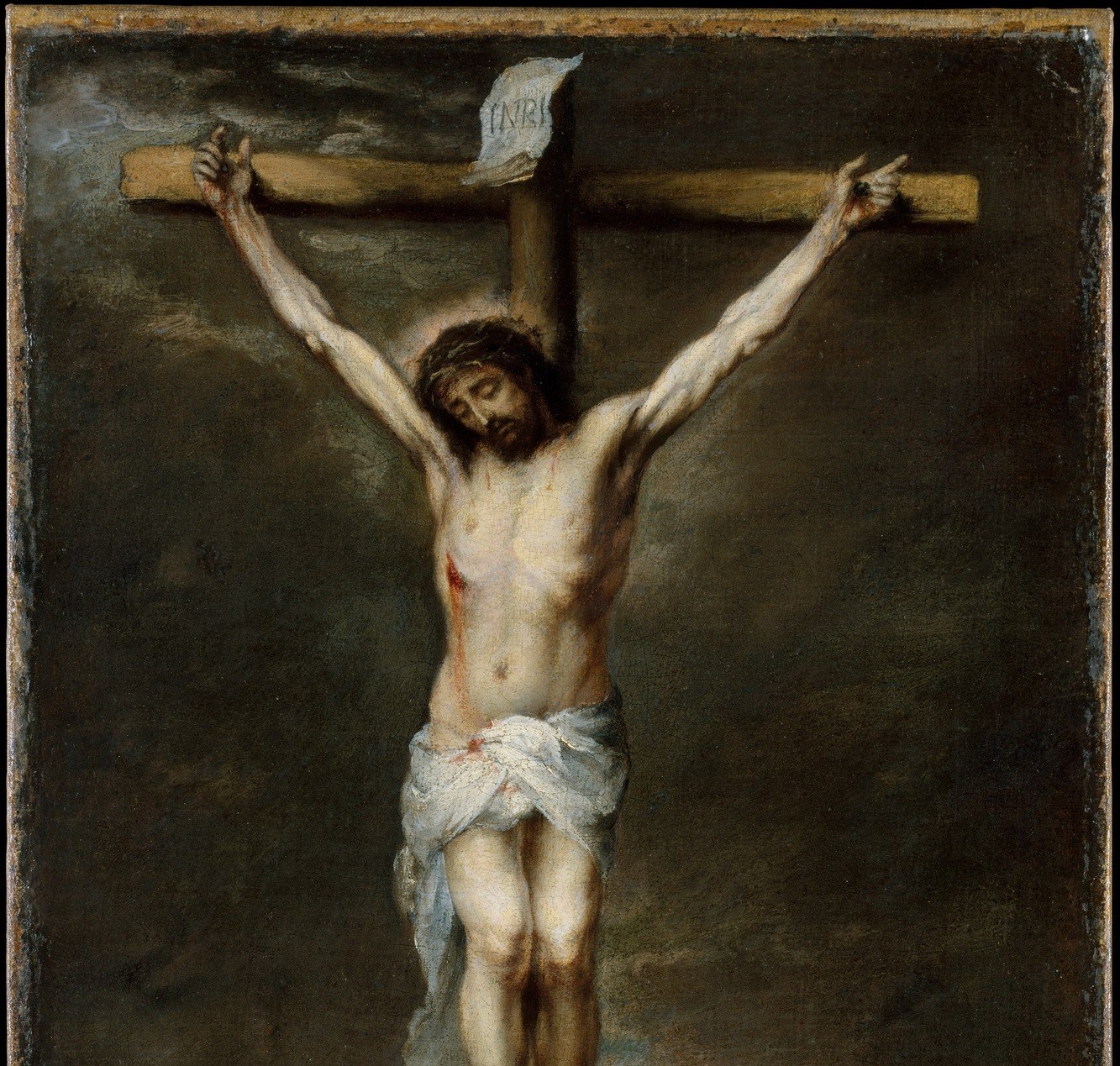
The Crucifixion by Bartolomé Esteban Murillo

You could scroll past Murillo’s The Crucifixion (c. 1675) and see only a solitary figure on a cross. But look into the darkness on the lower right, and a whole city emerges from the murk, Jerusalem, barely visible in the atmospheric haze behind Golgotha.

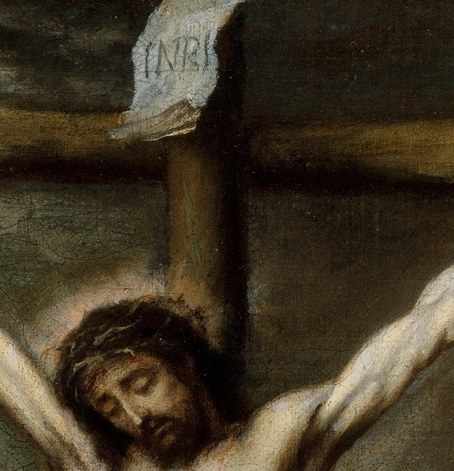
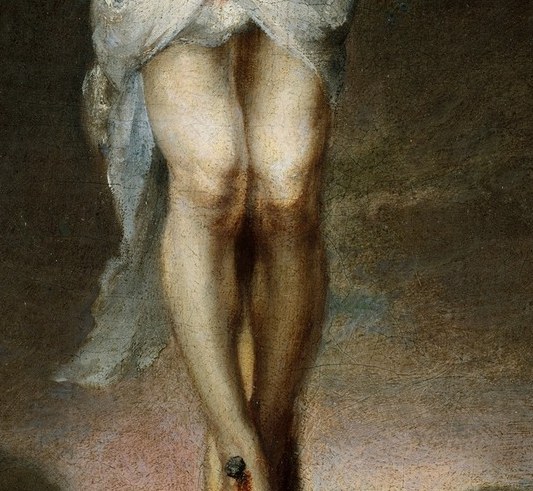
Painted late in Murillo’s career for a private chapel in Seville, this work is a masterclass in Baroque chiaroscuro. The body seems to generate its own light against the churning black sky, while the wound in Christ’s side and the single nail through both feet anchor the scene in precise, grim anatomy. Murillo renders every thorn in the crown with a physician’s care.

For centuries this painting was known only to the brothers of the Capuchin order who prayed beneath it. Its restraint, no angels, no weeping crowd, just one figure and a hidden city, was the whole point. The city was not an accident of underpainting; it was always meant to reward the patient eye.

What do you notice in the shadows that you missed on first glance?

#arthistory #baroque #murillo

Details
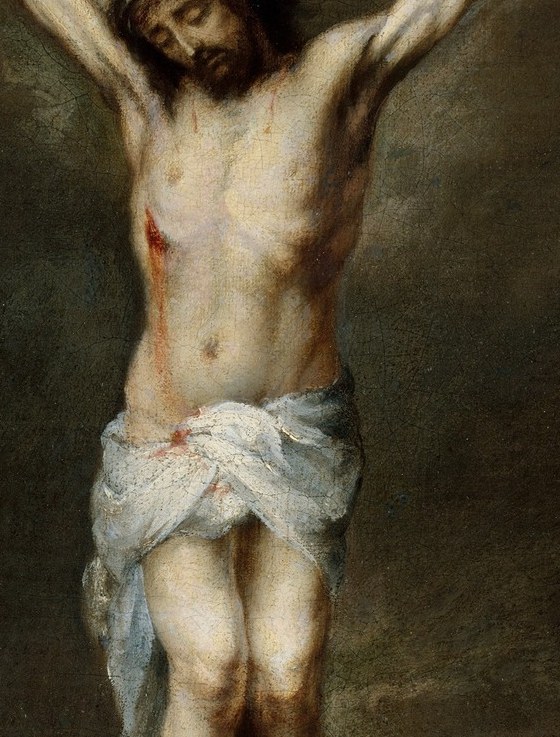
Murillo's chiaroscuro peaks here , a luminous body sculpted against the dark sky. The visible side wound (spear of Longinus) locates the moment chronologically after death, while the musculature preserves dignity.
The stark vertical bisects the canvas from top to near bottom , less an object than a compositional spine. Its dark rough grain contrasts with the luminous flesh pressed against it.
The tilt of the head conveys exhaustion and surrender; the crown of thorns presses into the brow, fusing kingship mockery with physical torment in a single gesture.
Murillo was celebrated for painting white cloth; this perizonium shows translucency and soft folds that demonstrate his technical mastery and function as the painting's brightest tonal anchor.
The sky is not background filler , in Gospel accounts, darkness covered the land at the moment of death. Murillo's churning clouds make that cosmic response the painting's emotional ceiling.
Transcript

You could scroll past this painting and see only a man on a cross. Murillo gives you every mark of Roman execution. A single nail through both feet, anchoring the weight of the body. Now look into the darkness on the right. A whole city. Jerusalem, just visible through the murk. Murillo painted this in 1675, for a chapel in Seville. The city is not a mistake. It was always meant to be found.